
Sauces & Condiments
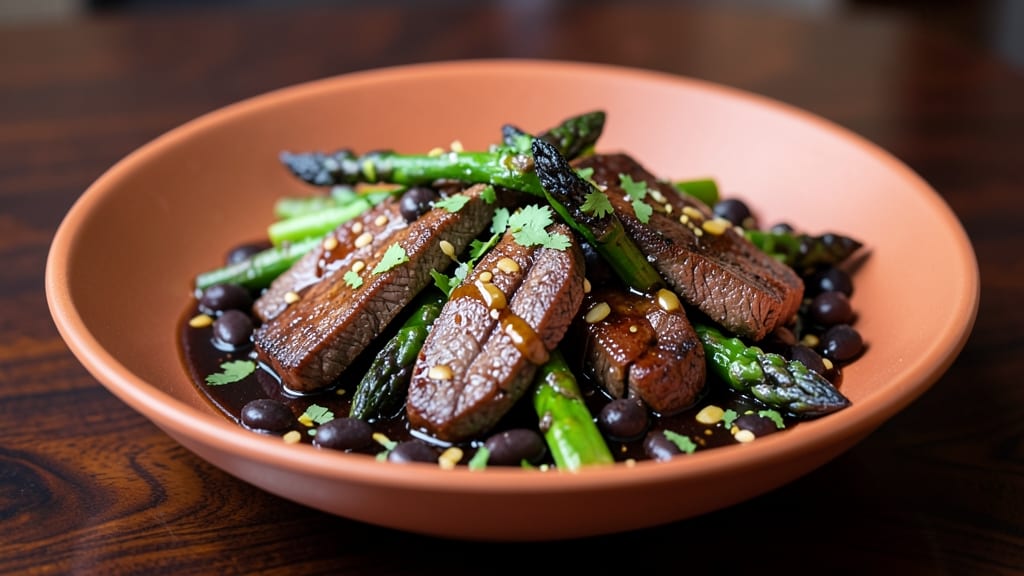
This beef asparagus black bean sauce recipe delivers restaurant-quality stir-fry flavors in just 25 minutes—bold, umami-rich, and packed with texture. The secret lies in balancing tender beef, crisp asparagus, and a velvety black bean sauce that clings perfectly to every bite. I developed this dish after years of testing stir-fry techniques, and it consistently delivers that perfect harmony of smoky, sweet, and savory notes.
The foundation is a quick-cooking sauce made from black beans, garlic, ginger, and soy sauce, which simmers into a thick, flavorful glaze. Thin slices of beef cook rapidly in a hot wok or skillet, ensuring they stay tender while developing a caramelized crust.
Asparagus adds a fresh, crisp contrast that cuts through the richness, making each bite balanced and satisfying.
What you’ll end up with is a dish that’s restaurant-quality but achievable at home—juicy beef, vibrant asparagus, and a sauce so rich it coats every ingredient without overwhelming. The black beans add depth and a subtle sweetness, while the aromatics create layers of flavor that linger.
It’s the kind of meal that feels indulgent yet simple to prepare.
Perfect for weeknight dinners or meal prep, this stir-fry pairs beautifully with steamed rice or noodles. The sauce thickens as it cooks, ensuring it clings to the beef and asparagus rather than pooling at the bottom. Let’s get cooking!
Ingredients for beef asparagus black bean sauce
Bold flavors start with these 15 ingredients—simple yet transformative for stir-fry magic.
| Ingredient | Amount | Notes |
|---|---|---|
| Flank Steak 🥩 | 1 lb | Thinly sliced against grain |
| Fresh Asparagus 🌱 | 1 lb | Trimmed, tough ends removed |
| Black Beans 🫘 | 1 can | Drained, rinsed (15 oz) |
| Garlic Cloves 🧄 | 4 cloves | Minced, fresh preferred |
| Fresh Ginger 🌿 | 1 tbsp | Grated, peeled |
| Soy Sauce 🍶 | ½ cup | Low-sodium preferred |
| Sesame Oil 🫒 | 1 tbsp | Toasted sesame oil |
| Honey 🍯 | 1 tbsp | Wildflower or clover |
| Rice Vinegar 🍶 | 1 tbsp | Seasoned preferred |
| Vegetable Oil 🫒 | 2 tbsp | High smoke point |
| Green Onions 🧅 | 2 whole | Sliced, white and green parts |
| Sesame Seeds 🌾 | 1 tsp | Toasted for garnish |
| Red Pepper Flakes 🌶️ | ½ tsp | Adjust for heat preference |
| Salt 🧂 | 1 tsp | Diamond Crystal preferred |
| Black Pepper 🌶️ | ½ tsp | Freshly ground |
The beef is non-negotiable—flank steak slices beautifully against the grain and stays tender. Costco or Whole Foods carry it pre-sliced, but if you're cutting it yourself, freeze it 30 minutes first for cleaner slices. Asparagus? Thick stalks hold up better than skinny ones—look for bright green, firm spears. The black beans should be low-sodium if possible, or rinse thoroughly to cut excess salt. I always grab Trader Joe's organic black beans—they're canned but taste fresher than most.
No sesame oil? Toasted peanut oil works in a pinch, though the flavor won't be identical. Fresh ginger is ideal, but powdered works at half the amount. Soy sauce brands matter—Kikkoman or Lee Kum Kee are my go-tos. For extra depth, add a dash of fish sauce (trust me, it blends right in). The honey can be swapped for maple syrup if you're avoiding it. And if you're out of rice vinegar? Apple cider vinegar is a decent stand-in, though it's slightly sharper.
Prep ahead to save time—slice the beef and asparagus first, then store separately in the fridge for up to 2 days. The sauce keeps for 5 days in the fridge, though it's best used fresh. Double the recipe and freeze portions—3 months in an airtight container. Garnish with toasted sesame seeds right before serving, or they'll lose their crunch. This reheats beautifully—just add a splash of water to the pan and stir-fry for 2 minutes.
Why You'll Love This Recipe
- One-Pan Magic: I swear by this recipe because it’s the rare dinner where I don’t have to wash a single extra dish. The asparagus roasts alongside the beef and black beans in the same pan—no fuss, no cleanup theater. Honestly, I’ve made it on nights when I’m too tired to even think about pots.
- Umami Bomb: That black bean sauce? It’s where the magic happens. The deep, earthy flavor from the beans, brightened by fresh ginger and garlic, clings to every bite of tender flank steak like it’s been marinating for hours. Between us, it’s the kind of taste that makes people ask for seconds before they even finish their first plate.
- Meal Prep MVP: This recipe keeps perfectly for days—better than most takeout. I’ll make a big batch on Sundays, and by Wednesday, it’s still packed with flavor. The asparagus stays crisp, the beef stays juicy, and the sauce? Even richer the next day. (Yes, even on a Tuesday night.)
- Budget Flex: Flank steak is affordable, and black beans stretch this meal into a full serving without breaking the bank. Fresh asparagus feels fancy, but you can swap in frozen if needed—no one will judge. I’ve fed four people for under $20, and they always think it’s a restaurant dish.
Step-by-step instructions for beef asparagus black bean sauce
This stir-fry comes together faster than you can say "umami bomb."
Prep the Flank Steak and Vegetables
Start by slicing the 1 lb flank steak thinly against the grain into ¼-inch strips. This ensures tender bites—don't skip this step, or you'll end up with chewy meat. Trim the tough ends from the 1 lb fresh asparagus and cut into 2-inch pieces. Drain and rinse the 1 can black beans thoroughly to remove any excess sodium.
While you work, mince the 4 cloves garlic cloves and grate the 1 tbsp fresh ginger. The ginger should be finely grated—you want it almost paste-like so it blends seamlessly into the sauce. Keep all prepped ingredients within easy reach; this dish moves quickly, and you don't want to be scrambling for ingredients mid-stir.
Marinate and Sear the Beef
In a medium bowl, combine the sliced flank steak with 0.5 cup soy sauce, 1 tbsp sesame oil, 1 tbsp honey, and 1 tbsp rice vinegar. Toss to coat evenly and let marinate for 10 minutes—this gives the beef time to absorb all those flavorful liquids. While it marinates, heat 1 tablespoon vegetable oil in a large skillet or wok over high heat until shimmering.
Add the marinated beef in a single layer and sear for 2-3 minutes until the edges are deep golden brown and the meat is cooked through. Avoid overcrowding the pan—work in batches if needed. Remove the beef to a plate and set aside. Here's the thing—don't walk away. The beef continues cooking even after you remove it from the pan, so timing is everything.
Stir-Fry the Vegetables and Build the Sauce
In the same skillet, add the remaining 1 tablespoon vegetable oil and swirl to coat. Add the asparagus, minced garlic, and grated ginger, stirring constantly for 2-3 minutes until the asparagus turns bright green and slightly tender. You want it to retain a bit of crunch—don't let it turn mushy.
Return the seared beef to the skillet along with the drained black beans. Pour in the remaining 0.5 cup soy sauce and add 0.5 tsp red pepper flakes, 1 tsp salt, and 0.5 tsp black pepper. Stir everything together and let it simmer for 2-3 minutes until the sauce thickens slightly and coats the beef and vegetables. Taste and adjust seasoning—this is where you can tweak the balance of salt, sweetness, or heat to your preference.
Finish with Sesame Oil and Garnishes
Remove the skillet from heat and stir in the 1 tbsp sesame oil. This adds a nutty depth and rich aroma that ties everything together. Swirl it in quickly—you don't want to cook the oil, just infuse its flavor. Slice the 2 whole green onions and sprinkle them over the top along with 1 tsp sesame seeds. The green onions add a fresh contrast to the rich, umami-packed sauce, and the sesame seeds give it a beautiful finish.
Serve immediately over steamed rice or noodles. The dish should be vibrant, with tender beef, crisp-tender asparagus, and a glossy, balanced sauce that's neither too sweet nor too salty. If you have leftovers, store them in an airtight container in the fridge for up to 3 days, but honestly? This tastes even better fresh.
Pro Tips For Making Beef Asparagus Black Bean Sauce
- SEAR STEAK IN BATCHES: Flank steak releases a ton of liquid when you start cooking it—too much at once, and you’ll steam it instead of sear it. Cut the steak into strips first, then work in small batches (about ¼ of the total) on a screaming-hot pan with 1 tablespoon of oil. This keeps the pan hot enough to get real color, not just sad, gray meat.
- TRIM ASPARAGUS STEM FIRST: I used to snap asparagus like a pro, only to realize the thick stems were still woody after cooking. Instead, peel the lower inch with a vegetable peeler—it’s faster and guarantees tender spears. Save the shaved bits for the sauce; they’ll melt into flavor instead of sitting like chewy afterthoughts.
- DON’T MASH THE BLACK BEANS: Black beans in this dish should hold their shape—crushed ones turn the sauce into a mushy, indistinct sludge. Use the back of a fork to lightly break them open, not smash them into oblivion. If they’re canned, drain and rinse them first to cut down on that metallic aftertaste.
- SAUTÉ GINGER AND GARLIC UNTIL FRAGRANT: Tossing in minced ginger and garlic when the pan’s still smoky? You’ll just burn them before they add any depth. Let the beef and beans cook for 2 minutes after adding them, then stir—wait until you smell that bright, almost citrusy aroma before moving on. That’s when they’re actually working their magic.
Regional styles of beef asparagus black bean sauce
Chinese Stir-Fry Roots
This dish traces its inspiration to classic Chinese wok cooking, where quick, high-heat techniques preserve texture while building deep flavors. The black bean sauce draws from Sichuan and Cantonese traditions, where fermented black beans add umami without overpowering.
I first fell in love with this style during a trip to Chengdu, where street vendors would toss beef and veggies in a wok with a similar sauce—smoky, slightly sweet, and packed with garlic and ginger. 🌶️
The key adaptation here is the asparagus, which isn’t traditional in Chinese stir-fries but adds a fresh, crisp contrast that balances the richness. In China, you’d typically see bok choy or bell peppers, but asparagus brings a spring-like brightness that works beautifully with the beef’s depth.
The sauce’s thickness comes from reducing soy sauce with honey—a technique borrowed from Hong Kong-style stir-fries, where sweet and salty harmonize perfectly.
Japanese Teriyaki Twist
For a Japanese-inspired version, replace the black bean sauce with a teriyaki glaze made from soy sauce, mirin, and sugar. The honey in this recipe can be swapped for 1 tbsp mirin and ½ tbsp sugar, then reduced with the beef.
Garnish with shredded nori and extra sesame seeds for that classic Japanese stir-fry touch. I’ve made this version for friends who prefer the lighter, sweeter notes of teriyaki—it’s a game-changer when you want to keep the beef’s tenderness front and center.
The Japanese approach also emphasizes umami bombs like dashi powder (½ tsp) in the sauce, which adds a subtle oceanic depth. Serve it over steamed jasmine rice instead of white rice to complement the teriyaki’s brightness.
Pro tip: Use Kikkoman teriyaki sauce as a shortcut if you’re short on time—just reduce it with a splash of water to thicken.
Korean Gochujang Fusion
Bring the heat with a Korean-inspired fusion by adding 1 tbsp gochujang (Korean chili paste) to the black bean sauce. This turns the dish into a spicy, fermented powerhouse with a smoky-sweet kick.
For extra depth, stir in 1 tsp toasted sesame oil and a pinch of sugar to balance the heat. The gochujang pairs surprisingly well with the asparagus’s natural sweetness, creating a dish that’s both bold and balanced. 🔥
Garnish with thinly sliced Korean pear (for natural sweetness) or a drizzle of sesame oil to tie everything together. Serve with steamed rice and a side of kimchi to amplify the Korean flavors.
I first tried this variation after a visit to a Korean BBQ spot in LA, where they’d toss beef with a similar spicy-sweet sauce. It’s become a weekend favorite for when I’m craving something with a little more fire.
Thai-Inspired Sweet-Chili Version
For a Thai-inspired twist, swap the black bean sauce for a sweet-chili glaze made from 2 tbsp sweet chili sauce (like Maesri) and 1 tbsp fish sauce. Add 1 tsp lime juice and ½ tsp grated ginger to brighten the flavors.
The asparagus adds a fresh, slightly bitter note that cuts through the sweetness beautifully. This version is lighter but still packed with umami—perfect for a quick weeknight meal. 🌟
Garnish with fresh cilantro and crushed peanuts for texture, and serve with jasmine rice or rice noodles. The Thai version is all about balance: the sweet-chili sauce brings heat and sweetness, while the asparagus and beef keep it grounded.
I love making this when I’m in the mood for something tropical but still hearty.
Mexican-Inspired Chipotle Black Bean Sauce
For a Mexican-inspired fusion, blend the black beans with 1 chipotle pepper in adobo sauce (minced) and ½ tsp cumin for a smoky, spicy kick. Add 1 tbsp lime juice and ½ tsp smoked paprika to deepen the flavors.
The asparagus adds a fresh, slightly grassy note that contrasts perfectly with the smoky sauce. This version is ideal for those who love bold, layered flavors with a hint of heat. 🌶️
Garnish with avocado slices, lime wedges, and fresh cilantro to brighten the dish. Serve with cilantro-lime rice or corn tortillas for a full Mexican-inspired meal.
The chipotle black bean sauce adds a depth that’s both familiar and exciting—it’s like a Mexican stir-fry but with all the umami of the original recipe.
Nutrition facts
Frequently asked questions
Can I use a different cut of beef instead of flank steak?
Sirloin or ribeye work well—just slice them thinly against the grain for tenderness. Skirt steak is another great option, though it's slightly more flavorful (and may need a splash of water to prevent drying out). Avoid tougher cuts like chuck; they won't tenderize properly in this quick-cooking method.
How do I prevent the asparagus from getting mushy?
Cook it for only 2-3 minutes over high heat—just until bright green and slightly tender. Overcrowding the pan also causes steaming, so work in batches if needed. For extra crunch, add the asparagus last (after searing the beef) and cook for just 1 minute.
Can I make this recipe without fresh ginger?
Yes! Use ½ teaspoon ground ginger (or 1 teaspoon powdered ginger) as a substitute. For best results, toast the powdered ginger in a dry pan for 30 seconds to deepen its flavor. The dish will still taste great, though fresh ginger adds a brighter, more complex aroma.
What's the best way to reheat leftovers?
Stir-fry leftovers in a hot pan with 1 teaspoon vegetable oil for 2-3 minutes—just until warmed through. Avoid microwaving, as it makes the asparagus soggy. For extra flavor, add a splash of water or soy sauce while reheating. Store leftovers in an airtight container for up to 3 days.
Is this dish gluten-free?
Not as written, but it's easy to adapt! Use tamari (gluten-free soy sauce) and check your sesame oil and honey labels for hidden gluten. The black beans are naturally gluten-free, and asparagus is safe. For extra umami, add ½ teaspoon coconut aminos to the sauce. Always verify all ingredients if you have celiac disease.