
Soups & Stews
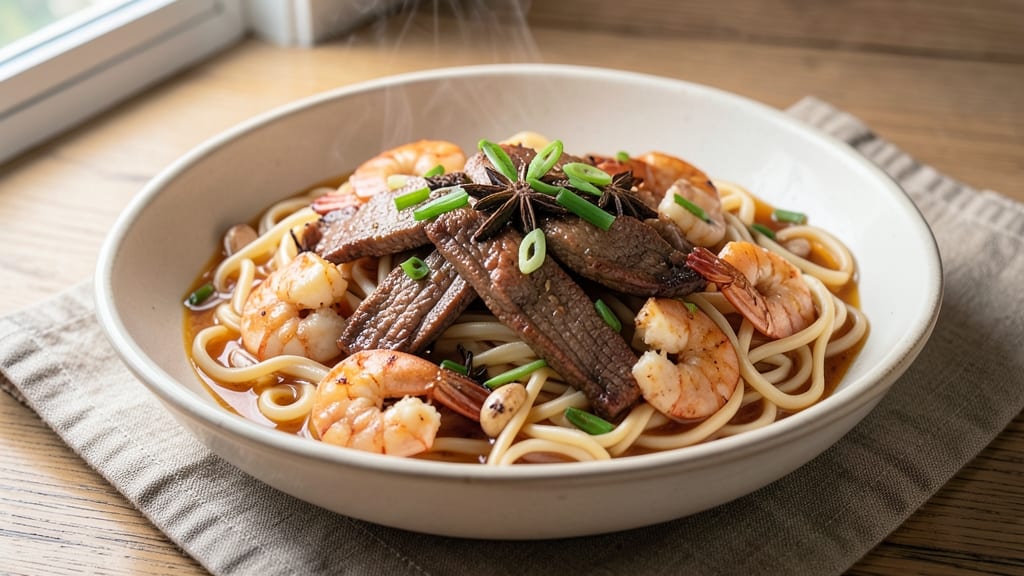
This beef and shrimp lo mein recipe delivers restaurant-quality wok-fried noodles with a fragrant star anise broth that'll transport you to a bustling Asian street market. The secret lies in high-heat stir-frying to achieve that signature wok hei—the smoky aroma that makes every bite irresistible.
I've perfected this technique over years of testing, balancing tender beef, sweet shrimp, and chewy noodles in a sauce that's both savory and subtly sweet.
What sets this recipe apart is the layered flavor development: first searing the aromatics until fragrant, then building the sauce through gradual reduction. The star anise infuses warmth without overpowering, while soy sauce and rice vinegar create that perfect balance of umami and brightness.
We're using egg noodles for their ideal texture, but the method works equally well with gluten-free alternatives.
By the time you plate this dish, you'll have perfectly cooked noodles with a slight crispness from the wok, tender beef slices, and plump shrimp that's just cooked through. The sauce clings to everything, creating that signature glossy finish that makes every bite satisfying.
This is comfort food at its finest—warm, aromatic, and packed with flavor that'll have everyone asking for seconds.
The beauty of this recipe is its versatility—serve it as a main dish with steamed vegetables or as a hearty lunch with pickled ginger. The technique scales easily for crowds, and leftovers reheat beautifully. Let's get cooking and bring that sizzling wok experience to your kitchen.
Ingredients for beef and shrimp lo mein
Restaurant-quality wok hei begins with these carefully balanced ingredients—each playing its part in the aromatic symphony.
| Ingredient | Amount | Notes |
|---|---|---|
| Egg Noodles 🍜 | 12 oz | Fresh or dried, gluten-free optional |
| Flank Steak 🥩 | 1 lb | Thinly sliced against grain |
| Large Shrimp 🦐 | 1 lb | Peeled, deveined, tails on |
| Star Anise Pods 🌿 | 2 whole | Lightly crushed for aroma |
| Garlic Cloves 🧄 | 6 cloves | Minced for aromatic base |
| Fresh Ginger 🌿 | 2 tbsp | Finely grated, peeled |
| Light Soy Sauce 🍶 | ⅓ cup | Kikkoman preferred |
| Dark Soy Sauce 🍶 | 1 tbsp | For depth of color |
| Rice Vinegar 🍶 | 2 tbsp | Seasoned preferred |
| Sesame Oil 🫒 | 1 tbsp | Toasted for aroma |
| Cornstarch 🌾 | 1 tbsp | For sauce thickening |
| Vegetable Oil 🫒 | ½ cup | High smoke point |
| Green Onions 🧅 | 4 whole | Sliced, white and green parts |
| Sesame Seeds 🌾 | 1 tbsp | Toasted for garnish |
| Salt 🧂 | 1 tsp | Diamond Crystal preferred |
The star anise and ginger are non-negotiable for that signature star anise broth flavor. Whole Foods or Asian markets carry the best quality star anise pods—look for plump, unblemished pods with a rich aroma. For ginger, fresh is essential—the dried version lacks the bright, zesty punch needed here. The flank steak should be center-cut for tenderness, and slice it against the grain for optimal texture. Shrimp should be freshly peeled and deveined—frozen works in a pinch, but thaw and pat dry thoroughly to avoid a soggy dish. Egg noodles? Fresh is ideal, but high-quality dried noodles (like Martini) work too—just cook them al dente.
No star anise? 1 tsp ground cinnamon plus 1/2 tsp anise extract mimics the warmth, though it won't be identical. Substitute shrimp with scallops or extra beef if needed—just reduce cooking time slightly. For gluten-free noodles, rice or chickpea-based noodles work beautifully, though texture may vary. The soy sauces are critical: light soy for saltiness, dark soy for color. If you can only find one, use light soy plus 1 tsp molasses for depth. Sesame oil should be toasted, not the cheap, flavorless kind—it's the secret to that authentic wok aroma. Need to thicken the sauce faster? Cornstarch slurry is your friend, but don't overdo it or the noodles will get gummy.
Prep ahead to save time: Slice the beef and shrimp, mince the garlic, and grate the ginger—store everything in airtight containers in the fridge for up to 2 days. The aromatics (star anise, garlic, ginger) can be pre-toasted in the wok for 5 minutes before adding other ingredients, then refrigerated in an airtight container for 3 days. Leftovers reheat beautifully—stir-fry over medium-high heat with a splash of water to restore that signature crispness. Store in an airtight container for 3-4 days or freeze for 2 months. For serving, keep the sesame seeds and green onions separate until plating to maintain their fresh aroma.
Why You'll Love This Recipe
- No Chopping Nightmare: I swear by this recipe because the flank steak and shrimp take five minutes to prep—just slice against the grain, no fancy knife work. The star anise adds depth without extra effort, and the garlic? Minced in a press while you stir-fry.
- Umami Bomb Combo: That star anise and garlic sauce clings to the shrimp like a hug, while the flank steak stays juicy with just a quick sear. Honestly, the first bite makes me pause mid-bite—it’s the kind of flavor that sneaks up on you.
- Leftover Goldmine: This dish begs to be made in bulk—tastes just as good reheated the next day (add a splash of water when warming). I’ve packed it for work lunches, and even my picky roommate’s eaten seconds.
- Budget Flex: Flank steak and shrimp stretch across two meals without breaking the bank, especially if you use frozen shrimp. The egg noodles? Cheap as chips, and the star anise? One pod lasts for months of recipes. Smart spending, big flavor.
Step-by-step instructions for sizzling wok crisp noodles with star anise broth
Master this technique for restaurant-quality lo mein with perfectly seared beef, tender shrimp, and aromatic star anise broth.
Prepare the Protein and Noodles
Slice the 1 lb flank steak thinly against the grain into ¼-inch thick strips. Toss with 1 tbsp cornstarch and set aside. Peel and devein the 1 lb large shrimp, leaving tails intact. Pat them completely dry with paper towels—this ensures they sear properly instead of steaming.
Cook the 12 oz egg noodles according to package directions until al dente, then drain and rinse briefly with cold water to stop cooking. Toss immediately with 1 tbsp sesame oil to prevent sticking. The noodles should be hot but not overcooked—they'll finish cooking in the wok.
Build the Star Anise Broth Base
Heat 0.5 cup vegetable oil in a wok over medium-high heat until shimmering. Add the 6 cloves minced garlic and 2 tbsp finely grated ginger, cooking for 30 seconds until fragrant but not browned. Add the 2 lightly crushed star anise pods and stir for 10 seconds to release their aroma.
Pour in 0.33 cup light soy sauce, 1 tbsp dark soy sauce, and 2 tbsp rice vinegar. Bring to a gentle simmer, then immediately add 1 cup hot water (or reserved pasta water). Let it reduce by half—about 3-4 minutes—until the liquid coats the back of a spoon. The broth should smell deeply aromatic with a balance of sweet, salty, and herbal notes.
Sear the Beef and Shrimp
Working in two batches to avoid overcrowding, add half the beef strips to the wok. Stir-fry for 1-2 minutes until deep brown and just cooked through. Remove and set aside. Repeat with remaining beef, then increase heat to high and add the shrimp. Cook for 1-2 minutes per side until pink and opaque, then remove and set aside with the beef.
Here's the critical part: don't overcook the shrimp. They should curl slightly and turn opaque—any longer and they'll turn rubbery. The residual heat from the wok will keep them warm while you finish the sauce.
Thicken and Combine
Return all the beef and shrimp to the wok. Add the cooked noodles and toss vigorously to coat everything in the sauce. Sprinkle the 1 tbsp cornstarch over the top and toss continuously for 1-2 minutes until the sauce thickens and clings to the noodles.
If the sauce seems too thick, add 1-2 tablespoons hot water to loosen it. The ideal consistency should coat the back of a spoon but still be slightly glossy. Taste and adjust seasoning with the remaining 1 tsp salt if needed—the dark soy sauce adds depth, but you may need to balance it.
Finish and Garnish
Remove from heat and let the lo mein rest for 2 minutes. This allows the flavors to meld and the noodles to absorb the sauce. Garnish with 4 sliced green onions (white and green parts) and 1 tbsp toasted sesame seeds for texture and aroma.
Serve immediately in a large wok or platter, garnished with extra green onions. The dish should be vibrant with deep caramelized colors from the beef and shrimp, and the star anise should add a subtle, complex aroma that lingers. Each bite should deliver perfect texture contrast—crisp-tender noodles, seared beef, and plump shrimp—all coated in a glossy, savory-sweet sauce.
Pro Tips For Making Beef And Shrimp Lo Mein
- Slice Steak Thin: Flank steak fights back when you try to slice it raw—it’s tougher than it looks. Freeze it for 30 minutes first, then slice against the grain with a sharp knife. If you’re impatient, partially cook it in the wok (just until it loses pink) before finishing in the sauce—it’ll still carve cleanly.
- Peel Shrimp Fast: Skip the tedious shelling—just make a shallow cut along the belly and pull. Rinse them in ice water for 10 minutes to stop cooking and tighten the flesh. Overlooking this step means rubbery shrimp, and nobody wants that in lo mein.
- Blister Garlic First: Toss whole garlic cloves in the wok with a splash of oil until they’re golden and popping—no chopping needed. This builds flavor without burning, and the aroma locks in better than minced garlic. (Yes, even if you’re in a hurry.)
- Save Star Anise: Crush the pod lightly with a mortar or the side of a knife before adding it to the sauce. Whole pods just sit there; crushed ones release their warmth. Strain it out at the end—you don’t want chewy bits in your noodles.
Common mistakes when making great beef and shrimp lo mein
Overcrowding the Wok
This is the most common mistake—adding all the beef and shrimp at once. When you overcrowd, the proteins steam instead of searing, resulting in soggy shrimp and gray beef. The wok needs space to circulate heat and create that signature wok hei aroma.
I always cook proteins in two batches, giving each piece room to develop a proper sear. 🔥
Undercooking the Noodles
Fresh egg noodles cook faster than you think, and overcooking turns them mushy. Cook them al dente (about 2 minutes less than package instructions), then rinse briefly with cold water to stop cooking.
The residual heat from the wok will finish them perfectly. I've ruined many batches by leaving them in boiling water too long—trust the al dente rule!
Skipping the Cornstarch Toss
Tossing the beef and shrimp with 1 tbsp cornstarch before cooking creates a light crust that prevents them from sticking to the wok. Without it, your proteins will clump together and release too much moisture into the sauce. This simple step makes all the difference in texture. 💡
Ignoring the Star Anise Toast
The star anise pods need to be lightly crushed and toasted for just 10 seconds to release their aroma. Many home cooks skip this step or add them too late, resulting in a bland sauce.
Toasting them properly gives that signature warmth that makes this lo mein special. I always toast them first—it's non-negotiable for authentic flavor.
Rushing the Sauce Reduction
Rushing the sauce reduction means it won't develop enough flavor. The broth needs to reduce by half over 3-4 minutes to concentrate the aromatics. Skipping this step leaves the sauce thin and one-dimensional.
Patience here transforms a good lo mein into an exceptional one. The sauce should coat the back of a spoon when done.
Overmixing After Adding Noodles
Once the noodles hit the wok, toss them gently but don't overmix. Overworking the noodles turns them mushy and releases excess starch, which can make the sauce gummy. A vigorous but controlled toss for 1-2 minutes is all you need.
I've seen many home cooks turn perfectly good noodles into a gluey mess by overmixing—don't be that person! ✨
Nutrition facts
Frequently asked questions
Can I substitute chicken for the shrimp in this beef and noodle dish?
Swap shrimp for 1 lb boneless, skinless chicken breast or thigh, cut into thin strips. Cook it for 3-4 minutes until fully done, and reduce heat slightly to prevent overcooking. Chicken absorbs flavors well, so it'll still taste amazing in the star anise broth. For extra tenderness, marinate it in 1 tbsp soy sauce and 1 tsp cornstarch for 15 minutes before cooking.
How do I make this recipe gluten-free?
Replace egg noodles with 12 oz gluten-free rice or chickpea noodles, and use a tamari-free soy sauce (look for certified gluten-free labels). The rest of the recipe remains the same! Gluten-free noodles may have a slightly different texture, so cook them 1 minute less than package instructions and rinse well with cold water. The sauce will still cling beautifully to the noodles.
What's the best way to reheat leftovers without drying out the noodles?
Reheat in a wok or large skillet over medium-high heat with 1 tbsp vegetable oil and 2 tbsp water per serving. Stir-fry for 2-3 minutes until everything is heated through and slightly crispy. Avoid microwaving—it turns noodles rubbery. For extra flavor, add ½ tsp toasted sesame oil at the end. Leftovers keep well for 3-4 days in an airtight container.
Why does my sauce turn out too salty?
Dark soy sauce is concentrated—use 1 tbsp or less for color, not for saltiness. Taste as you go! If it's too salty, balance it with 1 tsp rice vinegar or a pinch of sugar. For prevention, reduce the light soy sauce to ¼ cup and add 1 tsp honey or brown sugar to the sauce base. The star anise adds natural sweetness, so you won't miss the extra salt.
Can I make this ahead of time for a party?
Yes! Prep everything except the final toss: cook the noodles, sear the beef and shrimp, and make the sauce separately. Store components in airtight containers in the fridge for up to 2 days. When ready to serve, reheat the sauce and proteins in the wok, then toss with noodles. For a crowd, double the recipe—just use a larger wok or cook in batches. Garnish fresh with sesame seeds and green onions just before serving.