
Soups & Stews
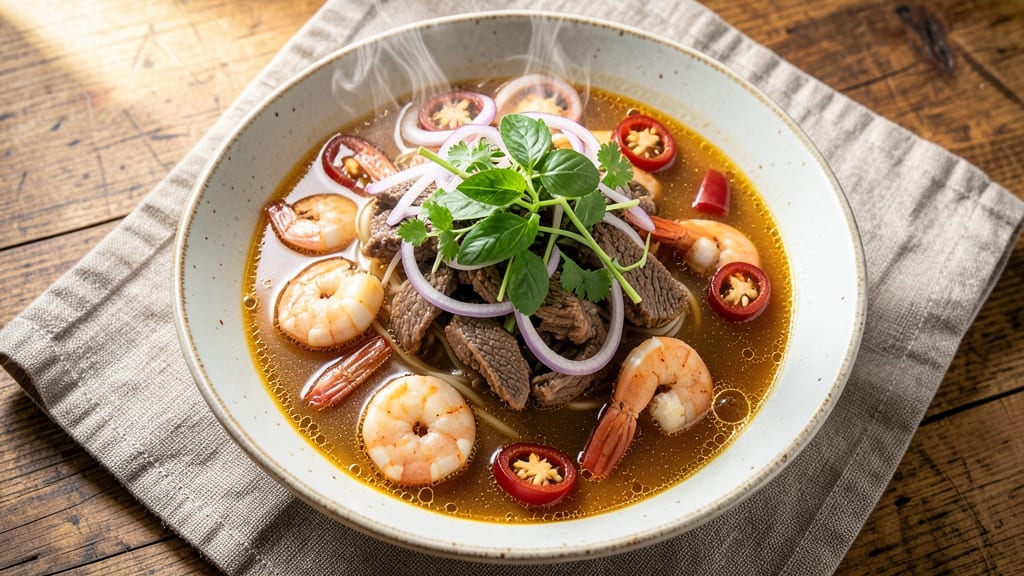
This beef and shrimp pho recipe delivers the aromatic, silky perfection of a Vietnamese street stall in your own kitchen. The secret lies in a slow-simmered broth infused with star anise, cinnamon, and ginger—complex flavors that build layer upon layer as they reduce.
I've perfected this version to balance authentic tradition with modern shortcuts, so you get restaurant-quality results without spending all day in the kitchen.
The foundation is a rich beef bone broth that carries deep umami notes, elevated by aromatic spices and fresh ginger.
While the broth simmers, you'll sear thinly sliced beef and shrimp to lock in their natural juices, then assemble everything with silky rice noodles and a vibrant array of fresh herbs and garnishes. This isn't just soup—it's a complete meal experience that warms both body and soul.
What makes this pho special is how each component comes together: the fragrant broth, the tender beef slices, the delicate shrimp, and the bright crunch of fresh herbs. The result is a bowl that's comforting yet vibrant, with every spoonful offering perfect balance between savory, spicy, and fresh.
The broth remains silky smooth even after reheating, making it ideal for meal prep.
Whether you're serving a family dinner or hosting friends, this pho recipe delivers the essence of Vietnamese comfort food. The key is patience—letting the broth develop its depth while keeping the proteins perfectly tender.
Once you taste the first bowl, you'll understand why pho has become a global favorite. Let's get started on creating this aromatic masterpiece.
Ingredients for beef and shrimp pho
Six aromatic spices plus fresh ginger kickstart this restaurant-worthy pho broth.
| Ingredient | Amount | Notes |
|---|---|---|
| Beef Bone Broth 🥘 | 8 cups | Homemade or high-quality store-bought |
| Star Anise Pods 🌿 | 2 whole | Whole pods for easy removal |
| Cinnamon Sticks 🌿 | 2 whole | 1-inch pieces for infusion |
| Fresh Ginger 🧄 | ½ cup | Thinly sliced, skin removed |
| Garlic Cloves 🧄 | 6 cloves | Smashed for deeper flavor |
| Thinly Sliced Beef 🥩 | 1 ½ lb | Chuck roast, sliced against grain |
| Large Shrimp 🦐 | 1 ½ lb | Peeled, deveined, tails on |
| Rice Noodles 🍜 | 12 oz | Flat or round, pho noodles preferred |
| Fish Sauce 🍶 | 2 tbsp | Red Boat preferred |
| Lime Wedges 🍋 | 4 whole | For serving |
| Fresh Thai Basil 🌿 | ½ cup | Chopped, for garnish |
| Bean Sprouts 🌱 | 1 cup | Fresh, for crunch |
| Jalapeño Slices 🌶️ | 2 whole | Thinly sliced, for heat |
| Sesame Oil 🫒 | 1 tbsp | For finishing |
| Salt 🧂 | 1 tsp | Kosher or sea salt |
The broth is everything—Red Boat fish sauce and star anise create that signature depth. For the beef, chuck roast gives the best texture when sliced thin against the grain. Shrimp should be large but not too big—16-20 count works perfectly. Fresh ginger is non-negotiable here; Asian markets often have the juiciest roots. If you can't find Thai basil, regular basil with a pinch of fish sauce gets close. The noodles? Pho noodles are ideal, but rice vermicelli in a pinch works too.
No star anise? Anise seeds at double the amount work in a pinch. Swapping beef for chicken? Use chicken thighs instead of chuck. Fish sauce substitute? Soy sauce plus a splash of coconut aminos (about 1 tbsp each). The jalapeños can be omitted if you prefer mild pho—just add more basil for brightness. For extra richness, add 1 tbsp of coconut milk at the end. And if your ginger is old or fibrous, microwave it for 30 seconds first to soften it up.
Broth keeps for 5 days in the fridge—taste even better after a day or two. Reheat gently on low heat to preserve that silky texture. The noodles? Soak them for 5 minutes before adding to hot broth. For meal prep, store components separately: broth, proteins, noodles, and garnishes. Assemble bowls fresh to keep everything vibrant. The shrimp and beef can be pre-cooked and stored separately for 3 days—just reheat gently before serving.
Why You'll Love This Recipe
- One-Pot Magic: I swear by this—just toss the broth, spices, and protein into one pot. No chopping mountains of herbs or juggling multiple pans. The star anise and cinnamon sticks infuse the broth while you prep the rest, so you’re basically hands-off after that.
- Deep Umami Bomb: That beef bone broth? It’s the star here. Rich, savory, and packed with natural collagen—no bouillon cubes needed. The ginger and garlic hit just right, balancing the warmth of the spices without overpowering. Honestly, the first sip makes me close my eyes.
- Weeknight to Dinner Party: Same recipe, different vibes. Whip up a quick bowl for yourself on a Tuesday, or double it for guests with fresh herbs and lime. The shrimp adds a touch of elegance, but the beef keeps it hearty. I’ve served it both ways—no one ever guessed it was the same base.
- Leftovers That Don’t Suck: Pho actually improves the next day. The flavors meld even more, and the broth gets even deeper. Freeze extras in portions for sick days or lazy mornings—just reheat and add fresh herbs. Between us, I’ve lived on this for a week straight and never tired of it.
Step-by-step instructions for beef and shrimp pho
Let's build this aromatic bowl of comfort with layers of deep flavor and tender proteins.
Infuse the Broth with Spices and Aromatics
In a large pot, combine the 8 cups Beef Bone Broth, 2 whole Star Anise Pods, 2 whole Cinnamon Sticks, 0.5 cup Fresh Ginger (thinly sliced), and 6 cloves Garlic Cloves (smashed). Bring to a gentle boil over medium-high heat until you see bubbles forming at the edges. Here's the thing—this is where the magic happens. The star anise and cinnamon will release their warm, earthy notes into the broth, while the ginger and garlic add bright, fresh complexity.
Once boiling, immediately reduce heat to low and let it simmer uncovered for 20 minutes. You'll notice the aroma intensify—this is your cue that the spices are working their magic. After simmering, carefully remove and discard the star anise pods and cinnamon sticks using a slotted spoon. The broth should now smell rich and inviting, with a subtle sweetness from the ginger and a hint of garlic's sharpness.
Cook the Beef Until Fork-Tender
Add the 1.5 lb Thinly Sliced Beef to the simmering broth. The key here is patience—this step requires time to transform tough beef into silky, melt-in-your-mouth slices. Let it cook uncovered on low heat for 45 minutes, stirring occasionally to prevent sticking. You'll know it's ready when the beef easily pulls apart with chopsticks or a fork and has absorbed the deep, savory flavors of the broth.
After removing the beef, strain the broth through a fine-mesh sieve into a clean pot, pressing gently on the solids to extract all the flavor. Discard the solids. This step ensures your pho broth is crystal clear, allowing the vibrant colors of your toppings to shine while maintaining maximum flavor. Keep the broth warm over low heat—you don't want it to boil again, as that can make it cloudy.
Prepare the Noodles and Protein
While the broth simmers, prepare the 12 oz Rice Noodles by soaking them in warm water for 10-15 minutes until pliable but still slightly firm to the bite. Drain and rinse briefly under cold water to stop the cooking process. The noodles should be tender but not mushy—pho noodles should have a satisfying chew.
In a separate skillet, heat 1 tablespoon Sesame Oil over medium-high heat. Add the 1.5 lb Large Shrimp and cook for 1-2 minutes per side until they turn opaque and curl slightly. Season immediately with 1 tsp Salt and 2 tbsp Fish Sauce, tossing to coat. The shrimp should be just cooked through—overcooking will make them rubbery. Remove from heat and set aside.
Assemble the Pho Bowls
Divide the prepared noodles among 6 bowls, spreading them evenly across the bottom. Ladle the warm broth over the noodles until each bowl is about ¾ full. Here's where it gets fun—let everyone customize their bowl. Add the cooked beef slices, shrimp, 1 cup Bean Sprouts, 2 whole Jalapeño Slices, and a generous handful of 0.5 cup Fresh Thai Basil to each bowl.
Drizzle with a little more broth if needed, then finish with sesame oil and a squeeze of lime wedges. The contrast of the bright lime with the rich, savory broth is what makes pho truly special. Serve immediately while everything is steaming hot—this is a dish meant to be enjoyed right away, with each component at its peak texture and temperature.
Pro Tips For Making Beef And Shrimp Pho
- TOAST YOUR SPICES FIRST: Star anise and cinnamon sticks don’t need to be whole—lightly toast them in a dry pan for 30 seconds until fragrant. This deepens their flavor without burning, and I learned this the hard way after my first batch tasted flat. Skip this, and your broth will still work, but it’ll lack that warm, aromatic punch.
- BLANCH SHRIMP STRATEGICALLY: Shock your shrimp in boiling water for exactly 10 seconds, then plunge into ice water. This keeps them tender and bright—overcook them, and they’ll turn rubbery before they even hit the broth. I used to add them straight to the simmering pho, and they’d always end up dry.
- SIMMER GINGER LOW AND SLOW: Add sliced ginger to the broth early and keep it at a gentle simmer (just bubbles breaking the surface). High heat extracts bitterness; low heat lets the natural sweetness shine. I was skeptical until I tried it—now I won’t make pho any other way.
- STRAIN BROTH THOROUGHLY: Use a fine-mesh sieve or cheesecloth to remove every last bit of debris—even tiny bits of cinnamon or star anise can make the broth cloudy. I used to rush this, and my pho always looked murky. Take the extra 30 seconds, and your broth will look restaurant-worthy.
Make-ahead tips for this dish
Broth Prep Ahead
Make the aromatic broth 2 days in advance for maximum depth of flavor. Store it in an airtight container in the refrigerator—this gives the spices and ginger time to meld beautifully.
The longer it sits, the richer it becomes. Just reheat gently on low heat before using, and strain again if you notice any cloudiness from cooling. 🌿
Protein Prep Timeline
Cook the beef 1 day ahead and store it in the broth (covered) in the fridge. The beef will absorb even more flavor overnight and stay tender. For the shrimp, cook them fresh before serving—1-2 minutes per side is all they need to stay juicy.
If prepping ahead, store the cooked shrimp separately in an airtight container with a splash of broth to keep them moist. 🦐
Noodle Storage Hack
Soak the rice noodles up to 3 days ahead in their packaging (with water) in the fridge. Drain and rinse just before assembling bowls to prevent them from becoming mushy. I like to store them in a resealable plastic bag with a damp paper towel to keep them pliable.
When ready to serve, just reheat in a bowl of warm broth for 2-3 minutes before plating. 🍜
Garnish Organization
Prep all garnishes—bean sprouts, Thai basil, jalapeños, and lime wedges—1 day ahead and store them in separate airtight containers in the fridge. This keeps everything fresh and ready to assemble bowls quickly.
Keep the sesame oil in a small jar at room temperature for easy access. The key is to keep the herbs and sprouts dry to maintain their crispness. ✨
Freezer-Friendly Broth
For long-term storage, freeze the broth in 1-cup portions in silicone ice cube trays. Once frozen, transfer cubes to a freezer bag with labels for easy identification. Thaw overnight in the fridge before reheating.
The texture remains silky when reheated properly—just warm on low heat and stir occasionally. This is perfect for busy weeknights when you want restaurant-quality pho in minutes. ❄️
Reheating Leftovers
Reheat leftovers by placing them in a pot with ½ cup fresh broth and warming on low heat for 5-7 minutes. Avoid microwaving—it can make the noodles rubbery. If the broth seems too strong after reheating, add a splash of water to balance the flavors.
Store leftovers in an airtight container for up to 3 days in the fridge. The beef and shrimp can be reheated separately if needed. 🔥
Nutrition facts
Frequently asked questions
Can I substitute chicken for the beef in this beef and shrimp pho?
Yes, but choose chicken thighs instead of breast for better texture. Use the same cooking method—simmer them in the broth for 30-40 minutes until fork-tender. Chicken absorbs flavors differently than beef, so you may want to add an extra ½ teaspoon of fish sauce to compensate for the milder taste.
How do I keep my pho noodles from getting mushy?
Rinse the cooked noodles briefly under cold water to stop the cooking process immediately. Store them in an airtight container with a damp paper towel (not wet) in the fridge for up to 3 days. When ready to serve, reheat them in warm broth for just 2-3 minutes—never microwave directly.
What's the best way to make this pho vegetarian?
Replace the beef with mushrooms (shiitake or oyster) and use vegetable broth instead of beef broth. Add 1 tablespoon of soy sauce and ½ teaspoon of sugar to mimic the umami depth. For protein, use extra shrimp or tofu (pressed and pan-fried). The star anise and cinnamon will still create that signature aromatic base!
Can I make the broth in an Instant Pot?
Combine all broth ingredients in the Instant Pot and cook on high pressure for 25 minutes. After releasing pressure, strain and simmer uncovered for 10 minutes to develop the flavors. The pressure cooker speeds up the process while still delivering that deep, complex taste. Just be sure to remove the star anise and cinnamon sticks before serving.
Why does my pho broth look cloudy after reheating?
Cloudiness usually means the broth boiled too vigorously or cooled too quickly. To fix it, strain the broth again through a cheesecloth-lined sieve and reheat gently on low heat. For prevention, always keep the broth at a simmer (not a rolling boil) and let it cool gradually. A splash of cold water before reheating can also help clarify it.