
Soups & Stews
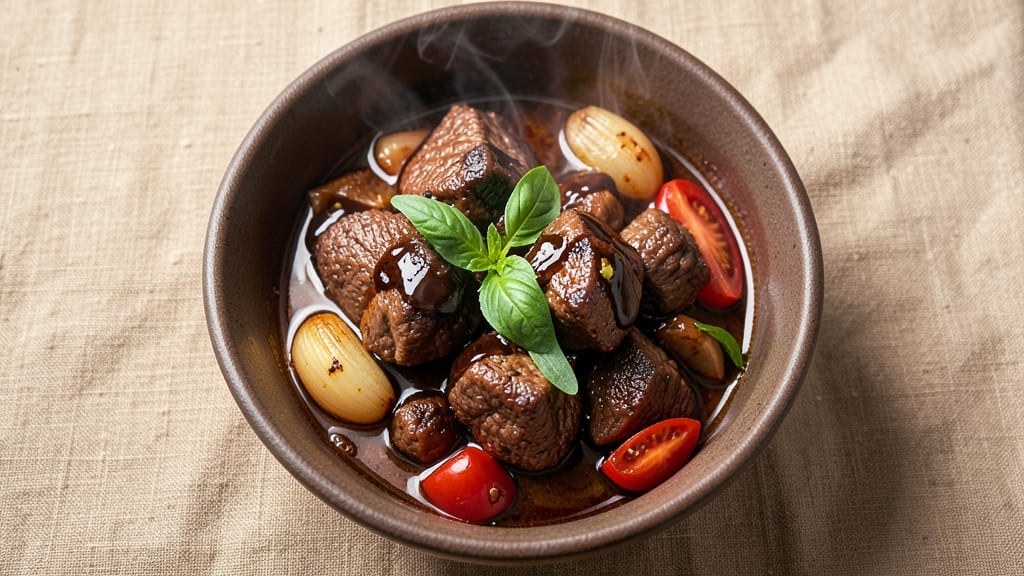
This balsamic beef stew slow cooker recipe transforms tough beef into melt-in-your-mouth tenderness with a rich, caramelized balsamic depth that elevates every bite. The secret lies in searing the beef first—creating a flavorful crust that dissolves into the slow-cooked broth, while the balsamic vinegar reduces into a glossy, tangy-sweet glaze.
What starts as simple ingredients becomes a hearty, restaurant-worthy stew with minimal effort.
The beauty of this method is its hands-off approach: you brown the beef, dump everything into the slow cooker, and let it work its magic for 6-8 hours on low.
The balsamic vinegar doesn’t just add acidity—it caramelizes into a velvety sauce that coats every piece of beef, balancing the richness with bright, complex notes. This is the kind of stew that tastes even better the next day, making it perfect for meal prep or feeding a crowd.
By the time it’s done, you’ll have fork-tender beef swimming in a sauce that’s equal parts savory, sweet, and tangy—thanks to the balsamic’s transformation. The aromas alone will have everyone gathering around the table, and the texture?
Perfectly tender beef with just enough bite. Serve it with crusty bread to soak up every last drop of that glorious sauce.
This recipe isn’t just about convenience—it’s about depth. The slow cooker allows the flavors to meld and intensify, turning a simple beef stew into something extraordinary. Whether you’re prepping for the week or hosting dinner guests, this balsamic beef stew slow cooker recipe delivers on flavor without the fuss.
Ingredients for balsamic beef stew slow cooker
Sixteen ingredients transform into a rich, caramelized balsamic beef masterpiece in your slow cooker.
| Ingredient | Amount | Notes |
|---|---|---|
| Chuck Roast 🥩 | 3 lb | Pre-cut into 1.5-inch cubes |
| Balsamic Vinegar 🍷 | ½ cup | High-quality aged balsamic |
| Beef Broth 💧 | 2 cups | Low-sodium preferred |
| Red Wine 🍷 | 1 cup | Bold dry red like Cabernet |
| Tomato Paste 🍅 | 2 tbsp | Smooth, not chunky |
| Yellow Onion 🧅 | 1 whole | Medium size, diced |
| Garlic Cloves 🧄 | 4 cloves | Fresh, minced |
| Carrots 🥕 | 4 whole | Medium, peeled, chopped |
| Celery Stalks 🥬 | 3 whole | Fresh, chopped |
| Fresh Thyme 🌿 | ½ oz | Or 1 tbsp dried |
| Olive Oil 🫒 | 2 tbsp | Extra-virgin preferred |
| Salt 🧂 | 1 ½ tsp | Kosher or sea salt |
| Black Pepper 🌶️ | 1 tsp | Freshly ground |
| All-Purpose Flour 🌾 | 2 tbsp | For browning beef |
The chuck roast is the backbone of this stew—its marbled fat renders into the sauce, creating depth. Look for well-marbled cuts at Whole Foods or your local butcher shop, where they can cut it precisely for you. If you're buying a whole roast, ask for it to be cubed into 1.5-inch pieces; this ensures even cooking. The balsamic vinegar should be aged (look for 'aceto balsamico di Modena' on the label)—it's sweeter and more complex than regular balsamic. For the red wine, any bold dry variety works—Cabernet Sauvignon or Merlot are foolproof choices. If you prefer to skip alcohol entirely, beef broth with a splash of balsamic vinegar works just as well.
No fresh thyme? Dried thyme at one-third the amount will do, though fresh adds an aromatic punch. The tomato paste can be substituted with 1 cup of crushed tomatoes if you prefer a chunkier texture, but the paste helps thicken the sauce beautifully. For the vegetables, don't stress over exact measurements—eyeball the carrots and celery based on what looks fresh in your fridge. If you're prepping ahead, you can chop all the vegetables the night before and store them in an airtight container. The flour is only needed if you're browning the beef on the stovetop before slow cooking—skip it if you're using the slow cooker's brown function.
This stew tastes even better the next day as flavors meld, so make a double batch if you're feeding a crowd. Store leftovers in an airtight container in the fridge for up to 5 days, or freeze portions for 3 months. To reheat, add a splash of water or broth and warm on low heat. The sauce thickens as it cools, so a little extra liquid helps restore its velvety texture. For meal prep, portion into individual containers—each serving comes with tender beef and rich sauce, perfect for lunches or dinner leftovers.
Why You'll Love This Recipe
- Dump-and-Go Magic: The chuck roast goes in raw—no pre-cooking, no fuss—while the balsamic and red wine mellow into deep, tangy richness. Honestly, I’ve made this on days when I forgot to thaw meat and it still turned out tender enough to melt.
- Taste Like a Feast: That combo of balsamic and red wine? It’s like a fancy restaurant’s secret sauce, but in your slow cooker. The tomato paste gives it a glossy, slightly sweet edge that makes every bite feel special—no one guesses it’s this easy.
- Leftovers for Days: This stew actually improves overnight, so I make a double batch and freeze half. Reheat it for sandwiches, toss it with mashed potatoes, or just eat it straight from the pot—it’s my go-to for lazy mornings.
- Budget-Friendly Luxury: Chuck roast is cheap, but the wine and balsamic make it taste expensive. Between us, I’ve served this at potlucks and had people ask for the recipe—no one bats an eye at the price tag when it’s this good.
Step-by-step instructions for balsamic beef stew
Transform simple ingredients into a rich, caramelized masterpiece with this foolproof slow cooker method.
Sear the Chuck Roast for Deep Flavor
Heat a large skillet over medium-high heat and add the 2 tablespoons olive oil. Once shimmering, add the 3 lb chuck roast in a single layer, working in batches if needed. Sear for 4-5 minutes per side until deeply browned—this creates the Maillard reaction that builds rich, complex flavors. Don't rush this step; you want a dark, crusty exterior on each piece.
Transfer the seared beef to the slow cooker and set aside. The browning might seem excessive, but it's what transforms ordinary beef into extraordinary stew. The caramelized bits will dissolve into the sauce later, creating depth of flavor you can't achieve otherwise.
Build the Aromatic Base
In the same skillet (no need to clean it), add the 1 whole yellow onion, 4 whole carrots, and 3 whole celery stalks chopped into even pieces. Cook for 5-6 minutes until softened and slightly caramelized—this sweetens the vegetables and enhances their flavor. Stir occasionally to prevent burning.
Add the 4 cloves garlic and cook for 30 seconds until fragrant. Immediately add the 2 tablespoons tomato paste and stir for 1 minute to cook out the raw taste. Pour in the 1 cup red wine and scrape up any browned bits from the bottom of the pan—they're packed with flavor. Transfer this mixture to the slow cooker with the beef.
Create the Balsamic Foundation
In a small bowl, whisk together the 0.5 cup balsamic vinegar, 2 cups beef broth, 1.5 teaspoons salt, and 1 teaspoon black pepper. Pour this liquid mixture into the slow cooker, stirring gently to combine. The acidity of the balsamic will begin breaking down the beef's connective tissue right away, creating that signature tender texture.
Sprinkle the 0.5 oz fresh thyme over the top. For best results, I use fresh thyme here—it adds a bright, herbal note that dried thyme can't match. The thyme will infuse its aroma throughout the stew as it cooks.
Slow Cook to Tender Perfection
Cover the slow cooker and cook on low heat for 8 hours or on high heat for 5-6 hours. This long, gentle cooking time is crucial—it allows the beef to become fork-tender while developing deep, complex flavors. The balsamic vinegar will slowly caramelize, creating that glossy, rich sauce that makes this stew special.
About 1 hour before serving, sprinkle the 2 tablespoons all-purpose flour over the top and stir gently. This creates a natural thickening that helps the sauce cling to the beef and vegetables. The flour should dissolve completely during the final hour of cooking.
Finish with Caramelized Balsamic Magic
Remove the lid and increase the heat to high for the final 15-20 minutes. This step is where the true magic happens—the balsamic vinegar will reduce and caramelize, creating a glossy, thick sauce that coats everything beautifully. You'll notice the stew darkening and developing a rich aroma.
Taste and adjust seasoning if needed. The stew should be rich, slightly tangy from the balsamic, and perfectly balanced. Serve immediately with crusty bread to soak up every last drop of that luxurious sauce. The beef should be fork-tender, falling apart easily, while the vegetables remain tender-crisp.
Pro Tips For Making Balsamic Beef Stew Slow Cooker
- SEAR THE ROAST FIRST: Chuck roast won’t brown much in the slow cooker, so hit it with a hot pan—no oil needed. Two minutes per side with a cast-iron skillet gives you depth of flavor the liquid alone can’t match. (Yes, even if you’re impatient like me.)
- USE RED WINE REDUCTION: Skip the plain red wine—simmer 1 cup down to ¼ cup first to concentrate the flavor. The slow cooker will dilute everything, so this step guarantees the wine’s richness doesn’t get lost. (I learned this the hard way when my stew tasted like watered-down merlot.)
- DON’T OVERLOAD THE BROTH: Start with 2 cups beef broth, not 4. The stew will reduce naturally, and adding more later if needed keeps the sauce from turning into soup. Trust me, you’ll regret the extra liquid by the end.
- ADD TOMATO PASTE LAST: Stir in the tomato paste during the final 30 minutes of cooking. This prevents it from turning into a gloopy mess and ensures it blends smoothly instead of clumping. (Sounds weird, but it works—your future self will notice.)
Wine and beer pairings for this recipe
Red Wine Elevation
The bold, dry red wine in this stew isn't just a liquid—it's the flavor bridge between the beef and balsamic. I always reach for a Cabernet Sauvignon or Chianti because their tannins complement the balsamic's acidity while adding depth.
Pour it in during the aromatic base step to deglaze the pan—those browned bits packed with flavor dissolve right into the wine. For a non-alcoholic version, use an extra ½ cup beef broth with 1 tbsp balsamic vinegar added. 🍷
Italian Chianti Harmony
An Italian Chianti pairs beautifully with this stew, mirroring the balsamic's Mediterranean roots. Its bright acidity and cherry notes cut through the richness, while earthy undertones enhance the thyme and beef.
Serve slightly chilled—around 55°F—to let its flavors shine without overwhelming the dish. If you prefer a lighter option, a Sangiovese offers similar complexity with slightly less tannin. 💛
Malbec Boldness
For those who love their wine with body, a Malbec delivers rich, dark fruit flavors that stand up to the stew's intensity. The wine's smoky notes complement the caramelized balsamic beautifully, creating a luxurious pairing.
Opt for an Argentine Malbec—its velvety texture and blackberry undertones elevate every spoonful. Decant for 30 minutes before serving to soften its tannins. 🍇
Beer Pairings
If wine isn't your thing, a dark amber ale or porter works surprisingly well. The malt sweetness balances the balsamic's tang, while the roasted notes in porters mirror the stew's depth.
Try a Guinness or Samuel Adams Black Lager—both add a creamy texture that contrasts nicely with the stew's heartiness. For a lighter option, a Belgian Dubbel brings fruity complexity. 🍺
Coffee After Dinner
Finish the meal with a bold Italian espresso or French press coffee to cleanse your palate. The bitterness cuts through the stew's richness, while the warmth enhances the balsamic's caramelized notes. For dessert lovers, a demi-tasse with a splash of balsamic-infused simple syrup ties the meal together beautifully. ☕
Nutrition facts
Frequently asked questions
Can I use a different cut of beef instead of chuck roast?
Yes, but chuck roast is ideal for its marbled fat and connective tissue. For a leaner option, try stew beef or chuck shoulder. Avoid tender cuts like sirloin—they'll turn mushy instead of tender. If using a leaner cut, increase cooking time by 1-2 hours on low.
What if I don't have red wine? Can I substitute it?
Use 2 cups beef broth plus 1 tbsp balsamic vinegar for the same depth of flavor. For extra richness, add 1 tbsp soy sauce or 1 tsp Worcestershire sauce. The key is maintaining the liquid balance—don't reduce the total volume below 3 cups.
How do I know when the beef is tender enough?
Test with a fork after 6 hours on low. The beef should pierce easily with minimal resistance. If it's still tough, cook 1-2 more hours. Overcooking won't happen in a slow cooker—it just gets more flavorful! For extra insurance, use a meat thermometer (195°F internal temp).
Can I make this stew without flour for thickening?
Yes! Skip the flour and let the balsamic reduce naturally for 30-45 minutes uncovered on high heat at the end. The sauce will thicken as it cools. Alternatively, stir in 1 tbsp cornstarch mixed with 2 tbsp water during the final 15 minutes of cooking for instant thickening.
What's the best way to reheat leftovers?
Add 2-3 tbsp water or broth to each portion and warm on low heat until steaming. Never microwave directly—it makes the sauce watery. For best texture, reheat in a pot for 5-10 minutes until piping hot. The sauce will thicken again as it cools.