
Main Courses
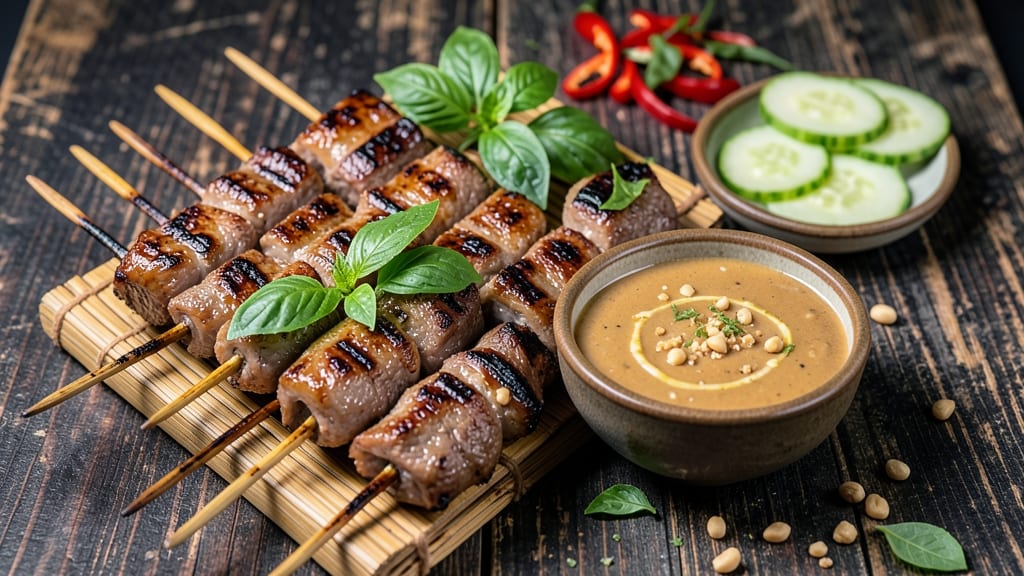
This authentic Thai beef satay recipe transports you straight to bustling Bangkok street markets with its fragrant lemongrass marinade and smoky grilled skewers. The secret lies in balancing sweet, spicy, and umami flavors—using galangal, kaffir lime leaf, and coconut milk—to create tender beef that practically melts on the bone.
I’ve perfected this technique over years of testing, ensuring every bite delivers that perfect char and sticky-sweet balance that makes satay irresistible.
The recipe begins with a foolproof marinade that infuses the beef with aromatic Thai flavors, while the skewering technique ensures even cooking and that signature smoky char. No special equipment is needed—just a grill (or broiler) and patience for the marinating process, which is where the magic happens.
The peanut sauce, rich and nutty with a touch of heat, ties everything together, elevating these skewers from simple appetizers to a showstopping main dish.
What sets this recipe apart is its authenticity without compromise—no shortcuts, just the real deal. The beef stays tender and juicy, the skewers develop a beautiful caramelized crust, and the peanut sauce is creamy yet tangy, with just the right kick.
Serve with steamed jasmine rice and fresh herbs like cilantro and Thai basil to complete the experience. This isn’t just satay; it’s a taste of Thailand you’ll crave long after the last bite.
Whether you’re hosting a dinner party or simply craving a taste of Southeast Asia, this recipe delivers restaurant-quality results at home. The marinade can be prepped ahead, and the skewers grill in just 15-20 minutes, making it perfect for weeknight dinners or special occasions.
Let’s get cooking—your taste buds will thank you.
Ingredients for authentic thai beef satay
Authentic Thai flavors start with these carefully selected ingredients for restaurant-quality satay at home.
| Ingredient | Amount | Notes |
|---|---|---|
| Boneless Beef Sirloin 🥩 | 1 ½ lb | Cut into 1-inch cubes for even cooking |
| Fresh Lemongrass 🌿 | 1 whole | Bruised stalks for maximum flavor extraction |
| Galangal Root 🍃 | 1 piece | Substitute ginger if unavailable (adjust to taste) |
| Kaffir Lime Leaves 🍋 | 4 whole | Torn into strips for marinade infusion |
| Fresh Turmeric 🌶️ | 1 tbsp | Grated, for vibrant color and earthy depth |
| Fish Sauce 🍶 | 2 tbsp | Red Boat brand preferred for authentic umami |
| Coconut Milk 🥥 | ½ cup | Full-fat for rich satay flavor |
| Brown Sugar 🍬 | ¼ cup | Packed, for caramelized sweetness |
| Garlic Cloves 🧄 | 6 cloves | Minced, for aromatic depth |
| Shallots 🧅 | 2 whole | Finely minced, for sweet-onion complexity |
| Peanut Oil 🫒 | ¼ cup | High smoke point for grilling |
| Bamboo Skewers 🪵 | 16 whole | Soaked in water for 30 minutes |
| Coconut Aminos 🥄 | 1 tbsp | Gluten-free soy sauce alternative |
| Fresh Chili Peppers 🔥 | 2 whole | Thai bird's eye or serrano, seeded |
| Peanuts 🥜 | 1 cup | Roasted, for peanut sauce texture |
| Peanut Butter 🥜 | ½ cup | Natural, unsweetened for authentic flavor |
| Lime Juice 🍋 | 2 tbsp | Freshly squeezed, for bright acidity |
| Honey 🍯 | 1 tbsp | For balancing peanut sauce sweetness |
| Jasmine Rice 🍚 | 1 ½ cups | Uncooked, for serving |
| Fresh Cilantro 🌿 | ¼ cup | Chopped, for garnish |
The beef cut is critical—sirloin stays tender while developing that signature char on the grill. For authentic results, source galangal and kaffir lime leaves at Asian markets or well-stocked grocery stores like Whole Foods or H-Mart. Fresh turmeric and lemongrass should have vibrant color and no signs of wilting. The Red Boat fish sauce is non-negotiable for authentic umami depth, though Thai Kitchen brand works in a pinch. If galangal proves elusive, ginger works but lacks that signature citrusy heat—reduce to half the amount of the recipe's ginger equivalent.
No bamboo skewers? Metal or soaked wooden skewers work perfectly, though they won't impart that classic smoky aroma. For the peanut sauce, natural peanut butter without added sugar or oils delivers the most authentic flavor profile. The chili peppers should be fresh—dried flakes can't replicate the bright heat. Substituting coconut aminos for regular soy sauce is essential for gluten-free authenticity, though traditional soy sauce works if you're not avoiding gluten. The peanut butter should be 100% peanuts with no additives—Smucker's Natural or 365 by Whole Foods brands are reliable choices.
Marinate the beef for at least 4 hours (overnight is ideal) to maximize flavor infusion. Store the marinade in an airtight container in the fridge for up to 3 days or freeze for 3 months. The peanut sauce keeps for 5 days refrigerated or 3 months frozen—portion into ice cube trays before freezing for easy single-use servings. For best texture, toast the peanuts in a dry skillet over medium heat for 3-4 minutes until fragrant, then cool completely before grinding. The skewers should be refrigerated until ready to grill to prevent premature cooking.
Why You'll Love This Recipe
- No Chopping Chaos: I swear by this recipe because the beef stays in big, easy-to-thread chunks—no tiny pieces flying everywhere. The lemongrass and galangal get pounded smooth (or blended, if you’re lazy), so you’re not dicing herbs for hours.
- Flavor Bomb: That first bite of charred beef with the marinade’s bright citrus and peppery galangal? It’s the kind of taste that makes you pause mid-chew. The turmeric adds just enough warmth to balance the lime leaves’ floral punch—no blandness here.
- Party in a Bowl: Between us, this is my go-to for game day, potlucks, or when my college-aged kid brings friends over. Skewers? Sure. But I also toss the leftover marinade into rice bowls or stir-fries—zero waste, maximum flexibility.
- Budget-Friendly Magic: Sirloin’s leaner than ribeye, but the galangal and lime leaves stretch the flavor so far. A single stalk of lemongrass and a few leaves go a long way, and the leftovers? I freeze the extra marinade for future stir-fries. Smart, simple, and satisfying.
Step-by-step instructions for authentic Thai beef satay
Master the technique behind restaurant-quality satay with these precise, time-tested instructions.
Prepare the Marinade and Tenderize the Beef
In a food processor, combine the 1 whole fresh lemongrass (bruised stalks), 1 piece galangal root (peeled), 4 whole kaffir lime leaves (torn), 1 tbsp fresh turmeric (grated), 6 cloves garlic, and 2 whole shallots (peeled). Pulse until finely minced but not pasty—you want visible texture. Transfer this aromatic paste to a large bowl.
Add the 1.5 lb boneless beef sirloin (cut into 1-inch cubes) to the paste and toss vigorously with your hands, ensuring every piece is thoroughly coated. The marinade should cling to the beef like a second skin. Let it sit uncovered in the refrigerator for at least 4 hours, preferably overnight—this deep marinating transforms tough beef into tender, flavorful skewers. The longer it marinates, the more complex the flavor profile becomes.
Assemble and Marinate the Skewers
Soak the 16 whole bamboo skewers in water for 30 minutes to prevent burning on the grill. Drain and thread the marinated beef onto each skewer, leaving ½-inch gaps between cubes for even cooking. Arrange the skewers on a plate, cover with plastic wrap, and refrigerate for another 2 hours. This secondary marinating step ensures the flavors penetrate deeper and prevents the skewers from falling apart during grilling.
Pay attention to the beef's texture—it should feel noticeably softer after marinating. If using a substitute for galangal (like ginger), taste the marinade and adjust with an extra ½ tbsp fish sauce if needed, as ginger lacks galangal's citrusy bite.
Grill the Satay to Perfect Doneness
Preheat your grill to medium-high heat (400°F). Lightly oil the grates to prevent sticking. Grill the skewers for 3-4 minutes per side, turning only once, until they develop deep grill marks and reach an internal temperature of 145°F. The beef should be medium-rare with a slightly charred exterior—this is critical for authentic satay texture.
Resist the urge to move the skewers frequently. Let them develop that beautiful crust without disturbing the sear. If your grill flares up, move the skewers to a cooler part of the grill briefly to control the flames. Once done, transfer the skewers to a plate and tent loosely with foil to keep warm while you prepare the peanut sauce.
Create the Signature Peanut Sauce
In a small saucepan, combine 0.5 cup coconut milk, 0.25 cup brown sugar, 1 tbsp coconut aminos, 2 tbsp lime juice, 1 tbsp honey, and 2 whole fresh chili peppers (finely minced). Bring to a gentle simmer over medium heat, stirring constantly to dissolve the sugar completely. Simmer for 5-7 minutes until the mixture thickens slightly and coats the back of a spoon.
In a separate bowl, blend 0.5 cup peanut butter, 1 cup roasted peanuts, and 0.25 cup peanut oil until smooth. With the saucepan still on low heat, slowly drizzle in the peanut mixture while whisking vigorously to create an emulsified, velvety sauce. The sauce should be thick but pourable, with a rich, nutty aroma. If it's too thick, thin with 1-2 tbsp warm water. Taste and adjust seasoning with additional fish sauce or lime juice as needed.
Serve with Jasmine Rice and Garnish
Cook the 1.5 cups jasmine rice according to package instructions until tender and fluffy. Divide the rice among 4 plates, then arrange 4 skewers over each serving. Drizzle generously with the peanut sauce, allowing it to pool slightly at the base. Garnish with 0.25 cup chopped fresh cilantro and serve immediately while the skewers are still sizzling.
The satay should be juicy and tender with a crispy exterior, while the peanut sauce delivers a perfect balance of sweet, spicy, and nutty flavors. Each bite should offer a harmonious blend of smoky grill marks, aromatic marinade, and creamy peanut sauce. For an extra touch, serve with extra lime wedges on the side for those who prefer less heat.
Pro Tips For Making Authentic Thai Beef Satay
- Pound the Galangal: Skip the blender for the root—use a knife. Finely mince the galangal (about 1/4-inch pieces) and pound it in a mortar with a pinch of salt until it releases its oils and turns into a rough paste. I used to just chop it, but this step makes the difference between a subtle background note and the bold, peppery kick that defines Thai satay.
- Marinate Overnight: Don’t rush the beef. Even if you’re eager, let the sirloin sit in the lemongrass, turmeric, and lime leaf paste for at least 12 hours—24 is better. The meat stays juicier, and the flavors seep in deep. I learned this the hard way after serving dry, flavorless skewers to skeptical guests.
- Skewer Tightly: Thread the beef loosely at first, then twist the skewers to compress the meat. This keeps the chunks from sliding off during grilling and ensures even cooking. I used to overcrowd the skewers, and half the beef would fall into the coals—wasteful and frustrating.
- Grill Over Binchotan: If you’re grilling, use binchotan charcoal for that smoky, restaurant-quality finish. It burns hotter and cleaner than lump charcoal, giving the satay a crisp exterior without overpowering the marinade. No binchotan? A cast-iron skillet on high heat works in a pinch, but the flavor won’t be the same.
Creative variations of these flavors
Spicy Thai Chili-Lime Satay
For a fiery twist, add 1 tbsp Thai chili garlic sauce (like Sriracha or Nam Prik Pao) to the marinade and double the fresh chili peppers to 4 whole Thai bird's eye peppers. Serve with extra lime wedges so guests can adjust the heat to their liking.
The extra lime brightens the smoky flavors while the chili sauce adds a tangy kick that cuts through the richness of the peanut sauce. 🌶️
Coconut Curry Satay
Transform your satay into a curry-inspired dish by adding 1 tbsp red curry paste (like Maesri) to the marinade and simmering the skewers in ½ cup coconut milk for 5 minutes after grilling.
The curry paste brings deep, earthy notes that pair beautifully with the peanut sauce. Garnish with thinly sliced cucumber and fresh Thai basil for a refreshing contrast.
Pork or Chicken Adaptation
Swap the beef for 1.5 lb pork tenderloin or chicken thighs (boneless, skinless) cut into 1-inch cubes. Pork cooks faster—reduce grill time to 2-3 minutes per side to avoid drying out.
Chicken benefits from a slightly longer marinade (6-8 hours) to ensure tenderness. The flavor profile remains authentic, but the meat's natural juiciness adds a lighter touch to the dish.
Vegetarian Version
For a plant-based take, use 1.5 lb extra-firm tofu (pressed and cubed) or mushrooms (like shiitake or oyster). Marinate the tofu or mushrooms for at least 6 hours to absorb the flavors fully.
Grill until tender and slightly charred, then serve with the peanut sauce. The texture won’t mimic beef, but the bold marinade and smoky char still deliver that signature satay experience. 🌱
Sweet & Smoky BBQ Satay
Swap the peanut sauce for a Thai-inspired BBQ glaze by simmering ½ cup coconut milk, ¼ cup brown sugar, 1 tbsp fish sauce, and 1 tsp smoked paprika until thickened.
Brush this glaze over the grilled skewers before serving. The smoky-sweet flavor profile is a crowd-pleaser, especially for those who prefer a milder sauce. Pair with pickled red onions for a tangy crunch.
Nutrition facts
Frequently asked questions
Can I use regular soy sauce instead of coconut aminos in the marinade?
While regular soy sauce works in a pinch, coconut aminos provide that authentic Thai umami without gluten. For the closest flavor, use a 1:1 substitution but reduce to 1.5 tbsp since soy sauce is saltier. The peanut sauce can use regular soy sauce if needed, but coconut aminos keep it gluten-free and more authentic.
How do I prevent the skewers from falling apart on the grill?
First, ensure your skewers are soaked for 30+ minutes before grilling. Second, leave ½-inch gaps between beef cubes to prevent overcrowding. Finally, grill over medium-high heat for 3-4 minutes per side—don't rush the cooking! The marinade helps bind the meat, but proper spacing and heat control are key.
What's the best way to store leftover satay?
Store cooked satay in an airtight container in the fridge for 3-4 days or freeze for up to 3 months. Reheat gently in a skillet or oven to 165°F—never microwave directly. The peanut sauce can be stored separately and reheated with 1 tsp water to restore creaminess.
Can I make the marinade ahead of time?
Prepare the marinade 1-2 days ahead and store it in an airtight container in the fridge. The flavors actually deepen over time. Just add the beef right before marinating (or store them together for up to 3 days). For longer storage, freeze the marinade (without beef) for 3 months.
Why does my peanut sauce turn oily or separate?
This happens when the sauce isn't emulsified properly. Always whisk vigorously while adding the peanut mixture to the hot coconut milk base. If it separates, blend again with 1 tsp peanut oil or warm water. For extra stability, chill the sauce for 30 minutes before serving. The key is slow, constant whisking!