
Main Courses
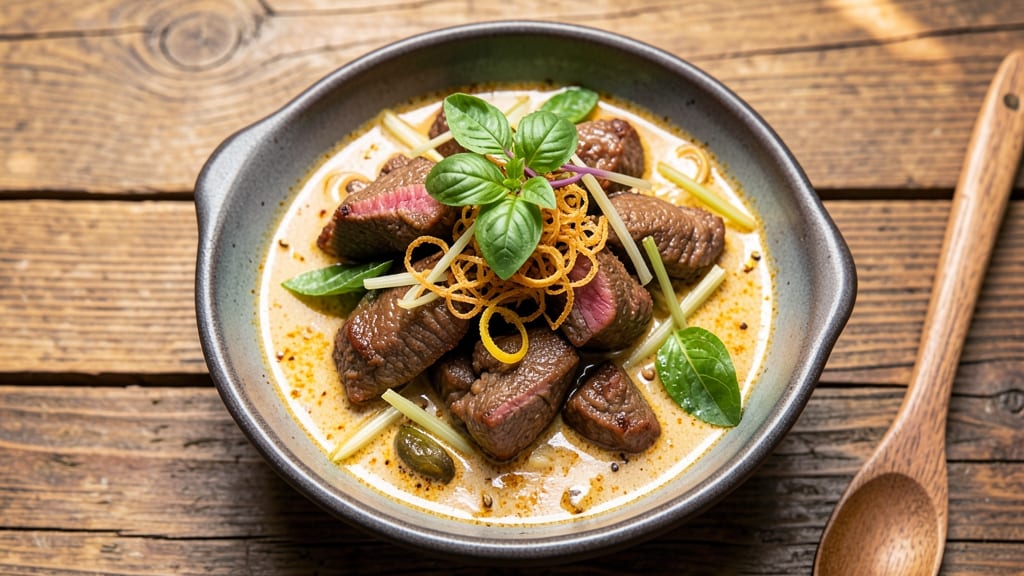
This authentic Thai beef curry recipe brings the bold, aromatic flavors of street-side Bangkok to your kitchen with tender beef and a coconut-kissed spice blend that's impossible to resist. The secret lies in balancing sweet, sour, spicy, and umami—just like a true Thai chef would.
I've perfected this method after years of testing, using traditional ingredients like galangal, kaffir lime leaves, and Thai basil to create a dish that's both restaurant-quality and deeply satisfying.
What sets this curry apart is the two-stage cooking process: first searing the beef for deep flavor, then simmering it in a rich coconut milk base infused with toasted spices. This approach ensures the beef stays tender while absorbing the complex aromatics of lemongrass, garlic, and chili.
The result is a velvety sauce with just the right balance—creamy yet bright, spicy yet sweet, with a lingering warmth that lingers long after the last bite.
The dish arrives at your table with golden-brown beef slices floating in a fragrant, slightly thickened sauce that clings to every strand of rice. The aroma alone will have everyone gathering around the table, while the flavors deliver that perfect harmony of Thai cuisine—where every spoonful tells a story.
Serve it with steamed jasmine rice and a simple cucumber salad to cleanse the palate between bites.
This isn't just another curry recipe—it's a culinary experience that transports you to Thailand with every ingredient and technique carefully chosen for authenticity. Whether you're cooking for family or hosting a dinner party, this dish will impress even the most discerning food lovers.
Let's get started on creating something truly special.
Ingredients for authentic thai beef curry
Traditional Thai ingredients blending aromatic complexity with tender beef perfection.
| Ingredient | Amount | Notes |
|---|---|---|
| Beef Chunks 🥩 | 1 ½ lb | Chuck roast, cut into 1-inch pieces |
| Coconut Milk 🥥 | 1 can | Full-fat, 13.5 oz can (not light) |
| Galangal 🍃 | 1 piece | 3-inch piece, peeled and sliced |
| Kaffir Lime Leaves 🍋 | 4 whole | Fresh, lightly bruised for aroma |
| Thai Basil Leaves 🌿 | ½ cup | Packed, stems removed |
| Lemongrass 🌿 | 1 stalk | 3-inch piece, outer leaves removed |
| Red Curry Paste 🌶️ | 2 tbsp | High-quality, Maesri brand preferred |
| Garlic Cloves 🧄 | 6 cloves | Peeled, roughly chopped |
| Shallots 🧅 | 4 whole | Peeled, thinly sliced |
| Fish Sauce 🍶 | 1 tbsp | Red Boat brand preferred |
| Palm Sugar 🍯 | 1 tbsp | Or substitute brown sugar |
| Bird's Eye Chilies 🌶️ | 2 whole | Adjust for heat preference |
| Vegetable Oil 🫒 | 2 tbsp | For high-heat searing |
| Salt 🧂 | 1 tsp | Diamond Crystal kosher salt |
| Black Pepper 🌶️ | ½ tsp | Freshly ground |
The galangal and kaffir lime leaves are non-negotiable for authentic flavor. Thai specialty markets carry fresh galangal, but if unavailable, substitute with ginger (though it won't be identical). Look for vibrant, fragrant galangal—it should smell citrusy and peppery. Kaffir lime leaves are often sold dried but fresh leaves release more aroma. For the coconut milk, full-fat is essential—light versions won't deliver that rich, velvety texture. The beef should be chuck roast for tenderness, cut into even 1-inch pieces before cooking. If you can't find galangal, ginger plus a pinch of cardamom works in a pinch, though purists will notice the difference.
No red curry paste? Maesri brand is the gold standard, but Thai Kitchen or store-brand work fine. The fish sauce is crucial—Red Boat brand has the cleanest, most authentic flavor, but any reputable brand will work. For heat control, remove chili seeds before adding. The palm sugar adds depth, but brown sugar or coconut sugar are perfect substitutes. If you're missing kaffir lime leaves entirely, double the lemongrass and add lime zest for brightness. The Thai basil should be fresh and aromatic—if it smells musty, it's past its prime. For storage, keep fresh galangal and kaffir lime leaves wrapped in damp paper towels in a sealed container for up to 1 week.
This curry develops deeper flavor over time, so reheat gently with a splash of water to restore creaminess. The sauce keeps for 5 days in the fridge, though the beef will be more tender after the first night. For longer storage, freeze portions in airtight containers for up to 3 months. The aromatics—galangal, lemongrass, and kaffir lime—can be prepped ahead and stored in the freezer for 2 months. When reheating, add a splash of coconut milk to maintain richness. The dish pairs beautifully with steamed jasmine rice, which absorbs the fragrant sauce perfectly.
Why You'll Love This Recipe
- Here’s what sold me: the galangal’s peppery kick, the coconut milk’s velvety richness, and that first tear of Thai basil when you stir it in. It’s not just "spicy"—it’s got layers, like a secret handshake of umami and citrus. (Yes, even on a Tuesday night, this’ll make you close your eyes and nod.)
- One-Pot Magic: I swear by this—just sear the beef, toss in the paste, and let it simmer. No chopping mountains of veggies, no last-minute ingredient scrambles. That galangal and lime leaves? You can even buy them pre-sliced at most Asian markets, and the coconut milk does all the heavy lifting while you sip your wine.
- Flavor Bomb: Here’s what sold me: the galangal’s peppery kick, the coconut milk’s velvety richness, and that first tear of Thai basil when you stir it in. It’s not just "spicy"—it’s got layers, like a secret handshake of umami and citrus. (Yes, even on a Tuesday night, this’ll make you close your eyes and nod.)
- Leftover Legend: Between us, this curry begs to be made extra. The beef stays tender, the sauce thickens just right, and it reheats like a dream—whether you’re packing lunches or feeding a houseful of guests. I’ve had it cold the next day with rice, and honestly? Even better.
Step-by-step instructions for authentic Thai beef curry
Master this traditional technique for rich, aromatic curry with melt-in-your-mouth beef every time.
Prepare the Aromatics and Sear the Beef
Heat the 2 tablespoons vegetable oil in a heavy-bottomed pot over medium-high heat. Add the 4 whole shallots and 6 cloves garlic cloves, cooking for 2-3 minutes until the shallots turn translucent and the garlic just begins to color. This foundational step builds the curry's depth.
Push the aromatics to one side and add the 1.5 lb beef chunks in a single layer. Let them sear undisturbed for 3-4 minutes until developing a deep golden crust. This initial browning creates the Maillard reaction that forms the curry's complex flavor base. Stir occasionally to ensure even coloring, then transfer the beef to a plate while keeping the aromatic oil in the pot.
Bloom the Curry Paste and Add Galangal
Reduce the heat to medium and add the 2 tablespoons red curry paste, stirring constantly for 1-2 minutes until it darkens slightly and releases its essential oils. This step, called "blooming," intensifies the paste's flavors by breaking down its natural oils through gentle heat.
Add the 1 piece galangal (sliced) and 2 whole bird's eye chilies (lightly crushed), cooking for another 1 minute until fragrant. The galangal's citrusy, peppery aroma will fill your kitchen—this is your signal that the base is properly activated. Be careful not to let it burn, as galangal has a low burn point compared to ginger.
Build the Coconut Milk Base
Pour in the 1 can coconut milk, stirring vigorously to combine with the paste. Bring to a gentle simmer over medium-low heat, then add the 1 tbsp fish sauce and 1 tbsp palm sugar. The curry should smell sweet, savory, and subtly spicy at this stage—this is the flavor profile we're building toward.
Return the beef to the pot along with any accumulated juices. Partially cover and simmer gently for 45-50 minutes, stirring occasionally, until the beef is fork-tender. The curry should reduce slightly, creating a thick, velvety sauce that coats the back of a spoon. If it reduces too quickly, add 2-3 tablespoons water to maintain balance.
Finish with Fresh Herbs and Balance Flavors
Remove the pot from heat and stir in the 4 whole kaffir lime leaves and 0.5 cup thai basil leaves. Let the curry steep for 5 minutes to infuse the delicate floral notes of the lime leaves and the anise-like aroma of the basil. This final infusion elevates the dish from ordinary to extraordinary.
Taste and adjust seasoning: add more fish sauce if needed for saltiness, or more palm sugar for sweetness. The curry should be complex—sweet, salty, spicy, and umami all at once. Remove and discard the kaffir lime leaves before serving, as they become bitter when cooked too long.
Serve with Traditional Accompaniments
Ladle the curry into serving bowls, ensuring each portion gets its share of tender beef and aromatic sauce. Garnish with additional thai basil leaves and a sprinkle of 0.5 teaspoon black pepper for freshness and a final peppery kick.
Serve immediately with steamed jasmine rice to soak up the rich sauce, and accompany with cucumber salad to cut through the curry's richness. The authentic balance of textures and flavors comes together in this final presentation—where every spoonful tells the story of Thailand's culinary tradition.
Pro Tips For Making Authentic Thai Beef Curry
- Bloom the galangal: Slice it thin—about 1/4-inch thick—and pound it lightly with the flat side of your knife before adding to the pot. I learned this the hard way: fresh galangal hides its oils until you break its fibers, and skipping this step means your curry tastes like it’s missing half its soul.
- Brown the beef first: Don’t rush this—sear the chunks over medium-high heat until they’re deep brown, not just cooked through. The Maillard reaction here builds flavor that coconut milk alone can’t mask, and it’ll keep your curry from tasting like a watered-down stew.
- Strain the coconut milk: Use a fine-mesh sieve or cheesecloth to remove the thick, stringy bits—especially if you’re using canned milk. Those fibers turn to mush and make your curry look unappealing (and taste like you cut corners). It’s a pain, but your dish will look and taste polished.
- Add kaffir lime leaves late: Tuck them in only when the curry is simmering, not boiling—otherwise, they’ll turn to sludge. Remove them after 5 minutes of steeping; their aroma is magic, but their texture isn’t. (Yes, even if you’re impatient like me.)
Make-ahead tips for this recipe
Prep Ahead Time-Savers
The aromatics are your flavor foundation—prep them the night before and store in a sealed container in the fridge. Slice the galangal, bruise the kaffir lime leaves, and chop the lemongrass and shallots.
This saves 15-20 minutes of prep day-of and ensures maximum flavor infusion. The beef can also be cut into 1-inch chunks and refrigerated overnight—just pat dry before searing. 💫
Freezing the Curry Base
Make the full curry sauce (without beef) and freeze it in airtight containers for up to 3 months. When ready to serve, thaw overnight in the fridge, then add fresh beef and simmer for 30-40 minutes until tender.
The frozen sauce retains its rich coconut flavor, though the texture may separate slightly—just stir in 2 tablespoons coconut milk before reheating. This is perfect for busy weeknights!
Beef Pre-Cook Strategy
For extra tenderness, parboil the beef chunks in salted water for 10 minutes before searing. Drain and pat dry thoroughly—this method shortens the final simmering time to 30 minutes while keeping the meat fork-tender.
Store pre-cooked beef in the fridge for 2 days or freeze for 1 month before using. Just sear briefly before adding to the curry sauce. 🔥
Herb Storage Hacks
Fresh Thai basil and kaffir lime leaves keep well in the fridge: wrap them in a damp paper towel, place in a sealed bag, and store for 5-7 days. For longer storage, freeze the leaves in ice cube trays with water, then transfer to a bag.
When reheating the curry, add the frozen herbs directly—they'll thaw and infuse beautifully. This preserves their bright, aromatic qualities better than dried substitutes.
Make-Ahead Sauce Boost
For deeper flavor, let the curry sauce simmer uncovered on the stove for 10-15 minutes after removing the beef. This reduces the sauce slightly and intensifies the spices. Store in the fridge for up to 5 days—the flavors actually improve as the ingredients meld.
When reheating, add 1 tablespoon coconut milk to restore creaminess and prevent separation. The beef will be even more tender after resting overnight in the sauce. ✨
Nutrition facts
Frequently asked questions
Can I substitute regular ginger for galangal in this recipe?
While you can use ginger in a pinch, galangal adds a unique citrusy, peppery depth that's essential for authentic flavor. For best results, combine 1 teaspoon grated ginger with ½ teaspoon ground cardamom to mimic galangal's complexity. If using fresh ginger, reduce the amount by half since it's milder.
How do I adjust the spice level for sensitive eaters?
Remove the seeds from the bird's eye chilies before adding them to the curry for milder heat. For extra caution, reduce the quantity to just 1 chili or omit entirely. You can always add more chili paste later if needed—just remember that heat builds as the curry simmers.
What's the best way to reheat leftovers without drying out the beef?
Add 1-2 tablespoons coconut milk to each portion before reheating and cover tightly. Warm over low heat for 5-7 minutes until just hot, stirring occasionally. Microwaving works too—use 50% power for 1-2 minutes with a damp paper towel covering the dish.
Can I make this curry in an Instant Pot or pressure cooker?
Yes! Sear the beef and aromatics first, then add all ingredients except the kaffir lime leaves and Thai basil. Cook on high pressure for 20 minutes, then quick-release. Finish with fresh herbs and adjust seasoning. The pressure cooker reduces cooking time significantly while keeping the beef tender.
Why does my curry taste too salty or bitter?
Too much fish sauce causes saltiness, while overcooking the kaffir lime leaves adds bitterness. Balance salty flavors by adding 1 teaspoon palm sugar or a splash of coconut milk. For bitterness, remove the leaves immediately after adding and strain them out. Always taste as you go!