
Soups & Stews
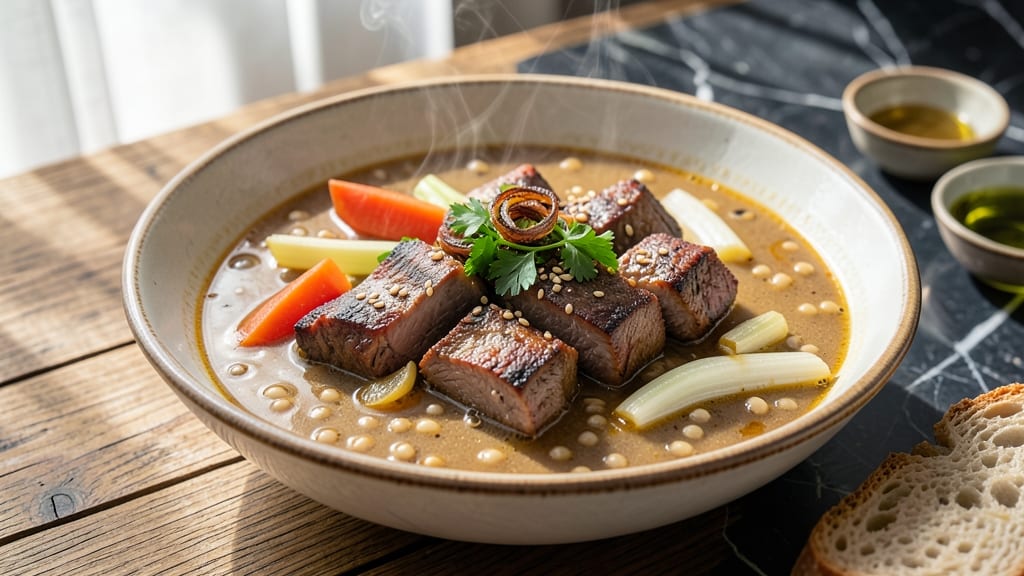
Transforming leftover prime rib into this beef barley soup is the ultimate way to elevate dinner without extra effort. The rich, umami-packed broth—built from prime rib bones and meat—creates a depth of flavor that turns simple ingredients into something extraordinary.
I developed this recipe after realizing how much flavor gets wasted when we don’t use every part of a roast.
What makes this soup special is the balance of textures and flavors: tender beef chunks, chewy pearl barley, and crisp vegetables all simmer together until perfectly harmonized. The key technique?
Browning the prime rib meat first to deepen its natural richness, then simmering it low and slow to develop that restaurant-quality depth. It’s the kind of meal that feels indulgent but comes together effortlessly.
By the time you’re done, you’ll have a steaming bowl of hearty soup that’s packed with protein, fiber, and umami flavor—perfect for chilly evenings or when you want to stretch a special cut of meat into multiple meals.
The aroma alone will have everyone at the table asking for seconds. This is comfort food at its finest, made better by using what you already have.
Best of all, this recipe scales perfectly—whether you’re feeding a family or meal prepping for the week. The leftovers reheat beautifully, making it ideal for busy schedules. Let’s turn those prime rib scraps into something truly special.
Ingredients for beef barley soup recipe with leftover prime rib
Prime rib scraps and pantry staples transform into restaurant-quality soup—rich, hearty, and full of umami.
| Ingredient | Amount | Notes |
|---|---|---|
| Leftover Prime Rib Meat 🥩 | 1 ½ lb | Cut into 1-inch cubes |
| Prime Rib Bones 🦴 | 2 whole | From leftover roast |
| Pearl Barley 🌾 | 1 cup | Uncooked, rinsed well |
| Yellow Onion 🧅 | 1 whole | Diced, medium size |
| Carrots 🥕 | 3 medium | Corrected to 3 medium whole |
| Celery Stalks 🧆 | 3 whole | Chopped, including leaves |
| Garlic Cloves 🧄 | 4 cloves | Minced, fresh preferred |
| Tomato Paste 🍅 | 2 tbsp | Smooth, not chunky |
| Dry Red Wine 🍷 | 1 cup | Bold, like Cabernet |
| Beef Broth 💧 | 6 cups | Homemade or quality store |
| Fresh Thyme 🌿 | ¼ cup | Leaves only, chopped |
| Bay Leaves 🍃 | 2 whole | Fresh if possible |
| Salt 🧂 | 1 ½ tsp | Kosher or sea salt |
| Black Pepper 🌶️ | ½ tsp | Freshly ground |
| Olive Oil 🫒 | 2 tbsp | For browning meat |
The prime rib bones are where all the magic happens. Save those bones after your roast—roast them briefly in a 400°F oven for 20 minutes to deepen their flavor before simmering. Costco or Whole Foods often have pre-cut prime rib, but if you're buying a whole roast, ask the butcher for the bone-in sections. The meat should be well-marbled, with visible fat—this translates to richer broth. If you don't have any bones, beef marrow bones from the grocery store freezer section work too. Just crack them open during cooking for extra richness.
No red wine? Substitute with beef broth plus 1 tbsp balsamic vinegar—it mimics the depth. Pearl barley is the star here, but if you can't find it, wild rice blend works too. Fresh thyme is ideal, but dried thyme at one-third the amount gets you close. The carrots and celery can be swapped for any combo of root vegetables—parsnips or turnips add nice earthiness. For extra umami, add 1 tbsp soy sauce or Worcestershire (check for vegetarian-friendly versions if needed). And if you're using store-bought broth, Kirkland Signature or Pacific Foods are my go-tos—they've got serious depth.
This soup tastes even better the next day as flavors meld. Store in the fridge for up to 5 days—the barley softens further, making it even more comforting. For freezing, portion into 2-cup servings and freeze for up to 3 months. I always make a double batch because it disappears fast. The broth can be made ahead and reheated separately—just add the barley and meat at the end to keep it chewy. Garnish with fresh thyme or a drizzle of high-quality olive oil before serving.
Why You'll Love This Recipe
- Zero-Waste Magic: I swear by this trick—those prime rib bones and leftover meat beg to be turned into soup. No scraps go to waste, and honestly? The rich, deep flavor from the bones makes it taste like a restaurant-worthy dish without the fuss.
- Rich Without Effort: The pearl barley soaks up all that beefy goodness like a sponge, while the onions and carrots caramelize into sweet, savory layers. It’s the kind of soup where every bite feels indulgent, but I’m too busy stirring to care about the calories.
- Weeknight Workhorse: Between us, this is my go-to when I’ve got a house full of people and zero energy. Toss in the barley in the morning, simmer all day, and boom—dinner’s ready. My kids even ask for it on Tuesdays, and that’s saying something.
- Budget-Friendly Luxury: Prime rib bones are cheap at the store, and leftover meat means I’m not buying extra. A big pot feeds four for under $15, and the leftovers? Even better the next day. That’s my kind of smart spending.
Step-by-step instructions for beef barley soup with leftover prime rib
Transform your leftover prime rib into a rich, hearty soup with deep umami flavors and satisfying texture.
Brown the Meat and Bones for Maximum Flavor
Heat a large Dutch oven over medium-high heat and add the 2 tablespoons olive oil. Arrange the 1.5 pounds leftover prime rib meat in a single layer and let it sear undisturbed for 3-4 minutes until deeply browned on one side. Flip and repeat until all sides are golden brown and crispy.
Remove the meat and set it aside. Add the 2 whole prime rib bones to the same pot and brown them for 2-3 minutes per side until they develop a rich color. This browning step is crucial—it develops the deep, meaty flavors that will infuse your soup. Don't rush it; patience here makes all the difference.
Sauté Vegetables and Build the Flavor Base
In the same Dutch oven, add the 1 whole diced yellow onion, 3 medium whole carrots (cut into chunks), and 3 whole chopped celery stalks. Cook for 5-6 minutes until the vegetables soften slightly and the onions become translucent. Stir occasionally to prevent burning.
Add the 4 cloves minced garlic and cook for 30 seconds until fragrant. Stir in the 2 tablespoons tomato paste and cook for another 1 minute to deepen its flavor. This aromatic vegetable base forms the flavor foundation of your soup, so take your time and let the ingredients meld together.
Deglaze and Simmer the Soup
Pour in the 1 cup dry red wine and scrape up any browned bits from the bottom of the pot with a wooden spoon. This deglazing step captures all the meaty flavors you've built. Let the wine simmer for 2-3 minutes until it reduces by half and the alcohol cooks off.
Add the 6 cups beef broth, 1 cup uncooked pearl barley (rinsed well), 0.25 cup chopped fresh thyme, 2 whole bay leaves, 1.5 teaspoons salt, and 0.5 teaspoon black pepper. Bring to a boil, then reduce heat to low and let it simmer uncovered for 45-50 minutes until the barley is tender and the soup has thickened slightly.
Finish and Serve with Perfect Texture
Return the browned prime rib meat to the pot and simmer for an additional 15-20 minutes until the meat is heated through and tender. Taste and adjust seasoning if needed—this is where you can really make the soup your own. The barley should be tender but still hold its shape slightly, providing a satisfying bite.
Remove the bay leaves before serving. Ladle the soup into bowls, garnishing each serving with a sprinkle of fresh thyme leaves. The result should be a rich, hearty soup with deep umami flavors from the prime rib, balanced by the earthy sweetness of the barley and vegetables. Serve immediately while hot for the best experience.
Pro Tips For Making Beef Barley Soup Recipe With Leftover Prime Rib
- CRUSH THE BONES FIRST: Prime rib bones are stubborn—smash the ends with a hammer or heavy pan before simmering. This cracks the marrow, releasing rich flavor faster than waiting for slow extraction. (Yes, it’s a little brutal, but your soup will taste like it’s been cooking all day.)
- SOAK BARLEY IN COLD WATER: Pearl barley absorbs liquid like a sponge—rinse it well, then soak for 30 minutes in cold water before adding to the pot. This cuts cooking time by 20 minutes and keeps those grains from turning mushy. (I learned this the hard way after slurping a bowl of glue-like barley.)
- SIMMER LOW AND COVERED: After the initial boil, drop heat to a bare simmer and keep the pot covered. High heat turns barley soup into stewed barley, and uncovered boiling evaporates broth too fast. A gentle roll of bubbles is all you need—this is a marathon, not a sprint.
- SALT THE BROTH IN LAYERS: Taste the broth as you go—add salt in stages (start with 1 tsp per quart) rather than dumping it all in at once. Leftover prime rib is already packed with sodium, and over-salting later is harder to fix. (Trust me, you’ll regret that last spoonful of salt.)
Wine and beer pairings for this dish
Red Wine Pairings
For this rich, umami-packed soup, I always reach for a bold red wine that can stand up to the deep flavors of prime rib. A Cabernet Sauvignon from Napa Valley—like a Caymus Vineyards or Opus One—is my go-to.
The wine's dark fruit notes and tannins complement the beef beautifully, while its acidity cuts through the richness. If you prefer something lighter, a Syrah from the Rhône Valley brings smoky, peppery notes that harmonize perfectly with the thyme and roasted meat. 🍷
Beer Pairings
A hearty amber ale or brown ale works wonderfully with this soup, balancing its richness with malty sweetness. I love pairing it with a Samuel Smith's Nut Brown Ale—its caramel and toasty notes echo the roasted flavors in the soup.
For something more robust, try a Belgian dubbel like Westmalle Dubbel, which brings fruity, spiced complexity that stands up to the prime rib's depth. 🍺
White Wine Alternative
If you prefer white wine, a full-bodied Chardonnay with oak notes—such as a Meiomi Pinot Grigio or Kendall-Jackson Vintner's Reserve Chardonnay—can work surprisingly well. The buttery richness of the wine mirrors the soup's texture, while its acidity keeps it refreshing.
For a lighter option, a dry Riesling from Germany adds a crisp, citrusy contrast that brightens the dish. 🥂
Non-Alcoholic Options
Don’t have wine or beer? No problem! A sparkling apple cider like Martinelli's Sparkling Apple Cider adds a festive touch with its effervescence and subtle sweetness. For something more savory, try a ginger beer—the spicy kick complements the soup's umami depth.
I also love pairing it with a chilled hibiscus tea (like Tazo Hibiscus Tea) for a refreshing, slightly tart contrast. 🍹
Pro Tips for Pairing
Let your wine or beer breathe for 10-15 minutes before serving to open up its flavors. For reds, decanting (pouring into a separate container) can help soften tannins.
If you're serving the soup with crusty bread, opt for a wine with higher acidity—like a Malbec or Zinfandel—to cut through the richness. And remember, the best pairing is the one you enjoy most! 💫
Nutrition facts
Frequently asked questions
How do I use prime rib bones if I don't have any from my roast?
Pick up beef marrow bones from your grocery store's freezer section—they're perfect for adding rich flavor. Roast them briefly at 400°F for 20 minutes before simmering to deepen their flavor. Just crack them open during cooking to release the marrow, which adds incredible richness to your broth.
Can I make this soup without red wine?
Use 1 cup beef broth plus 1 tablespoon balsamic vinegar instead. The vinegar mimics the wine's acidity and depth. For extra umami, add 1 tablespoon soy sauce or Worcestershire—just check for vegetarian-friendly versions if needed.
Why does my barley turn mushy instead of staying chewy?
Pearl barley needs 45-50 minutes of simmering, but don't overcook it! If it's mushy, you likely simmered too long or used too much liquid. Always rinse the barley first to remove excess starch, and keep the heat at a gentle simmer—not a rolling boil.
How can I make this soup even more flavorful?
Roast the prime rib meat 5 minutes longer before adding it back to deepen its flavor. For extra depth, add 1 teaspoon smoked paprika or a splash of fish sauce (just 1/2 teaspoon)—it sounds unusual, but it enhances umami beautifully.
Can I prep this soup ahead of time?
Yes! Make the broth and cook the barley separately, then reheat everything together. Store components in the fridge for up to 5 days or freeze for 3 months. The flavors actually improve overnight as everything melds together.