
Soups & Stews
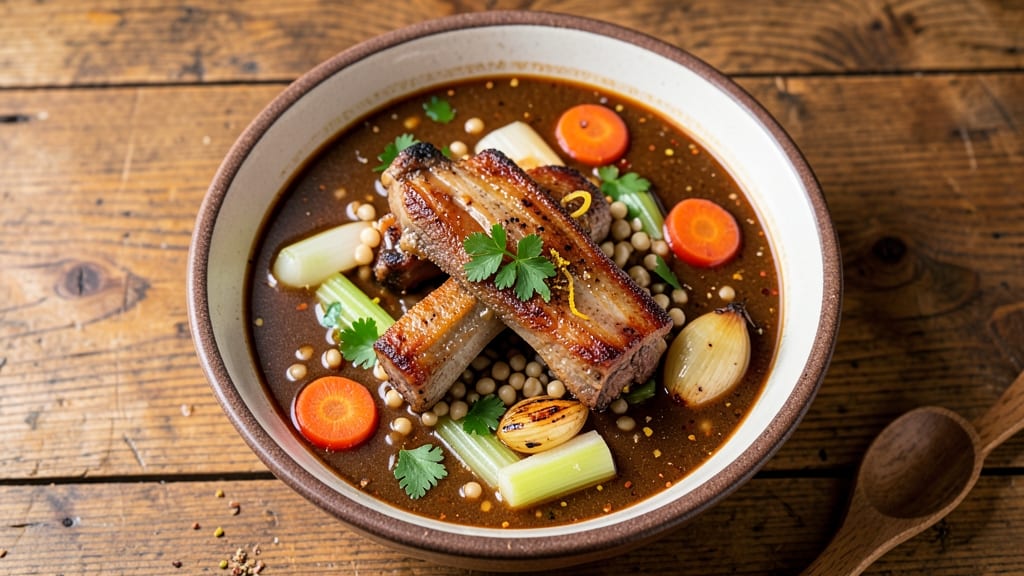
This beef barley soup recipe with prime rib bones delivers restaurant-quality depth that transforms ordinary weeknight meals into comforting centerpieces. The secret lies in slow-roasting prime rib bones to unlock rich, caramelized flavors that infuse the broth with unmatched savory complexity—far beyond what store-bought stock can achieve.
What starts as a simple simmer becomes a symphony of textures and aromas as the bones render their essence into a velvety foundation.
The process begins with carefully roasting the bones until deeply browned, a critical step that develops the Maillard reaction for maximum flavor extraction. While the bones simmer for hours, pearl barley cooks until tender yet retains its satisfying bite, absorbing the broth's deep umami character.
This isn't just soup—it's a multi-layered experience where each spoonful delivers both hearty substance and delicate broth, creating perfect balance that keeps you reaching for another bowl.
What makes this recipe particularly impressive is its ability to deliver professional results with straightforward techniques. The pressure cooker option cuts preparation time nearly in half while maintaining the same rich flavor profile, making this ideal for busy weeknights without sacrificing quality.
Every element comes together to create a dish that feels both comforting and sophisticated—ideal for cold evenings when you crave warmth in every sense.
The final touch comes in garnishing with fresh parsley and serving with crusty bread, transforming this nourishing soup into a complete meal experience.
Whether you're feeding a family or treating yourself to a solo dinner, this recipe delivers the kind of depth and satisfaction that turns ordinary meals into memorable occasions.
Ingredients for beef barley soup recipe with prime rib bones
Sixteen ingredients transform simple simmering into restaurant-quality beef barley soup with prime rib bones.
| Ingredient | Amount | Notes |
|---|---|---|
| Prime Rib Bones 🦴 | 3 lb | Cut into 2-inch pieces |
| Pearl Barley 🌾 | 1 ½ cups | Uncooked, rinsed thoroughly |
| Yellow Onions 🧅 | 2 whole | Peeled, cut into wedges |
| Carrots 🥕 | 4 whole | Peeled, cut into 1-inch chunks |
| Celery Stalks 🌿 | 4 whole | Trimmed, cut into 1-inch pieces |
| Garlic Cloves 🧄 | 8 cloves | Peeled, lightly crushed |
| Tomato Paste 🍅 | ½ cup | High-quality, no sugar added |
| Dry Red Wine 🍷 | 1 cup | Bold variety like Cabernet Sauvignon |
| Beef Broth 💧 | 8 cups | Homemade preferred, low-sodium |
| Fresh Thyme 🌿 | 2 tbsp | Leaves only, stems removed |
| Fresh Parsley 🌿 | ¼ cup | Chopped, for garnish only |
| Bay Leaves 🌿 | 2 whole | Dried, removed before serving |
| Kosher Salt 🧂 | 2 tsp | Diamond Crystal preferred |
| Freshly Ground Black Pepper 🌶️ | 1 tsp | Freshly cracked for best flavor |
| Extra-Virgin Olive Oil 🫒 | ¼ cup | For roasting bones and vegetables |
The prime rib bones are the foundation of this recipe's depth. Look for marrow-rich bones—ask your butcher for the best cuts from the rib section. Whole Foods or high-end grocery stores often carry them pre-cut, but if you're buying a whole rib roast, the butcher can separate the bones for you. The key is to roast them until deeply browned, which develops the Maillard reaction for maximum flavor extraction. For best results, use bones that still have some meat attached—they'll render more fat and collagen during the roasting process. If you're short on time, Costco's pre-cut beef bones work well and are cost-effective for larger batches.
Substitutions are possible but will impact depth. No red wine? Dry sherry or additional beef broth works in a pinch, though wine adds complexity. Fresh thyme unavailable? Dried thyme at one-third the amount suffices, but fresh is preferred for brightness. The tomato paste can be omitted entirely if you're avoiding umami, but it helps balance acidity in the broth. For the barley, wild rice or farro can replace pearl barley for a different texture profile. If you're using a pressure cooker, reduce the broth by 2 cups to account for steam loss. The celery, carrot, and onion combination is traditional, but any mirepoix-style vegetable mix will work.
This soup tastes even better the next day as flavors meld. Store in an airtight container in the refrigerator for up to 5 days, or freeze for 3 months for future use. For freezing, portion into individual containers to reheat only what you need. The bones can be roasted ahead and stored in the freezer for up to 3 months before simmering. When reheating, add a splash of water or broth to restore consistency. The fresh parsley should be added just before serving to maintain its vibrant color and fresh aroma. For optimal flavor, let the soup sit at room temperature for 10 minutes after reheating to allow all components to integrate fully.
Why You'll Love This Recipe
- No-Chop Sides: I swear by the "sofrito shortcut" here—just toss whole carrots and celery stalks into the pot. They soften beautifully without any prep, and honestly? The flavor’s just as rich. (Yes, even on a Tuesday night when I’m too tired to peel.)
- Rich Without Effort: Those prime rib bones? Absolute magic. They melt into the broth, turning it into something so deep and savory you’d think you simmered for hours. Pearl barley soaks up all that flavor like a sponge—no mushy texture, just perfect bite.
- Weeknight to Holiday: I make this when my in-laws visit or when I need to feed the kids after soccer practice. The same pot works for both: just add a splash of red wine for company, or skip it for a quick family meal. The barley’s hearty enough to satisfy everyone.
- Leftovers That Don’t Suck: Between us, most soups turn sad after day two. Not this one. The barley keeps its texture, and the broth gets even better as the flavors marry. I freeze portions—perfect for lazy nights when I just want to reheat and eat. (No takeout needed.)
Step-by-step instructions for beef barley soup with prime rib bones
This method transforms humble ingredients into a deeply flavorful soup with rich bone broth and perfectly tender barley.
Roast the Prime Rib Bones and Vegetables
Preheat your oven to 425°F and line a large roasting pan with heavy-duty aluminum foil. Arrange the 3 lb prime rib bones in a single layer, then scatter the 2 whole yellow onions, 4 whole carrots, and 4 whole celery stalks around them. Drizzle everything with the 0.25 cup extra-virgin olive oil and sprinkle with 1 tsp kosher salt and ½ tsp freshly ground black pepper.
Roast uncovered for 45-50 minutes, stirring once halfway through, until the bones are deeply browned and the vegetables begin to soften. This step develops complex flavors through the Maillard reaction and caramelization. If the vegetables soften too quickly, remove them after 30 minutes and continue roasting the bones alone for another 15 minutes.
Build the Flavor Base
Transfer the roasted bones and vegetables to a large stockpot. Add the 8 cloves garlic cloves, 2 tbsp fresh thyme, and 2 whole bay leaves. Pour in the 1 cup dry red wine and scrape the bottom of the pot to release all those flavorful browned bits. Bring to a boil over high heat, then reduce to a simmer and cook for 10 minutes to allow the alcohol to evaporate and the flavors to meld.
Stir in the 0.5 cup tomato paste and cook for another 5 minutes until it darkens slightly. This step creates a rich, concentrated base that will infuse the broth with depth. The tomato paste adds umami without overpowering the delicate flavors of the barley and beef.
Simmer the Bone Broth
Add the 8 cups beef broth to the pot, then bring everything to a gentle boil. Reduce heat to maintain a steady simmer and add the 3 lb roasted prime rib bones back in. Partially cover the pot and simmer for 2-2.5 hours, skimming any foam or impurities that rise to the surface. This long cooking time extracts collagen from the bones, transforming them into a velvety, nutrient-rich broth.
Check the broth occasionally and add water if it reduces too much. The bones should become tender enough to easily pull apart with a spoon. When the broth has reduced by about 25% and the bones are fully tender, remove them from the pot using tongs and set aside to cool slightly.
Add Barley and Finish the Soup
Strain the broth through a fine-mesh sieve into a clean pot, pressing on the solids to extract maximum flavor. Discard the solids or compost them. Return the broth to the pot and add the 1.5 cups pearl barley. Bring to a gentle boil, then reduce heat to low and simmer uncovered for 45-50 minutes, stirring occasionally, until the barley is tender but still has a slight bite.
The barley should absorb some of the liquid but still maintain its distinct texture. If it softens too quickly, reduce the heat further. Taste and adjust seasoning with additional kosher salt and black pepper as needed. The soup should be rich and savory, with the barley providing a satisfying chew.
Serve with Garnish
Using two forks, shred the cooled prime rib bones and return them to the pot, stirring to distribute throughout the soup. Remove the 2 bay leaves before serving. Ladle the soup into bowls and garnish each serving with 1 tablespoon chopped fresh parsley. The parsley adds a bright contrast to the deep, umami-rich flavors of the broth and beef.
Serve immediately with crusty bread to soak up every last drop of that luxurious bone broth. The combination of tender beef, chewy barley, and velvety broth creates a satisfying, comforting bowl that's perfect for chilly days.
Pro Tips For Making Beef Barley Soup Recipe With Prime Rib Bones
- CRACK THE BONES FIRST: I learned this the hard way—skipping the bone cracking means you’re fighting for flavor instead of letting it simmer free. Use a meat mallet or rolling pin to break the prime rib bones into 2-3 inch chunks before adding them to the pot. This exposes more marrow and collagen, turning your broth from good to deeply rich—no extra work, just better results.
- SOAK BARLEY UNLESS YOU LIKE MUSH: Pearl barley’s notorious for turning to paste if you’re not careful. Give it a 30-minute soak in cold water before adding to the soup—this cuts cooking time by nearly half and keeps the texture firm. (Yes, even if you’re impatient like me.) Drain well before tossing it in, or you’ll end up with a gluey mess.
- SWEAT THE VEGETABLES LOW AND SLOW: I used to rush the onion-carrot-celery mix and wondered why my soup tasted flat. Instead, cook them on medium-low for 10-12 minutes until they’re soft and the onions are translucent. This builds a sweet, caramelized base that makes the whole soup sing—no burning, no bitterness, just flavor.
- SKIP THE BOILING BROTH: Let the prime rib bones start in cold water, then bring to a gentle simmer—never a rolling boil. Boiling scalds the marrow and makes the broth cloudy. A low simmer (tiny bubbles, just breaking the surface) extracts the best collagen and keeps the broth clear. Trust me, your future self will notice the difference.
Flavor customization for beef barley soup recipe with prime rib bones
Umami Boost Options
For an extra depth of savory flavor, add 1-2 tablespoons of fish sauce or 1 teaspoon of soy sauce during the final simmer. I find Red Boat fish sauce adds a perfect umami punch without overpowering the broth.
Alternatively, stir in ½ cup of mushroom broth (made by simmering dried shiitake mushrooms in water) for a vegetarian-friendly umami boost. 💫
Spice Level Control
Adjust heat to your preference by adding ½ teaspoon of smoked paprika during the roasting stage for a subtle smoky note. For a kick, stir in 1 teaspoon of crushed red pepper flakes with the tomato paste.
If you prefer warmth without heat, add 1 teaspoon of ground cumin or ½ teaspoon of ground coriander for earthy complexity.
Herb Variations
Swap out thyme for rosemary or sage for a more robust herbal profile. I love adding 1 sprig of fresh rosemary during the roasting phase—it caramelizes beautifully and adds piney depth.
For a brighter finish, stir in 1 tablespoon of fresh dill or 1 teaspoon of dried oregano at the end of cooking.
Vegetable Swaps
Replace carrots with sweet potatoes (peeled and cubed) for natural sweetness that balances the richness. Swap celery for leeks (white and light green parts only) for a milder, slightly sweet flavor.
For a heartier texture, add ½ cup of diced parsnips or ½ cup of chopped fennel bulb during the roasting phase.
Protein Enhancements
Add 1 cup of cooked beef short ribs (simmered separately) or ½ cup of crumbled blue cheese at the end for a creamy, tangy twist.
For a lighter option, stir in ½ cup of cooked lentils or ½ cup of chickpeas during the final 15 minutes of cooking to boost protein and fiber.
Acidity Balance
Brighten the broth with 1 tablespoon of apple cider vinegar or 1 teaspoon of balsamic vinegar during the final simmer. For a fruity contrast, add ½ cup of cranberry juice or ½ cup of pomegranate juice when the barley is nearly tender.
A splash of lemon juice at the end adds freshness without overpowering the dish. 🍋
Nutrition facts
Frequently asked questions
Why does roasting the prime rib bones first make such a difference?
The roasting step creates the Maillard reaction, which develops deep, caramelized flavors that infuse the broth with complexity. This process transforms simple beef bones into flavor bombs that extract more gelatin and collagen during simmering, resulting in a richer, more velvety texture. Skipping this step means missing out on that restaurant-quality depth!
Can I use regular beef bones instead of prime rib bones?
While you can use other beef bones like marrow or knuckle bones, prime rib bones are ideal because they're rich in marrow and collagen, which create a more luxurious broth. For a budget-friendly option, combine 2 lb prime rib bones with 1 lb beef marrow bones to maintain depth while reducing cost.
How do I know when the barley is perfectly cooked?
Pearl barley should be tender but still hold its shape with a slight bite—like al dente pasta. Test by tasting a few grains: they should be soft inside but not mushy. If they're too firm after 50 minutes, add ½ cup hot broth and simmer 10 more minutes. Overcooked barley turns to mush and loses its satisfying texture.
Is this soup freezer-friendly? How should I store it?
Let the soup cool completely, then transfer to airtight containers, leaving 1-inch headspace for expansion. Freeze for up to 3 months. Thaw overnight in the fridge—never microwave directly from frozen. For best texture, reheat on the stovetop over medium-low heat, adding a splash of water or broth if needed. The flavors actually improve after freezing!
What's the fastest way to make this soup without sacrificing flavor?
Use a pressure cooker! After roasting the bones and building the flavor base, add everything to the pressure cooker with 6 cups broth (less liquid for pressure cooking). Cook on high pressure for 60 minutes, then add barley and cook 15 more minutes. This cuts simmering time by nearly half while keeping that deep, rich flavor. Just