
Main Courses
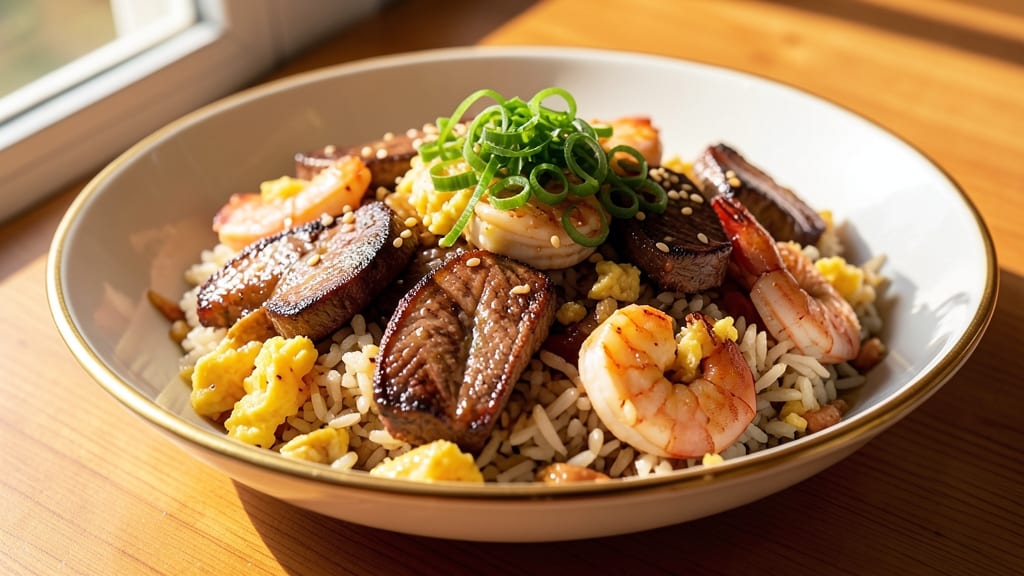
This beef and shrimp fried rice recipe delivers restaurant-quality wok hei flavor in just 20 minutes, combining tender beef strips and succulent shrimp with perfectly seasoned rice.
The key lies in proper protein preparation—searing the beef until caramelized and pre-cooking the shrimp to maintain their delicate texture while ensuring they stay juicy. This isn't your average fried rice; it's a protein-packed powerhouse that balances savory, umami, and a touch of heat.
What sets this recipe apart is the technique: high-heat stir-frying in small batches preserves the smoky wok flavor (or "wok hei") even on home stoves, while the rice absorbs just enough soy sauce for depth without being overpowering.
The shrimp adds a luxurious texture contrast to the beef's chewiness, and a quick finish with sesame oil and green onions elevates it from weeknight meal to special occasion dish. Every bite delivers that perfect crunch and savory punch.
The secret weapon here is timing—cooking proteins separately ensures they don't overcook during the rice stir-fry, while the rice itself gets toasted in the wok for that signature nutty aroma. This method transforms simple ingredients into a dish that's both comforting and impressive, with flavors that develop as you cook.
The result? A plate that looks as good as it tastes, with each component perfectly balanced for maximum satisfaction.
Whether you're feeding a family or meal prepping for the week, this recipe scales beautifully while maintaining its restaurant-quality essence. The technique is straightforward but delivers professional results, making it perfect for both beginners and experienced cooks looking to elevate their fried rice game. Let's get cooking!
Ingredients for beef and shrimp fried rice
Restaurant-quality wok hei flavor starts with these carefully selected ingredients—each playing a precise role in the dish's signature crunch and savory balance.
| Ingredient | Amount | Notes |
|---|---|---|
| Day-Old Cooked White Rice 🍚 | 4 cups | Cold or room temperature preferred |
| Ribeye Steak 🥩 | ¾ lb | Thinly sliced against grain |
| Large Shrimp 🦐 | ½ lb | Peeled, deveined, tails on |
| Eggs 🥚 | 2 whole | Freshly beaten for scramble |
| Green Onions 🧅 | ½ cup | Thinly sliced, white and green parts |
| Sesame Oil 🫒 | 1 tbsp | Toasted for aroma |
| Light Soy Sauce 🍶 | ½ cup | Kikkoman preferred |
| Dark Soy Sauce 🍶 | 1 tbsp | For color depth |
| Oyster Sauce 🍶 | 2 tbsp | High-quality preferred |
| Vegetable Oil 🫒 | ¼ cup | High smoke point |
| Garlic Cloves 🧄 | 4 cloves | Minced finely |
| Fresh Ginger 🌿 | 1 tbsp | Grated finely |
| White Pepper 🌶️ | ½ tsp | Freshly ground |
| Sesame Seeds 🌾 | 1 tbsp | Toasted for garnish |
| Cornstarch 🌾 | 1 tbsp | For shrimp coating |
The proteins are non-negotiable here. For the beef, ribeye delivers the best marbling and tenderness—ask your butcher to slice it thinly against the grain. Costco or Whole Foods carry pre-sliced versions, but if you're slicing yourself, freeze the meat for 20 minutes first to make it easier. Shrimp should be 21-25 count per pound for optimal texture; larger shrimp overcook too quickly. Look for wild-caught when possible, as it holds up better to high-heat cooking. The eggs? Pasture-raised if you can find them—they scramble with a richer texture.
No ribeye? Flank steak or sirloin work in a pinch, but slice against the grain for tenderness. Shrimp substitutes? Scallops or firm white fish hold up well, though texture will differ. The soy sauces are where flavor magic happens—Kikkoman light soy for saltiness, Lee Kum Kee dark soy for color. Swap oyster sauce for hoisin or extra soy sauce plus a splash of sesame oil if needed. The cornstarch coating on shrimp is critical—skip it and they'll turn rubbery. For the rice, jasmine or basmati absorbs flavors better than long-grain white, but use what you have.
Prep ahead to save time: Cook the rice and proteins the night before, then refrigerate. The shrimp can be pre-cooked and stored in the fridge for up to 2 days—just reheat gently before stir-frying. Sesame oil loses potency quickly, so store it in the fridge and use within 6 months of opening. For meal prep, divide into containers with a thin layer of oil on top to prevent sticking. This dish reheats beautifully—2 minutes in the microwave or 3-4 minutes in a skillet over medium heat, stirring constantly to maintain texture.
Why You'll Love This Recipe
- I swear by this trick: use pre-cooked rice and pre-trimmed shrimp. The ribeye? Just slice it thin after searing—no butchering skills required. My lazy Sundays thank me every time.
- No Chopping Hassle: I swear by this trick: use pre-cooked rice and pre-trimmed shrimp. The ribeye? Just slice it thin after searing—no butchering skills required. My lazy Sundays thank me every time.
- Umami Bomb Combo: That ribeye adds deep, savory richness while the shrimp brings bright sweetness. Scramble the eggs just past set, and you’ve got a perfect balance—creamy, crispy, and packed with flavor in every bite.
- Leftover Hero: This dish actually improves the next day. The flavors meld better, and reheating it in a skillet with a splash of soy sauce? It’s like a second life for your dinner. I’ve fed a crowd with just two batches.
Step-by-step instructions for beef and shrimp fried rice
Master this wok technique for perfectly balanced texture and bold Asian-inspired flavors.
Prep All Ingredients for Maximum Efficiency
Break the 0.75 lb ribeye steak into ¼-inch slices against the grain for tender bites. Toss the 0.5 lb large shrimp with 1 tbsp cornstarch and set aside. Mince the 4 cloves garlic and grate the 1 tbsp fresh ginger finely. Thinly slice the 0.5 cup green onions and toast the 1 tbsp sesame seeds in a dry pan until fragrant.
Break the 2 whole eggs into a bowl and whisk vigorously. Spread the 4 cups day-old cooked white rice on a tray and let it sit at room temperature for 5 minutes—this prevents gummy fried rice. The reason we use day-old rice is that it's drier and absorbs flavors better than fresh rice.
Cook Proteins Separately for Perfect Doneness
Heat 2 tablespoons vegetable oil in a wok over high heat until shimmering. Add the ribeye slices and sear for 1-2 minutes until deep brown but still slightly pink inside. Remove and set aside. In the same wok, add another 1 tablespoon vegetable oil and cook the shrimp for 2-3 minutes until pink and opaque—they should curl slightly when done.
Real talk: don't overcrowd the wok. Cook the shrimp in batches if needed to maintain high heat. The shrimp should release easily from the pan when ready, indicating they've cooked through without rubberizing. Keep both proteins warm in a covered bowl while you prepare the rest.
Scramble Eggs and Build the Flavor Base
Add 1 tablespoon vegetable oil back to the wok and scramble the eggs over medium-high heat for 30 seconds until just set but still slightly runny. Remove and set aside. Reduce heat to medium and add the remaining 1 tablespoon vegetable oil, followed by the minced garlic and ginger. Sauté for 30 seconds until fragrant—this is where the foundation of your dish's flavor develops.
Pour in the 0.5 cup light soy sauce, 1 tbsp dark soy sauce, and 2 tbsp oyster sauce. Stir for 1 minute until the sauce begins to reduce slightly and coat the wok. Here's the thing—dark soy sauce adds color, while light soy sauce provides the salty depth. The oyster sauce contributes that umami richness that makes this dish sing.
Combine Everything with High Heat Technique
Increase heat to high and add the 4 cups day-old cooked white rice, breaking up any clumps with a spatula. Stir-fry for 2-3 minutes until the rice is heated through and begins to sizzle. Add the scrambled eggs back to the wok and toss everything together for 1 minute to distribute the flavors evenly.
Return the ribeye and shrimp to the wok, tossing gently to coat everything in the sauce. Cook for an additional 1-2 minutes just to meld all the components. The rice should be hot throughout with a slight crispness on the edges—a telltale sign of proper wok hei (breath of the wok). If the mixture looks dry, add 1-2 tablespoons water to create steam and loosen the rice.
Finish and Garnish for Restaurant-Quality Presentation
Turn off the heat and immediately stir in the 0.5 cup green onions and 1 tbsp toasted sesame seeds. Drizzle with 1 tbsp sesame oil and sprinkle with 0.5 tsp white pepper. The sesame oil adds a nutty aroma that ties everything together, while the pepper provides a subtle heat that cuts through the richness.
Serve immediately while still sizzling hot. Each bite should deliver a perfect balance of tender beef, plump shrimp, silky eggs, and aromatic rice with that signature wok hei flavor. The dish should be vibrant with colors from the dark soy sauce and fresh green onions, making it as visually appealing as it is delicious.
Pro Tips For Making Beef And Shrimp Fried Rice
- STIR-FRY IN BATCHES: I learned this the hard way—trying to cook everything at once means soggy shrimp and undercooked beef. Start with the ribeye in a screaming-hot wok (or largest pan you have), remove it after 2 minutes, then add shrimp. Once they’re pink, push everything to one side, scramble eggs in the cleared space, then mix it all together. Your proteins stay crisp, not steamed.
- USE COLD RICE: Day-old rice isn’t just a suggestion—it’s non-negotiable for this dish. Cold, dry grains absorb the stir-fry’s flavors better and resist mushiness. If you’re fresh out of leftovers, spread freshly cooked rice on a tray, chill it 10 minutes, then refrigerate 1 hour. No shortcuts here—your future self will notice.
- SALT THE SHRIMP: Skip this, and your shrimp will turn rubbery. Toss peeled shrimp with ½ teaspoon salt and a pinch of white pepper before cooking—let them sit 5 minutes while you prep the rest. The salt breaks down proteins, keeping them juicy. (Yes, even if you’re impatient like me.)
- CHAR THE AROMATICS FIRST: Green onions alone won’t carry the dish, but a quick char does. After cooking the beef and shrimp, remove them, then toss the onions in the same pan for 30 seconds until the bottom turns golden. Toss everything back in—this adds depth without extra ingredients. Sounds weird, but it works.
Regional styles of this dish
Hong Kong Style
This version keeps the beef and shrimp but adds a Hong Kong twist with extra chili oil (about 1 tsp) and dried shrimp (about 2 tbsp) for deeper umami.
Use less soy sauce (reduce to 3 tbsp total) and finish with crushed peanuts (about 2 tbsp) for texture. The key is high heat—Hong Kong chefs stir-fry in batches to maintain that signature wok hei aroma. 🔥
Southern Chinese
Southern Chinese fried rice often includes char siu (Chinese BBQ pork) instead of beef, but you can keep the ribeye for a fusion twist. Add 1 tbsp Shaoxing wine when cooking the proteins and finish with pickled ginger (about 1 tsp) for brightness.
Southern versions use more oyster sauce (up to 3 tbsp) and a touch of sugar (about ½ tsp) to balance flavors. Serve with chili crisp on the side for heat lovers. 🌶️
Japanese Teriyaki
For a Japanese-inspired take, replace the soy sauce with teriyaki sauce (about ½ cup) and add 1 tbsp mirin for sweetness. Swap the shrimp for salmon or tuna (sashimi-grade, seared briefly) and use furikake seasoning (about 1 tbsp) instead of sesame seeds.
Garnish with shredded nori and pickled radish for a fresh, umami-packed finish. The teriyaki glaze should coat the proteins for a glossy, caramelized effect. 🍣
Thai-Inspired
Thai fried rice (khao pad) transforms this dish with Thai basil (about ¼ cup), red curry paste (about 1 tsp), and lime wedges for serving. Use coconut aminos (about 3 tbsp) instead of soy sauce and add Thai bird’s eye chilies (about 1-2, sliced) for heat.
Stir in crushed peanuts and bean sprouts (about ½ cup) at the end. The lime juice brightens the dish, balancing the richness of the proteins. 🍋
Korean Kimchi
Add a Korean kick by mixing in ½ cup chopped kimchi (drained) during the final stir-fry. Use gochujang (about 1 tbsp) instead of dark soy sauce and top with fried egg (sunny-side up) for extra indulgence.
Garnish with sesame seeds and scallions. The kimchi adds tangy, spicy depth that pairs perfectly with the beef and shrimp. Serve with ssamjang (Korean dipping sauce) on the side. 🌶️
Nutrition facts
Frequently asked questions
Can I use frozen shrimp instead of fresh?
Yes, but thaw them properly first! Place frozen shrimp in a bowl of cold water for 10-15 minutes to maintain texture, then pat completely dry before tossing with cornstarch. Never thaw at room temperature—this causes rubbery shrimp. For best results, use shrimp labeled "frozen raw" and follow package instructions for cooking time.
What's the best rice for this recipe?
Jasmine or basmati rice works best—both have a slight fragrance and separate well when cooked. Use day-old rice (cooled and spread on a tray) for optimal texture. If using fresh rice, cook it slightly underdone and let it sit uncovered for 30 minutes before using. Never microwave rice directly from the pot—it becomes mushy.
How do I prevent the shrimp from turning rubbery?
Three key factors: high heat, cornstarch coating, and proper timing. Cook shrimp in batches over high heat for exactly 2-3 minutes—they're done when they curl and turn opaque. The cornstarch creates a barrier that locks in moisture. Never overcrowd the pan or they'll steam instead of sear.
Can I make this vegetarian?
Replace the beef with mushrooms (shiitake or oyster) and swap shrimp for tofu (extra-firm) or tempeh. Marinate the tofu in soy sauce and cornstarch for texture. Use vegetable broth instead of water when cooking rice. For extra umami, add 1 tbsp mushroom powder or 1 tsp fish sauce alternative to the sauce mixture.
Why does my fried rice always taste bland?
Most likely, you're not using enough oyster sauce or dark soy sauce for color/depth. The secret is building layers of flavor: first sear the proteins, then reduce the sauce until it coats the wok (this concentrates flavors). Use fresh garlic and ginger—pre-minced versions lose potency. Finish with sesame oil (never cooking oil) and white pepper for brightness.