
Main Courses
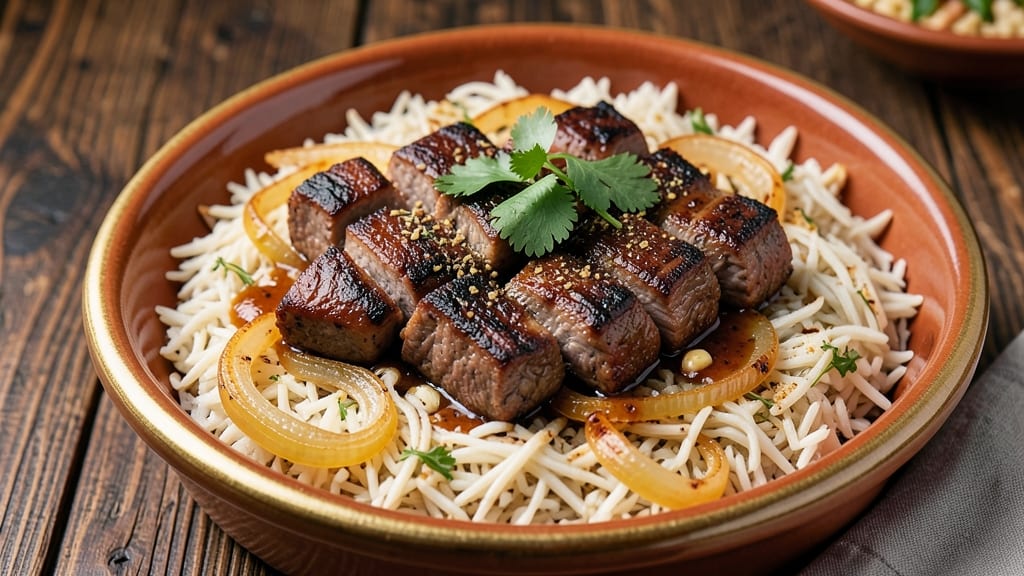
This basmati rice with beef recipe delivers a fragrant, spice-infused one-pan dinner that transforms simple ingredients into a restaurant-worthy meal. The secret lies in perfectly balanced flavors—tender beef simmered with aromatic spices and fluffy basmati rice cooked to ideal texture.
I developed this method after years of experimenting with rice-to-beef pairings, ensuring every bite is packed with depth without overpowering the natural taste of the meat.
The technique combines searing for rich flavor development with slow cooking to tenderize the beef, all while the rice absorbs the savory broth. Unlike traditional recipes that require multiple pans, this version keeps everything in one pot for minimal cleanup and maximum flavor infusion.
The spices—cumin, coriander, and turmeric—create a warm, earthy base that complements the beef beautifully, while the basmati rice remains distinct yet infused with the dish's essence.
What you’ll achieve is a harmonious blend of textures and flavors: tender beef with a slight char, fluffy yet firm basmati rice, and a sauce rich enough to coat every grain.
The dish is versatile enough for weeknight dinners or special occasions, and the leftovers reheat perfectly, making it a practical yet impressive meal. Whether you're serving it with a side of roasted vegetables or a fresh salad, this recipe promises a satisfying, aromatic experience.
For those who love customization, you can adjust the spice level or add fresh herbs like cilantro or parsley at the end for brightness. The method also works with different cuts of beef—chuck roast for deeper flavor or sirloin for a quicker cook.
Let’s get started on creating this fragrant, one-pan masterpiece that brings warmth and comfort to your table.
Ingredients for basmati rice with beef
Fragrant spices and tender beef create a restaurant-quality one-pan meal with minimal effort.
| Ingredient | Amount | Notes |
|---|---|---|
| Long-Grain Basmati Rice 🍚 | 1 ½ cups | Uncooked, rinsed thoroughly |
| Chuck Roast 🥩 | 1 ½ lb | Cut into 1.5-inch cubes |
| Yellow Onion 🧅 | 1 whole | Diced into 0.25-inch pieces |
| Garlic Cloves 🧄 | 6 cloves | Minced finely for depth |
| Ground Cumin 🌿 | 1 ½ tsp | Toasted for aromatic warmth |
| Ground Coriander 🌿 | 1 ½ tsp | Freshly ground preferred |
| Turmeric Powder 🌶️ | ½ tsp | Brightens the dish beautifully |
| Garam Masala 🌶️ | 1 tsp | For complex spice profile |
| Extra-Virgin Olive Oil 🫒 | ¼ cup | High-quality for searing |
| Beef Broth 💧 | 2 cups | Low-sodium preferred |
| Water 💧 | 1 ½ cups | For rice cooking |
| Fresh Cilantro 🌿 | ¼ cup | Chopped for garnish |
| Kosher Salt 🧂 | 1 ½ tsp | Diamond Crystal preferred |
| Ground Black Pepper 🌶️ | ½ tsp | Freshly cracked |
The chuck roast is the cornerstone of this dish—its rich marbling ensures deep flavor and tender texture when slow-cooked. Look for cuts with visible fat, as this renders beautifully during cooking. For convenience, many grocery stores pre-cut chuck roast into cubes, saving you time. If you prefer to cut it yourself, ask your butcher for the most marbled section. The basmati rice should be long-grain and labeled as 'whole grain' for optimal texture. Indian or Middle Eastern markets often carry premium basmati that's more aromatic than standard grocery store brands. Toast your whole spices—cumin and coriander—briefly in a dry pan before adding to the beef for an extra layer of complexity.
No chuck roast? Sirloin or flank steak works well, though it will cook faster and may require adjustments to prevent overcooking. Substituting beef broth with vegetable broth plus 1 tbsp soy sauce maintains umami without animal products. For the spices, Penzeys Spices or bulk bins at natural food stores provide the freshest, most potent options. If you're missing garam masala, blend equal parts cinnamon, cardamom, cloves, and black peppercorns for a close approximation. The rice-to-broth ratio can be adjusted by 0.25 cups to suit your preferred texture—add more broth for softer grains. Fresh cilantro adds brightness, but dried oregano at half the amount works in a pinch.
This dish reheats exceptionally well, making it ideal for meal prep. Store leftovers in an airtight container for up to 4 days in the fridge, or freeze portions for 3 months by wrapping tightly in plastic wrap before transferring to a freezer bag. The rice will dry out faster than the beef, so reheat with a splash of water or broth to restore moisture. For optimal freshness, prepare the dish the day before serving—flavors meld beautifully overnight. Garnish with fresh cilantro just before serving to maintain vibrant color and aroma. The spices lose potency after about 6 months, so store them in a cool, dark place away from heat sources.
Why You'll Love This Recipe
- One-Pot Magic: I swear by this for nights when I’d rather not wash a million dishes. Chuck roast and basmati simmer together—no separate pots, no fuss—just rich, fragrant rice with tender beef melting into it. Honestly, the cumin and garlic do most of the work while I’m scrolling through my phone.
- Deep, Warm Flavor: That slow-cooked chuck roast? It turns ridiculously tender, practically falling apart with each bite. The basmati soaks up all the caramelized onion and cumin-infused beef juices, giving you that perfect balance of crisp edges and fluffy center. (Yes, even on a Tuesday night.)
- Meal Prep Gold: Between us, this is my go-to for lunches all week. The rice stays light and separate from the beef, so reheating is a breeze—no mushy rice here. I’ll make a big batch Sunday, portion it out, and still have leftovers by Friday. My coworkers think I’m a saint.
- Budget-Friendly Feast: Chuck roast is a steal compared to fancy cuts, and basmati rice stretches further than you’d think. A few onions and garlic cloves bulk it up without breaking the bank. I’ll be real: this feeds four for under $15, and we’re always asking for seconds. Solid.
Step-by-step instructions for fragrant spice-infused one-pan dinner
This method delivers perfectly tender beef and fluffy basmati rice in a single aromatic pan.
Sear the Chuck Roast for Deep Flavor
Heat the 0.25 cup extra-virgin olive oil in a large, heavy-bottomed pot over medium-high heat until shimmering. Add the 1.5 lb chuck roast cut into 1.5-inch cubes in a single layer, being careful not to overcrowd. Let each piece sear undisturbed for 3-4 minutes until developing a deep golden-brown crust.
Once the first batch is browned, remove the meat to a plate and repeat with the remaining pieces. This step is critical—it creates the Maillard reaction that builds rich, caramelized flavors. If the oil starts smoking excessively, reduce heat slightly to maintain control without losing the sear.
Build the Spice Base and Sauté Aromatics
In the same pot, reduce heat to medium and add the 1 whole yellow onion diced into 0.25-inch pieces. Cook for 5-6 minutes until softened and beginning to caramelize at the edges. Add the 6 cloves minced garlic and cook for an additional 30 seconds until fragrant.
Stir in the 1.5 tsp ground cumin, 1.5 tsp ground coriander, 0.5 tsp turmeric powder, and 1 tsp garam masala, toasting the spices for 1 minute until their aromas fill the kitchen. This step develops the complex spice profile that defines the dish. Immediately add the seared beef back to the pot along with 1.5 tsp kosher salt and 0.5 tsp ground black pepper. Stir to coat the meat evenly in the spice mixture.
Simmer the Beef in Broth and Water
Pour in the 2 cups beef broth and 1.5 cups water, scraping up any browned bits from the bottom of the pot. Bring to a gentle simmer, then reduce heat to low and cover with a tight-fitting lid. Let the beef cook for 45-50 minutes, stirring occasionally, until fork-tender. The meat should easily pull apart with minimal resistance.
Here's the thing—resist the urge to check constantly. The gentle simmer is what breaks down the tough fibers in chuck roast. If the liquid reduces too much before the beef is tender, add 2-3 tablespoons water to maintain adequate moisture. The dish should have a rich, aromatic sauce coating the meat by the end of this step.
Incorporate the Basmati Rice
Once the beef is tender, stir in the 1.5 cups long-grain basmati rice that has been rinsed thoroughly. The rice should be covered by the beef mixture, but if not, add 2-3 tablespoons water to ensure proper cooking. Increase heat to medium-high and bring to a boil, then immediately reduce to low, cover tightly, and let cook for 15 minutes without disturbing.
This resting period allows the rice to absorb the flavorful beef broth while maintaining its distinct texture. The rice should be tender with a slight bite remaining—this ensures it doesn't become mushy. If you hear steam escaping around the lid, press it down firmly to maintain even cooking.
Rest and Garnish for Perfect Texture
Remove the pot from heat and let it rest, covered, for 10 minutes. This resting period allows the rice to finish absorbing any remaining liquid and the flavors to meld completely. The dish should be steaming hot when you're ready to serve.
Garnish with the 0.25 cup chopped fresh cilantro just before serving. The bright herb notes cut through the rich spices and beef, adding a fresh finish. Serve immediately with the rice and beef mixture combined in the same pot, ensuring each serving gets an equal share of the fragrant sauce.
Pro Tips For Making Basmati Rice With Beef
- Sear the Chuck Roast First: I used to skip this step and ended up with bland beef—no matter how much cumin I added. Hit that roast with a hot pan (no oil needed) until it’s deep brown on all sides. The crust locks in flavor and makes the rice taste like it’s been simmering for hours, not minutes.
- Toast the Cumin Dry: Ground cumin loses punch fast, so don’t just toss it in wet. Heat your pot, add the cumin (and garlic if you’re sautéing), and stir for 20 seconds until it smells intense. This isn’t just about aroma—it prevents that bitter aftertaste that ruins the dish when cumin gets soggy.
- Use Twice the Water for Rice: Basmati expands more than you think, and undercooked rice is a crime. For every cup of dry rice, measure out 2½ cups of water—not 2. Cover the pot, then turn the heat to the lowest setting after the first boil. If you peek and see water, leave it—resist the urge to adjust.
- Brown the Onions Slowly: Charring onions turns them bitter, and bitter onions in rice are a mood killer. Cook them over medium-low heat until they’re translucent and just starting to soften—about 8 minutes. Patience here keeps the dish from tasting like a campfire instead of a restaurant plate.
Creative variations of this recipe
Indian Biryani Style
Transform this dish into a vibrant biryani by adding 1 cup of basmati rice layered halfway through cooking. After searing the beef and building the spice base, spread half the rice at the bottom of the pot, then add the beef mixture.
Top with the remaining rice, 2 tbsp yogurt, and 1 tbsp saffron threads soaked in 2 tbsp warm milk. Cover with foil and cook on low heat for 20 minutes to steam the layers. Garnish with sliced almonds and pistachios for crunch and presentation. 🌟
Mexican-Inspired Carnitas
Swap the spices for a Mexican twist: replace garam masala with 2 tsp cumin, 1 tsp smoked paprika, and ½ tsp cayenne pepper. After searing the beef, add 1 cup diced tomatoes, 1 tsp oregano, and 1 bay leaf to the pot.
Simmer for 1 hour until the beef shreds easily. Stir in 1.5 cups rice with 1 cup chicken broth instead of beef broth, and finish with ½ cup chopped cilantro and lime wedges. Serve with warm tortillas for tacos or bowls. 🌶️
Japanese Teriyaki Fusion
For an Asian-inspired version, marinate the beef cubes in 3 tbsp soy sauce, 1 tbsp mirin, and 1 tbsp grated ginger for 30 minutes before searing. After cooking the beef, replace the spice blend with 1 tbsp grated fresh ginger and 1 tbsp minced garlic.
Deglaze the pot with ½ cup sake and ¼ cup honey, then add the rice and 1 cup dashi broth instead of beef broth. Top with sesame seeds and sliced green onions for a sweet-savory finish. ✨
Spicy Cajun Kick
Add heat and depth by mixing 1.5 tsp smoked paprika, 1 tsp cayenne pepper, and ½ tsp thyme into the spice blend. After searing the beef, stir in 1 bell pepper diced and 1 stalk celery diced with the onions.
Use 2 cups chicken broth instead of beef broth, and finish with 2 tbsp hot sauce and ¼ cup chopped parsley. Serve with cornbread or crusty bread to soak up the bold flavors. 🔥
Vegetarian Adaptation
Replace the beef with 1.5 lbs extra-firm tofu pressed and cubed, or 1.5 lbs chickpeas for a hearty texture. Toss the tofu or chickpeas in 1 tbsp olive oil and 1 tsp smoked paprika before searing.
Use 2 cups vegetable broth and add 1 can diced tomatoes to the pot for richness. Garnish with lemon wedges and extra cilantro to brighten the dish. This version is just as flavorful and satisfying! 🌱
Slow Cooker Shortcut
For a hands-off approach, sear the beef in a skillet first, then transfer everything to a 6-quart slow cooker. Add the spices, broth, and water, then cook on low for 6 hours or high for 3 hours.
Stir in the rice 30 minutes before serving. The slow cooker ensures tender beef and perfectly cooked rice with minimal effort. Perfect for busy weeknights! ⏰
Nutrition facts
Frequently asked questions
Can I use a different cut of beef instead of chuck roast?
For a quicker cook, try sirloin or flank steak (cut into ½-inch strips and cook for 20-25 minutes instead of 45-50 minutes). For deeper flavor, use brisket or short ribs—just increase cooking time to 1.5-2 hours on low heat. The key is to ensure the beef becomes fork-tender before adding the rice.
Why does my basmati rice turn out mushy? Mushy rice usually happens from overcooking or insufficient liquid absorption.
Can I make this dish ahead of time?
Yes! This recipe actually tastes better the next day as flavors meld. Store leftovers in an airtight container in the fridge for up to 4 days. To reheat, add 1-2 tablespoons water or broth per cup of rice and cover tightly. Heat on low for 10-15 minutes to restore moisture without drying out the beef.
What if I don’t have garam masala?
No problem! Blend equal parts cinnamon, cardamom, cloves, and black peppercorns for a homemade garam masala substitute. For a simpler approach, use 1 tsp each of cumin and paprika plus a pinch of cayenne. The dish will still be flavorful, though the depth will differ slightly from traditional garam masala’s complexity.
How can I make this dish spicier?
Add heat by increasing the cayenne to ½ tsp or adding 1 tsp red pepper flakes with the other spices. For smoky depth, swap ½ tsp of the cumin for smoked paprika. If you prefer fresh heat, stir in 1 chopped jalapeño or serrano pepper with the onions. Always taste as you go—spices build intensity as they cook!