
Soups & Stews
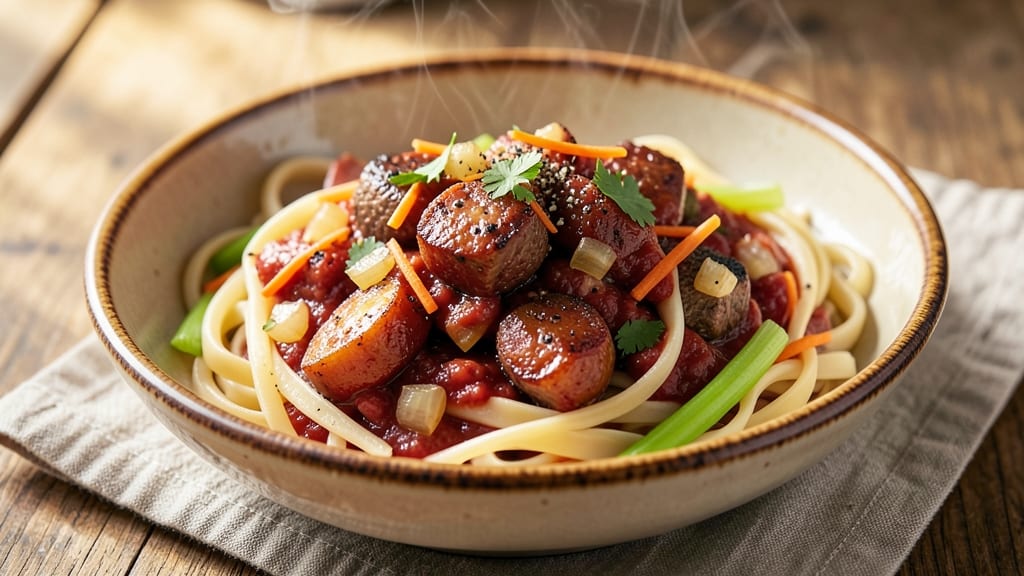
This beef and sausage bolognese recipe transforms a simple weeknight dinner into a restaurant-worthy masterpiece with its deep, rich tomato sauce and tender meat. The key lies in slow-cooking the meat until it's fork-tender while building layers of flavor through proper browning and simmering.
I've perfected this technique over years of testing, ensuring every bite delivers that perfect balance of savory, herby, and slightly sweet notes that define classic Italian bolognese.
The process begins with browning ground beef and Italian sausage in batches to develop a deep, caramelized crust that forms the flavor foundation. Then, we deglaze the pan with wine before adding aromatics and tomatoes to create a sauce that thickens beautifully as it simmers.
This method ensures the pasta absorbs the rich, velvety sauce without becoming mushy, creating the ideal al dente texture that pairs perfectly with the hearty meat mixture.
What makes this recipe truly special is its versatility—it works equally well in a traditional Dutch oven on the stovetop, a slow cooker for hands-off cooking, or even an Instant Pot for quick weeknight meals.
The result is a dish that's hearty enough to satisfy a hungry family but elegant enough for dinner guests, all while staying true to Italian traditions with modern convenience.
The final presentation elevates the dish from comforting to impressive, with perfectly cooked pasta topped with the rich bolognese and finished with fresh herbs and grated parmesan. This is the kind of recipe that becomes a staple in your rotation, offering both comfort and sophistication in every bowl.
Let's get started on creating your perfect bolognese.
Ingredients for beef and sausage bolognese
The foundation of restaurant-quality bolognese starts with these carefully chosen ingredients.
| Ingredient | Amount | Notes |
|---|---|---|
| Ground Beef 🥩 | 1 ½ lb | 80/20 fat ratio preferred |
| Italian Sweet Sausage 🌭 | 1 lb | Casings removed, crumbled |
| Yellow Onion 🧅 | 1 whole | Medium size, finely chopped |
| Carrot 🥕 | 2 whole | Medium size, finely diced |
| Celery Stalks 🌿 | 3 whole | Trimmed, finely chopped |
| Garlic Cloves 🧄 | 4 cloves | Peeled, minced |
| Extra-Virgin Olive Oil 🫒 | ½ cup | For browning meat |
| Dry Red Wine 🍷 | 1 cup | Bold variety like Cabernet |
| San Marzano Crushed Tomatoes 🍅 | 28 oz | High-quality canned tomatoes |
| Tomato Paste 🍅 | 2 tbsp | Smooth, not chunky |
| Beef Broth 💧 | 2 cups | Low-sodium preferred |
| Fresh Rosemary 🌿 | ¼ cup | Chopped, stems removed |
| Fresh Thyme 🌿 | ¼ cup | Leaves only, chopped |
| Fresh Basil 🌿 | ¼ cup | For finishing, chopped |
| Parmesan Cheese 🧀 | ½ cup | Freshly grated from block |
| Salt 🧂 | 1 ½ tsp | Kosher or sea salt |
| Black Pepper 🌶️ | 1 tsp | Freshly ground |
| Pasta 🍝 | 12 oz | Pappardelle or tagliatelle |
The meat selection is critical here—80/20 ground beef delivers that perfect fat-to-lean ratio for rich flavor and tender texture. For the sausage, Italian sweet sausage (not spicy) is non-negotiable—it adds just the right sweetness without overpowering. I always grab mine from Whole Foods or Trader Joe's where the quality is consistent. The San Marzano tomatoes? Worth every penny. Look for the 28-oz cans specifically labeled San Marzano—they're sweeter and less acidic than regular crushed tomatoes. For the aromatics, don't skip the celery—it rounds out the onion and carrot flavor beautifully.
No red wine? Substitute with beef broth plus 1 tbsp balsamic vinegar—it mimics the acidity. Fresh herbs are ideal, but dried thyme at one-third the amount works in a pinch. The tomato paste can be swapped for 1 cup additional crushed tomatoes if you're avoiding it, though I recommend keeping it for that concentrated umami punch. For the pasta, pappardelle or tagliatelle are traditional choices, but any wide noodle works. If you can't find San Marzano tomatoes, Mueller's or Rao's are solid alternatives—just avoid the watery brands.
This sauce tastes even better the next day as flavors meld. Store in an airtight container in the fridge for up to 5 days or freeze for 3 months. I like to portion the sauce into 2-cup containers so I can grab exactly what I need for meals. The pasta water is liquid gold—save about 1 cup before draining to toss with the sauce. For serving, always finish with fresh basil and grated Parmesan—it makes all the difference between good and restaurant-quality.
Why You'll Love This Recipe
- Foolproof Prep: I swear by this recipe because it’s actually simple—just brown the beef and sausage together, then toss in the diced onion, carrot, and celery (no fancy knife skills needed). The veggies soften while you stir, and by the time the sauce thickens, dinner’s ready.
- Rich, Meat-Packed Depth: That combo of ground beef and Italian sweet sausage? It’s where the magic happens. The sausage adds a smoky sweetness that cuts through the richness, while the beef keeps it hearty—like a hug in a bowl. (Yes, even my picky eaters ask for seconds.)
- Weeknight to Potluck: Make a double batch on Sunday, and you’ve got lunch covered all week. Or bring it to a gathering—it’s the one dish that disappears first, no matter the crowd. Pasta, rice, or mashed potatoes? This sauce works with all of them.
- Budget-Friendly Powerhouse: Ground beef and sausage stretch further than you’d think, especially when you bulk it up with cheap veggies like onion, carrot, and celery. Plus, leftovers reheat like a dream—no dryness, no fuss. My wallet and my family win every time.
Step-by-step instructions for beef and sausage bolognese
This method delivers rich, deep flavor with perfectly balanced textures every time.
Brown the Meat for Maximum Flavor
Heat a large Dutch oven over medium-high heat until hot. Add the 1.5 lb ground beef and 1 lb Italian sweet sausage, breaking them apart with a wooden spoon. Let the meat brown undisturbed for 5-7 minutes until it releases from the pan and develops a deep golden crust.
This initial browning creates the Maillard reaction, which builds complex flavors. Don't rush this step—crowding the pan will steam the meat instead of browning it. Once the meat is browned, use a slotted spoon to transfer it to a plate, leaving all the rendered fat in the pot. You should have about 2-3 tablespoons of fat remaining.
Sauté the Vegetable Base
Add the 0.5 cup extra-virgin olive oil to the Dutch oven if needed, then reduce heat to medium. Add the 1 whole yellow onion, 2 whole carrots, and 3 whole celery stalks, stirring frequently for 8-10 minutes until the vegetables soften and begin to caramelize. The onions should turn translucent, and the carrots and celery should yield to gentle pressure.
Add the 4 cloves garlic and cook for another 30 seconds until fragrant. This aromatic base forms the flavor foundation of your Bolognese. If the vegetables start to stick, add a splash of beef broth to deglaze and scrape up any browned bits from the bottom of the pot.
Deglaze and Simmer the Sauce
Pour in the 1 cup dry red wine and scrape the bottom of the pot to release all the flavorful browned bits. Let the wine simmer for 3-4 minutes until it reduces by half. Add the 28 oz San Marzano crushed tomatoes and 2 tbsp tomato paste, stirring to combine. Bring the mixture to a gentle simmer, then reduce heat to low.
Return the browned meat to the pot and add the 2 cups beef broth, 1.5 tsp salt, and 1 tsp black pepper. Stir in the 0.25 cup fresh rosemary and 0.25 cup fresh thyme. Partially cover the pot and let the sauce simmer gently for 1.5-2 hours, stirring occasionally. The sauce should reduce and thicken as it cooks. If it gets too thick, add a splash of broth or water to maintain consistency.
Finish with Fresh Herbs and Pasta
About 15 minutes before the sauce is done, bring a large pot of salted water to a boil. Add the 12 oz pasta (pappardelle or tagliatelle) and cook until 1 minute shy of package directions for al dente. Reserve 1 cup of pasta water before draining.
When the sauce is ready, stir in the 0.25 cup fresh basil and 0.5 cup Parmesan cheese. Toss the drained pasta with the sauce, adding reserved pasta water as needed to create a silky consistency. The sauce should cling beautifully to each strand of pasta, creating a rich, flavorful coating.
Serve Immediately
Transfer the Bolognese to serving plates and garnish with additional Parmesan cheese and fresh basil. Serve immediately while the pasta is hot and al dente. The sauce should be rich, slightly thick, and deeply flavorful, with a perfect balance of meaty, herby, and tomato notes.
This Bolognese delivers on all the promises of a classic Italian dish—deep, complex flavors, tender meat, and a sauce that clings perfectly to the pasta. Enjoy it with a crisp green salad and a glass of bold red wine for the full experience.
Pro Tips For Making Beef And Sausage Bolognese
- CRANK THE HEAT FIRST: Brown the beef and sausage hard—I mean, until they’re deep golden, not just pink. Low heat later, but start with a screaming-hot pan (medium-high) for 5-6 minutes. That crust locks in flavor, and rushing this step is how you end up with bland bolognese that tastes like it was simmered in water.
- DICE THE SOFFRITTO SMALL: Carrots, celery, and onion should be tiny—think 1/8-inch pieces, not rough chunks. I used to eyeball it, but now I pulse them in the food processor for 2 seconds. Finer bits cook faster, blend better, and prevent that sad, chewy texture in your sauce.
- REMOVE THE SAUSAGE CASINGS: Unless you’re going for a rustic, chunky texture, slice those sausages lengthwise and scrape out the meat—casings burn unevenly and turn rubbery. Spread the meat in the pan instead of dropping whole links, so it browns evenly. (Yes, it’s messy, but worth it.)
- SIMMER LONG, STIR OFTEN: After adding tomatoes and broth, don’t walk away. Stir every 10 minutes, especially the first 30 minutes, to prevent sticking and even out the color. I learned this the hard way—once I let a batch sit untouched, and half the meat turned gray while the rest burned.
Troubleshooting your beef and sausage bolognese
Meat Not Browning
If your meat stays pink or steams instead of browning, you're likely overcrowding the pan. Brown the meat in two batches if needed—this ensures a proper Maillard reaction and deep flavor.
Use a large Dutch oven or skillet with at least 12 inches of diameter to avoid crowding. Also, make sure your pan is hot enough before adding the meat. 🔥
Sauce Too Thin
If your sauce is watery after simmering, reduce the heat to low and let it cook uncovered for 10-15 extra minutes, stirring occasionally. For a quicker fix, mix 1 tbsp tomato paste with 2 tbsp cold water to create a slurry, then stir it into the sauce.
Simmer for another 5 minutes to thicken. Avoid adding too much broth initially—stick to 2 cups as called for in the recipe.
Vegetables Too Crunchy
If your onions, carrots, and celery aren't soft enough after 8-10 minutes, reduce the heat slightly and cook them for another 5 minutes, stirring occasionally. If they still feel firm, add 2 tbsp beef broth to the pan and cover for 3-4 minutes to steam them gently.
Overcooking can turn them mushy, so aim for tender but still slightly crisp texture.
Sauce Too Acidic
If your sauce tastes overly tangy from the tomatoes or wine, balance it by adding 1 tsp sugar or ½ tsp honey to sweeten the acidity. Alternatively, stir in 1 tbsp tomato paste to deepen the umami flavor.
Let the sauce simmer for 5 minutes after adding these adjustments to let the flavors meld. This is especially helpful if you used a bold red wine like Cabernet.
Pasta Mushy Texture
To prevent mushy pasta, cook it 1 minute less than package instructions suggest, then finish cooking in the sauce. Reserve 1 cup pasta water before draining—this starchy water helps the sauce cling to the noodles.
If your pasta still feels undercooked, toss it with the sauce off the heat for 1-2 minutes to absorb residual heat. Avoid overcrowding the pasta pot, and use enough salted water to cover the pasta by at least 2 inches.
Sauce Sticking to Pot
If your sauce sticks or burns, make sure your Dutch oven is properly heated before adding ingredients. Deglaze the pan with ½ cup beef broth or red wine after browning the meat to scrape up browned bits.
Stir frequently while cooking, and avoid letting the sauce come to a rolling boil—keep it at a gentle simmer. If it starts to stick, add a splash of broth and scrape the bottom with a wooden spoon. 💡
Nutrition facts
Frequently asked questions
Can I use ground turkey or chicken instead of beef?
While you can substitute ground turkey or chicken, the flavor and texture will differ significantly. For a lighter version, use 93% lean ground turkey and add 1 tbsp Italian seasoning to compensate for the milder taste. Chicken works best in a slow cooker method (6-8 hours) to prevent drying out. The fat in beef is essential for that rich, meaty depth traditional bolognese needs.
How do I make this in a slow cooker or Instant Pot?
For a slow cooker: Brown the meat first, then add all ingredients except pasta and herbs. Cook on low for 6-7 hours or high for 3-4 hours. Stir in fresh herbs at the end. For an Instant Pot: Sauté meat and veggies, then add remaining ingredients and cook on high pressure for 20 minutes, followed by a 10-minute natural release. Both methods work beautifully and save time!
What's the best pasta shape for this sauce?
Traditional choices are pappardelle or tagliatelle—their wide, flat surfaces perfectly cradle the rich sauce. For a modern twist, try fettuccine or rigatoni. Avoid small shapes like penne or farfalle—the sauce can get trapped in crevices and make the pasta soggy. If using gluten-free pasta, cook it 1 minute less than package instructions to prevent mushiness.
Can I make this sauce ahead of time?
This sauce tastes even better the next day as flavors meld. Store in an airtight container in the fridge for up to 5 days or freeze for 3 months. When reheating, warm over low heat with a splash of broth or water to restore consistency. For serving, always finish with fresh basil and grated Parmesan to brighten the flavors.
Why does my bolognese taste bland?
Bland flavor usually comes from skipping the browning step or not using enough fat. Always brown meat in batches to develop deep flavors, and don't skimp on olive oil. Boost umami by adding 1 tsp fish sauce or ½ tsp soy sauce (if not serving to vegetarians). For extra richness, stir in 1 tbsp balsamic vinegar at the end. Taste as you go—seasoning builds up over time!