
Soups & Stews
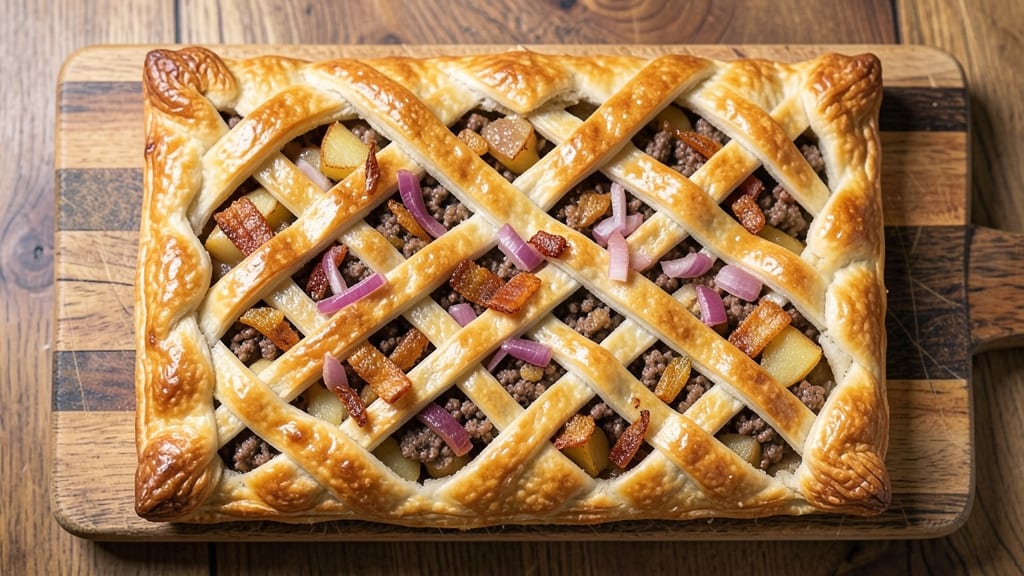
This beef and potato pasty recipe delivers the perfect balance of flaky crust and hearty filling, inspired by traditional British mining pasties. The secret lies in a well-seasoned beef and potato mixture encased in a buttery, golden pastry that stays crisp even when sliced.
I've perfected this recipe over years of testing, ensuring every bite delivers tender meat, creamy potatoes, and that satisfying crust you can't resist.
The filling combines ground beef with diced potatoes, onions, and a blend of savory seasonings—thyme, bay leaf, and black pepper—that create deep, aromatic flavors. The dough is made with flour, lard (for authenticity), and just enough butter to achieve that signature flaky texture.
What sets this recipe apart is the folding technique, which creates a compact, handheld shape that's ideal for picnics or hearty meals.
By the time it emerges from the oven, you'll have a pasty with a golden, crisp crust that gives way to tender beef and perfectly cooked potatoes inside.
The aroma alone will have everyone gathering around the table, and the first bite delivers that satisfying mix of textures—crispy, tender, and savory. This is comfort food at its finest, with a rustic charm that feels both nostalgic and satisfyingly modern.
Serve warm with a side of gravy for dipping or alongside a fresh salad for balance. The leftovers reheat beautifully, making this an excellent recipe for meal prep or sharing with friends. Let's get started on creating your own traditional pasty!
Ingredients for beef and potato pasty
Gather these hearty ingredients for a pasty with a golden crust and tender filling.
| Ingredient | Amount | Notes |
|---|---|---|
| Ground Beef 🥩 | 1 lb | 80% lean for best flavor |
| Russet Potatoes 🥔 | 2 lbs | Diced into 1/2-inch pieces |
| Yellow Onion 🧅 | 1 whole | Finely chopped, about 1 cup |
| All-Purpose Flour 🌾 | 3 cups | Plus 1 tbsp for dusting |
| Lard 🧈 | ½ cup | For authentic flaky texture |
| Unsalted Butter 🧈 | ¼ cup | Cold, cubed for layers |
| Ice Water 💧 | ½ cup | For dough elasticity |
| Fresh Thyme 🌿 | 1 tbsp | Leaves only, chopped fine |
| Bay Leaves 🍃 | 2 whole | Crushed lightly for flavor |
| Ground Black Pepper 🌶️ | 1 tsp | Freshly cracked for heat |
| Salt 🧂 | 1 ½ tsp | Kosher salt preferred |
| Beef Stock 🥫 | ¼ cup | For moisture and depth |
| Vegetable Oil 🫒 | 1 tbsp | For filling prep |
The potatoes and beef are the stars here. Russet potatoes make the filling creamy when cooked—peel and dice them evenly for consistent texture. For the beef, 80% lean ground chuck gives the best flavor and moisture. Costco or local butchers often sell pre-ground chuck at better prices than the grocery store. The onions? Yellow onions add sweetness that balances the savory beef. If you're short on time, Trader Joe's sells pre-diced onions in a bag—no chopping required. Just make sure they're finely chopped for even cooking.
No lard on hand? Substitute with equal parts butter and shortening—it won't be as flaky, but still delicious. Fresh thyme is ideal, but dried thyme at one-third the amount works in a pinch. The bay leaves can be skipped if you're sensitive to their flavor, but they add that classic pasty aroma. For the dough, all-purpose flour gives the best balance of structure and flakiness—bread flour makes it too tough. If you're making multiple pasties, double the dough recipe and freeze extras for later. The beef stock adds richness, but low-sodium broth prevents over-salting the filling.
Store the dough between layers of plastic wrap in the fridge for up to 2 days. The filling can be prepped ahead and kept in the fridge for 1 day—just assemble and bake when ready. For best results, bake immediately after assembling. If you need to freeze, bake first, then cool completely before wrapping tightly in foil. Reheats beautifully in the oven at 350°F for 10-15 minutes. The crust stays crisp even after reheating, while the filling warms through perfectly.
Why You'll Love This Recipe
- One-Bowl Wonder: I swear by this trick—mix the filling right in the flour-lard dough. No separate prep, no extra bowls. Just toss everything together, fold, and bake. That’s it. (Yes, even on a Tuesday night.)
- Crispy-Meets-Creamy Magic: The secret’s in the lard crust—golden, shatteringly crisp—while the inside stays tender. Russets hold their shape, and the onion caramelizes into sweet little pockets when baked. Between us, that contrast is ridiculously satisfying.
- Lunchbox Legend: Make two, slice them up, and you’ve got foolproof packed lunches. The crust stays sturdy enough to handle a car ride, and the filling reheats like a dream. My kid’s favorite? The "crust sandwiches" she sneaks when she thinks I’m not looking.
- Budget Powerhouse: Ground beef stretches far, potatoes bulk it up, and flour/lard cost pennies. Honestly, this feeds four for under $10—and leftovers reheat just as well. I’ll be real: it’s my go-to when groceries are tight, but no one ever guesses.
Step-by-step instructions for beef and potato pasty
Master the art of pasty-making with this foolproof method for a golden, flaky crust that perfectly encases your hearty filling.
Prepare the Filling for Maximum Flavor
In a large skillet, heat 1 tablespoon vegetable oil over medium-high heat. Add the 1 whole yellow onion (finely chopped) and cook for 5-6 minutes until softened and translucent. This is your flavor foundation—don't rush this step or the onions will burn.
Add the 1 lb ground beef and cook until browned, breaking it apart with a wooden spoon. Drain any excess fat if needed. Stir in the 2 lbs russet potatoes (diced into ½-inch pieces), 1 tbsp fresh thyme, 2 crushed bay leaves, 1 tsp ground black pepper, and 1.5 tsp salt. Pour in the ¼ cup beef stock and cook for 8-10 minutes until the potatoes begin to soften. The filling should be moist but not saucy—this ensures a tender, flavorful center.
Make the Flaky Pastry Dough
In a large bowl, combine the 3 cups all-purpose flour and 1 tablespoon flour for dusting. Cut in the ½ cup lard and ¼ cup unsalted butter (both cold and cubed) using a pastry cutter or your fingers until the mixture resembles coarse crumbs. This step creates the signature flaky layers—work quickly to keep everything cold.
Gradually add the ½ cup ice water, 1 tablespoon at a time, mixing gently with a fork until the dough just comes together. Knead lightly on a floured surface for 2-3 minutes until smooth. Wrap in plastic wrap and refrigerate for 30 minutes—this resting period relaxes the gluten for easier rolling and prevents shrinking.
Assemble the Pasty with Precision
Roll out the chilled dough on a lightly floured surface to form a 12-inch circle about ⅛-inch thick. Cut the dough in half, then roll each half into a 6-inch circle. Spoon half of the filling onto one circle, leaving a 1-inch border around the edges. Top with the other dough circle and press the edges firmly to seal.
Use a sharp knife to trim excess dough, then crimp the edges with a fork or your fingers to create a decorative seal. Cut a small slit in the center of the top crust to allow steam to escape during baking—this prevents bursting and ensures a crispy finish. Place the pasty on a parchment-lined baking sheet.
Bake Until Golden and Crisp
Preheat your oven to 400°F. Brush the top crust with a lightly beaten egg (optional for extra shine) and bake for 45-50 minutes until the crust is deep golden brown and the filling is bubbling through the steam slit. The internal temperature of the filling should reach 190°F—this guarantees tender potatoes and fully cooked beef.
Let the pasty rest for 10 minutes before serving. This resting period allows the filling to set slightly, making it easier to slice without losing the juices. The crust should be crispy on the outside with flaky layers that melt in your mouth, while the inside remains moist and savory. Serve warm with a side of mustard or horseradish for the full Cornish pasty experience.
Pro Tips For Making Beef And Potato Pasty
- PARBOIL POTATOES FIRST: Toss peeled Russets into boiling water for 3 minutes before stuffing them in—this keeps them from turning gluey inside. I learned this the hard way when my pasties collapsed like sad pancakes after baking.
- CRUMBLE BEFORE SEARING: Break the ground beef into rough chunks (no smaller than walnut-sized) before browning—it cooks faster and stays juicier. Finer crumbles turn to paste, and nobody wants a mushy filling.
- CHILL THE DOUGH: Wrap the lard-flour crust in plastic and refrigerate for at least 30 minutes before rolling—cold dough seals better and resists shrinking. Skipping this means your pasty might look like a sad, deflated balloon.
- VENT THE TOP: Cut a small X on the crust’s top before baking—steam escapes, preventing a soggy mess inside. Yes, it’s less impressive-looking, but your filling will stay dry and flavorful. (Your future self will thank you.)
Wine and beer pairings for this dish
Red Wine Classics
A robust Pinot Noir from the Willamette Valley in Oregon is my go-to pairing for beef and potato pasty. Its bright acidity and red fruit notes cut through the richness of the beef while complementing the earthy potatoes.
Look for a bottle with 12-14% ABV—something like Domaine Serene Pinot Noir delivers that perfect balance without overpowering the dish. Serve slightly chilled (55-60°F) to enhance its vibrant flavors. 🍷
English Ale Harmony
For beer lovers, a well-hopped English Pale Ale like Fuller's ESB brings out the savory depth of the pasty. The malty sweetness and subtle caramel notes from the ale mirror the caramelized onions in the filling, while the hop bitterness provides a refreshing contrast.
Aim for a beer with 5.2-5.5% ABV—it’s robust enough to stand up to the hearty flavors without being too heavy. Serve at 45-50°F for the best balance of malt and hops.
Cider Pairing
Don’t overlook dry English cider as a surprising yet excellent match. A crisp Westons Dry Cider with its apple and pear notes adds a fruity brightness that pairs beautifully with the thyme and bay leaf in the filling.
The slight tartness cleanses your palate between bites, making it a refreshing choice. Opt for a cider with 5-6% ABV and serve it well-chilled (45°F) to highlight its crispness. 🍏
Port for Dessert
If you're serving pasty as part of a larger meal, finish with a glass of Ruby Port to complement the richness. The sweet, fruity notes of a Graham's 10-Year-Old Ruby Port echo the caramelized flavors in the crust and filling.
Serve it slightly warmed (65-70°F) to release its aromatic qualities. A small 2-ounce pour is perfect for balancing the meal without overwhelming it.
Regional Beer Twist
For a regional twist, try a Cornish Ale like Sharp’s Doom Bar if you're in the UK or serving to guests who appreciate local flavors. This strong ale (around 6.5% ABV) has a malty sweetness and subtle hoppiness that pairs wonderfully with the pasty’s savory filling.
Serve at 50°F to enjoy its full complexity without bitterness overpowering the dish.
Nutrition facts
Frequently asked questions
Can I use steak instead of ground beef for this pasty?
Yes, but you'll need to adjust the cooking method. For best results, slice 1 lb of beef sirloin into thin strips and brown them quickly in a hot skillet before adding to the potatoes. The steak version will have a slightly different texture—more tender chunks rather than ground meat—but still delicious. Just reduce the beef stock to 2 tablespoons since steak releases less moisture.
How do I make the crust extra flaky?
The secret is keeping everything cold and using the right technique. Work quickly when cutting in the lard and butter, and avoid overworking the dough. For maximum flakiness, freeze the dough for 20 minutes before rolling, then roll it between two sheets of parchment paper to prevent sticking. Brush the bottom crust with beaten egg before adding filling—this creates a golden barrier that enhances flakiness.
What's the best way to reheat leftover pasty?
Oven reheating preserves the crust's crispiness best. Place slices on a baking sheet and heat at 350°F for 10-15 minutes until warmed through. For microwave reheating, cover with a damp paper towel and heat for 30-45 seconds—this prevents the crust from becoming soggy. Never reheat in the air fryer as it dries out the filling too quickly.
Can I make this pasty ahead of time?
Assemble the pasty and refrigerate it overnight (unbaked) for deeper flavors. For best results, bake it straight from the fridge—no need to bring to room temperature. You can also freeze unbaked pasties for up to 1 month (wrap tightly in foil). Bake from frozen, adding 10-15 minutes to the cooking time. The crust will still be crispy when done.
Why did my pasty turn out soggy?
Soggy pasties usually result from one of three issues: overworked dough, insufficient steam escape, or underbaked filling. First, ensure you cut a steam slit in the top crust. Second, verify the filling reaches 190°F internal temp. Finally, check your dough—if it feels sticky or you over-kneaded, the gluten will absorb too much moisture. For next time, chill the dough longer and roll it thinner.