
Main Courses
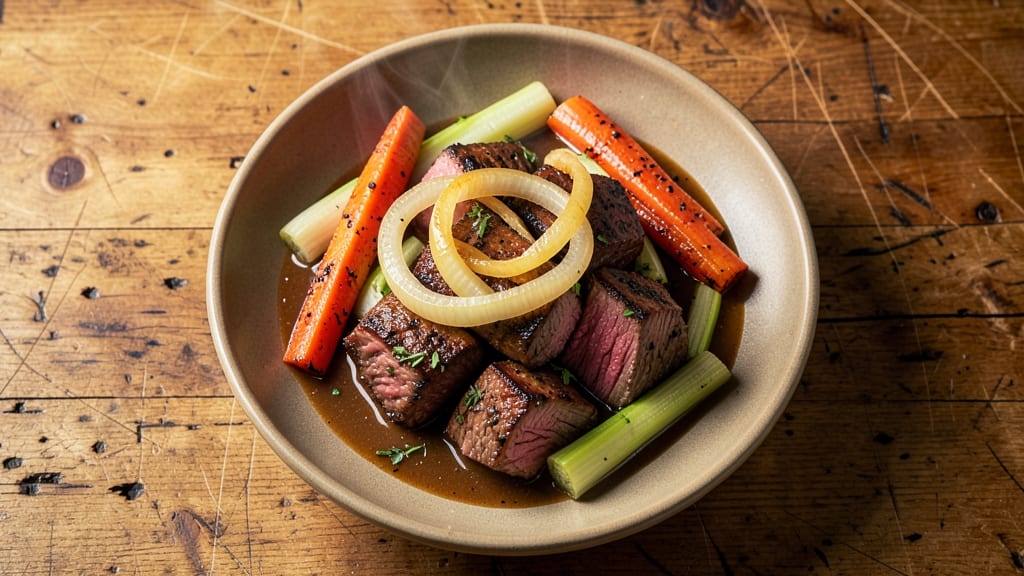
Slow-braised Bavarian beef transforms tough cuts into melt-in-your-mouth perfection through patience and technique—this recipe delivers restaurant-quality results with a rich, caramelized fond that forms the base for velvety gravy. The key lies in searing the meat deeply before braising it low and slow, allowing flavors to meld into a deeply satisfying dish that feels like a home-cooked hug.
What sets this recipe apart is the balance between simplicity and depth—just a handful of pantry staples create layers of flavor through proper technique. You'll start with a deep sear to develop that signature fond, then braise the beef until fork-tender while building a rich sauce from the browned bits.
The result is beef so tender it practically falls apart, all swimming in a sauce that's rich yet balanced with just the right acidity.
This isn't just another beef braise—it's a complete Bavarian experience with traditional sides like fluffy dumplings and sweet-tart red cabbage. The dumplings soak up the rich gravy beautifully, while the cabbage adds a refreshing contrast.
Every bite delivers that perfect harmony of textures and flavors that makes this dish a comfort food classic.
Perfect for special occasions or cozy family dinners, this recipe serves 6-8 and comes together in about 4 hours of active time (though much of that is hands-off braising).
The aromas alone will have everyone gathering at the table—just wait until they taste the first forkful. Let's get started with the full recipe.
Ingredients for bavarian beef
Sixteen ingredients transform tough beef into melt-in-your-mouth Bavarian perfection through slow braising.
| Ingredient | Amount | Notes |
|---|---|---|
| Chuck Roast 🥩 | 3 lb | Well-marbled, cut into 1.5-inch cubes |
| All-Purpose Flour 🌾 | ½ cup | For dredging beef cubes |
| Yellow Onion 🧅 | 2 whole | Thinly sliced, about 4 cups |
| Carrots 🥕 | 4 whole | Peeled, cut into 1-inch chunks |
| Celery Stalks 🥬 | 4 whole | Cut into 1-inch pieces |
| Garlic Cloves 🧄 | 6 cloves | Minced, about 2 tbsp |
| Tomato Paste 🍅 | ½ cup | High-quality, no sugar added |
| Dry Red Wine 🍷 | 1 cup | Bold variety like Cabernet Sauvignon |
| Beef Broth 💧 | 4 cups | Homemade or high-quality store-bought |
| Bay Leaves 🌿 | 2 whole | Fresh preferred, dried works |
| Thyme Sprigs 🌿 | 4 whole | Fresh, about 1 tbsp leaves |
| Black Peppercorns 🌶️ | 1 tbsp | Freshly cracked, about 1 tsp |
| Salt 🧂 | 1 ½ tsp | Kosher or sea salt |
| Unsalted Butter 🧈 | 4 tbsp | Cold, for gravy |
| All-Purpose Flour 🌾 | 2 tbsp | For gravy thickening |
The chuck roast is non-negotiable here—its marbling delivers that signature richness. Costco or local butchers often have the best cuts, but any well-marbled chuck works. Look for bright red color and visible fat; avoid anything grayish or overly lean. Slice the roast into 1.5-inch cubes for even cooking. The flour dredge is crucial—it helps develop that caramelized fond during the sear. Pat the beef dry first, then toss each piece in flour before browning. For the vegetables, organic carrots and celery from the grocery store's produce section work perfectly—they hold up well during braising.
No red wine? Substitute beef broth with a splash of balsamic vinegar for depth. Fresh thyme and bay leaves are ideal, but dried works at half the amount. The tomato paste can be swapped for 1 cup crushed tomatoes if you prefer. For the beef broth, homemade is best, but high-quality store-bought like Kirkland Signature works in a pinch. If you're short on time, pre-cut vegetables from the grocery store's prepped veggie section save chopping time. The butter for gravy should be cold and unsalted—it adds richness without overpowering the beef's natural flavor.
This dish tastes even better the next day as flavors meld. Store in an airtight container in the fridge for up to 5 days or freeze for 3 months. For reheating, add a splash of broth to prevent drying. The gravy thickens as it cools, so thin with extra broth if needed. Portion into individual containers for easy lunches—just reheat with a splash of water. The vegetables and broth can be prepped ahead and refrigerated for 2 days before braising.
Why You'll Love This Recipe
- One-Pot Magic: I swear by this recipe when I need dinner on the table without a million dishes. Chuck roast, onions, carrots, and celery all simmer together—no separate pans, no stress. Just dump, cover, and let it work its slow-cook wonder.
- Deep, Rich Payoff: That chuck roast? It turns tender after hours of braising, falling apart at the touch of a fork. The flour helps thicken the sauce into something velvety, while the carrots and celery add natural sweetness that balances the beef’s savory depth.
- Leftovers That Shine: Between us, this dish begs for seconds—and then thirds. The flavors only get better the next day, so I always make extra. Sandwich it in buns for a hearty lunch, or toss it into a pasta for a lazy weeknight dinner.
Step-by-step instructions for slow-braised Bavarian beef
This method transforms tough chuck roast into melt-in-your-mouth perfection through precise timing and technique.
Prepare the Beef and Vegetables
Pat the 3 lb chuck roast dry with paper towels—this ensures a better sear later. Cut into 1.5-inch cubes (about 6-8 pieces) and place them in a large bowl. Add the 0.5 cup all-purpose flour, 1.5 tsp salt, and 1 tbsp freshly cracked black peppercorns, then toss until evenly coated. Let the seasoned beef sit at room temperature for 15 minutes while you prep the vegetables.
In a separate bowl, combine the 2 whole yellow onions (thinly sliced), 4 whole carrots (cut into 1-inch chunks), 4 whole celery stalks (cut into 1-inch pieces), and 6 cloves garlic (minced). This aromatic trio forms the flavor base for your braise. Keep these ingredients separate from the beef until you're ready to brown everything together.
Brown the Beef and Vegetables
Heat a heavy Dutch oven or large pot over medium-high heat (no oil needed—the beef's fat will render). Working in batches if needed, add the floured beef cubes and let them sear undisturbed for 3-4 minutes per side until deep golden brown and crispy. Transfer the browned beef to a plate and set aside.
In the same pot, add the prepared vegetables and cook for 5-6 minutes, stirring occasionally, until they begin to soften and release their natural juices. This step builds flavor through caramelization—the foundation of your rich fond. Once the vegetables are tender, add the 0.5 cup tomato paste and stir for 1 minute to deepen the color and flavor.
Deglaze and Simmer
Pour in the 1 cup dry red wine, scraping up all the browned bits from the bottom of the pot with a wooden spoon. This deglazing step captures all the concentrated beef flavor that would otherwise go to waste. Let the wine simmer for 3-4 minutes until reduced by half and slightly thickened.
Add the 4 cups beef broth, 2 whole bay leaves, and 4 whole thyme sprigs to the pot. Return the browned beef to the pot, making sure it's submerged in the liquid. Bring to a gentle simmer, then reduce heat to low and cover partially with a lid. The liquid should bubble softly—this is the key to tender, not mushy, beef.
Braise Until Fork-Tender
Let the beef braise uncovered for 2.5-3 hours until the meat is fork-tender and pulls apart easily. You'll know it's ready when the internal temperature reaches 200-205°F (use a meat thermometer for accuracy). The vegetables should be completely tender, and the sauce should have thickened into a rich, caramelized fond.
Real talk: Don't rush this step. The slow cooking breaks down the collagen in the beef, transforming it into gelatin that makes each bite luxurious. If the liquid reduces too much, add ½ cup hot water to maintain the proper consistency. The beef should be bathed in flavorful sauce, not dried out.
Finish with Butter and Thicken the Sauce
Once the beef is tender, remove it from the pot and set it aside. Strain the braising liquid through a fine-mesh sieve into a clean pot to remove any herb stems or vegetable pieces. Return the liquid to medium heat and whisk in the 2 tbsp all-purpose flour to thicken the sauce.
Add the 4 tbsp cold unsalted butter, one tablespoon at a time, whisking constantly until the sauce becomes glossy and velvety. This step creates the signature Bavarian richness—don't skip it. Return the beef to the pot and toss to coat evenly in the sauce. Serve immediately with crusty bread or over mashed potatoes to soak up every last drop of that luxurious fond.
Pro Tips For Making Bavarian Beef
- Sear the Chuck Roast Hard: I learned this the hard way—skipping the deep sear means your beef stays tough. Get that roast screaming hot in a Dutch oven with oil for 4-5 minutes per side until it’s dark brown. The crust locks in flavor and keeps it juicy during the long braise.
- Dice the Veggies Small: Big onion chunks and celery stalks? Nope. Cut everything into ¼-inch pieces—onions, carrots, celery—so they soften evenly and don’t turn to mush. (Yes, it takes 10 extra minutes, but trust me, it matters.)
- Deglaze with Beer Early: Don’t wait until the end to add the beer. Pour it in right after searing, let it bubble for 2 minutes, then scrape up those browned bits. That’s where the flavor lives, and skipping it means a dull sauce.
- Skip the Crowding in the Dutch Oven: After searing, pile everything in but don’t overcrowd. If your roast and veggies are packed too tight, they’ll steam instead of braise. Add a splash of liquid first, then layer ingredients loosely—your future self will thank you.
Dietary considerations for this bavarian beef
Gluten-Free Adaptation
Traditional Bavarian beef uses flour for dredging and thickening gravy, but you can easily adapt this recipe. Replace the 0.5 cup all-purpose flour for dredging with 0.5 cup gluten-free all-purpose flour blend like Bob's Red Mill 1-to-1.
For the gravy, use 2 tbsp cornstarch or arrowroot powder instead of flour to thicken the sauce. Just whisk it into the strained braising liquid and cook until thickened. 🌾
Dairy-Free Option
This recipe includes butter for finishing, but you can make it dairy-free with a few simple swaps. Use 4 tbsp vegan butter like Miyoko's or Earth Balance instead of unsalted butter.
For extra richness, add 2 tbsp coconut cream at the end for a velvety texture. The flavor remains just as rich and satisfying.
Low-Carb Adjustments
To reduce carbs, skip the flour dredge entirely and sear the beef in 1 tbsp olive oil instead. For the gravy, use 2 tbsp xanthan gum (a pinch at a time) to thicken the sauce instead of flour.
This keeps the dish low-carb while maintaining the deep, savory flavors. Pair it with cauliflower mash or roasted Brussels sprouts for a complete low-carb meal.
Allergen-Friendly Tips
For nut allergies, ensure all ingredients are nut-free—especially if using store-bought tomato paste or broth. Check labels for hidden allergens. For soy allergies, avoid soy-based thickeners and stick with cornstarch or arrowroot. Always read ingredient labels carefully to avoid cross-contamination, especially when using pre-made broths or sauces.
Vegetarian Swap
While not traditional, you can create a vegetarian version using mushrooms or hearty lentils instead of beef. Sauté 1 lb cremini mushrooms or 1 cup cooked brown lentils with the vegetables, then proceed with the braising instructions.
Use vegetable broth instead of beef broth, and add 1 tbsp soy sauce for umami depth. The result is a hearty, flavorful dish that still feels comforting and satisfying. 🌱
Nutrition facts
Frequently asked questions
Can I use a different cut of beef for this recipe?
While chuck roast is ideal for its marbling and tenderness, you can substitute with brisket or short ribs—both work well for braising. Avoid lean cuts like sirloin, as they won't become tender enough. If using brisket, cut it into 1.5-inch cubes and braise for 3-4 hours instead of 2.5-3 hours.
What's the best way to reheat leftover Bavarian beef?
Reheat gently in a skillet with a splash of beef broth over low heat to prevent drying. Avoid microwaving—it can make the sauce watery. For extra richness, add a pat of butter or a drizzle of red wine while reheating. Leftovers taste even better the next day as flavors meld!
How do I make this dish gluten-free?
Replace the flour dredge with 0.5 cup gluten-free flour blend (like Bob's Red Mill 1-to-1) and use cornstarch or arrowroot powder instead of flour to thicken the gravy. The flavor stays rich and satisfying, just without the gluten. Always check labels on broths and tomato paste for hidden gluten.
Can I make this recipe in a slow cooker?
Yes! Brown the beef and vegetables as directed, then transfer everything to a 6-quart slow cooker. Add all remaining ingredients (wine, broth, herbs) and cook on low for 6-8 hours or high for 4-5 hours. The slow cooker's gentle heat ensures tender beef without drying it out. Finish with butter as directed.
What's the secret to the best Bavarian beef sauce?
The magic happens in the fond—those browned bits at the bottom of the pot! Always deglaze with wine to capture them, then simmer uncovered to thicken naturally. The butter finish adds richness, but don't overcook it or the sauce will separate. For extra depth, add a splash of red wine vinegar at the end for brightness.