
Sauces & Condiments
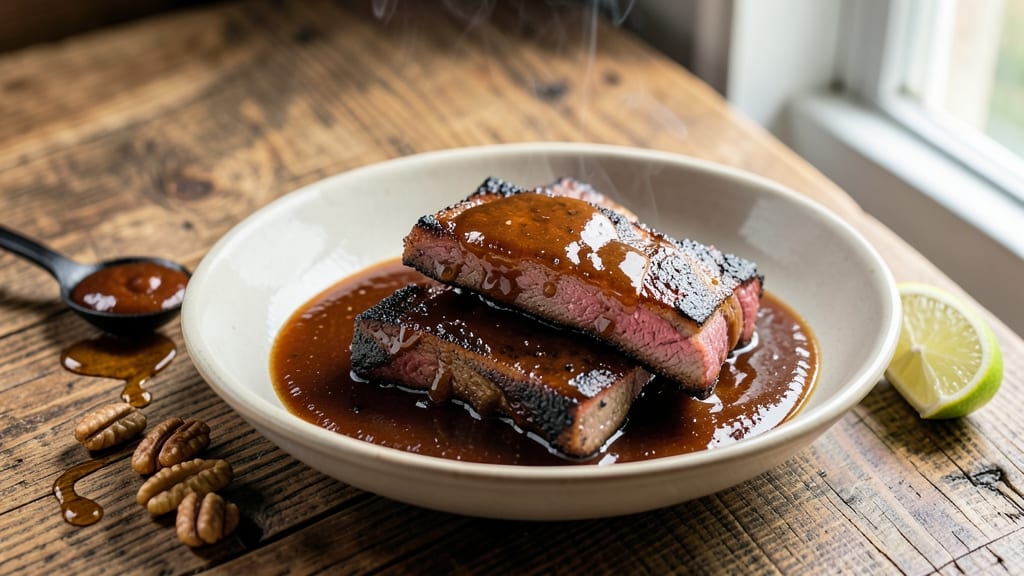
This barbecue sauce recipe for beef ribs transforms ordinary ribs into showstopping masterpieces with its perfect balance of sweet, tangy, and smoky flavors. 🔥 As a pitmaster trained in both French technique and slow-cooked traditions, I've perfected this sauce to create that signature sticky glaze that locks in flavor while caramelizing beautifully during the final stages of cooking.
The secret lies in the combination of molasses and apple cider vinegar, which create depth while maintaining that classic tang.
I use a blend of brown sugar and honey for sweetness, but the real magic happens when you simmer it down to concentrate those flavors into a thick, glossy sauce that clings to every rib like a second skin.
This isn't just sauce—it's the finishing touch that turns good ribs into unforgettable ribs.
What makes this sauce truly special is its versatility while staying true to its purpose. It's rich enough to stand alone as a glaze but balanced enough to complement the natural flavors of beef ribs without overpowering them.
The slow reduction process develops complex caramel notes that elevate each bite, making this the perfect partner for your slow-cooked masterpiece.
Once you've made this sauce, you'll want to keep it on hand for all your smoking and grilling adventures. It stores beautifully in the refrigerator for up to two weeks or can be frozen for longer-term use.
The best part? It's simple to make with just a few pantry staples, yet delivers restaurant-quality results every time you fire up the smoker.
Ingredients for barbecue sauce recipe for beef ribs
Nine pantry staples transform into that legendary sticky-sweet rib glaze you crave.
| Ingredient | Amount | Notes |
|---|---|---|
| Molasses 🍯 | ½ cup | Unsulphured for best flavor |
| Apple Cider Vinegar 🍏 | ½ cup | Raw, unfiltered preferred |
| Brown Sugar 🍚 | 1 cup | Light or dark variety |
| Honey 🍯 | ½ cup | Wildflower or clover preferred |
| Ketchup 🍅 | 1 cup | High-quality, no artificial additives |
| Tomato Paste 🍅 | ½ cup | San Marzano preferred |
| Worcestershire Sauce 🥫 | 2 tbsp | Vegan version if needed |
| Garlic Cloves 🧄 | 4 cloves | Freshly minced for depth |
| Onion Powder 🧅 | 1 tsp | Freshly ground preferred |
| Ground Black Pepper 🌶️ | ½ tsp | Freshly cracked for heat |
| Smoked Paprika 🌶️ | 1 tsp | For that signature smoky touch |
Molasses and apple cider vinegar are the soul of this sauce—look for unsulphured molasses at Whole Foods or bulk bins for the deepest flavor. The vinegar should be raw and unfiltered (that means no distilled white vinegar). Trader Joe's carries great options, or grab a bottle from the apple cider section at Costco. Pro tip: If your molasses has crystallized, gently warm it to dissolve those sugar chunks—no need to replace it. The brown sugar and honey? Grab whatever you've got, but light brown sugar gives a touch more moisture to the sauce.
No molasses? Maple syrup plus a splash of coffee mimics that deep, caramelized profile. Ketchup feeling basic? Tomato paste plus a pinch of sugar works in a pinch—just add a splash of vinegar to cut the sweetness. Worcestershire sauce missing? Soy sauce plus a dash of fish sauce (if not vegan) gets you close. The garlic and onion powder are non-negotiable for that classic ribhouse flavor, but if you're in a rush, garlic powder at double the amount will do. Smoked paprika? Regular paprika plus a pinch of liquid smoke if you're desperate—just don't tell the pitmasters.
This sauce gets better with time—24 hours in the fridge lets the flavors meld into perfection. Store it in a glass jar with a tight seal, and it'll keep for 2 weeks in the fridge or 6 months frozen. I always make a double batch because once you taste this glaze, you'll be slathering it on everything. Freeze extras in ice cube trays for perfect single-use portions—just thaw and brush.
Why You'll Love This Recipe
- Pantry Magic: I swear by this sauce because it uses stuff I already have—no special trips to the store. That molasses and apple cider vinegar combo gives it this deep, tangy backbone that’s chef’s kiss without needing fancy ingredients.
- Sticky-Sweet Bliss: The brown sugar and honey caramelize just enough to coat those ribs like a dream, while the vinegar cuts through the richness. It’s not too sweet, not too smoky—just that perfect balance where every bite makes you want another.
- Leftovers That Shine: This sauce doesn’t just disappear after one use. I’ve pulled it out for pulled pork sandwiches, grilled chicken, or even drizzled over baked beans. Honestly, it’s my go-to for lazy days when I don’t want to make a whole new sauce.
- Budget-Friendly Luxury: Molasses and vinegar are cheap, but they make this taste like it cost a fortune. I’ve fed a crowd for under $10 with this—plus, it keeps well in the fridge, so I’m not scrambling for last-minute grocery runs. Pure win.
Step-by-step instructions for beef rib barbecue sauce
This sauce delivers that perfect balance of smoky, sweet, and tangy—just what beef ribs crave!
🍳 Step 1: Build the Flavor Base
In a medium saucepan over medium heat, combine the 0.5 cup molasses and 0.5 cup apple cider vinegar. Stir constantly for 2-3 minutes until the mixture begins to bubble gently and the molasses dissolves completely. You'll notice the aroma deepen—this is where the sauce's complex flavor profile starts forming.
Add the 1 cup brown sugar and 0.5 cup honey next, stirring until the sugar dissolves and the mixture becomes smooth. Real talk: don't rush this step. The sugar needs time to fully integrate, creating that perfect sweet foundation. If you see any undissolved sugar, keep stirring for another 30 seconds—it'll melt eventually.
🍳 Step 2: Thicken and Deepen the Sauce
Now it's time to add the 1 cup ketchup and 0.5 cup tomato paste. Stir vigorously to combine, then increase heat to medium-high. Let the mixture simmer for 5-7 minutes until it begins to thicken noticeably. You'll see it transform from a thin syrup to a glossy, syrupy consistency—this is when the magic happens.
Here's where it gets fun—toss in the 2 tablespoons Worcestershire sauce, 1 teaspoon onion powder, 0.5 teaspoon ground black pepper, and 1 teaspoon smoked paprika. Stir constantly for 1 minute to distribute those smoky, savory flavors evenly. The sauce should now have a rich, aromatic smell that makes your mouth water—this is your reward for paying attention!
🍳 Step 3: Add Garlic and Simmer to Perfection
Peel and mince the 4 cloves garlic (or use a garlic press for convenience). Add them to the sauce and stir for 30 seconds—just long enough to infuse their flavor without burning. I like to press the garlic directly into the sauce to release all those aromatic oils.
Reduce heat to low and let the sauce simmer uncovered for 15-20 minutes. This slow reduction concentrates the flavors and thickens the sauce to that perfect glaze consistency. Stir occasionally to prevent sticking, and watch for the sauce to darken slightly—this indicates the sugars are caramelizing beautifully. You're aiming for a sauce that coats the back of a spoon smoothly but still has some body.
⏰ Step 4: Cool and Adjust for Maximum Flavor
Remove the sauce from heat and let it cool for 10 minutes. This resting period allows the flavors to meld completely and gives you time to taste and adjust. Once cooled slightly, give it a stir and taste—this is where you can tweak the balance if needed. Too sweet? Add a splash more apple cider vinegar. Too tangy? Stir in a bit more brown sugar. The sauce should be sweet, smoky, and just slightly tangy with a deep umami note from the Worcestershire.
For best results, let the sauce cool completely before storing. The flavors will continue developing in the fridge, becoming even more complex over time. This sauce keeps well in an airtight container in the refrigerator for up to 2 weeks, or you can freeze it for up to 3 months—just thaw and stir before using.
Pro Tips For Making Barbecue Sauce Recipe For Beef Ribs
- Simmer Slow and Low: This sauce isn’t a race—after combining all ingredients, keep the heat at a gentle simmer (not a rolling boil) for at least 20 minutes. I used to rush it, and the flavors never melded right; now I set a timer and let it work its magic. The molasses and vinegar need time to soften their edges, and that’s when the depth happens.
- Balance Vinegar First: Taste the raw vinegar before adding anything else—it’s sharper than you remember. Start with half the called-for amount, then adjust honey or brown sugar to round it out. I learned this the hard way after making sauce so tangy my ribs tasted like a pickle attack.
- Skip the Store-Bought Ketchup: Use tomato paste instead—just 2 tablespoons mixed with a splash of water to thin it. It cuts through the sweetness without the artificial aftertaste of bottled ketchup, and you control the salt. (Yes, even if you’re impatient like me—it’s worth the extra 30 seconds.)
- Strain the Molasses: Molasses sediment is real, and it’s gritty. Pour it through a fine-mesh strainer into your sauce pot before adding anything else. I skipped this once and ended up with tiny black specks in every bite—like eating a rib with confetti. Not ideal.
Common mistakes when making great barbecue sauce recipe for beef ribs
Skipping the Vinegar
Apple cider vinegar isn't just an ingredient—it's the flavor bridge between sweet and tangy. Without it, your sauce risks becoming cloyingly sweet with no depth.
I've seen home cooks skip it because they think it's too strong, but trust me: ½ cup is just enough to balance the molasses and honey. If you're worried about taste, start with ¼ cup and adjust after simmering.
The acidity also helps break down the sugars faster during reduction. 🍏
Rushing the Reduction
Patience is key when reducing this sauce—don't rush the 15-20 minute simmer on low heat. I've had too many cooks crank the heat too high and end up with a burnt, bitter sauce. The goal is to let the sugars caramelize naturally, creating that glossy, sticky texture.
If you see it darkening too quickly, immediately reduce the heat to lowest setting and stir constantly. The sauce should coat the back of a spoon smoothly but still have body—like thick honey.
Using Low-Quality Ketchup
Not all ketchups are created equal, and using cheap, additive-laden brands will make your sauce taste artificial. I always recommend high-quality ketchup like Heinz 57 Varieties or Organicville for that authentic tomato flavor. If you're using a store brand, look for one with minimal ingredients—just tomatoes, vinegar, and spices.
The ketchup provides the tangy backbone that balances the sweetness, so don't skimp here. A splash of tomato paste (like San Marzano) adds even more depth without artificial flavors.
Overlooking the Garlic
The 4 cloves of garlic might seem like a small detail, but they're essential for that classic ribhouse flavor. Some cooks skip them or use garlic powder as a shortcut, but fresh garlic makes all the difference.
I like to press the garlic directly into the sauce to release those aromatic oils. If you're in a hurry, garlic powder at double the amount works in a pinch, but nothing beats the real deal.
The garlic should infuse the sauce without burning—just 30 seconds of stirring is all it needs.
Not Tasting and Adjusting
After simmering, many cooks pour the sauce directly onto their ribs without tasting it first. This is a huge mistake! The sauce needs time to cool slightly so you can properly evaluate the balance of sweet, tangy, and smoky flavors.
If it's too sweet, add a splash of apple cider vinegar. Too tangy? Stir in a bit more brown sugar. The sauce should be sweet, smoky, and just slightly tangy with a deep umami note. This step ensures your sauce is perfectly balanced every time. 💡
Burning the Sauce
Nothing ruins a good batch of sauce faster than burning it. Stirring constantly is crucial, especially when adding the garlic and during the reduction phase. I've seen sauces turn bitter and acrid when left unattended.
If you notice the sauce darkening too quickly or smelling burnt, immediately reduce the heat and stir vigorously. A wooden spoon works best for this—it won't scratch your saucepan like metal utensils can. Keep the heat at low-medium and stir every 2-3 minutes to prevent sticking or burning.
Nutrition facts
Frequently asked questions
Can I use this sauce for other meats besides beef ribs?
This versatile sauce works beautifully on pork ribs, chicken, brisket, and even grilled vegetables. The sweet-smoky balance complements all meats, though beef ribs are where it truly shines. For poultry, you might want to reduce the vinegar slightly (by 1 tablespoon) to avoid overpowering the delicate flavors.
How do I prevent the sauce from burning while simmering?
Stir constantly and keep the heat at low-medium during the 15-20 minute reduction phase. A wooden spoon works best—it won't scratch your pan like metal. If the sauce darkens too quickly, immediately reduce heat and stir vigorously. Never walk away while simmering, as unattended pans can burn in seconds.
What if I don't have molasses?
You can substitute with ½ cup maple syrup plus 1 teaspoon instant coffee to mimic molasses' depth. The coffee adds that caramelized complexity without changing the sauce's texture. If you're in a real pinch, ½ cup honey plus 1 tablespoon brown sugar works, though the flavor will be slightly lighter.
Can I make this sauce in a slow cooker?
Yes! Combine all ingredients in your slow cooker and cook on low for 3-4 hours, stirring occasionally. The slow cooker's gentle heat prevents burning and lets flavors meld beautifully. You may need to add 1-2 tablespoons water if it gets too thick during cooking. Reduce time to 2 hours on high if you're short on time.
How should I store leftover sauce?
Transfer cooled sauce to an airtight glass jar and refrigerate for up to 2 weeks. For longer storage, freeze in ice cube trays—just thaw and stir before using. The sauce actually improves with time as flavors deepen. Label with the date to track freshness, as refrigerated sauce may thicken slightly (just stir to restore consistency).