
Main Courses
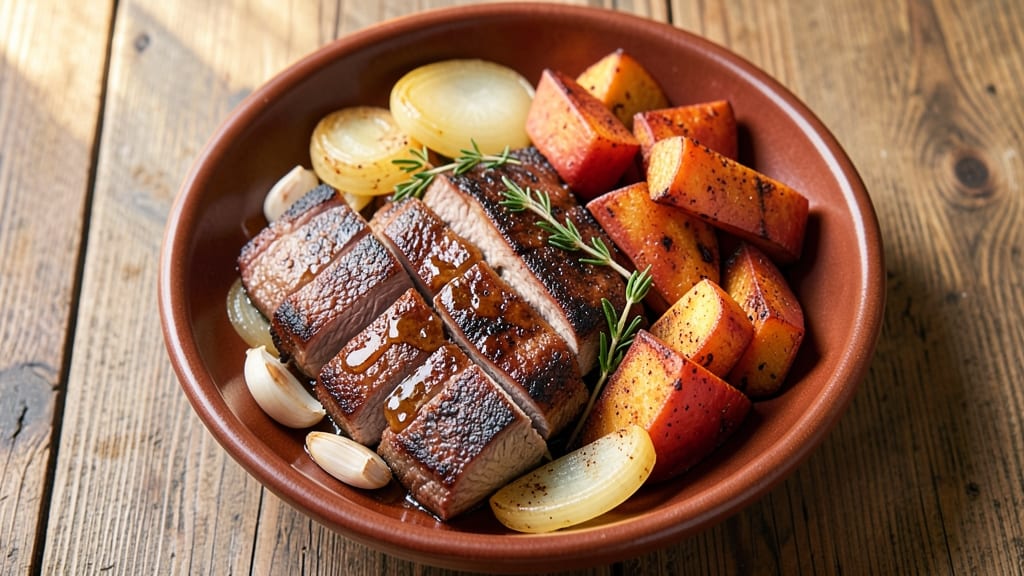
This baked sweet potato and beef recipe transforms humble ingredients into a smoky-sweet masterpiece where tender beef and caramelized sweet potatoes share the spotlight. The secret lies in slow-roasting the beef until it develops a deep, savory fond that becomes the star of the sauce—rich, velvety, and packed with flavor. I've perfected this technique over years of holiday dinners, where it consistently earns rave reviews from even the most skeptical meat lovers.
The magic happens in layers: beef seared to lock in juices, sweet potatoes roasted until their edges crisp and their centers melt, and a fond reduced to a glossy, umami-packed sauce that ties everything together.
This isn't just a recipe—it's a weeknight solution that delivers restaurant-quality results with minimal effort. The combination of smoky paprika, sweet honey, and slow-cooked beef creates a balance that's both comforting and sophisticated.
What you'll end up with is a plate that looks as impressive as it tastes: golden-brown beef slices fanned over creamy sweet potatoes, all bathed in that deep caramelized sauce. The sweetness of the potatoes contrasts beautifully with the beef's savory depth, while the sauce adds a luxurious finish.
This dish is hearty enough for a family dinner but simple enough to prepare when you need to impress without stress.
Pair it with a simple green salad or crusty bread to soak up every last drop of that fond-infused sauce. The best part? Leftovers reheat beautifully, making this the ultimate make-ahead meal. Let's get started on creating this crowd-pleasing centerpiece that'll have everyone asking for seconds.
Ingredients for baked sweet potato and beef
Six ingredients transform humble beef and sweet potatoes into a restaurant-worthy centerpiece with smoky depth.
| Ingredient | Amount | Notes |
|---|---|---|
| Beef Chuck Roast 🥩 | 2 ½ lb | Center-cut for even cooking |
| Sweet Potatoes 🍠 | 3 medium | Organic preferred for sweetness |
| Yellow Onion 🧅 | 1 whole | Yellow or red, diced |
| Garlic Cloves 🧄 | 6 cloves | Freshly minced for aroma |
| Smoked Paprika 🌶️ | 2 tbsp | High-quality smoked variety |
| Honey 🍯 | ¼ cup | Wildflower preferred for depth |
| Balsamic Vinegar 🍷 | ⅛ cup | Aged 10+ years for richness |
| Beef Broth 💧 | 1 ½ cups | Homemade or high-quality store |
| Olive Oil 🫒 | ¼ cup | Extra-virgin for searing |
| Kosher Salt 🧂 | 1 ½ tbsp | Diamond Crystal preferred |
| Fresh Thyme 🌿 | ¼ cup | Leaves only, finely chopped |
| Black Peppercorns 🌶️ | 1 ½ tsp | Freshly cracked for texture |
| Rosemary 🌿 | ½ tsp | Dried, crushed between fingers |
The beef selection is non-negotiable for this dish. Chuck roast delivers the ideal balance of tenderness and fat content needed for that signature caramelized fond. Look for cuts with good marbling—Whole Foods or local butchers often carry premium options. Sweet potatoes should be uniformly shaped (no knobby ones) and feel heavy for their size, indicating moisture content. Organic varieties from the produce section tend to have more natural sweetness, but conventional works fine. The onions and garlic? Spanish yellow onions add subtle sweetness, while garlic should be plump with papery skins—avoid those shriveled cloves that smell like dust. For smoked paprika, Penzeys or La Boîte brands offer the deepest, most authentic smoke flavor.
No smoked paprika? Substitute with 1 tbsp regular paprika plus 1 tsp liquid smoke, but you'll lose some complexity. Running short on balsamic? Red wine vinegar at half the amount works in a pinch, though the flavor profile shifts slightly. The beef broth can be swapped for vegetable broth plus 1 tsp soy sauce for umami depth. Fresh thyme is ideal, but dried works at one-third the amount—just crush the leaves between your fingers before adding to release the oils. For the olive oil, California extra-virgin brands like Corto or Gaea provide the fruity notes that complement the dish beautifully. Preferring a different herb? Fresh rosemary or sage would work equally well, though thyme's earthy notes are most complementary here.
This dish reheats even better than it tastes fresh—3-4 days in the fridge with the sauce kept separate. For longer storage, freeze the beef and potatoes together for up to 3 months, then reheat the sauce separately and toss everything together when ready to serve. The sauce alone keeps for 1 week in the fridge, making it perfect for drizzling over other dishes. For presentation, slice the beef against the grain for maximum tenderness. The sweet potatoes should be fork-tender with slightly crisp edges—if they're still firm, return them to the oven for another 10-15 minutes.
Why You'll Love This Recipe
- One-Pan Magic: I swear by this trick—just toss everything on a sheet pan, roast, and walk away. The beef caramelizes while the sweet potatoes soften, and honestly? I’ve never had to scrub more than one pan after.
- Smoky Sweet Heat: That smoked paprika and garlic combo? It’s where this dish gets its soul. The beef stays tender but packed with flavor, and the sweet potatoes get this irresistible crispy edge that makes it feel like a restaurant meal.
- Weeknight Workhorse: Between us, this is my go-to when I’m too tired to plan. It feeds four easily, reheats like a dream, and even my picky-eating partner asks for seconds—no fancy sides needed.
- Budget-Friendly Feast: A chuck roast stretches far, and sweet potatoes are cheaper than regular potatoes. I’ll be real: it’s the kind of meal where you get leftovers for lunch, and you won’t even mind eating it twice.
Step-by-step instructions for smoky-sweet roast with caramelized fond
Master this technique and you'll transform simple ingredients into a restaurant-worthy centerpiece.
Prep and Season the Beef Chuck Roast
Begin by patting the 2.5 lb beef chuck roast dry with paper towels—this ensures maximum browning later. In a small bowl, combine the 2 tbsp smoked paprika, 1.5 tbsp kosher salt, 1.5 tsp freshly cracked black peppercorns, 0.5 tsp crushed rosemary, and the 0.25 cup finely chopped fresh thyme. Rub this mixture generously over the entire surface of the roast, pressing it into the meat so it adheres well. Let it sit at room temperature for 30 minutes while you prepare the vegetables.
The reason for this seasoning step is critical: the paprika adds depth while the rosemary and thyme create aromatic layers that penetrate the meat during cooking. Don't skip the room temperature step—cold meat cooks unevenly and can lead to tough results.
Sear the Beef and Roast the Sweet Potatoes
Preheat your oven to 375°F. Heat a Dutch oven over medium-high heat and add the 0.25 cup olive oil. Once shimmering, sear the beef chuck roast on all sides until deeply browned, about 3-4 minutes per side. Remove the beef and set aside. In the same Dutch oven, add the 1 whole yellow onion (diced) and 6 cloves minced garlic, cooking for 3 minutes until softened.
Meanwhile, pierce the 3 medium sweet potatoes in several places with a fork and roast them directly on the oven rack at 425°F for 20 minutes. This high heat gets them partially cooked while you finish the beef preparation. The sweet potatoes should develop a slightly charred exterior—this is your signal they're ready for the next phase.
Build the Caramelized Fond and Deglaze
Return the seared beef to the Dutch oven with the onions and garlic. Add the 1.5 cups beef broth, scraping up all the browned bits from the bottom of the pan—this is where the flavor magic happens. Bring to a simmer, then cover and transfer to the preheated 375°F oven. Roast for 2 hours, turning the beef occasionally to ensure even cooking and maximum fond development.
After 2 hours, remove the beef and set aside. Increase the oven temperature to 400°F. In a separate baking dish, add the partially roasted sweet potatoes along with the 0.25 cup honey and 0.125 cup aged balsamic vinegar. Toss to coat evenly, then bake for 15-20 minutes until caramelized and tender. The potatoes should be fork-tender with a glossy, sticky coating.
Finish with the Caramelized Fond
Return the beef to the Dutch oven juices and simmer uncovered for 15-20 minutes until the sauce reduces to a glossy, caramelized fond. The beef should be fork-tender with an internal temperature of 203°F. Remove the beef and let it rest for 15 minutes before slicing—this resting period is crucial for juiciness.
Slice the beef against the grain into ½-inch thick pieces. Serve the beef over the caramelized sweet potatoes, spooning the rich fond sauce generously over the top. The combination of tender beef, sweet potatoes with sticky caramel glaze, and deeply flavorful fond creates a harmonious balance of textures and flavors that will impress any dinner guest.
Pro Tips For Making Baked Sweet Potato And Beef
- USE A HOT PAN: DESCRIPTION: Sear the beef chuck roast in a screaming-hot cast iron or Dutch oven for 3-4 minutes per side before baking—this locks in flavor and prevents dryness later. I learned this the hard way when my first batch turned out bland; the Maillard reaction is your friend here.
- PEEL AND DRY POTATOES: DESCRIPTION: Scrub sweet potatoes clean, peel them, and pat them thoroughly dry before slicing—wet skins steam instead of caramelizing. I skip the towel and just rough them up with paper towels; it’s faster and works just as well.
- SKIP THE CROWDED PAN: DESCRIPTION: Don’t stack sliced onions or potatoes—they’ll steam instead of brown. Arrange them in a single layer, cut-side down, and give them space. Yes, it takes a bigger pan, but the flavor difference is worth it.
- ADD GARLIC LATE: DESCRIPTION: Toss minced garlic into the baking dish only in the last 15 minutes—it burns fast and turns bitter if left too long. I keep a small bowl of it nearby and sprinkle it on just before the final 10 minutes of baking.
Wine and beer pairings for baked sweet potato and beef
Red Wine Pairings
For this rich, smoky-sweet dish, I reach for a bold red wine that can stand up to the beef's depth while complementing the sweet potatoes' caramelized notes. A Cabernet Sauvignon from Napa Valley—like Caymus Vineyards or Opus One—works beautifully with its dark fruit flavors and firm tannins.
The wine's acidity cuts through the dish's richness, while its blackcurrant and cedar notes harmonize with the smoked paprika. 🍷
If you prefer something slightly lighter, a Syrah from the Northern Rhône (like Guigal Côtes du Rhône) brings peppery spice and dark berry flavors that mirror the dish's complexity.
The wine's smoky character enhances the paprika's aroma, creating a perfect marriage of flavors. For a budget-friendly option, Louis M. Martini Cabernet Sauvignon delivers excellent value without sacrificing quality.
Malbec Complements
A Malbec from Argentina—such as Catena Zapata or Trapiche—adds a velvety texture and jammy fruit profile that pairs exceptionally well with the caramelized fond.
The wine's high alcohol content (around 14-15%) helps cleanse the palate between bites, while its dark plum and chocolate notes echo the dish's depth. 🍇
For a more approachable option, try a Zinfandel from California, like Ravenswood Old Vine. Its bold, spicy character and hints of blackberry jam complement the sweet potatoes' caramelization while standing up to the beef's richness. The wine's natural sweetness also balances the dish's savory-sweet contrast beautifully.
Beer Pairings
For beer lovers, a dark amber ale with caramel and toasted malt notes works wonderfully. I recommend Samuel Smith's Nut Brown Ale—its rich maltiness and subtle coffee undertones enhance the dish's caramelized elements. The beer's moderate bitterness also helps balance the sweetness of the potatoes and honey. 🍺
If you prefer something lighter, a Belgian-style dubbel like Westmalle Dubbel offers a malty sweetness and spicy yeast character that complements the dish's complexity. The beer's fruity esters and caramel notes create a delightful contrast with the smoky beef.
For a more robust option, try a stout like Guinness—its roasted malt flavors and creamy texture provide a satisfying counterpoint to the dish's richness.
Non-Alcoholic Options
Don't worry if you're avoiding alcohol—there are still excellent choices. A sparkling cranberry juice (like Ocean Spray) adds a festive touch with its tartness cutting through the dish's richness. The bubbles also help cleanse the palate between bites. 🍒
For a more savory option, try a smoked tea like Lipton Smoky Mountain. The tea's subtle smokiness enhances the dish's paprika notes, while its robust flavor provides a satisfying contrast to the sweet potatoes. Serve it chilled for an elegant, refreshing accompaniment.
Nutrition facts
Frequently asked questions
Can I substitute chuck roast with a different beef cut?
Yes, but choose wisely! Brisket or short ribs work well—they're fatty enough to create a rich fond. Avoid lean cuts like sirloin as they won't develop the same depth of flavor. If using brisket, trim excess fat and cook it 1.5 hours longer to ensure tenderness.
How do I know when the sweet potatoes are perfectly cooked?
They're done when they're fork-tender with slightly crisp edges. Insert a fork—the tines should slide in easily with minimal resistance. The exterior should have a glossy caramelized sheen from the honey-balsamic glaze. If they're still firm after 20 minutes, return them to the oven for 5-10 minutes more.
What's the best way to reheat leftovers?
Reheat the beef and potatoes separately to 350°F for 15-20 minutes, then warm the sauce on the stovetop over medium-low heat until bubbly. Combine everything just before serving to maintain texture. For extra tenderness, add 1 tbsp beef broth to the reheating dish to prevent drying.
Why does my fond not caramelize properly?
This usually happens when the oven isn't hot enough or the beef isn't seared deeply. Ensure your oven reaches 375°F and sear the beef until it's deep brown on all sides. For extra fond development, deglaze with 1 tbsp balsamic vinegar before adding broth to intensify the flavor.
Can I make this dish in a slow cooker?
Brown the beef first, then transfer everything (except sweet potatoes) to the slow cooker with 1 cup broth. Cook on low for 8 hours, then shred the beef and mix with the caramelized sweet potatoes. The fond will be less intense but still flavorful. For extra richness, reduce the beef juices on the stovetop after cooking.