
Main Courses
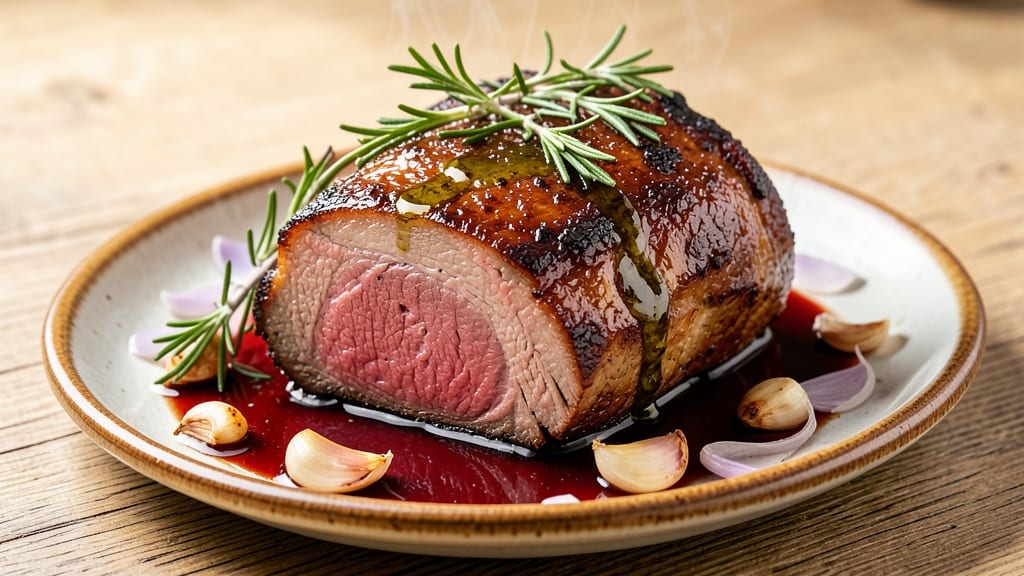
This authentic Italian roast beef transforms tough cuts into melt-in-your-mouth perfection with a rosemary-crusted exterior and tender, buttery interior. The secret lies in slow-braising—where red wine and aromatic herbs work their magic over hours, creating a dish that tastes like Nonna’s Sunday roast.
Every bite delivers that perfect balance of savory, herby richness, with meat so tender it practically dissolves on your tongue.
What sets this recipe apart is the traditional Italian technique—no shortcuts, just time and patience.
We start with a dry rub of rosemary, garlic, and black pepper, then slow-roast the beef until it reaches medium-rare (or your preferred doneness) while basting it with its own juices and a splash of red wine. The crust?
Achieved by finishing under the broiler for a golden, caramelized seal that locks in all those flavors.
The result is a showstopping centerpiece that pairs beautifully with creamy polenta, roasted root vegetables, or a simple arugula salad. The aroma alone—warm, spiced, and deeply savory—will have your whole house gathering around the table.
This isn’t just roast beef; it’s a taste of Italy, made simple yet sophisticated enough for any occasion.
Ready in about 3 hours (mostly hands-off time), this recipe proves that authenticity doesn’t require complexity—just the right techniques and a little love. Let’s get cooking.
Ingredients for authentic italian roast beef
Six ingredients transform tough beef into Nonna-style roast perfection with rosemary crust and wine-braised tenderness.
| Ingredient | Amount | Notes |
|---|---|---|
| Beef Chuck Roast 🥩 | 4 lb | Center-cut, well-marbled |
| Fresh Rosemary 🌿 | ½ cup | Finely chopped stems included |
| Garlic Cloves 🧄 | 8 cloves | Peeled, smashed slightly |
| Extra-Virgin Olive Oil 🫒 | ¼ cup | High-quality, fruity |
| Dry Red Wine 🍷 | 1 ½ cups | Bold, like Chianti or Cabernet |
| Beef Broth 🥄 | 2 cups | Low-sodium preferred |
| Unsalted Butter 🧈 | ½ cup | Cold, cubed for basting |
| Kosher Salt 🧂 | 2 tsp | Diamond Crystal preferred |
| Freshly Ground Black Pepper 🌶️ | 1 tsp | Coarsely cracked |
| Fresh Thyme Leaves 🌿 | ¼ cup | Or 1 tbsp dried thyme |
| Yellow Onion 🧅 | 1 whole | Thinly sliced, for braising |
| Carrots 🥕 | 2 medium | Whole, peeled, for braising |
The beef is non-negotiable—center-cut chuck roast with visible marbling is key for that melt-in-your-mouth texture. Whole Foods or a trusted butcher will have the best quality, but any reputable grocery store carries it pre-cut. Look for pieces with good fat distribution; that's where the flavor hides. If you're buying a whole roast, trim excess fat but leave some for moisture. The rosemary should smell vibrant—fresh from the market is worth the splurge here, as dried just can't match that piney freshness. For the wine, any bold red works—Chianti, Cabernet, or even a good Zinfandel. Whatever's open in your fridge will do.
No fresh rosemary? Dried works at half the amount, but trust me, it's not the same. Running low on beef broth? Substitute red wine plus water (1:1 ratio), but the saltiness will be different. The butter is crucial for that buttery interior—full-fat, unsalted is non-negotiable here. Want to cut costs? Use half butter, half olive oil for basting. The onions and carrots can be swapped for any root vegetable—parsnips or celery root add different flavors but work beautifully. If you're feeling fancy, add a splash of balsamic vinegar to the braising liquid for depth.
This roast tastes even better the next day—make extra for leftovers. Store in the fridge for 4-5 days or freeze for up to 3 months (portion into single servings first). For reheating, low and slow is key—300°F oven for 20-30 minutes keeps it tender. The crust will soften slightly, but that's okay. If you're planning ahead, prep the dry rub the night before and let the beef sit at room temperature for 1 hour before roasting—this ensures even cooking. Trust me, that extra hour makes all the difference.
Why You'll Love This Recipe
- No Fuss, Big Payoff: I swear by this—just sear the chuck roast in olive oil, toss in whole garlic cloves and rosemary sprigs, then let the red wine and oven do the work. Honestly, the hardest part is waiting for it to finish.
- Taste Like Nonna’s: That deep, caramelized crust from the red wine? The rosemary’s piney aroma cutting through the beef’s richness? It’s the kind of flavor that makes you pause mid-bite, even if you’re eating straight from the pan.
- Leftovers That Shine: Slice it thin for sandwiches the next day, or shred it into pasta sauce—it’s just as good cold as it is hot. Between us, I’ve turned this into breakfast hash, and no one’s complained yet.
- Budget Beef, Big Impact: A chuck roast stretches further than you’d think, and the wine and herbs make it feel fancy without breaking the bank. I’ll be real: this is how I feed my family well for under $20.
Step-by-step instructions for slow-braised Italian roast beef
Here's how to transform a simple chuck roast into a restaurant-worthy centerpiece with tender threads and aromatic crust.
Sear the Beef for Maximum Flavor
Pat the 4 lb beef chuck roast dry with paper towels—this ensures a proper sear. Heat 0.25 cup extra-virgin olive oil in a Dutch oven over medium-high heat until shimmering. Working in batches if needed, sear the roast on all sides for 3-4 minutes per side until deeply browned. The key is patience here—don't rush the searing process, or the crust will be pale instead of rich and caramelized.
Once browned, remove the roast and set it aside. You'll notice the pan has developed a beautiful fond—those browned bits are packed with flavor. This is the foundation of your braising liquid, so don't scrape them out. Here's where it gets good: add 1 whole yellow onion and 2 medium carrots, sliced into rounds, to the same pan and cook for 5 minutes until they begin to soften and caramelize slightly. This adds depth to your final dish.
Build the Aromatic Braising Liquid
Increase heat to medium, then add 8 cloves garlic cloves and 0.5 cup fresh rosemary to the pan. Cook for 1 minute until fragrant—this releases their essential oils and infuses the pan with incredible aroma. Pour in 1.5 cups dry red wine, scraping up all those flavorful browned bits from the bottom of the pan. Let it simmer for 3 minutes until reduced by about half.
Next, add 2 cups beef broth, bringing the mixture to a gentle simmer. The liquid should just barely cover the vegetables and roast. Season with 2 tsp kosher salt and 1 tsp freshly ground black pepper. Return the roast to the pot, making sure it's submerged in the liquid. This step is crucial for keeping the meat moist during the long braising process.
Slow-Braise to Perfection
Cover the Dutch oven with a tight-fitting lid and transfer it to a 325°F oven. Here's where the magic happens: braise the roast for 3 hours. This low-and-slow cooking method breaks down the connective tissue, transforming tough beef into melt-in-your-mouth tenderness. After 3 hours, check the internal temperature—it should read 190-195°F when measured with an instant-read thermometer.
If the liquid has reduced too much, add ½ cup hot water to maintain adequate coverage. The roast should be fork-tender at this point, with the meat practically falling apart. This is the moment when your patience pays off—each bite will be rich, flavorful, and incredibly satisfying. The aroma alone will have your kitchen smelling like an Italian trattoria.
Create the Rosemary Butter Crust
While the roast rests, prepare the finishing touch: the rosemary butter crust. In a small bowl, combine 0.5 cup unsalted butter (cold and cubed) with 0.25 cup fresh thyme leaves. Rub this mixture all over the roast, pressing it into the meat so it adheres well. The butter will melt into a golden, aromatic crust as it finishes cooking.
Return the roast to the Dutch oven and increase the oven temperature to 425°F. Braise uncovered for 15-20 minutes until the butter has melted and formed a beautiful golden crust. This final step adds a luxurious texture that elevates the dish from simple braised beef to something truly special. The crust should be golden brown and crisp, with the butter having rendered into a glossy finish.
Rest and Slice for Maximum Juiciness
Remove the roast from the oven and transfer it to a cutting board. Let it rest for 15 minutes before slicing. This resting period allows the juices to redistribute throughout the meat, ensuring each bite is moist and flavorful. During this time, you can reduce the braising liquid on the stovetop to create a rich gravy, if desired.
Slice the roast against the grain into ½-inch thick pieces. The meat should be fork-tender with a beautiful rosemary-infused crust. Serve immediately with the reduced braising liquid spooned over the top, accompanied by crusty bread or roasted vegetables. The result is an authentic Italian roast beef that's rich, tender, and packed with flavor—perfect for a special family dinner or impressive gathering.
Pro Tips For Making Authentic Italian Roast Beef
- SEAR THE ROAST FIRST: After you’ve seasoned the chuck roast with salt and pepper, sear it in a screaming-hot Dutch oven for 3-4 minutes per side before adding anything else. I used to skip this, thinking it was unnecessary, but that crust locks in flavor and keeps the meat juicy—especially important for chuck, which can dry out if you’re not careful.
- SMASH THE GARLIC: Don’t just mince those garlic cloves—smash them with the flat side of your knife first. This releases more oils and flavor into the olive oil when you sauté them. I learned this the hard way after a batch tasted bland; now I always bruise the cloves before cutting.
- DEGLAZE WITH WINE: After browning the meat and garlic, pour in that dry red wine and let it bubble for a full 2 minutes before adding broth. The alcohol needs time to cook off, or your roast will taste sharp instead of rich. I used to rush this step, and the dish never hit the same notes.
- REST IT UNDER FOIL: Once the roast is done, transfer it to a cutting board, tent loosely with foil, and let it sit for 10-15 minutes. This keeps it warm while the juices redistribute—skipping this means dry slices, no matter how perfect the internal temp looked. (Yes, even if you’re impatient like me.)
Wine and beer pairings for authentic italian roast beef
Red Wine Pairings
This dish practically begs for a bold Italian red—Chianti Classico is my go-to choice. Its bright acidity and cherry notes cut through the rich beef while complementing the rosemary and garlic. For something smoother, try a Barolo from Piedmont, which brings earthy tannins that mirror the beef's depth.
I always open the bottle 30 minutes before serving to let it breathe and enhance its aromas. 🍷
Beer Complements
If wine isn't your thing, a malty Italian lager like Peroni or Birra del Borgo works surprisingly well. The crisp, slightly bitter finish cleanses your palate between each tender bite.
For craft beer lovers, a Belgian Dubbel with its caramel and dark fruit notes provides a delightful contrast to the beef's savory profile. Just avoid heavy stouts—they'll overpower the dish.
White Wine Alternatives
Don't dismiss whites! A Vermentino from Sardinia or Fiano from Campania offers surprising harmony. Their citrus and mineral notes balance the dish's richness without competing. I've had great success with a chilled Soave—its almond undertones pair beautifully with the rosemary crust.
Serve slightly chilled (50-55°F) for the best experience.
Beverage Temperature Tips
Wine should be served at 60-65°F for reds and 50-55°F for whites to preserve their aromas. I always use a wine decanter for reds to aerate them properly. For beer, serve at 45-50°F—colder than you might think!
Pro tip: Keep your beverages in the fridge until just before serving, then let them sit for 5-10 minutes to reach ideal drinking temperature.
Non-Alcoholic Options
Don't worry if alcohol isn't an option—sparkling blood orange soda (like San Pellegrino Aranciata Rossa) makes a fantastic mocktail. The effervescence and citrus notes refresh your palate beautifully.
For something more substantial, try Italian hibiscus tea (carciofi) with a splash of honey—it complements the rosemary's herbal notes without overpowering the beef. 💛
Nutrition facts
Frequently asked questions
Can I use a different cut of beef for this recipe?
A chuck roast is ideal because of its marbling and connective tissue, which creates tender meat when slow-braised. However, you can substitute with a bottom round roast or brisket—just increase braising time by 30-45 minutes to ensure tenderness. Avoid lean cuts like sirloin; they won't develop the same rich texture.
Why does the recipe call for red wine when I don't drink alcohol?
Red wine adds depth and acidity that balances the richness of the beef, but you can substitute with beef broth or a mix of apple cider vinegar (2 tbsp) + water to mimic the acidity. For flavor, add 1 tsp dried porcini mushrooms or 1 tsp beef bouillon powder to the braising liquid. The dish will still be delicious—just slightly different in profile!
How do I know when the beef is done?
Use a meat thermometer for accuracy! For medium-rare, aim for 145°F internal temp (rests to 150°F), while medium is 160°F. The 3-hour braise should bring the temp to 190-195°F—the meat will be fork-tender and pull apart easily. If unsure, cut into a small section; juices should run clear, not pink or bloody.
Can I make this roast in a slow cooker?
Sear the beef first, then transfer it to a slow cooker with all braising ingredients. Cook on low for 8 hours or high for 5 hours. Finish with the rosemary butter crust under a broiler for 10-15 minutes to achieve the same golden seal. The slow cooker method is perfect for hands-off prep, though the crust may be slightly softer.
What’s the best way to reheat leftovers?
Reheat slices in a 300°F oven for 20-30 minutes on a wire rack over a baking sheet to prevent sogginess. For quick reheating, use a skillet over medium-low heat with a splash of beef broth to restore moisture. Leftovers taste even better the next day—just avoid microwaving, which can make the meat dry.