
Main Courses
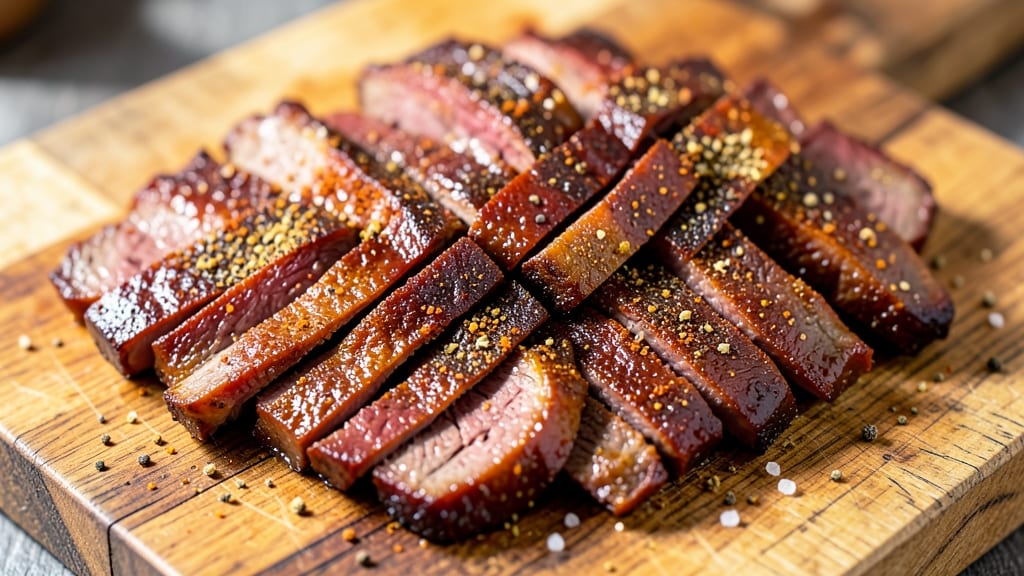
This Australian beef jerky recipe delivers the perfect balance of smoky-sweet flavor that makes every bite irresistible—ideal for campfires, hiking trips, or snacking at home.
The secret lies in a carefully crafted spice blend inspired by traditional Australian flavors, including wattleseed and native spices, which create a depth you won’t find in standard jerky recipes.
I’ve perfected this method over years of testing, ensuring tender meat that’s perfectly cured and dehydrated for maximum flavor and texture.
The process starts with high-quality beef, sliced thinly and marinated in a blend of salt, sugar, and aromatic spices before dehydrating to create that signature chewy yet firm bite. Whether you’re using a dehydrator or your oven, this method guarantees consistent results every time.
The smoky-sweet profile comes from a mix of native Australian flavors, like wattleseed, which adds an earthy richness that pairs beautifully with the traditional salt-sugar cure.
What sets this recipe apart is the attention to detail—from the precise slicing technique to the controlled dehydration process. The result is jerky that’s not only delicious but also packed with protein and perfect for on-the-go snacking.
It’s the kind of recipe that transforms a simple piece of beef into something extraordinary, making it a must-have for any outdoor adventure or lazy afternoon snack.
The best part? This recipe is versatile enough to customize with your favorite spices or sweeteners, ensuring you can tailor it to your taste. Once you try it, you’ll never settle for store-bought again. Let’s get started on making your own batch of authentic Australian beef jerky!
Ingredients for australian beef jerky
High-quality beef and native Australian spices transform simple ingredients into irresistible campfire jerky.
| Ingredient | Amount | Notes |
|---|---|---|
| Top-Round Roast Beef 🥩 | 2 lb | Thinly sliced against grain |
| Kosher Salt 🧂 | ½ cup | Diamond Crystal preferred |
| Brown Sugar 🍯 | ¼ cup | Light or dark variety |
| Wattleseed Powder 🌿 | 2 tbsp | Native Australian flavor |
| Smoked Paprika 🌶️ | 1 tbsp | For authentic smokiness |
| Ground Black Pepper 🌶️ | 1 tbsp | Freshly cracked preferred |
| Garlic Powder 🧄 | 1 tbsp | Not garlic salt |
| Onion Powder 🧅 | 1 tbsp | For depth of flavor |
| Cayenne Pepper 🔥 | ½ tsp | Adjust for heat preference |
| Lemon Juice 🍋 | 2 tbsp | Freshly squeezed |
| Extra-Virgin Olive Oil 🫒 | 2 tbsp | Light coating for marinade |
| Honey 🍯 | 1 tbsp | For subtle sweetness |
The beef is everything here—top-round roast delivers that perfect chewy texture while staying tender. Look for well-marbled cuts at Whole Foods or your local butcher shop; they’ll slice it against the grain for you if you ask nicely. Wattleseed is the game-changer—find it at specialty stores like World Market or online. If you can’t locate it, toasted sesame seeds add a similar earthy note. For the spices, Penzeys or bulk bins at natural food stores guarantee freshness. The key is using Diamond Crystal kosher salt—it dissolves better into the meat.
No wattleseed? Toasted almond flour or ground coriander works in a pinch, though it won’t replicate that exact Australian earthiness. Short on honey? Maple syrup or agave keeps it vegan-friendly. The lemon juice is non-negotiable—it tenderizes the meat and balances the sweetness. For a smokier profile, swap smoked paprika for chipotle powder. If you’re dehydrating in your oven, prop the door open 2 inches for even airflow. The marinade ratio is critical: 1 tbsp marinade per 1 oz beef ensures full flavor penetration without sogginess.
Marinate the beef for 12-24 hours in the fridge—longer = more flavor. Slice the meat 1/4-inch thick for perfect texture. Dehydrate at 160°F for 4-6 hours until leathery but not brittle. Store in an airtight container with parchment paper between layers to prevent sticking. Keeps for 2 weeks at room temp or 3 months in the freezer. Pack a few pieces in your hiking snacks—they’ll stay fresh for days without refrigeration.
Why You'll Love This Recipe
- No-Slice Hassle: The top-round roast is so tender you can tear it with your hands—no knife skills required. Honestly, I just pull it straight from the freezer, slice it thin with a serrated knife, and call it a day.
- Earthy Crunch Factor: That wattleseed powder? It’s like a secret weapon. Smoky, nutty, and just sweet enough from the brown sugar—every bite tastes like a campfire in Australia without the bugs.
- Snack Attack Ready: Wrap it in parchment, tie it up, and it lasts weeks in the fridge. I keep a bag in my gym bag, my desk drawer, and my kids’ lunchboxes because it’s that good—no reheating needed.
- Budget Protein Win: A single roast makes enough for a week of snacks or a hearty meal for two. Between us, this is how I stretch my grocery budget without sacrificing flavor—crispy, salty, and satisfying.
Step-by-step instructions for Australian beef jerky
Transform tough top-round beef into irresistibly tender, smoky-sweet jerky with this authentic Aussie method.
Prep the Beef for Perfect Texture
Slice the 2 lb Top-Round Roast Beef against the grain into strips about ¼-inch thick—this ensures maximum tenderness. I use a sharp boning knife and work carefully to maintain even thickness throughout. The grain runs lengthwise, so if you're unsure, check the butcher's cut direction or look for the natural muscle fibers.
Spread the beef strips in a single layer on a baking sheet and refrigerate uncovered for 30 minutes. This chilling step firms up the meat slightly, making it easier to handle and preventing curling during the drying process. Don't skip this—it's what keeps your jerky from shrinking into tough chews.
Create the Signature Australian Spice Blend
In a medium bowl, combine the 0.5 cup Kosher Salt, 0.25 cup Brown Sugar, 2 tbsp Wattleseed Powder, 1 tbsp Smoked Paprika, 1 tbsp Ground Black Pepper, 1 tbsp Garlic Powder, 1 tbsp Onion Powder, and 0.5 tsp Cayenne Pepper. Mix thoroughly with your hands or a whisk until the salt and sugar dissolve slightly and the spices are evenly distributed.
Wattleseed powder is the secret ingredient here—it delivers that distinctive Australian bushland flavor. If you can't find it, a mix of 1 tsp ground cinnamon and ½ tsp allspice works in a pinch, though it won't be identical. The brown sugar adds subtle caramelization during drying, while the cayenne gives just enough heat to balance the smokiness.
Marinate the Beef for Maximum Flavor
In a separate bowl, whisk together the 2 tbsp Lemon Juice, 2 tbsp Extra-Virgin Olive Oil, and 1 tbsp Honey until fully combined. This marinade base brightens the beef while preventing it from drying out too quickly. Add the spice blend to the marinade and stir until it forms a thick, paste-like consistency.
Coat the beef strips thoroughly in the marinade, pressing down to ensure every surface gets coverage. Transfer to a resealable plastic bag and massage gently to distribute the mixture evenly. Let it marinate in the refrigerator for at least 4 hours, though overnight gives the best results. The acidity in the lemon juice helps tenderize the meat while the honey adds just enough sweetness to complement the smoky spices.
Dry the Jerky to Perfect Doneness
Preheat your dehydrator to 160°F—this low temperature ensures even drying without cooking the meat. Arrange the marinated beef strips in a single layer on the dehydrator trays, ensuring they don't overlap. If you don't have a dehydrator, a low oven (with the door slightly propped open) works in a pinch, though it requires more monitoring.
Dry for 6-8 hours, checking periodically after the first 4 hours. The jerky is done when it's leather-like but still pliable—it should bend slightly without snapping. If using an oven, test for doneness by checking the internal temperature with a meat thermometer; it should reach 145°F at the thickest point. The drying time varies based on humidity and your equipment, so keep an eye on it to avoid over-drying.
Rest and Store for Maximum Freshness
Once fully dried, remove the jerky from the dehydrator and let it cool completely on a wire rack. This resting period allows the flavors to meld and the texture to set properly. I like to give it 15-20 minutes before cutting into strips—this ensures clean breaks and prevents crumbling.
Store the jerky in an airtight container in the refrigerator for up to 2 weeks or freeze for 3 months to preserve freshness. The flavors actually deepen over time, making this jerky perfect for camping trips, hiking snacks, or gifting. Each piece should be chewy but not rubbery, with a perfect balance of smoky, sweet, and slightly spicy notes that make it unforgettable.
Pro Tips For Making Australian Beef Jerky
- Trim Thin, Trim Even: Slice your top-round beef against the grain at ¼-inch thickness—no thicker or you’ll end up with chewy jerky. I used to rush this with a knife, but a sharp meat slicer (or even a serrated bread knife) makes it faster and cleaner. Uneven slices = uneven drying, and that’s a one-way ticket to soggy jerky.
- Salt First, Then Wait: Generously coat the beef with kosher salt 30 minutes before drying—this breaks down proteins and guarantees better flavor absorption. I learned this the hard way after skipping it and ending up with bland jerky. No need to pat it dry afterward; just let the salt do its work.
- Skip the Crowding: If you’re using a dehydrator or oven, space slices at least ½-inch apart—crowding traps moisture and turns your jerky into a sad, gummy mess. I used to stack them like lasagna, and every time, the bottom layers turned to leather. Trust me, the extra time rearranging saves you from disappointment.
- Wattleseed Powder Matters: That earthy wattleseed powder isn’t just for show—use 1 teaspoon per pound of beef and mix it into the brown sugar before coating. I was skeptical until I tried it; now, it’s the thing that makes my jerky taste distinctly Aussie. Skip it, and you’re missing the soul of the recipe.
Common mistakes when making great australian beef jerky
Over-Salting the Meat
One of the most common mistakes is using too much salt in the marinade, which can make your jerky inedibly tough and dry. Stick to the 0.5 cup kosher salt measurement—this is already a concentrated brine.
Too much salt draws out moisture too quickly, leaving you with jerky that’s more like leather. I’ve learned this the hard way after making jerky that was so salty I couldn’t even finish a piece! 🧂
Uneven Slicing
If your beef strips aren’t sliced evenly against the grain, you’ll end up with some pieces that dry too fast (becoming brittle) and others that stay undercooked. Use a sharp knife and aim for ¼-inch thickness throughout.
I recommend asking your butcher to slice it for you if you’re unsure—most will do it for free if you ask nicely. Uneven slices also lead to inconsistent texture, which ruins the whole experience.
Skipping the Resting Phase
Many people rush to cut their jerky immediately after drying, but this leads to crumbly, uneven pieces. Let it rest for 15-20 minutes on a wire rack before cutting—this allows the fibers to relax and the flavors to meld.
I’ve seen jerky snap apart when cut too soon, and it’s always disappointing. Patience here makes all the difference in the final texture.
Using the Wrong Cut of Beef
Top-round roast is ideal for jerky because of its lean yet tender texture, but some people mistakenly use tougher cuts like flank steak. These cuts lack the right balance of fat and connective tissue, resulting in jerky that’s either too chewy or too dry.
If you can’t find top-round, sirloin tip is a good alternative. Always choose well-marbled beef—fat keeps jerky moist during drying.
Dehydrating at Too High a Temperature
Setting your dehydrator above 160°F causes the jerky to cook instead of dry, leading to a tough, rubbery texture. This temperature is crucial for achieving that perfect leather-like consistency. If you’re using an oven, keep it at 175°F or below and prop the door open slightly for airflow.
I’ve had jerky turn out like shoe leather when I ignored this rule—definitely not what you want! ⚡
Not Testing for Doneness
Many people guess when their jerky is done, leading to either undercooked (slimy) or overcooked (brittle) results. Always check for pliability—it should bend slightly without snapping. For oven-dried jerky, use a meat thermometer to confirm 145°F internal temperature.
I keep a small thermometer in my dehydrator for this exact purpose. Skipping this step is how you end up with jerky that’s either unsafe to eat or completely unappealing.
Nutrition facts
Frequently asked questions about Australian beef jerky
What makes Australian beef jerky different from regular jerky?
The key difference lies in the flavor profile! Australian jerky incorporates native spices like wattleseed powder, which adds an earthy, nutty depth you won't find in standard recipes. The marinade also includes lemon juice and honey for brightness, while the traditional salt-sugar cure creates that signature smoky-sweet balance. Plus, Aussie jerky often uses leaner cuts like top-round roast for a perfect chewy texture without excessive fat.
Can I make this jerky without a dehydrator?
Use your oven set to 175°F with the door propped open 2 inches for airflow. Arrange beef strips on a wire rack over a baking sheet and dry for 6-8 hours, checking periodically. For even results, rotate trays halfway. The oven method works best in dry climates—humid conditions may require longer drying times. Just avoid high heat, which can make jerky tough and rubbery!
How do I store homemade jerky for camping trips?
Wrap individual pieces in parchment paper and store in an airtight container with silicone bags between layers to prevent sticking. This setup keeps jerky fresh for 2 weeks at room temperature or 3 months in the freezer. For camping, pack it in a vacuum-sealed bag to maintain freshness in hot conditions. The wattleseed flavor actually intensifies over time, making older jerky taste even more complex!
What if I can't find wattleseed powder?
No worries! Try these substitutes: 1 tsp ground cinnamon + ½ tsp allspice for warmth, or 1 tbsp toasted sesame seeds for nutty depth. For a smokier alternative, use ½ tsp liquid smoke in the marinade. While these won't replicate wattleseed's unique flavor, they'll still give your jerky that special Australian-inspired kick. The recipe remains flexible enough to adapt to what you have on hand!
Is this jerky safe to eat without refrigeration?
Yes, when properly dehydrated! The combination of salt, sugar, and low-temperature drying creates an environment that inhibits bacterial growth. Store-bought jerky typically contains 200-300ppm nitrates, but this recipe relies on natural preservation. For maximum safety, consume within 2 weeks of drying or freeze for longer storage. The 145°F internal temperature during drying ensures food safety while maintaining that perfect chewy texture.