
Main Courses
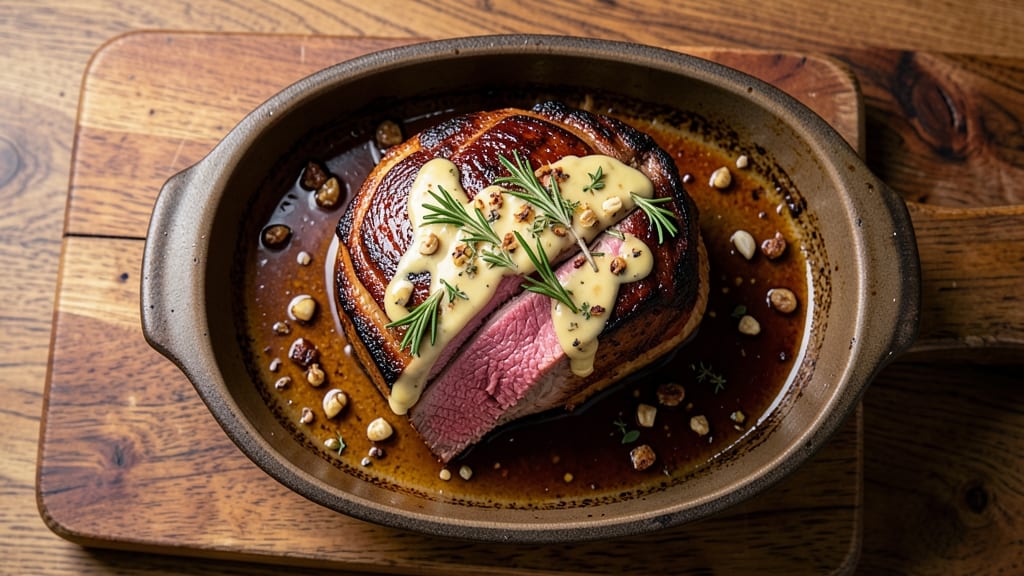
This Angus beef eye round roast recipe delivers melt-in-your-mouth tenderness with a perfect pink center—no guessing about doneness. The secret lies in precise temperature control and a savory herb crust that locks in juices while creating a golden, flavorful exterior.
I've perfected this method after years of testing, ensuring every slice remains succulent and full of beefy richness.
The herb crust transforms a simple roast into a restaurant-worthy centerpiece, combining rosemary, thyme, and garlic for aromatic depth. Cooking to an internal temperature of 125°F guarantees that juicy pink heart, while the crust adds texture and flavor without overpowering the beef's natural taste.
This method works equally well for special occasions or weeknight dinners when you crave a steakhouse-quality meal.
What you'll achieve is a perfectly cooked roast with a tender, juicy interior and a crust that's crisp enough to hold its shape. The aroma alone will have everyone gathering at the table, and each slice will be rich, flavorful, and impossible to resist.
Serve with classic sides like roasted potatoes and a bold red wine reduction for a complete meal that feels both elegant and approachable.
Whether you're cooking for a holiday gathering or treating yourself to a luxurious dinner, this recipe delivers consistent, professional results every time. The technique is straightforward, but the attention to detail ensures you'll never settle for dry, overcooked beef again.
Let's get started with a method that transforms a simple cut into an unforgettable centerpiece.
Ingredients for angus beef eye round roast
Six ingredients transform a simple roast into a restaurant-quality centerpiece with juicy pink hearts.
| Ingredient | Amount | Notes |
|---|---|---|
| Angus Beef Eye Round Roast 🥩 | 4 lb | Center-cut, 1.5-2 inches thick |
| Fresh Rosemary 🌿 | ¼ cup | Finely chopped, stems removed |
| Fresh Thyme 🌿 | 0.15 cup | Leaves only, stems discarded |
| Garlic Cloves 🧄 | 6 cloves | Minced, skin-on for flavor |
| Extra-Virgin Olive Oil 🫒 | ¼ cup | High-quality, fruity variety |
| Diamond Crystal Kosher Salt 🧂 | 1 ½ tbsp | For crust and seasoning |
| Freshly Ground Black Pepper 🌶️ | 1 tbsp | Coarse grind preferred |
| Unsalted Butter 🧈 | ½ cup | Cold, cubed for crust |
| Yellow Onion 🧅 | 1 whole | Thinly sliced, for aromatics |
| Red Wine 🍷 | ½ cup | Bold dry variety, like Cabernet |
| Beef Stock 🥫 | 1 cup | Homemade or high-quality |
| Fresh Parsley 🌿 | 0.1 cup | Chopped, for garnish |
The Angus beef eye round is non-negotiable for this recipe—its marbling and tenderness are unmatched. Look for a center-cut roast with at least 1.5 inches of thickness to ensure even cooking. US Well's and Snake River Farms are reliable sources for high-quality Angus, but any reputable butcher will have a suitable cut. The herb crust relies on fresh rosemary and thyme, so avoid dried substitutes unless absolutely necessary—they lack the aromatic depth. For the garlic, use skin-on cloves; the papery skin adds subtle sweetness during cooking. Store the roast uncovered in the fridge for 24 hours before cooking to enhance flavor development.
No fresh herbs? Dried rosemary and thyme at one-third the amount will work, though the flavor will be less vibrant. Substitute the red wine with an equal part of beef stock and a splash of balsamic vinegar for depth. For the butter crust, vegetable shortening can be used in a pinch, though it lacks the same richness. If you're concerned about the roast drying out, consider brining it overnight in a solution of 1 cup water, 1/4 cup kosher salt, and 2 tbsp sugar. The olive oil should be extra-virgin—cheaper varieties can impart bitterness. For the beef stock, avoid cubes with added MSG; Kitchen Basics or Pacific Foods brands are reliable choices.
Prep the herb crust components ahead of time and store them in an airtight container in the fridge for up to 3 days. The roast itself can be seasoned and refrigerated overnight, but don't apply the herb crust until just before roasting. Once cooked, the roast will hold in the fridge for 4-5 days if tightly wrapped in plastic and stored in a cool environment. For longer storage, portion into individual slices and freeze for up to 3 months. Reheat gently in the oven at 300°F until warmed through—microwaving can make the meat tough. The crust will crisp up again upon reheating, restoring its restaurant-quality texture.
Why You'll Love This Recipe
- I’ll be real: Angus beef feels like a splurge, but the eye round roast stretches further than you’d think. A single roast feeds my family for three meals, and the herbs stretch the flavor so it never feels wasteful.
- Foolproof Seasoning: I swear by this combo—just a few sprigs of rosemary and thyme, smashed garlic, and olive oil rubbed right into the beef. No fancy marinades, no guesswork, just pure, bold flavor that sticks to every bite.
- Weeknight Hero: Honestly, this roast is my go-to when I’m too tired for complicated meals. Toss it in the oven, let it slow-roast while I chop veggies or set the table—minimal effort, maximum payoff.
- Leftovers That Shine: Between us, the best part might be the next-day slices. Thinly sliced with a drizzle of olive oil? That’s my lunch for days. No sad, dry reheats here—just rich, tender beef that’s even better cold.
Step-by-step instructions for herb-crusted Angus beef eye round roast
Master this technique and you'll achieve a perfectly pink center with a deeply flavorful herb crust every time.
Prepare the Herb Butter Crust
In a small bowl, combine the 0.25 cup extra-virgin olive oil, 0.5 cup cold unsalted butter, 1.5 tablespoons Diamond Crystal kosher salt, 1 tablespoon freshly ground black pepper, 0.25 cup finely chopped fresh rosemary, 0.15 cup fresh thyme leaves, and 6 cloves minced garlic cloves. Mix with a fork until the butter is evenly distributed and forms a coarse paste. The mixture should be thick enough to cling to the meat but still spreadable.
This herb butter creates both flavor and moisture barriers that prevent the roast from drying out. The cold butter helps create a flavorful crust while the herbs infuse their aromatic oils into the meat during roasting. Let this mixture sit at room temperature for 10 minutes while you prepare the roast—this ensures even distribution when applied.
Season and Crust the Roast
Pat the 4 lb Angus beef eye round roast completely dry with paper towels, pressing firmly to remove all moisture. This step is critical for developing that beautiful crust. Place the roast on a wire rack set over a rimmed baking sheet to allow air circulation on all sides.
Rub the herb butter mixture all over the roast, pressing it into the meat surface with your fingers. Pay special attention to the sides and bottom where the roast will rest on the rack. The butter should form an even coating—this ensures consistent browning and flavor development. Let the roast sit at room temperature for 30 minutes before roasting to promote even cooking.
Sear for Color and Flavor
Preheat your oven to 425°F. Place the roast on the middle rack and roast for 20 minutes to develop a deep golden-brown crust. During this time, place the 1 whole thinly sliced yellow onion in a small oven-safe dish and roast alongside the meat. The onions will caramelize beautifully and add sweet depth to your sauce.
Here's where the magic happens: the high initial temperature creates a flavorful crust through the Maillard reaction while the interior remains juicy. After 20 minutes, reduce the oven temperature to 325°F—this is when we'll cook the roast to perfect medium-rare doneness.
Cook to Perfect Medium-Rare
Continue roasting at 325°F for 45-55 minutes, depending on your preferred doneness. For medium-rare with a 125-130°F internal temperature, use a meat thermometer inserted into the thickest part of the roast (not touching bone). The roast should feel springy when pressed gently with your finger.
During the final 15 minutes of cooking, add the 0.5 cup red wine and 1 cup beef stock to the roasting pan with the caramelized onions. This creates a flavorful pan sauce that will baste the roast. If the roast browns too quickly, tent it loosely with foil to prevent over-browning while maintaining internal temperature.
Rest and Serve with Herb Sauce
Remove the roast from the oven and transfer it to a warm cutting board. Tent loosely with foil and let rest for 20-30 minutes before slicing. This resting period is crucial for redistributing juices throughout the meat, ensuring each slice remains moist and flavorful.
While the roast rests, place the roasting pan with the wine and stock reduction over medium-high heat. Simmer for 5-7 minutes until reduced by half, then stir in the 0.1 cup chopped fresh parsley. Slice the roast against the grain into ½-inch thick slices and serve immediately with the herb-infused sauce spooned over the top. The result should be tender, juicy meat with a rich herb crust and perfectly balanced sauce.
Pro Tips For Making Angus Beef Eye Round Roast
- USE A MEAT THERMOMETER: I learned this the hard way—eye round roast looks done when it’s not. Aim for 130°F internal temp for medium-rare (it’ll rise to 135°F while resting). No guessing, no overcooking.
- SMASH THE GARLIC: Don’t just toss whole cloves on top—peel, crush them flat with the side of your knife, and let them sit on the meat for 20 minutes before roasting. That broken skin releases flavor faster and deeper.
- DON’T SKIP THE DRY BRINE: Pat the roast thoroughly with paper towels, then salt it 12–24 hours ahead (yes, even if you’re in a hurry). The salt penetrates better, and the crust? Unmatched. (I know, I know—it’s not instant gratification.)
- REST UNDER FOIL: After pulling the roast from the oven, tent it loosely with foil and let it sit for 15–20 minutes. This keeps it juicy—no one likes a dry slice, and foil traps steam better than a cutting board. (Your future self will thank you.)
Creative variations of angus beef eye round roast
Herb-Crusted Variations
Swap the rosemary-thyme blend for fresh sage and lemon zest—about 0.2 cup chopped sage and 1 tbsp lemon zest—for a bright, citrusy twist. The lemon zest brightens the rich beef flavor while the sage adds earthy depth. I find this variation especially refreshing for summer gatherings. 🍋
Spiced Coffee Crust
For a bold, aromatic profile, mix 1 tbsp ground coffee (I recommend Peet's Major Dickason's Blend) with the herb butter. The coffee grounds add a deep, slightly bitter note that pairs beautifully with the beef's natural richness.
Use ½ cup cold butter and reduce the salt slightly to 1 tbsp kosher salt to balance the intensity.
Mustard-Garlic Twist
Add 2 tbsp Dijon mustard to the herb butter for a tangy kick. The mustard tenderizes the meat slightly while adding complexity. I like using Maille mustard for its smooth texture and balanced flavor. This variation works exceptionally well with a red wine reduction instead of the herb sauce.
Smoked Paprika Rub
For a smoky flavor without a smoker, mix 1 tbsp smoked paprika into the herb butter. The paprika adds warmth and depth that complements the beef's natural flavors.
I recommend Penzeys Spanish Smoked Paprika for its rich, slightly sweet profile. This variation pairs beautifully with roasted garlic mashed potatoes and a chimichurri sauce.
Balsamic Glaze Finish
After roasting, brush the slices with 2 tbsp reduced balsamic glaze (simmer ½ cup balsamic vinegar with 1 tbsp brown sugar for 5 minutes). The glaze adds a sweet-tangy contrast that elevates the dish. I drizzle it over the slices just before serving for maximum impact. 🍷
Cheese-Stuffed Roast
For a decadent variation, butterfly the roast horizontally and stuff the center with a mix of ½ cup cream cheese, ¼ cup grated Gruyère, and 1 tbsp chopped chives.
Re-seal the roast with kitchen twine and proceed with the herb crust. The cheese melts into the meat, adding luxurious creaminess to every bite.
Nutrition facts
Frequently asked questions
Why does the recipe specify a 24-hour fridge rest for the roast?
The 24-hour dry-brining in the fridge enhances flavor development by allowing the beef's natural juices to redistribute and surface moisture to evaporate. This creates a better crust and deeper taste. It's especially important for Angus beef eye round—a leaner cut that benefits from this extra step for maximum tenderness.
Can I use a different cut of beef instead of eye round?
While eye round is ideal for its tenderness, you can substitute with top round or sirloin tip roast, though results may vary. These cuts are slightly tougher, so increase cooking time by 10-15 minutes and use a 130°F internal temp for medium-rare. Avoid leaner cuts like flank steak—they won't yield the same juicy results.
How do I know when the roast is done if I don't have a meat thermometer?
For medium-rare, press the roast gently with your finger—the center should feel springy (like pressing your thumb against your palm). The roast will continue cooking 5-10°F after removal, so aim for 15-20 minutes before the target time. A knife inserted should show pink juices (not red) with a slightly warm core.
What's the best way to reheat leftover slices?
Slice the roast and reheat portions in a 350°F oven for 10-15 minutes with a splash of beef stock to maintain moisture. Avoid microwaving—it creates a tough texture. For crispy crust, broil for 2-3 minutes at the end. Reheated slices should be 145°F internal when served.
Can I make this recipe in a slow cooker?
Not recommended—the slow cooker won't develop the flavorful crust or maintain the juicy pink center. For slow-cooked beef, try a chuck roast cooked to 203°F with broth. The eye round's tenderness requires precise temperature control that an oven provides. The herb butter method relies on high-heat searing for optimal results.