
Main Courses
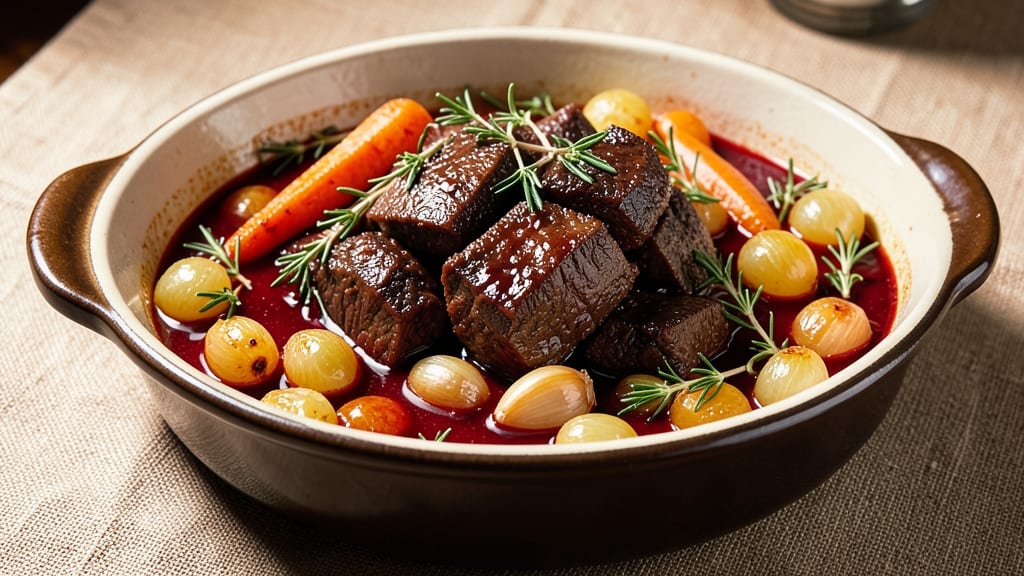
Auguste Escoffier's beef bourguignon recipe transforms humble beef and wine into a dish that defines French cuisine. 🔥 This classic technique—slow-braised with red wine, pearl onions, and aromatic herbs—was perfected by the father of modern French cooking, and its rich, tender results remain unmatched even today.
The magic lies in the fond, that deep, flavorful base created by browning the beef and vegetables before adding wine and stock. Escoffier's method ensures the meat becomes fork-tender while absorbing the complex flavors of the sauce, which develops its signature richness through hours of gentle simmering.
What you'll achieve is a dish with layers of depth—caramelized onions, tender beef, and a sauce so velvety it coats every bite. The aroma alone will transport you to a Parisian bistro, while the technique remains accessible for home cooks with patience and the right tools.
Perfect for special occasions or weeknight dinners, this recipe pairs beautifully with crusty bread or buttery mashed potatoes. Let's recreate this timeless classic step by step.
Ingredients for auguste escoffier beef bourguignon
Escoffier's method begins with quality cuts and aromatic foundations for unmatched depth.
| Ingredient | Amount | Notes |
|---|---|---|
| Beef Chuck Roast 🥩 | 2 lb | Cut into 1.5-inch cubes |
| Red Wine 🍷 | 2 cups | Dry, bold variety like Cabernet Sauvignon |
| Pearl Onions 🧅 | 1 ½ lb | Whole, peeled if preferred |
| Carrots 🥕 | 1 ½ lb | Cut into 1-inch chunks |
| Garlic Cloves 🧄 | 6 cloves | Peeled, smashed |
| Fresh Thyme 🌿 | ¼ cup | Stems removed |
| Fresh Parsley 🌿 | ¼ cup | Chopped, for garnish |
| All-Purpose Flour 🌾 | 2 tbsp | For dredging beef |
| Beef Stock 💧 | 2 cups | Homemade or high-quality |
| Tomato Paste 🍅 | 2 tbsp | Smooth, no sugar added |
| Olive Oil 🫒 | ½ cup | Extra-virgin for richness |
| Salt 🧂 | 1 ½ tsp | Diamond Crystal preferred |
| Black Pepper 🌶️ | 1 tsp | Freshly ground |
| Bay Leaves 🍃 | 2 whole | Fresh preferred |
| Butter 🧈 | 2 tbsp | Unsalted, for deglazing |
The beef selection is non-negotiable—chuck roast delivers the ideal marbling for tender results. Whole Foods Market or specialty butchers carry the best cuts, but any reputable grocery store's chuck roast will suffice. Look for vibrant color and visible fat marbling, which ensures richness during the long braise. Pearl onions should be firm and uniform in size—Whole Foods sells them pre-peeled for convenience, though peeling yourself guarantees consistency. Carrots need no special treatment beyond even cutting; organic varieties from the produce section add subtle sweetness without pesticides. Fresh thyme and parsley from the market's herb section will elevate the dish beyond jarred alternatives—Williams-Sonoma often carries excellent quality if your local store falls short.
Red wine is the soul of bourguignon—Cabernet Sauvignon or Merlot from a trusted producer like Louis Jadot or Chateau Ste. Michelle adds depth without overpowering. No red wine? Dry sherry or beef stock with 1 tbsp balsamic vinegar creates a respectable substitute. The beef stock must be rich; Kitchen Basics or Pacific Foods brands deliver professional results. For tomato paste, San Marzano is ideal, though any smooth paste works. Fresh bay leaves from the spice aisle outperform dried—Penzeys Spices sells excellent quality. The flour should be all-purpose, not self-rising, and the olive oil must be extra-virgin—California Olive Ranch or Colavita are reliable choices. Salt and pepper should be freshly ground; Diamond Crystal kosher salt dissolves perfectly in sauces.
Store the beef in its original packaging until ready to use, while fresh herbs should be wrapped in damp paper towels and refrigerated for up to 5 days. The wine can be refrigerated until needed, though it will develop more complexity at room temperature. This dish tastes even better the next day as flavors meld—reheat gently in the sauce over medium-low heat. Portion into airtight containers for 4-5 days of fridge storage or freeze for 3 months. The sauce thickens upon cooling; thin with additional beef stock if needed. For presentation, garnish with fresh parsley and serve with crusty baguette slices or buttery mashed potatoes.
Why You'll Love This Recipe
- Slow-Simmer Magic: I swear by the overnight braise—just sear the beef chuck, toss in onions, carrots, and garlic, then let the red wine do its work while you sleep. That deep, caramelized flavor? Zero effort after the initial hour.
- Wine-Lover’s Dream: Honestly, the red wine isn’t just for flavor—it’s the star. The acidity cuts through the richness, and the longer it cooks, the more complex it gets. (Yes, even the cheap bottles work—just pick something dry.)
- Leftovers That Shine: This isn’t a "make it once and forget it" dish. The second day? Even better. Reheat with a splash of broth, and it’s still tender, still packed with that wine-soaked richness. My freezer’s always stocked with portions.
- Budget Beef Boost: A chuck roast stretches further than you’d think, especially when you’re feeding a crowd. Pearl onions and carrots add elegance without breaking the bank, and the garlic? Just a few cloves for layers of flavor. Frugal but feels fancy.
Step-by-step instructions for auguste Escoffier's beef bourguignon
Master Escoffier's technique for rich, velvety beef bourguignon with tender beef and aromatic vegetables.
🍳 Step 1: Sear the Beef Chuck Roast
Pat the 2 lb Beef Chuck Roast dry with paper towels and cut into 1.5-inch cubes. This size ensures even cooking without toughness. In a heavy Dutch oven, heat 0.5 cup Olive Oil over medium-high heat until shimmering but not smoking. Working in batches, add the beef cubes and sear for 2-3 minutes per side until deeply browned with a crust forming. This caramelization builds the foundation for your sauce.
Transfer the seared beef to a plate and set aside. Don't drain the Dutch oven—those browned bits (fond) are packed with flavor. If the oil appears overcrowded, reduce the heat slightly to prevent steaming instead of searing. The beef should release easily from the pan when ready to flip.
👨🍳 Step 2: Build the Classic French Fond
Return the Dutch oven to medium heat and add 2 tbsp Butter, letting it melt completely. Sprinkle 2 tbsp All-Purpose Flour over the fond and stir vigorously with a wooden spoon for 1-2 minutes until the mixture turns a nutty brown color. This roux forms the thickening agent for your sauce.
Pour in 2 cups Red Wine (a bold Cabernet Sauvignon works best) and scrape up all the browned bits from the bottom. Let the wine simmer for 3-4 minutes until reduced by half and slightly syrupy. Add 2 tbsp Tomato Paste and stir to blend completely. This step develops the deep, complex flavor that defines authentic beef bourguignon.
🥘 Step 3: Sauté Vegetables and Deglaze
Add 1.5 lb Pearl Onions (peeled if preferred), 1.5 lb Carrots (cut into 1-inch chunks), 6 cloved Garlic Cloves (smashed), 0.25 cup Fresh Thyme (stems removed), 2 whole Bay Leaves, 1.5 tsp Salt, and 1 tsp Black Pepper to the Dutch oven. Stir well to coat with the developing sauce. Cook for 5-6 minutes until the onions begin to soften and the carrots release their sweetness.
Pour in 2 cups Beef Stock and bring to a gentle simmer. Return the seared beef to the pot, along with any accumulated juices. The liquid should come up about halfway up the beef cubes. Partially cover the Dutch oven and let it simmer gently for 1 hour 30 minutes to 2 hours, stirring occasionally, until the beef is fork-tender and the sauce has thickened to a glossy consistency.
⏰ Step 4: Finish and Rest for Maximum Flavor
Once the beef is tender (it should pull apart easily with a fork), remove the bay leaves and adjust the seasoning if needed. The sauce should coat the back of a spoon and have a velvety texture. If it's too thin, simmer uncovered for another 5-10 minutes to reduce further. For garnish, stir in 0.25 cup Fresh Parsley just before serving.
Let the bourguignon rest for 10-15 minutes before serving. This resting period allows the juices to redistribute throughout the beef and vegetables, ensuring each bite is rich and flavorful. Serve with crusty French bread to soak up every last drop of that luxurious sauce.
Pro Tips For Making Auguste Escoffier Beef Bourguignon
- SEAR THE ROAST UNTIL IT BROWNS: I learned this the hard way—skipping the deep sear means your bourguignon will taste like stewed beef, not rich, caramelized perfection. Get that roast screaming hot in the pan for 8-10 minutes per side until it’s dark brown, even black in spots. That crust locks in flavor and turns your wine into a silky sauce.
- PEEL PEARL ONIONS LAZY-LIKE: Yes, you could peel them one by one, but why? Cut them in half, slice lengthwise into quarters, and let them sit in cold water for 10 minutes. The skins slip off like magic—no fuss, no frustration. (Your future self will thank you when you’re elbow-deep in wine reduction.)
- DEGLAZE WITH PATIENCE: After searing the meat, don’t rush the wine splash. Let it sizzle for 30 seconds first—this breaks down the fond (those stuck-on bits) before you pour. Then scrape every last bit with a wooden spoon. I used to pour and stir immediately, and half the flavor vanished down the drain.
- SIMMER LOW AND COVERED: This isn’t a race. After adding the wine and broth, reduce heat to a bare simmer, cover, and walk away. Too much heat = tough meat and a skimpy sauce. I was skeptical until I tried it—now my bourguignon stays tender and the sauce thickens beautifully, just like Escoffier intended. (Your slow cooker can wait.)
Essential equipment for great auguste escoffier beef bourguignon
Dutch Oven Essentials
A heavy-duty Dutch oven is non-negotiable for beef bourguignon—it distributes heat evenly and retains moisture during the long braise. I swear by the Le Creuset 5.5-quart (enamel-coated for durability) or the Lodge Cast Iron (pre-seasoned for that classic flavor).
Both handle the 350°F oven temperature needed for finishing, and their tight lids trap steam for tender results. 🔥
Wooden Spoons
Use a heat-resistant wooden spoon (like Oxo Good Grips) to stir the sauce without scratching the Dutch oven. Wood absorbs flavors better than metal and prevents the fond from sticking during deglazing.
Keep it handy for scraping up those precious browned bits from the bottom—this is where the magic happens!
Measuring Tools
Precision matters in French cooking. Invest in a stainless steel measuring set (I use OXO Good Grips) for accurate wine and stock measurements. A kitchen scale (like Escali Primo) ensures your 2 tbsp flour and 2 tbsp tomato paste are spot-on—critical for the sauce’s balance. Don’t eyeball it!
Tongs for Searing
Tongs (preferably stainless steel with silicone grips) are better than forks for flipping beef cubes—they prevent piercing the meat, which releases juices prematurely. I recommend Mercer Culinary Millennia for their durability. Keep them nearby to avoid overcrowding the pan during searing.
Fine-Mesh Strainer
A fine-mesh strainer (like OXO Good Grips) helps clarify the sauce if you prefer a smoother texture. Strain out the vegetables after braising but before serving—this step elevates the dish to restaurant-quality. For garnish, reserve some pearl onions and carrots for plating.
Timer and Thermometer
Set a timer (I use my phone’s) for the 1.5–2 hour braise to avoid overcooking. A meat thermometer (like ThermoWorks Smoke) ensures the beef reaches 203°F—the perfect temp for fall-apart tenderness. No guesswork needed! 💡
Nutrition facts
Frequently asked questions
Why does Escoffier's recipe use chuck roast instead of tenderloin?
The chuck roast is essential because its fat marbling and connective tissue break down during the long braise, creating incredibly tender meat. Tenderloin, being leaner, would dry out in the 1.5–2 hour cooking time. Escoffier's method relies on this transformation to achieve the signature melt-in-your-mouth texture that defines authentic beef bourguignon.
Can I substitute red wine with something else?
While red wine is traditional, you can use dry sherry or a mix of beef stock + 1 tbsp balsamic vinegar for depth. For the best results, choose a bold wine like Cabernet Sauvignon—its tannins help tenderize the beef. If substituting, reduce the liquid by 1/4 cup to maintain sauce consistency.
How do I fix beef that's still tough after braising?
If the beef isn't tender after 2 hours, return it to the pot with an extra 1/2 cup beef stock and simmer 30–45 minutes more. The issue is usually undercooking—aim for 203°F internal temp. For extra tenderness, add 1 tsp baking soda to the braising liquid (neutralizes acidity and speeds up collagen breakdown).
What's the best way to reheat leftover beef bourguignon?
Gently reheat in the same Dutch oven over low heat with a splash of beef stock to maintain sauce consistency. Never microwave—it makes the sauce watery. For best results, cover and warm on the stovetop for 10–15 minutes. The dish actually improves overnight as flavors meld!
Can I make this dish in a slow cooker?
Yes, but with adjustments: sear the beef first, then transfer everything to the slow cooker and cook on low for 8 hours or high for 5 hours. The sauce will be thinner—reduce it on the stovetop afterward. For deeper flavor, add 1/2 cup red wine during the last 30 minutes of cooking.