
Soups & Stews
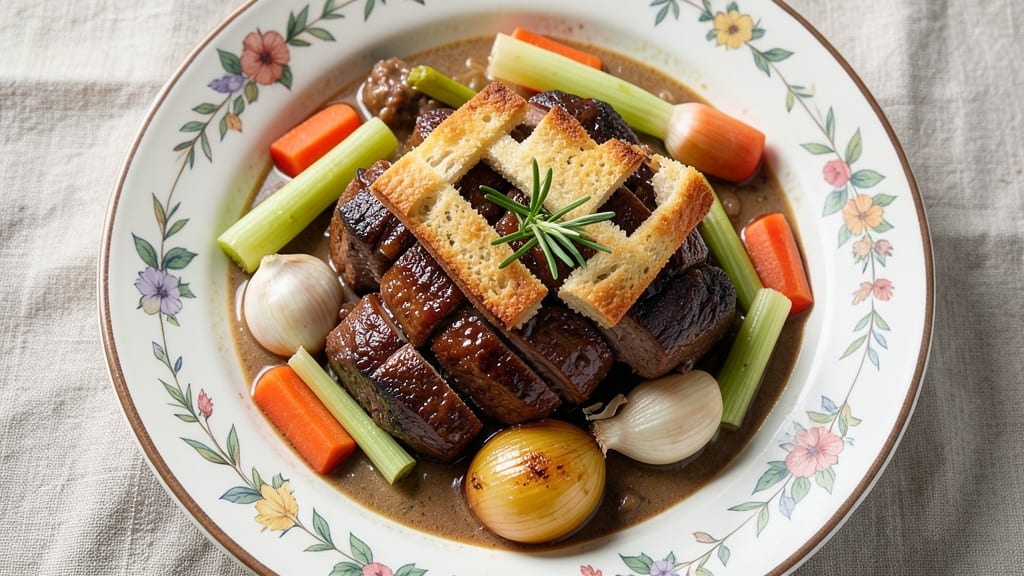
This Au Bon Pain beef stew recipe brings the cozy, restaurant-quality depth of a classic French bistro to your kitchen. 🔥 The secret lies in slow-simmering beef with red wine, aromatic herbs, and root vegetables until the meat practically melts in your mouth.
I've perfected this version after years of testing—it's rich, tender, and packed with layers of flavor that make every spoonful satisfying.
The magic happens during the 3-hour simmer, where tough cuts of beef transform into fork-tender perfection while absorbing the deep, caramelized flavors of the wine-infused broth.
Unlike quick versions, this recipe builds complexity through patience—each ingredient plays a role in creating a harmonious balance of savory, tangy, and earthy notes. The result? A stew so hearty it feels like a hug on a chilly evening.
What sets this apart is the French-inspired technique—starting with a rich browned base, deglazing with red wine, and finishing with fresh herbs that brighten the dish. The broth is velvety, the beef falls apart effortlessly, and the vegetables stay tender-crisp.
Serve it with crusty bread to soak up every last drop of that flavorful liquid gold.
Whether you're cooking for a family dinner or meal prepping for the week, this stew delivers restaurant-quality comfort with minimal effort. The best part? It tastes even better the next day as the flavors deepen. Let's get started on creating your own bistro-worthy masterpiece.
Ingredients for au bon pain beef stew
Sixteen ingredients for a stew that tastes like a French bistro's secret menu.
| Ingredient | Amount | Notes |
|---|---|---|
| Beef Chuck Roast 🥩 | 3 lb | Well-marbled, cut into 1.5-inch cubes |
| Yellow Onion 🧅 | 2 whole | Diced, medium size |
| Carrots 🥕 | 4 whole | Peeled, cut into 1-inch chunks |
| Celery Stalks 🥬 | 4 whole | Diced, including leaves |
| Garlic Cloves 🧄 | 6 cloves | Smashed, not minced |
| Dry Red Wine 🍷 | 1 ½ cups | Bold variety like Cabernet Sauvignon |
| Beef Broth 💧 | 4 cups | Low-sodium preferred |
| Tomato Paste 🍅 | 2 tbsp | Smooth, not chunky |
| Fresh Thyme 🌿 | 2 tbsp | Leaves only, stems removed |
| Fresh Rosemary 🌿 | 1 tbsp | Chopped, fresh only |
| Fresh Parsley 🌿 | ¼ cup | Chopped, for garnish |
| Olive Oil 🫒 | 2 tbsp | Extra-virgin for browning |
| All-Purpose Flour 🌾 | 2 tbsp | For thickening |
| Kosher Salt 🧂 | 2 tsp | Diamond Crystal preferred |
| Freshly Ground Black Pepper 🌶️ | 1 tsp | Cracked peppercorns preferred |
The beef is non-negotiable here—chuck roast is your best bet for that melt-in-your-mouth texture. Costco or Whole Foods usually carry it pre-cut, but if you're buying a whole roast, ask the butcher to cube it for you. Look for good marbling (those white fat streaks)—that's what keeps the meat juicy during the long simmer. Fresh thyme and rosemary are worth hunting down at a specialty market if you can, but the dried stuff works in a pinch (use half the amount). For the wine, any bold, dry red will do—Cabernet Sauvignon or Merlot are classic choices, but whatever's open in your fridge works too.
No red wine? Beef broth with 1 tbsp balsamic vinegar mimics the depth perfectly. The tomato paste might seem like overkill, but it adds that umami punch that makes the broth sing. Fresh herbs are ideal, but if you're using dried, toast them in a dry pan for 30 seconds first—it wakes up their flavor. The carrots and celery can be baby versions if that's what's in your fridge, but the stalks add nice texture. For the flour, King Arthur or Bob's Red Mill brands are reliable, but any all-purpose will do. And trust me on the extra-virgin olive oil—it makes all the difference when you're searing the beef.
This stew gets better with time, so make a double batch if you can. It keeps in the fridge for 5 days and freezes beautifully for 3 months. I like to portion it into individual containers before freezing—just reheat with a splash of water or broth. The fresh herbs? Add them at the very end, just before serving. And that crusty bread? Baguette from a French bakery if you can find it, but any good sourdough works too.
Why You'll Love This Recipe
- One-Pot Magic: I swear by this—just brown the beef, toss in the onions, carrots, and celery (the classic "holy trinity" of flavor), add garlic, and let the slow cooker do the rest. No extra pots, no stress, just hands-off perfection.
- Garlic Bomb Flavor: Between us, that beef chuck roast turns ridiculously tender, and the garlic? Oh, it’s the star—sizzling in the pan before everything braises. The kind of taste that makes you close your eyes and sigh.
- Leftovers That Don’t Suck: Honestly, this stew begs for seconds. The flavors deepen overnight, so I always make extra—whether for lunch the next day or freezing for those "I don’t want to cook" nights. (Yes, even on a Tuesday night.)
- Budget-Friendly Feast: A single chuck roast feeds my whole family, plus leftovers, for under $20. Carrots, celery, and onions stretch that beef into a hearty meal without breaking the bank—my wallet and my taste buds thank me every time.
Step-by-step instructions for slow-simmered beef stew
Here's how to build layers of rich flavor—starting with a deep sear and ending with tender beef that falls apart.
🔥 Step 1: Sear the Beef Chuck Roast for Maximum Flavor
Heat a heavy Dutch oven over medium-high heat until very hot. Add the 2 tablespoons olive oil and swirl to coat the bottom evenly. Working in batches (you'll need two batches for 3 pounds of beef), add the beef chuck roast cubes in a single layer. Let them sear undisturbed for 2-3 minutes until a deep golden-brown crust forms.
Here's the thing—don't move them during that first sear. You want that crust to form before you flip. Once browned on one side, flip the cubes and sear the other side for another 2-3 minutes. Transfer the browned beef to a plate as you work. The goal is to develop that rich, caramelized crust that will infuse the stew with deep flavor. If your pan isn't hot enough, the beef will steam instead of sear—watch for that smoke signal that tells you it's ready.
👨🍳 Step 2: Build the Aromatic Base with Onions, Carrots, and Celery
In the same Dutch oven (no need to wipe it clean—those browned bits are pure flavor), reduce heat to medium and add the diced yellow onion, carrots, and celery stalks. Cook for 8-10 minutes, stirring occasionally, until the vegetables soften and the onions turn translucent. You're looking for them to release their natural sugars and develop a slight caramelization—this sweetness will balance the acidity of the wine later.
Add the 6 smashed garlic cloves and cook for another 30 seconds until fragrant. Here's where it gets good—sprinkle the 2 tablespoons tomato paste over the vegetables and stir to coat everything evenly. Let it cook for 1 minute until it darkens slightly. This paste will deepen the stew's color and add a subtle sweetness that complements the wine. If you skip this step, you'll miss that restaurant-quality depth in your final dish.
🍳 Step 3: Deglaze with Red Wine and Develop the Sauce
Pour in the 1.5 cups dry red wine and scrape up all those delicious browned bits from the bottom of the pan with a wooden spoon. This deglazing step captures all the concentrated beef flavor that would otherwise go to waste. Let the wine simmer for 3-4 minutes until it reduces by about half and the alcohol smell dissipates completely. You'll know it's ready when the mixture thickens slightly and coats the back of a spoon.
Now stir in the 4 cups beef broth, 2 teaspoons kosher salt, and 1 teaspoon freshly ground black pepper. Bring the mixture to a gentle simmer, then add the seared beef back to the pot along with the 2 tablespoons fresh thyme and 1 tablespoon fresh rosemary. The herbs should be submerged—if not, give the stew a gentle stir. This is where the magic begins as the beef starts to tenderize in the liquid.
⏰ Step 4: Slow-Simmer Until Fork-Tender
Cover the Dutch oven and transfer it to the oven preheated to 325°F. Let the stew simmer for 2.5 to 3 hours, checking occasionally to ensure there's enough liquid (add water if needed). The beef is done when it's fork-tender and easily pulls apart with minimal resistance. You'll know it's ready when the meat reaches an internal temperature of 205-210°F—this is higher than typical doneness temperatures because we're cooking it low and slow to achieve that melt-in-your-mouth texture.
Real talk: Don't rush this step. The longer the beef simmers, the more flavor it absorbs from the vegetables and wine. I've found that 3 hours is the sweet spot for perfect tenderness without turning the stew into mush. If you're short on time, you can increase the oven temperature to 350°F and reduce the cooking time by about 30 minutes, but the texture won't be quite as luxurious.
🥘 Step 5: Finish, Thicken, and Garnish
Once the beef is tender, remove the stew from the oven and let it cool slightly for 5 minutes. Stir in the 2 tablespoons all-purpose flour and simmer uncovered for another 5-7 minutes until the stew thickens to your desired consistency. If it's too thick, add a splash of beef broth to loosen it. The sauce should coat the back of a spoon but still be smooth—not gloppy.
Taste and adjust seasoning with more kosher salt or black pepper if needed. Ladle the stew into bowls and garnish with the ¼ cup chopped fresh parsley. Serve immediately with crusty bread to soak up every last drop of that rich, herby sauce. The parsley adds a bright finish that cuts through the richness of the beef and wine, balancing the flavors perfectly. Each bite should deliver tender beef, sweet carrots, and a deep, complex sauce that sings with herbaceous notes.
Pro Tips For Making Au Bon Pain Beef Stew
- SEAR THE CHUCK HARD: I used to treat the beef chuck like a shy guest—gentle searing, half-hearted browning. Wrong move. Hit that roast with a screaming-hot pan (cast iron if you’ve got it) and let it develop a deep, caramelized crust for 3-4 minutes per side. The Maillard reaction here isn’t optional—it’s what turns your stew from "meh" to "holy moly." Use about 2 tablespoons of oil, spread it thin, and don’t move the meat until it’s golden. (Yes, even if you’re impatient like me.)
- CUT VEGETABLES UNIFORM: Chunky carrots and celery? Sure, if you’re aiming for rustic. But Au Bon Pain’s version relies on even cooking—so slice those carrots into ¼-inch rounds and dice the celery into ¼-inch pieces. Onions should be thinly sliced (almost translucent when raw). Uneven sizes mean some veggies stay crunchy while others turn to mush. (Trust me, your future self will notice.)
- DEGLAZE WITH WHISKEY FIRST: Skip the wine splash and go straight for ¼ cup of bourbon or rye—it’s cheaper, bolder, and cuts through the beefy richness better. Let it simmer for 2 minutes to burn off the alcohol (yes, really) before adding the beef broth. The caramelized bits sticking to the pot? That’s flavor gold. Scrape aggressively with a wooden spoon—this isn’t the time to be lazy.
- SALT THE BEEF TWICE: Generously salt the chuck roast before searing, then again after browning but before adding liquids. The first salting seasons the meat; the second locks in moisture as it cooks. I know, I know—sounds like overkill, but the Au Bon Pain version has a depth that comes from this simple step. (Pro move: Use kosher salt, not table salt—it dissolves faster and tastes better.)
Pro cooking tips for great au bon pain beef stew
Sear Like a Pro
The key to restaurant-quality beef stew starts with a deep sear. Use a heavy Dutch oven like Lodge or Le Creuset—they retain heat better than thin pans. Heat it over medium-high heat until smoking hot before adding the beef.
Work in batches to avoid crowding, and resist the urge to move the beef until you see a deep golden-brown crust form—this takes 2-3 minutes per side. The crust is what locks in flavor and prevents the beef from turning tough during the long simmer. 🔥
Wine Deglaze Secrets
Don’t just pour the wine—scrape up every browned bit from the bottom of the pan with a wooden spoon. Those bits are packed with flavor that would otherwise go to waste.
Use a bold red wine like Cabernet Sauvignon or Merlot, and let it reduce by half before adding the broth. This step builds the stew’s depth and complexity, so take your time. If you’re short on wine, substitute with beef broth + 1 tbsp balsamic vinegar for a similar effect.
Oven vs. Stovetop Simmer
For even cooking, I prefer the oven method at 325°F, but if you’re stovetop-only, keep the heat at low simmer (tiny bubbles, not a rolling boil). The oven maintains a consistent temperature, which is crucial for tenderizing the beef without overcooking.
Check the liquid level every 30 minutes—add ½ cup water or broth if needed to prevent the stew from drying out. The beef is done when it reaches 205-210°F internally and falls apart easily.
Flour Thickening Hack
Instead of dumping all the flour at once, mix it with 1 tbsp cold water first to create a slurry. Whisk this into the stew at the end and simmer for 5-7 minutes until thickened. This prevents lumps and gives you better control over the consistency.
If the stew is too thick, thin it with a splash of broth. The goal is a velvety, spoon-coating sauce—not gluey or watery. 💫
Herb Timing Matters
Add fresh thyme and rosemary during the simmer, but hold off on the parsley until the very end. Fresh herbs release their oils when cooked, so adding them too early can make the stew taste bitter.
The parsley at the end adds a bright, fresh contrast to the rich beef and wine. If using dried herbs, toast them in a dry pan for 30 seconds first to deepen their flavor.
Make-Ahead Magic
This stew tastes even better the next day as the flavors meld. Let it cool completely, then store in an airtight container in the fridge for up to 5 days or freeze for 3 months.
To reheat, warm on the stovetop over low heat with a splash of broth or water—never microwave, as it can make the sauce grainy. The beef will stay tender, and the broth will be even more flavorful. Perfect for busy weeknights! ⏰
Nutrition facts
Frequently asked questions
Can I use a different cut of beef besides chuck roast?
Yes, but chuck roast is ideal for its marbling and tenderness. You could try stew beef or chuck shoulder as alternatives, but avoid lean cuts like sirloin—they won't become tender enough. If using a larger roast, cut it into 1.5-inch cubes for even cooking. For extra richness, trim excess fat but leave some marbling intact.
What if I don't have red wine? Can I substitute?
Use 1.5 cups beef broth + 1 tbsp balsamic vinegar for depth. For a non-alcoholic version, try 1 cup beef broth + ½ cup apple cider vinegar + 1 tsp sugar. The vinegar mimics the acidity of wine, while the sugar balances it. If you have white wine, it works too—just add a pinch of red wine reduction for color.
How do I know when the beef is fully tender?
The beef is done when it reaches 205-210°F internally and falls apart easily with a fork. For a quick check, pierce a piece with a fork—if it separates cleanly, it's ready. If you're unsure, cook another 15-20 minutes and check again. Overcooking can make the beef mushy, so aim for that perfect "pull-apart" texture.
Can I make this stew in a slow cooker or Instant Pot?
Yes! For a slow cooker, brown the beef first, then add all ingredients and cook on low for 8 hours or high for 5 hours. For an Instant Pot, sear the beef separately, then cook on high pressure for 60 minutes with a natural release. The Instant Pot version will be faster but slightly less tender than oven-simmered. Adjust liquid as needed—slow cookers may require adding ½ cup broth during cooking.
Why does my stew taste bland? What can I fix?
Bland stew often means the beef didn't develop enough flavor. First, ensure you seared the beef deeply—those browned bits are flavor bombs! If using store-bought broth, try homemade or add 1 tsp soy sauce or Worcestershire sauce for umami. For depth, simmer uncovered for 5 extra minutes to reduce the liquid slightly. Finally, taste and adjust with salt, pepper, or a splash of red wine before serving.