
Main Courses
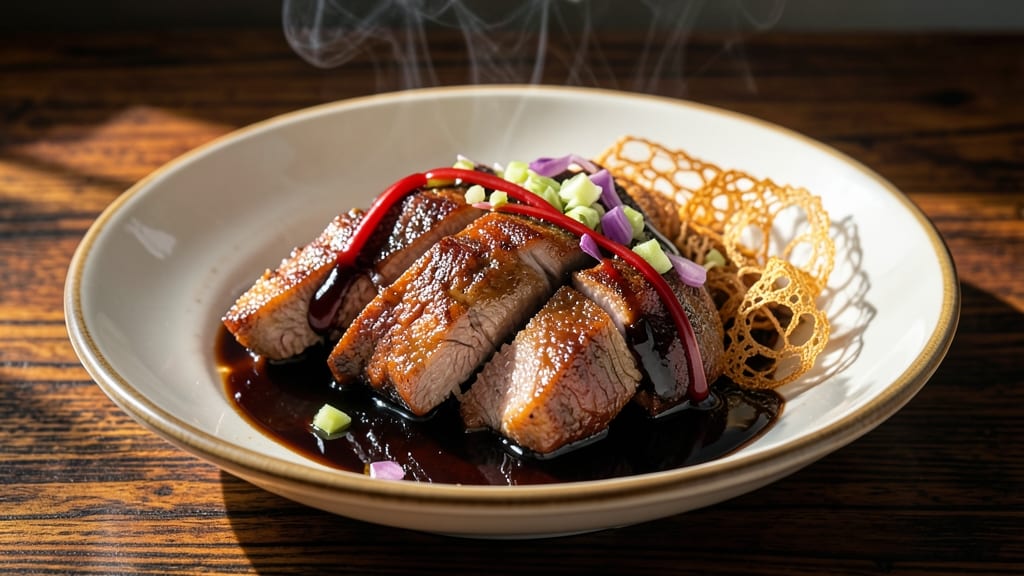
This Asian-style beef cheek recipe transforms tough cuts into melt-in-your-mouth silk through slow braising—a technique that unlocks deep umami flavors and restaurant-quality tenderness. The secret lies in marinating the beef overnight with soy, five-spice, and fermented ingredients, then simmering it low and slow until it practically falls apart.
Every bite delivers that perfect contrast: tender, almost buttery beef against crisp vegetables or fluffy rice.
What makes this dish truly special is the balance of textures and flavors—savory, slightly sweet, and aromatic. The long cooking process develops complex layers of taste, while the addition of star anise, ginger, and black vinegar creates that signature Asian depth.
Unlike quick-cooked meats, this recipe rewards patience with results that feel luxurious yet approachable for home cooks.
By the time you serve this dish, your kitchen will smell like a bustling Asian eatery, and your guests will be impressed by the velvety texture and rich flavor.
The beef cheek becomes so tender it dissolves at the touch of a fork, making it perfect for pairing with steamed jasmine rice, quick-pickled vegetables, or even as a filling for dumplings. This is comfort food at its finest—elegant yet simple.
The beauty of this recipe is its versatility. Use it as the centerpiece of a weeknight dinner or elevate it to a special occasion meal. The slow-braised technique ensures every bite is packed with flavor, while the aromatic spices add warmth and complexity.
Ready to master this dish? Let’s get started with the ingredients and step-by-step instructions.
Ingredients for asian style beef cheek
Transform tough beef cheek into luxurious silk with these umami-rich ingredients—each playing a crucial role in the slow-braised magic.
| Ingredient | Amount | Notes |
|---|---|---|
| Beef Cheek 🥩 | 2 lb | Tough cut, trimmed of excess fat |
| Dark Soy Sauce 🍶 | ½ cup | Kikkoman preferred for depth |
| Light Soy Sauce 🍶 | ¼ cup | For balance of saltiness |
| Shaoxing Wine 🍷 | ¼ cup | Adds aromatic complexity |
| Fresh Ginger 🧄 | 2 tbsp | Julienned, skin removed |
| Garlic Cloves 🧄 | 6 cloves | Crushed, not minced |
| Five-Spice Powder 🌶️ | 1 tbsp | Authentic blend for warmth |
| Star Anise 🌟 | 2 whole | Whole pods for infusion |
| Black Vinegar 🍶 | ¼ cup | Adds tangy depth |
| Brown Sugar 🍯 | ¼ cup | Lightly packed |
| Honey 🍯 | 1 tbsp | For subtle sweetness |
| Red Chili Flakes 🌶️ | ½ tsp | Adjust for heat preference |
| Sesame Oil 🫒 | 1 tbsp | For finishing aroma |
| Jasmine Rice 🌾 | 1 ½ cups | Uncooked, long-grain |
| Green Onions 🧅 | 4 whole | Sliced for garnish |
The beef cheek is non-negotiable for this dish—its collagen-rich composition dissolves into velvety texture when braised properly. Look for well-marbled cuts at specialty butchers or Asian markets, where they often carry pre-trimmed pieces. Costco or Whole Foods typically stock them in the frozen section if fresh isn't available. Five-spice powder must be authentic (not the generic grocery store blend)—Penzeys or Spicewalla carry high-quality versions. Star anise pods should be plump and aromatic; if they smell stale, replace them immediately. Ginger and garlic should be fresh, never powdered, as their raw potency is essential for building flavor depth during the long cook.
No Shaoxing wine? Dry sherry or mirin works in a pinch, though the flavor profile will shift slightly. Black vinegar can be substituted with balsamic vinegar, but reduce to 1 tbsp and add 1 tsp soy sauce to compensate for the milder tang. For the five-spice blend, if you're missing one component (like cloves or fennel), omit it entirely—don't try to substitute with individual spices. The sesame oil is purely for finishing; if you prefer a nutty aroma, toast whole sesame seeds in a dry pan before grinding. Brown sugar can be swapped for coconut sugar, but it will caramelize differently during the long braise. Always use fresh ginger and garlic—never pre-minced or jarred, as they lose potency quickly.
Beef cheek marinates best overnight in the fridge, but if short on time, 4 hours minimum will still yield tender results. The braising liquid keeps for 5 days refrigerated or 3 months frozen—portion into ice cube trays for easy reheating. Cooked beef cheek reheats beautifully; simmer in its own juices for 10-15 minutes on low heat to restore tenderness. Store jasmine rice in an airtight container with a slice of apple to prevent drying. Green onions should be trimmed and stored stems-down in a jar of water in the fridge for up to 2 weeks. The five-spice powder and star anise should be kept in a cool, dark place to preserve their aromatic oils—glass jars with tight seals are ideal.
Why You'll Love This Recipe
- One-Pot Magic: I swear by this recipe when I’m too tired to juggle multiple pans. The beef cheek practically melts into tender perfection while the soy sauces and Shaoxing wine simmer down into a glossy, sticky sauce—no straining, no fuss, just deep flavor in one pot.
- Umami Bomb: That first bite? Rich, caramelized beef cheek with layers of savory-sweet from the dark soy and a bright kick from the ginger. The Shaoxing wine cuts through the richness like a secret weapon—it’s the kind of dish that makes you close your eyes and savor it.
- Leftover Hero: Between us, this recipe begs to be made in bulk. The beef stays tender for days, and the sauce only gets better as it sits—ideal for meal prep or feeding a crowd. I’ve reheated portions for lunch all week without a single complaint (or a sad leftovers bin).
- Budget Luxury: Beef cheek is a steal compared to other cuts, and a little goes a long way. The dark soy and Shaoxing wine add depth without breaking the bank, making this my go-to for impressive meals that won’t drain my wallet. Honestly, it’s the kind of dish that makes frugal cooking feel fancy.
Step-by-step instructions for slow-braised beef cheek
Transform tough beef cheek into melt-in-your-mouth silk using precise timing and layered flavors.
Prepare the Beef Cheek for Maximum Tenderness
Trim any remaining fat from the 2 lb beef cheek, leaving about ¼ inch for flavor. Place the meat in a large pot and cover with cold water by 2 inches. Add the 2 whole star anise pods and bring to a boil over high heat. Immediately reduce to a simmer and cook for exactly 30 minutes. This initial blanching step helps break down collagen and removes any surface impurities.
Drain the beef cheek and rinse it thoroughly under cold water. Pat it completely dry with paper towels—this ensures better browning and flavor absorption later. The meat should feel firm but pliable, not rubbery. This preparation is critical for developing that signature silky texture we're after.
Build the Umami-Packed Braising Liquid
In the same pot, combine the 0.5 cup dark soy sauce, 0.25 cup light soy sauce, 0.25 cup shaoxing wine, 0.25 cup black vinegar, 0.25 cup brown sugar, and 1 tbsp honey. Bring this mixture to a boil over medium-high heat, stirring constantly to dissolve the sugar completely. You'll notice the liquid darken significantly as it reduces—this is where the deep, complex flavors develop.
While the liquid reduces, prepare the aromatics by julienning the 2 tbsp fresh ginger and crushing the 6 cloves garlic. Add these to the pot along with the 1 tbsp five-spice powder and 0.5 tsp red chili flakes. Stir well and let the mixture simmer for 5 minutes until the aromatics are fragrant and the liquid has reduced by about one-third. This aromatic base forms the foundation of our braising liquid.
Braise Until Fork-Tender Perfection
Return the beef cheek to the pot and pour in enough water to cover the meat by 1 inch. Bring to a gentle simmer over medium-low heat. The key here is maintaining a steady temperature—you want small bubbles breaking the surface occasionally, not a rolling boil. Cover the pot and let it cook for 3 hours, then check the meat for tenderness.
Use a fork to test the beef cheek—it should pierce easily with minimal resistance. If not, continue braising for another 30- to 60-minute increments until it reaches this texture. The braising liquid should reduce significantly, coating the beef in a glossy, flavorful glaze. This slow cooking process transforms the tough collagen into gelatin, creating that luxurious silk-like texture we're aiming for.
Finish with Signature Flavor Layers
Once the beef cheek is fork-tender, carefully remove it from the pot and set it aside. Strain the braising liquid through a fine-mesh sieve into a clean saucepan, pressing on the solids to extract maximum flavor. Return the liquid to medium heat and simmer until it thickens slightly, coating the back of a spoon. This concentrated sauce will carry all our hard work to the plate.
Add the 1 tbsp sesame oil to the thickened sauce and stir well. The sesame oil adds a final aromatic layer that bridges the rich umami flavors with a subtle nutty finish. Taste and adjust seasoning if needed—you might need a touch more soy sauce for saltiness or a splash of water to reach your desired consistency. The sauce should coat the back of a spoon but remain fluid enough to glaze the beef beautifully.
Serve Over Jasmine Rice with Garnish
Slice the beef cheek against the grain into ¼-inch thick pieces. The grain will be visible as you cut—this is where the meat's natural texture lies. Return the sliced beef to the sauce and toss gently to coat evenly. Cook the 1.5 cups jasmine rice according to package instructions, fluffing it with a fork before serving.
Divide the rice among serving plates and top each portion with the beef cheek and sauce. Garnish with the sliced 4 whole green onions, cutting them into ¼-inch pieces for visual appeal. The green onions add a fresh contrast to the rich, umami-packed beef. Serve immediately while the beef is still warm and the sauce is at its peak glossiness. Each bite should deliver that perfect balance of tender beef, complex braising liquid, and aromatic finish.
Pro Tips For Making Asian Style Beef Cheek
- Par-Cook First: I learned this the hard way—beef cheek needs a head start. Simmer it in water with a splash of Shaoxing wine and ginger for 30 minutes before braising. This jumpstarts the collagen breakdown, so you’re not staring at a pot for hours waiting for tender results.
- Scrape the Ginger: Skip the minced ginger—peel, slice, and scrape the surface with a spoon. The juices and oils released from the skin add depth that prepped ginger can’t match. (Yes, it looks weird, but trust the process.)
- Balance the Sauces: Dark soy adds color; light soy carries flavor. Use them in a 2:1 ratio (light to dark) unless you’re aiming for a glossy, molasses-like finish. Too much dark soy? Your dish turns bitter—no amount of sugar fixes that.
- Deglaze with Wine First: After searing the beef cheek, pour in the Shaoxing wine immediately—don’t wait for the pan to cool. The alcohol burns off faster, leaving behind a richer, caramelized base. (Your future self will notice the difference.)
Creative variations of these flavors
Korean-Inspired Braised
Transform this dish into a Korean-style bulgogi-inspired beef cheek by swapping the soy sauces for 1 cup gochujang (Korean chili paste) and 1 tbsp gochugaru (Korean chili flakes). Add 1 tbsp toasted sesame seeds and 1 tbsp grated pear to the marinade for natural sweetness and tenderness.
Cook the beef cheek in a clay pot (hangwa) or heavy Dutch oven for 4 hours on low heat, then finish with a drizzle of sesame oil and toasted sesame seeds. Serve with steamed short-grain rice and kimchi for an authentic Korean feast. 🌶️
Japanese Miso-Glazed
For a Japanese-inspired twist, replace the soy sauces with ½ cup white miso paste and 2 tbsp mirin. Add 1 tbsp grated daikon radish and 1 tbsp grated ginger to the braising liquid.
Simmer the beef cheek in a cast-iron skillet for 3 hours, then glaze it with a mixture of 2 tbsp miso paste, 1 tbsp honey, and 1 tbsp sake. Finish with toasted nori strips and pickled ginger for a sophisticated Japanese touch. 🍶
Thai Coconut Curry
Give this dish a Thai-inspired makeover by adding 1 can (13.5 oz) coconut milk and 2 tbsp red curry paste to the braising liquid. Include 1 stalk lemongrass, 2 kaffir lime leaves, and 1 tbsp fish sauce for depth.
Simmer the beef cheek for 2.5 hours until tender, then finish with fresh Thai basil and crushed peanuts. Serve over jasmine rice with steamed bok choy for a fragrant, creamy Thai curry experience. 🌺
Vietnamese Caramelized
For a Vietnamese-inspired version, replace the black vinegar with 3 tbsp fish sauce and add 1 tbsp sugar to caramelize. Include 1 cinnamon stick and 1 tbsp nuoc mam (Vietnamese fish sauce) in the braising liquid.
Cook the beef cheek for 3 hours, then finish with fresh cilantro and crushed peanuts. Serve with steamed rice noodles and pickled daikon for a bold, savory Vietnamese flavor profile. 🥢
Spicy Sichuan
Bring Sichuan heat to this dish by adding 1 tbsp Sichuan peppercorns (toasted and crushed), 1 tbsp doubanjiang (chili bean paste), and 1 tbsp chili crisp to the braising liquid.
Simmer the beef cheek for 3 hours, then finish with scallions and toasted cumin seeds. Serve with steamed rice and spicy chili oil for a fiery Sichuan kick. ⚡
Sweet and Sour Fusion
Create a sweet-and-sour fusion by adding ½ cup pineapple juice and 2 tbsp rice vinegar to the braising liquid. Include 1 tbsp grated apple and 1 tsp five-spice powder for balance.
Simmer the beef cheek for 3 hours, then finish with fresh pineapple chunks and cilantro. Serve with steamed rice and quick-pickled cucumbers for a tangy, refreshing twist. 🍍
Nutrition facts
Frequently asked questions
Why does beef cheek become so tender in this recipe?
The secret lies in the 3-hour slow braise at low heat, which breaks down collagen into gelatin, creating that signature silk-like texture. The combination of ginger, garlic, and star anise also helps tenderize the meat naturally while infusing deep aroma. This method transforms tough cuts into luxurious bites that practically melt in your mouth.
Can I substitute beef cheek with another cut?
While beef cheek is ideal for its collagen content, you can use brisket, chuck roast, or pork shoulder in a pinch. For pork, reduce cooking time to 2 hours and add 1 tbsp apple cider vinegar to balance richness. Just expect slightly less melt-in-your-mouth tenderness. The braising technique works best with fatty, well-marbled cuts.
How do I know when the beef is done?
The beef is ready when a fork pierces it with minimal resistance and the fibers pull apart easily. Look for a glossy, reduced sauce coating the meat—this indicates proper doneness. If it's still tough after 3 hours, extend cooking by 30-minute increments until tender. Never rush this step, as patience is key to perfect texture.
Can I make this recipe in an Instant Pot?
Yes! Use the sauté function to build the braising liquid, then cook on low pressure for 90 minutes with a natural release. Add ½ cup water instead of covering by 1 inch. The pressure cooker speeds up the process while still delivering tender results. For best texture, shred the beef slightly before serving to mimic the slow-braised consistency.
What sides pair best with this dish?
Jasmine rice is classic, but you can also serve with steamed bok choy, pickled vegetables, or noodles for texture contrast. For a complete meal, add quick-pickled cucumbers or kimchi to cut the richness. The umami depth of the beef works beautifully with light, fresh sides that balance its intensity.