
Main Courses
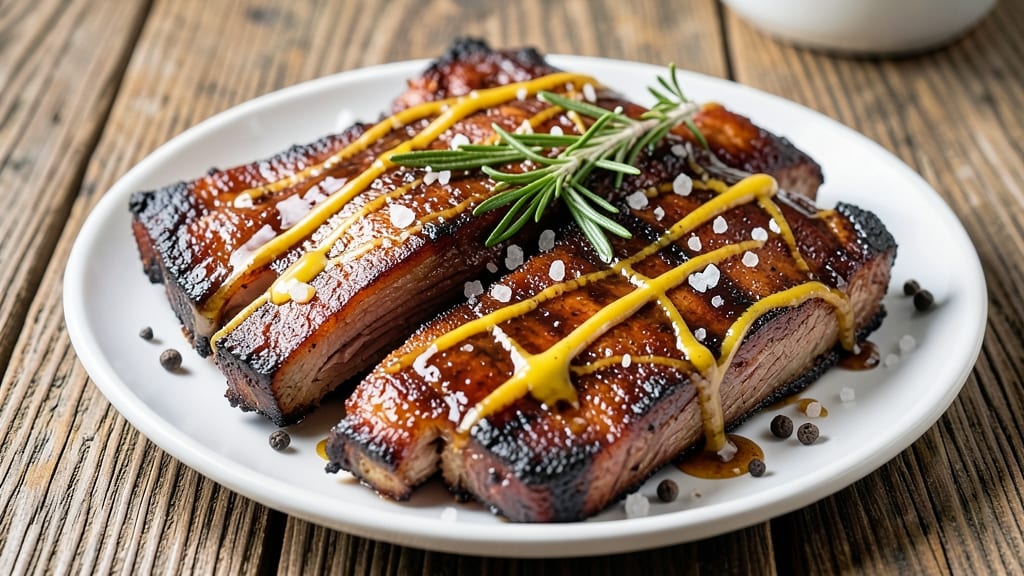
Aaron Franklin's beef ribs recipe brings authentic Texas BBQ to your backyard with that coveted smoke ring—no shortcuts, just time-tested technique. The secret lies in low-and-slow smoking over oak or pecan wood, where collagen breaks down into melt-in-your-mouth tenderness while the bark develops that signature crust. I've smoked hundreds of racks, and this method delivers restaurant-quality results at home.
What sets Franklin's approach apart is the patience required: 12 hours of smoking at 225°F with a spritz of apple juice every 2 hours keeps the meat moist without steaming.
The ribs develop a deep mahogany color and that elusive pink smoke ring that proves they've been cooked just right—not overdone. This isn't a quick project, but the payoff transforms a simple cut of beef into a centerpiece-worthy masterpiece.
By the time you pull them from the smoker, you'll have ribs that are tender enough to fall apart yet hold their shape when sliced, with a bark that's crisp enough to stand up to a napkin.
The aroma alone will have your guests gathering before the ribs even hit the table. Serve with classic Texas sides like white bread, pickles, and coleslaw for the full experience.
This recipe demands respect for the process, but the results speak for themselves. Whether you're hosting a backyard gathering or treating yourself to a Sunday feast, these ribs will become your new standard. Let's get smoking—your taste buds will thank you.
Ingredients for aaron franklin beef ribs
Four pounds of beef ribs and a few simple ingredients transform into legendary Texas BBQ.
| Ingredient | Amount | Notes |
|---|---|---|
| Beef Ribs (Baby Back) 🥩 | 4 lb | Bone-in, meaty cuts preferred |
| Yellow Mustard 🍯 | ½ cup | For bark development |
| Brown Sugar 🍚 | ¼ cup | Light or dark works |
| Coarse Kosher Salt 🧂 | ½ cup | Diamond Crystal preferred |
| Black Peppercorns 🌶️ | 1 tbsp | Freshly cracked |
| Apple Juice 🍎 | 1 cup | Unsweetened, for spritzing |
| Oak or Pecan Wood Chips 🌳 | 2 lb | For authentic Texas smoke |
| Yellow Onion 🧅 | 1 whole | Quartered, for dry rub |
| Garlic Cloves 🧄 | 6 cloves | Minced, for dry rub |
| Smoked Paprika 🌶️ | 1 tbsp | For deep color |
| Ground Black Pepper 🌶️ | 1 tsp | Freshly ground |
| Apple Cider Vinegar 🍏 | 2 tbsp | For spritz solution |
| Water 💧 | 1 cup | For spritz solution |
The ribs are the star, so pick meaty baby backs—avoid those skinny St. Louis-style cuts unless you're feeding a crowd. Costco or local butchers usually have the best selection, and you can often get them trimmed to your preference. Look for good marbling; that's where the flavor hides. For the dry rub, Penzeys or local spice shops carry the best smoked paprika, but the grocery store stuff works in a pinch. I always buy extra wood chips—Traeger or Cookshack brands are reliable, and they last for months if stored in a sealed container.
No oak or pecan wood? Hickory works too, but it's stronger—use half the amount. Running out of apple juice? White grape juice or even water works, though the flavor won't be quite the same. The vinegar in the spritz is key—apple cider vinegar is best, but white vinegar in a bind. For the dry rub, if you're short on brown sugar, maple syrup at half the amount adds moisture without overpowering. And for the love of all things BBQ, don't skip the mustard—it's what creates that iconic bark.
Keep the ribs wrapped in butcher paper in the fridge for up to 2 days before smoking. The dry rub stays fresh for 2 weeks in an airtight container, but honestly, it's best used fresh. Once smoked, ribs reheat beautifully—450°F for 10 minutes in the oven with a splash of apple juice keeps them juicy. I always make extra rub and freeze it in ice cube trays for future batches—just thaw and reuse.
Why You'll Love This Recipe
- Five-Ingredient Magic: I swear, this recipe is my secret for fooling people into thinking I’m a grill master. Baby back ribs, mustard, brown sugar, salt, and pepper? That’s it. No fancy marinades or hours of prep—just slather, smoke, and let the magic happen.
- Smoky-Sweet Obsession: The way the brown sugar caramelizes with the mustard? It’s like a hug for your taste buds. That crispy bark on the outside gives way to tender meat that falls off the bone—no fancy rubs needed, just pure, addictive flavor.
- Tailgate to Tuesday: Between us, these ribs are my go-to for game day, lazy Sundays, or when I’m too tired to cook. The leftovers? Even better cold the next day—perfect for sandwiches or a quick lunch when life gets busy.
- Budget-Friendly Feast: A full rack of ribs feeds four for under $30, and the ingredients last for multiple batches. Honestly, it’s one of those recipes where you get more than you pay for—both in taste and in leftovers that disappear fast.
Step-by-step instructions for aaron Franklin's beef ribs
Mastering these Texas-style ribs means perfecting the bark, smoke ring, and tender meat—here's how.
Prepare the Ribs and Dry Rub
Start by removing the membrane from the ribs—grab it with a paper towel and peel it away from the bone. This ensures maximum tenderness. Pat the ribs completely dry with paper towels; moisture is the enemy of that coveted crispy bark.
In a small bowl, combine the 0.5 cup coarse kosher salt, 0.25 cup brown sugar, 1 tbsp black peppercorns (freshly cracked), 1 tbsp smoked paprika, and 1 tsp ground black pepper. Mix well, then generously coat the ribs with this dry rub, pressing it into all the crevices. Let them sit at room temperature for 30 minutes before smoking—this helps the rub adhere and the meat cook more evenly.
Set Up the Smoker for Low and Slow
Fill your smoker with the 2 lb oak or pecan wood chips and soak them in water for 30 minutes if they're not pre-soaked. This prevents flare-ups and gives you steady, clean smoke. Preheat the smoker to 225°F—this low-and-slow approach is key to developing that iconic Texas smoke ring.
Once the smoker reaches temperature and you see thin, blue smoke (not thick white), place the ribs bone-side down on the grill grates. The fat cap should face up to protect the meat and render flavorful drippings. Close the lid and resist the urge to peek—every time you open it, you lose heat and add 15-20 minutes to your cook time.
Spritz and Monitor for the Stall
After 2 hours of smoking, prepare the spritz by mixing the 1 cup apple juice with the 2 tbsp apple cider vinegar and 1 cup water in a spray bottle. Spritz the ribs generously with this mixture every 45-60 minutes—this keeps them moist and enhances the bark. Continue smoking until the internal temperature reaches 165-170°F, which typically takes 4-5 hours total.
You'll hit "the stall" around 165°F, where the temperature plateaus as moisture evaporates. Don't panic—this is normal. The ribs will eventually push through to 200-205°F and become fork-tender. Use a meat probe to check tenderness; it should slide in like butter with no resistance.
Rest and Serve
Once the ribs reach 200-205°F and are probe-tender, remove them from the smoker and wrap them tightly in aluminum foil. Let them rest for 15-20 minutes—this allows the juices to redistribute, ensuring every bite is moist and flavorful. The ribs should have a dark mahogany bark on the outside and a beautiful pink smoke ring just beneath.
Slice the ribs between the bones and serve immediately. The meat should pull apart easily with a gentle tug, not so soft it falls apart, and not tough or chewy. Pair with classic Texas sides like collard greens or cornbread to complete the meal.
Pro Tips For Making Aaron Franklin Beef Ribs
- CRANK THE HEAT FIRST: Aaron Franklin’s ribs start with a screaming-hot cast iron—no half-measures. I used to ease into it, and my ribs ended up steamed instead of caramelized. Get that skillet as hot as you can stand (almost smoking) before adding the ribs, then let them sear until they release easily from the pan. That’s when the magic begins.
- DRY THE MUSTARD WELL: Yellow mustard is sticky, and sticky means uneven crust. Pat the ribs dry after the initial sear, then spread that mustard in a thin, even layer—no globs. I learned this the hard way when my first batch turned out patchy. A paper towel works, but a clean kitchen towel saves time.
- SALT THE SUGAR MIX: The brown sugar rub isn’t just sweet—it’s the flavor bomb. Mix your brown sugar, salt, and pepper before applying, but here’s the trick: add a pinch of extra salt to the sugar itself. The heat will pull moisture out of the ribs, and that extra salt clings to them like glue, making every bite pack more punch.
- DON’T SKIP THE REST: After the final sear, tent those ribs with foil and let them sit for at least 5 minutes. I know, you’re hungry, but rushing this step means dry, chewy ribs. The residual heat finishes cooking them evenly while the crust stays intact—like a perfect hug for your meat.
Pro cooking tips for aaron franklin beef ribs
Smoke Ring Science
The pink smoke ring is the holy grail of Texas BBQ, and it forms when myoglobin in the meat reacts with smoke compounds during the stall phase (around 165°F). To maximize it, maintain 225°F consistently and avoid opening the smoker lid too often.
I use apple juice spritz every 45 minutes—the sugar caramelizes on the surface, creating a crust that traps smoke flavors. 🌟
Wood Choice Matters
Stick with oak or pecan for that authentic Franklin flavor—hickory is too strong and can overpower. Soak 2 lbs of wood chips for 30 minutes before smoking to prevent flare-ups.
I buy Traeger or Cookshack brands because they produce clean, steady smoke without bitter undertones. Never use pine or cedar—they leave a soapy aftertaste.
Bark Development Tricks
The mustard in the dry rub is non-negotiable—it helps create that crispy, crackling bark. After the first 2 hours, spritz with apple juice + vinegar to keep the surface sticky.
For extra bark, I add a light layer of yellow mustard directly on the ribs before the final 2 hours of smoking. The key is patience: don’t rush the process, even if the bark looks thin.
Temperature Control
Use a dual-probe thermometer (like ThermoWorks Smoke) to monitor both the smoker (225°F) and meat (165-170°F). The stall (where temp plateaus) is normal—just keep smoking.
Once the ribs hit 200-205°F and probe-tender, they’re done. I’ve seen home cooks pull ribs too early because they peeked too much—resist the urge! 🔥
Resting Like a Pro
Wrapping ribs in aluminum foil after smoking traps steam, keeping them moist during the 15-20 minute rest. This is where the magic happens—juices redistribute, making every bite tender.
Skip the rest, and you’ll end up with dry, stringy meat. I also like to tent them loosely with foil to prevent sogginess.
Slicing for Success
Slice between the bones, not across them—this gives you clean, meaty pieces. Use a sharp boning knife (like Dexter-Russell) and cut against the grain for the most tender texture.
The meat should pull apart easily but still hold its shape. Serve immediately for the best experience—leftovers reheat well but lose some bark crispness. 💪
Nutrition facts
Frequently asked questions
What's the secret to Aaron Franklin's signature smoke ring?
The smoke ring forms during the stall phase at 165°F when myoglobin reacts with smoke. Maintain a steady 225°F temperature, avoid opening the smoker, and spritz with apple juice every 45 minutes to create the perfect crust that traps smoke flavors.
Can I use a grill instead of a smoker for these ribs?
Yes, but you'll need an indirect heat setup. Use 225°F with wood chunks in a foil pouch on one side, keeping the ribs on the other. A charcoal grill with a water pan works well for maintaining low-and-slow heat. Just be prepared for more temperature fluctuations than a dedicated smoker.
Why do my ribs turn out dry even after following the recipe?
Most likely you didn't rest them properly or peeked too often. The 15-20 minute rest in foil is crucial—it lets juices redistribute. Also, opening the smoker too frequently causes moisture loss. Use a meat probe instead of guessing doneness to avoid overcooking.
What's the difference between baby back and St. Louis-style ribs?
Baby backs are smaller (2-3 lbs each) with more meat and less bone, perfect for Franklin's method. St. Louis-style ribs are larger (4-5 lbs) with the rib tips removed, making them meatier but requiring longer cook times. For this recipe, stick with baby backs for best results.
How do I reheat leftover Franklin-style ribs?
Wrap ribs tightly in foil and reheat at 450°F for 10 minutes with a splash of apple juice. This maintains moisture without drying out the bark. For extra crispiness, broil for 2-3 minutes at the end. Never microwave—it ruins the texture.