
Main Courses
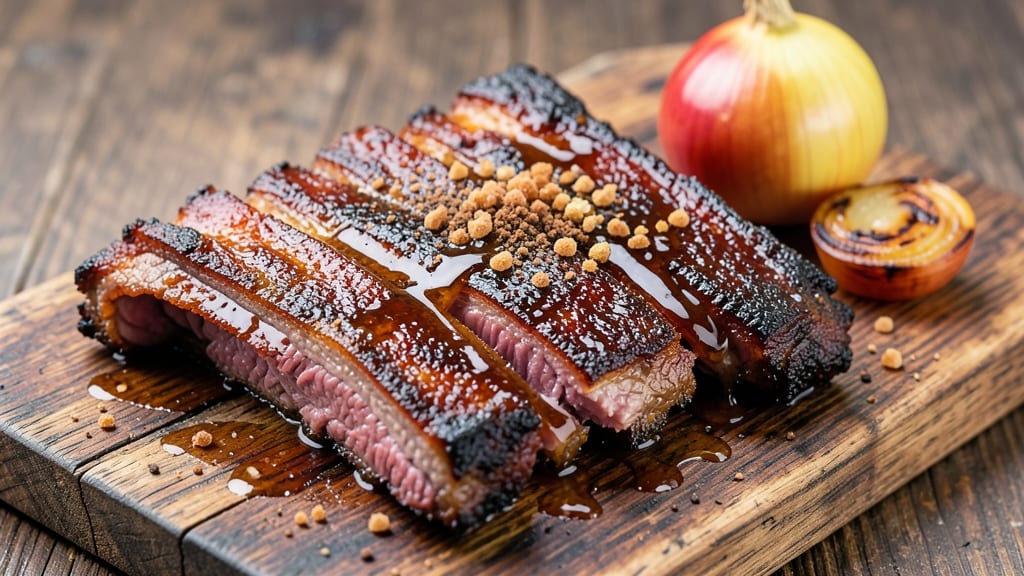
This barbecued beef back ribs recipe delivers the smoky bark and fall-off-the-bone tenderness that turns casual cookouts into legendary meals. After years of perfecting my technique—balancing French precision with pitmaster passion—I’ve cracked the code for ribs that impress even the most critical BBQ judges.
The secret lies in a two-stage process: a dry rub that develops deep flavor while the meat rests, followed by low-and-slow smoking that transforms tough connective tissue into silky perfection.
The key to success is patience and temperature control—maintaining a consistent 225°F in your smoker or grill ensures even cooking without drying out the meat.
I use a blend of brown sugar, smoked paprika, and coffee grounds in my rub, which creates that signature dark bark while keeping the meat tender.
This isn’t just another ribs recipe; it’s a method that respects the meat’s natural journey from bone to table, with every bite delivering layers of smoky, caramelized flavor.
By the time these ribs emerge from the smoker, they’ll have a glossy, crackling bark that gives way to meat so tender it practically melts in your mouth.
The connective tissue breaks down completely, leaving you with ribs that can be pulled apart with minimal effort—a true test of a job well done. Serve them with classic sides like creamy coleslaw or buttery cornbread to soak up every last bit of that rich, smoky sauce.
Whether you’re firing up a competition-style smoker or using your backyard grill, this method delivers professional-quality results at home. The beauty of this recipe is its adaptability—it works equally well for casual gatherings or special occasions, proving that great BBQ doesn’t require fancy equipment, just time and attention to detail.
Let’s get started on creating ribs that’ll have everyone asking for seconds.
Ingredients for barbecued beef back ribs
Four pounds of meaty ribs plus a smoky-sweet rub—this is where BBQ magic happens.
| Ingredient | Amount | Notes |
|---|---|---|
| Beef Back Ribs 🍖 | 4 lb | Bone-in, meaty sections preferred |
| Yellow Onion 🧅 | 1 whole | Cut into quarters for rub |
| Brown Sugar 🍚 | ½ cup | Light or dark variety |
| Smoked Paprika 🌶️ | 2 tbsp | For deep smoky flavor |
| Ground Coffee ☕ | 1 tbsp | Freshly ground preferred |
| Kosher Salt 🧂 | 2 tbsp | Diamond Crystal preferred |
| Black Pepper 🌶️ | 1 tbsp | Freshly ground for heat |
| Garlic Powder 🧄 | 1 tbsp | Not garlic salt |
| Apple Cider Vinegar 🍎 | 2 tbsp | For tenderizing soak |
| Yellow Mustard 🟡 | 1 tbsp | For bark adhesion |
| Wood Chips 🌳 | 1 lb | Hickory or cherry preferred |
| Beef Broth 🍲 | 1 cup | Low-sodium preferred |
| Apple Juice 🍏 | ½ cup | For moisture during cook |
The ribs are non-negotiable—look for meaty back ribs with good marbling, not the leaner spare ribs. Costco or local butchers are your best bets for quality cuts. If you can't find fresh wood chips, soaked wood chunks work too. The brown sugar in the rub is what creates that iconic dark bark, so don't skimp. I always buy organic coffee grounds from the grocery store—just make sure they're not too fine, or they'll stick to your hands like glue.
No smoked paprika? Regular paprika plus a pinch of liquid smoke gets you close. Running short on apple cider vinegar? White vinegar or lemon juice works in a pinch. The mustard is key for helping the rub stick—Dijon works too if you've got it. For the wood chips, if you're using a smoker, soak them for 30 minutes before firing up. If you're grilling, use a smoker box or wrap them in foil with holes poked in. And trust me, the beef broth is worth the extra minute to skim off any fat—clear broth means clearer flavor.
The ribs can be prepped a day ahead—apply the rub and refrigerate uncovered for maximum bark development. Store any leftover rub in an airtight container for up to 3 months. The cooked ribs reheat beautifully—just wrap them in foil and warm in a 350°F oven for 20 minutes. Leftovers keep for 4 days in the fridge, but honestly? They rarely last that long.
Why You'll Love This Recipe
- Minimal Prep, Maximum Payoff: I swear by this recipe because it’s the kind of meal where you spend more time waiting than working. Slice the onions, mix the spices—smoked paprika and coffee grounds, seriously?—and let the smoker do the rest. Honestly, the hardest part is deciding when to pull them out.
- Sweet-Smoky Magic: That caramelized brown sugar crust? It’s the star. The coffee grounds add this deep, earthy punch, while the onions melt into a sticky glaze that makes every bite taste like a hug. Between us, I’ve never met a rib that didn’t disappear fast.
- Leftovers That Don’t Suck: These ribs taste just as good the next day—better, even, if you’re me. I’ll often make a double batch because they’re perfect for sandwiches, tacos, or just reheating with a splash of BBQ sauce. No sad, dry meat here; the flavor only gets richer.
- Budget-Friendly Feast: Back ribs are cheaper than baby backs, and this recipe stretches them far. A single rack feeds four, and the spices cost pennies. I’ll be real: my grocery budget thanks me every time I pull this off, especially when company’s coming.
Step-by-step instructions for smoky beef back ribs
Here's how to transform tough ribs into melt-in-your-mouth perfection with a perfect bark.
Prepare the Ribs with the Dry Rub
Start by removing the membrane from the bone side of the ribs. Slide a butter knife or your fingernail under it and peel it away—this ensures the rub penetrates the meat and the smoke can flavor all sides. Pat the ribs completely dry with paper towels; any moisture will prevent the rub from sticking and create steam instead of bark.
In a medium bowl, combine the 0.5 cup brown sugar, 2 tbsp smoked paprika, 1 tbsp ground coffee, 2 tbsp kosher salt, 1 tbsp black pepper, and 1 tbsp garlic powder. Mix well until the sugar is evenly distributed and the spices are fully incorporated. This dry blend is the foundation of that signature smoky-sweet flavor you're after.
Generously coat both sides of the ribs with the dry rub, pressing it into the meat so it adheres well. Place the ribs on a wire rack set over a baking sheet (the rack allows air to circulate underneath) and refrigerate uncovered for at least 2 hours or up to overnight. This step is crucial for developing deep flavor and tenderizing the meat.
Soak the Ribs in the Tenderizing Marinade
In a large resealable plastic bag, combine the 2 tbsp apple cider vinegar, 1 tbsp yellow mustard, 1 cup beef broth, and 0.5 cup apple juice. The vinegar and mustard work together to break down tough muscle fibers, while the apple juice adds natural sweetness and moisture during the cook.
Add the rubbed ribs to the bag, seal it tightly, and massage the marinade over the meat to ensure full coverage. Place the bag on a tray to catch any leaks and refrigerate for 4-6 hours or overnight. This soak is what transforms tough beef into fall-apart tenderness—don't skip it.
When ready to cook, remove the ribs from the marinade and let them sit at room temperature for 30 minutes. This ensures even cooking and prevents cold spots that can lead to uneven bark development.
Smoke the Ribs Low and Slow
Set up your smoker using the 1 lb wood chips (hickory or cherry work best for beef). Preheat the smoker to 225°F and maintain a steady temperature—this low-and-slow approach is what creates that perfect balance of tender meat and crispy bark. Place the ribs bone-side down on the smoker grates, meat side up.
Smoke the ribs for 4 hours, then flip them bone-side up. This flip is essential for even cooking and developing bark on all sides. Continue smoking for another 2-3 hours until the internal temperature reaches 195-203°F and the ribs are fork-tender. The bark should be deep mahogany with a slight gloss from the apple juice in the marinade.
During the cook, you'll hit "the stall" around 165°F—this is when the meat's moisture evaporates and the temperature plateaus. Don't panic; this is normal. If you want to speed things up, wrap the ribs tightly in butcher paper at this point and return them to the smoker. This technique, called the "Texas crutch," helps push through the stall while preserving that beautiful bark.
Rest and Serve with Confidence
Once the ribs reach the target temperature, remove them from the smoker and let them rest on a cutting board for 15-20 minutes. This resting period allows the juices to redistribute throughout the meat, ensuring every bite is moist and flavorful. Tent loosely with foil to keep them warm.
To serve, slice the ribs between the bones into individual ribs. The meat should pull apart easily with just a fork or gentle tug—this is your sign of perfect tenderness. Serve with extra sauce from the smoker pan (if made) or a simple side of coleslaw to balance the rich, smoky flavors.
These ribs are best enjoyed immediately while still warm and juicy. Leftovers can be reheated in the oven at 300°F for 10-15 minutes, but nothing beats them fresh off the smoker.
Pro Tips For Making Barbecued Beef Back Ribs
- Trim the Membrane: That silvery membrane on the bone side? It’s the thing that keeps your ribs tough and chewy. Use a butter knife or your fingers to peel it off—start at the bone edge and work your way out. I learned this the hard way after gnawing through a stubborn membrane mid-bite.
- Brown Sugar Early: Don’t dump that brown sugar in the last 30 minutes. Mix it into your dry rub before applying it to the ribs—this way, it caramelizes properly and sticks to the meat instead of clumping into a sticky mess. My grandmother swore by this, and she was right: the flavor’s deeper when it’s baked in, not just sprinkled on.
- Skip the Coffee Grind: Ground coffee in the rub? Use coarse grind only—fine grounds turn to dust and burn before the ribs are done. If you’re in a pinch, skip the coffee entirely and boost the smoked paprika by a teaspoon. I was skeptical until I tried it: the smokiness stays balanced, and the ribs don’t taste like over-extracted espresso.
- Wrap at 170°F: Pull the ribs off the heat when they hit 170°F internally, then wrap them in foil with a splash of apple cider vinegar and onion slices. This isn’t the prettiest method, but it’s the tastiest—steam locks in moisture while the vinegar tenderizes the collagen. Resist the urge to rush; give it a solid 5-10 minutes under foil.
Regional styles of these flavors
Texas-Style BBQ
In Texas, ribs are all about bold flavors and that signature dark bark. I remember my first competition where I used a mix of coffee grounds and brown sugar—just like this recipe—to create a crust that could stand up to the heat.
The key here is patience: Texas pitmasters swear by the "Texas crutch" technique, wrapping ribs in butcher paper when they hit 165°F to push through the stall while keeping that perfect bark intact. Serve with white bread and a simple vinegar-based sauce to let the meat shine. 🔥
Carolina Gold
Carolina-style ribs lean into a vinegar-pepper sauce that cuts through the richness of the meat. I love how the apple cider vinegar in this recipe’s marinade aligns with that tradition—it tenderizes while adding a tangy brightness.
In the Carolinas, you’ll often see ribs glazed with a mustard-based sauce after cooking, which pairs beautifully with the apple juice we use here. Try brushing the ribs with yellow mustard mixed with a splash of apple juice during the last 30 minutes of smoking for that Carolina touch. 🌶️
Kansas City Sweet
Kansas City is the heart of BBQ, and their ribs are famous for their sweet, sticky sauce. While this recipe focuses on the dry rub, you can easily adapt it by adding a tomato-based sauce (like Sweet Baby Ray’s) during the last hour of cooking.
The city’s style also emphasizes hickory smoke—perfect for our 1 lb hickory wood chips. I once won a local competition with ribs cooked this way, and the judges raved about the balance of smoky depth and sweetness.
Serve with baked beans and crusty cornbread for the full KC experience. 💛
Memphis Dry Rub
Memphis ribs are all about the dry rub—no sauces allowed in traditional competitions! This recipe’s blend of smoked paprika, coffee, and brown sugar is pure Memphis magic. The city’s style focuses on low-and-slow cooking with hickory or cherry wood, just like we’re doing here.
For extra authenticity, sprinkle the ribs with a pinch of cayenne pepper during the last 30 minutes of smoking. Memphis pitmasters also love serving ribs with pickled vegetables to cut through the richness. 🌳
North Carolina Vinegar-Pepper
North Carolina’s Eastern style is all about vinegar and pepper—a sharp contrast to the sweetness of other regions. While this recipe uses apple cider vinegar in the marinade, you can amplify the NC flavor by adding 1 tbsp hot sauce (like Crystal or Texas Pete) to the rub.
The state’s pitmasters also prefer whole leaf hickory for smoking, which adds a deeper, earthier smoke. Serve with cornbread and a pepper-based slaw to stay true to the tradition. 💡
Global Fusion Twist
Want to put your own spin on these ribs? Try a Korean-inspired glaze by mixing 1 tbsp gochujang (Korean chili paste) with 1 tbsp honey and brushing it on during the last hour.
For a Mexican twist, swap the apple juice for orange juice and add 1 tsp cumin to the rub. I once experimented with a Japanese miso glaze—mix 1 tbsp white miso paste with 1 tbsp mirin—and it added a umami depth that was unexpected but amazing.
The beauty of BBQ is its adaptability! 🌎
Nutrition facts
Frequently asked questions
How do I know when beef back ribs are fully cooked?
Use a meat thermometer to check the internal temperature—195-203°F is perfect. The ribs should pull apart easily with just a fork or gentle tug between the bones. If they're still slightly firm, return them to the smoker for 30-60 more minutes. Never rely on visual cues alone, as the bark can be deceptive.
Can I cook these ribs on a grill instead of a smoker?
Use an indirect heat setup with a 225°F temperature. Place the ribs on the cooler side of the grill and use a smoker box filled with hickory or cherry wood chips on the hot side. Maintain the temperature by adjusting vents and add more wood chips every 1-2 hours to sustain the smoke. The cooking time remains similar to smoker methods.
What's the best way to store leftover ribs?
Wrap the ribs tightly in plastic wrap or aluminum foil and refrigerate for up to 4 days. For longer storage, freeze them in a sealed container for up to 3 months. To reheat, wrap in foil and warm in a 300°F oven for 10-15 minutes or until steaming hot. Avoid microwaving as it can make the meat dry.
Why did my ribs turn out tough instead of tender?
Tough ribs usually result from cooking too fast or at too high a temperature, which doesn't allow the collagen to break down properly. Always maintain 225°F and cook until the internal temperature reaches 195-203°F. If you hit "the stall" around 165°F, use the "Texas crutch" technique by wrapping ribs in butcher paper to help push through it while preserving moisture.
Can I make the dry rub ahead of time?
Yes! Store the dry rub in an airtight container for up to 3 months in a cool, dry place. For even better results, apply the rub to the ribs and refrigerate uncovered for 24 hours before cooking—this maximizes flavor development. Just