
Main Courses
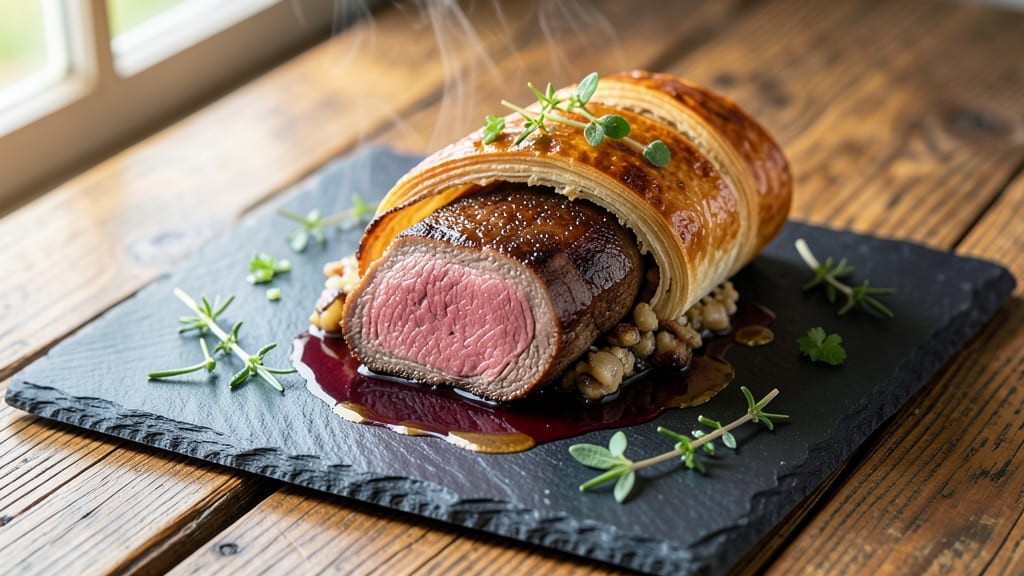
This 72-hour beef Wellington transforms a simple beef fillet into a showstopping centerpiece that demands a second helping. 🌟 The secret lies in the slow marinade—red wine, shallots, and fresh herbs tenderize the meat while infusing it with deep, complex flavors.
This isn't just a recipe; it's a culinary experience that elevates weeknight dinners to restaurant-worthy status, where every bite delivers perfectly seared meat encased in golden, flaky pastry.
The process begins with a three-day marinade that works its magic, followed by careful searing to lock in juices and create those coveted crusty edges.
Wrapping the fillet in puff pastry requires precision—blind-baking ensures the crust stays crisp while the meat rests, guaranteeing a result that's as impressive to serve as it is to eat. No shortcuts here; this is a dish built on patience and technique, where every step matters.
What you'll achieve is a perfectly balanced Wellington: tender, juicy beef with a deep red wine reduction, all encased in a golden, buttery pastry that shatters at the first bite.
The aroma alone—warm pastry mingling with caramelized shallots and rich red wine—will have your guests anticipating the first forkful. This isn't just dinner; it's an event.
Pair it with roasted mushrooms, creamy mashed potatoes, or a crisp green salad to complete the meal. The key to success lies in the details: resting the meat, blind-baking the pastry, and plating with confidence. Let's create something extraordinary—one layer at a time.
Ingredients for 72 hour beef wellington
The foundation of restaurant-quality Wellington begins with these 15 carefully selected ingredients.
| Ingredient | Amount | Notes |
|---|---|---|
| Beef Tenderloin 🥩 | 1 ½ lb | Center-cut, trimmed of fat |
| Dry Red Wine 🍷 | 1 cup | Bold Cabernet Sauvignon preferred |
| Shallots 🧅 | 6 whole | Minced, not sliced |
| Fresh Thyme 🌿 | ¼ cup | Leaves only, stems removed |
| Fresh Rosemary 🌿 | ¼ cup | Finely chopped, fresh preferred |
| Fresh Parsley 🌿 | ¼ cup | Flat-leaf variety, chopped |
| Dijon Mustard 🍯 | 2 tbsp | High-quality, smooth texture |
| Unsalted Butter 🧈 | ½ cup | Cold, cubed for searing |
| Puff Pastry 🍞 | 1 sheet | Store-bought, thawed |
| Prosciutto 🥓 | 4 slices | Thinly sliced, high-quality |
| Duck Fat 🦆 | 2 tbsp | For extra richness |
| Kosher Salt 🧂 | 1 ½ tsp | Diamond Crystal preferred |
| Freshly Ground Black Pepper 🌶️ | 1 tsp | Coarse grind preferred |
| Egg 🥚 | 1 whole | For egg wash |
| All-Purpose Flour 🌾 | 1 tbsp | For dusting |
The beef tenderloin is non-negotiable—center-cut with even grain ensures uniform cooking. Source it from high-end butchers or specialty grocers like Whole Foods or Eataly, where they'll trim it precisely for you. The red wine should be bold and dry—Cabernet Sauvignon or Merlot from a reputable producer. Fresh herbs are essential; local farmers markets often have superior quality compared to grocery store bunches. For the puff pastry, store-bought is fine (like Pepperidge Farm), but if you're ambitious, homemade yields superior results. The prosciutto should be thinly sliced and high-quality—Oscars or Parrini brands deliver exceptional flavor.
No red wine? Substitute with beef stock reduced by half, but the depth of flavor won't match. Fresh herbs unavailable? Dried thyme and rosemary at one-third the amount will suffice, though texture suffers. Short on prosciutto? Thinly sliced pancetta works similarly. The Dijon mustard can be swapped for whole-grain mustard, though it may alter texture slightly. For the butter, European-style (like Plugrá) has higher fat content, ideal for searing. If you lack duck fat, additional butter works, though the flavor profile changes. The egg wash can be replaced with milk or cream, but egg provides better shine and adhesion.
The beef marinade should be refrigerated for the full 72 hours—no shortcuts here. Fresh herbs keep for 5 days wrapped in damp paper towels, while the puff pastry stays frozen until ready to use. Prosciutto and duck fat can be stored up to 6 months in the freezer. Once assembled, the Wellington keeps for 2 days in the fridge before baking; beyond that, the pastry loses crispness. For make-ahead convenience, prep all components 2 days ahead—marinate the beef, prep the pastry, and store separately until assembly day.
Why You'll Love This Recipe
- No Fuss Prep: I swear by this method—just sear the beef, let the wine and shallots simmer into a rich paste, then wrap it in puff pastry. No fancy knife work, no stress. The 72-hour marinade does most of the heavy lifting while you’re out living your life.
- Wine-Infused Magic: That dry red wine reduction? It’s the secret weapon. The acidity cuts through the richness of the beef tenderloin while the shallots and thyme build layers of earthy, herbaceous depth. Every bite tastes like a fancy dinner, but I made it in my own kitchen.
- Leftovers for Days: Between us, this recipe makes enough for two dinners. The first night is the star, but the second? Just as good—reheated slices with a splash of red wine are my go-to lazy Sunday lunch. Honestly, I’ve never had beef wellington that didn’t shine twice.
- Weeknight to Dinner Party: Same recipe, different vibes. Weeknights? Serve it with roasted potatoes and a simple salad. Hosting? Add a truffle mashed potato and a bold cabernet. The rosemary and thyme give it that restaurant-worthy aroma, but the effort stays light. (Yes, even on a Tuesday night.)
Step-by-step instructions for 72-Hour beef Wellington
Master this classic technique for restaurant-quality results at home.
👨🍳 Step 1: Prepare the Duxelles and Seasoning
In a food processor, pulse the 6 whole shallots until finely minced—think confit texture, not paste. Transfer to a bowl and mix with 0.25 cup fresh thyme, 0.25 cup fresh rosemary, and 0.25 cup fresh parsley. Add 2 tbsp Dijon mustard and 1.5 tsp kosher salt, then fold in 0.5 cup cold unsalted butter using your fingers until the mixture resembles coarse sand. This duxelles should be moist but not wet—if it sticks, chill for 15 minutes before proceeding.
Real talk: The butter-to-shallot ratio is critical here. Too much butter makes the Wellington greasy; too little makes it dry. Spread the duxelles evenly over the beef tenderloin later, ensuring full contact with the meat for maximum flavor infusion.
🔥 Step 2: Sear and Rest the Beef
Pat the 1.5 lb beef tenderloin dry with paper towels—this is non-negotiable for a good sear. Heat a heavy skillet over high heat with 2 tbsp duck fat until shimmering. Sear the beef on all sides for 3-4 minutes per side until deeply browned. Transfer to a plate and let rest for 15 minutes at room temperature before proceeding.
Don't rush the sear—you're building flavor layers here. The beef should develop a deep mahogany crust before it even hits the oven. While it rests, preheat your oven to 425°F for the final bake.
🥘 Step 3: Assemble the Wellington
Roll out the 1 sheet puff pastry on a floured surface to ¼-inch thickness. Lay the 4 slices prosciutto in a single layer over the pastry, slightly overlapping. Spread the duxelles mixture evenly over the prosciutto, then place the rested beef tenderloin on top. Roll the pastry tightly around the beef, sealing the seam with egg wash (beat 1 whole egg with 1 tbsp water). Trim excess pastry, leaving ½-inch border for sealing.
Brush the exterior with egg wash and score the top in a diamond pattern for ventilation. This isn't just decoration—it prevents steam buildup that could make your pastry soggy. Place on a parchment-lined baking sheet for easy transfer.
🔥 Step 4: Bake to Golden Perfection
Bake the Wellington for 40-45 minutes until the pastry is golden brown and internal temperature reaches 125°F (medium-rare). For the last 5 minutes, increase heat to 450°F to achieve a crispy crust. Let rest for 15 minutes before slicing—this ensures clean cuts and maximum juiciness.
Here's the thing about timing: Your oven might run hot, so start checking at the 35-minute mark. The pastry should be deep golden, not pale yellow. If it browns too quickly, tent with foil. Serve with 1 cup dry red wine reduced by half for a perfect pairing.
Pro Tips For Making 72 Hour Beef Wellington
- Trim the Fat First: Slice off that silvery fat layer from the tenderloin before searing—it’s the stuff that makes your pan smoke like a campfire instead of a fire hazard. I learned this the hard way when my kitchen filled with grease fumes and the crust turned to ash.
- Sear in Batches: Crowd the pan, and your beef will steam instead of sear. Work in single layers, 2-3 minutes per side, until deep brown—no rush, even if it means two turns in the pan. That crust is what holds the Wellington together.
- Shallots, Not Onions: Onions burn before they caramelize in this timeline. Shallots stay sweet and mellow, blending seamlessly into the wine reduction. Dice them small—think rice grains—and cook them low and slow.
- Wine Reduction Timing: Let that wine reduce after the beef rests. Cold beef + hot reduction = instant curdling. Deglaze the pan right after searing, then set it aside while the beef rests—cleaner, smoother, and no last-minute scrambling.
Creative variations of these flavors
Classic French Twist
Swap the prosciutto for thinly sliced black forest ham and add a layer of 2 tbsp chopped cornichons mixed into the duxelles. This German-inspired variation keeps the elegance but adds a tangy crunch.
I've found that German-style mustard (like Hellmann's) works beautifully here, replacing the Dijon. Serve with a red cabbage slaw to complete the flavor profile. 🌟
Mushroom Lover's Upgrade
Increase the duxelles by adding ½ cup finely chopped cremini mushrooms sautéed in 1 tbsp butter until golden. This earthy addition pairs perfectly with the beef's richness.
For extra decadence, top with 2 oz goat cheese before sealing the pastry. The mushrooms caramelize beautifully during baking, adding a meaty texture. 🍄
Spicy Cajun Kick
Add 1 tbsp Cajun seasoning to the marinade and include 2 slices smoked bacon instead of prosciutto. This Louisiana-inspired version brings bold, smoky heat that contrasts beautifully with the buttery pastry.
Serve with Cajun cream sauce on the side for dipping. I like to use Tony Chachere's seasoning for authentic flavor. 🌶️
Vegetarian Veggie Wellington
Replace the beef with 1.5 lb portobello mushrooms marinated in red wine and herbs. Use 2 tbsp mushroom duxelles (sautéed until dry) and add ½ cup lentils for heartiness. Top with 4 oz vegan cheese before sealing. This version maintains the pastry technique while offering a satisfying plant-based option. 🌱
Duck Confit Version
Swap the beef for 1.5 lb duck confit (pre-cooked in its own fat). Reduce the marinade time to 24 hours since duck cooks faster. Use 1 tbsp duck fat in the duxelles and add 1 tbsp chopped tarragon for a French-inspired twist.
The duck's natural richness shines through the pastry beautifully. 🦆
Make-Ahead Holiday Version
Prepare the Wellington 2 days ahead and refrigerate uncooked. On serving day, bake directly from the fridge (add 10 minutes to cooking time). For extra festivity, add 1 tbsp cranberry sauce to the duxelles and garnish with edible gold leaf.
This version is perfect for Thanksgiving or Christmas dinners when you want to impress without last-minute stress. ✨
Nutrition facts
Frequently asked questions
Why does the recipe call for a 72-hour marinade?
The extended marinade time is key to achieving restaurant-quality tenderness and flavor infusion. The red wine and herbs slowly break down the beef's muscle fibers, while the shallots and mustard create a flavorful crust. This process transforms a simple fillet into a melt-in-your-mouth experience with deep, complex notes.
Can I use regular butter instead of duck fat for searing?
Yes, but expect slightly different flavor results. Duck fat adds a rich, almost umami depth that complements the beef perfectly. If using butter, opt for high-fat European-style butter (like Plugrá) and use 1 tbsp extra to compensate for its lower fat content. The sear will still form, though the flavor profile will be more classic than luxurious.
What's the best way to reheat leftover Wellington?
Leftover Wellington should never be reheated in the oven—it will dry out the pastry. Instead, slice the Wellington and reheat individual portions in a 350°F oven for 10-12 minutes on a wire rack over a baking sheet. For microwave reheating, cover with a damp paper towel and heat for 20-30 seconds on medium power. The key is speed and gentle heat to preserve moisture.
How do I fix soggy pastry after baking?
Soggy pastry usually means steam built up during baking. To prevent this, always score the pastry in a diamond pattern before baking (this creates vents) and blind-bake it for 5 minutes at 425°F before adding the beef. If your pastry is already soggy, try slicing it thinly and serving it with a side of red wine reduction to mask any texture issues.
What's the ideal internal temperature for medium-rare beef?
For perfect medium-rare doneness, aim for an internal temperature of 125°F when removed from the oven. Use a meat thermometer to check the thickest part of the fillet. Remember that the beef will continue cooking slightly as it rests, so pull it out just before reaching your target temperature. For medium, target 135°F.