
Soups & Stews
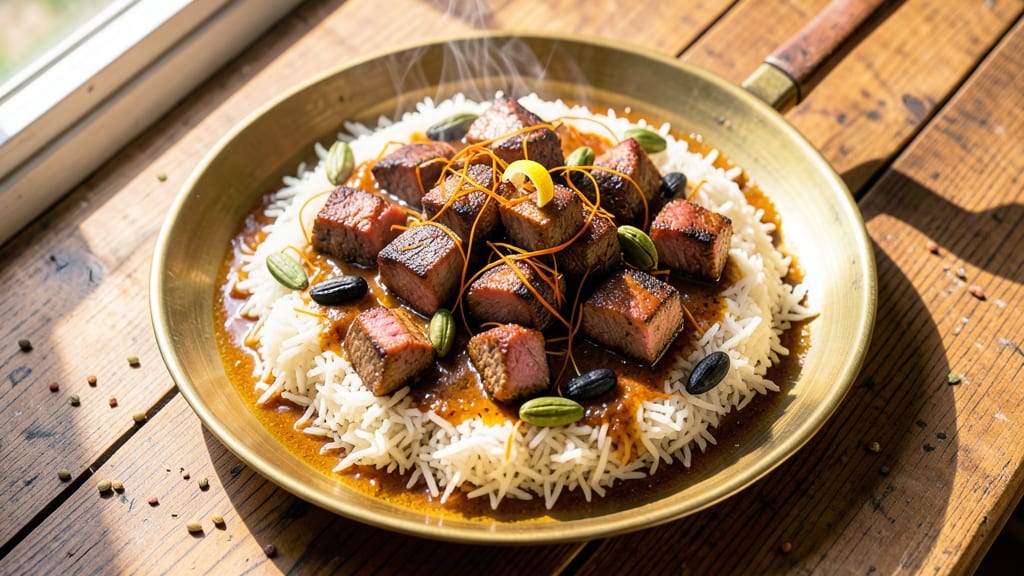
This beef biriyani recipe in Malayalam transforms a simple weeknight into a celebration of Kerala’s rich flavors—fragrant saffron rice layered with tender, spiced beef, cooked to perfection in a sealed pot. The secret lies in the slow-cooked layers and the aromatic blend of kokum, curry leaves, and black pepper that defines Malayalam biriyani. I’ve perfected this method over years of family gatherings, ensuring every bite delivers the complex balance of sweet, tangy, and spicy that makes it unforgettable.
The magic begins with the beef marinade, where yogurt and spices tenderize the meat while building deep flavor. Basmati rice, lightly parboiled with saffron and cardamom, forms the fragrant base, while the beef layers infuse the rice with their rich, spiced essence.
The dum cooking method—sealing the pot and cooking over low heat—creates steam that transforms the dish into something restaurant-quality. This isn’t just a recipe; it’s a tradition you can recreate at home.
By the time you serve this biriyani, your kitchen will smell like a Kerala feast, and your guests will never guess it wasn’t made in a tandoor. The beef stays juicy, the rice absorbs the aromatic spices, and the layers hold together beautifully.
Each forkful is a harmony of textures and flavors—tender beef, fragrant rice, and the bright tang of kokum that cuts through the richness. Perfect for special occasions or when you want to impress without hours in the kitchen.
Serve with a side of raita or a simple cucumber salad to balance the richness, and watch as this dish becomes the star of your meal. The best part?
The leftovers taste even better the next day, as the flavors meld and deepen. Let’s bring the soul of Malayalam biriyani to your table—one layer at a time.
Ingredients for beef biriyani recipe in malayalam
Fragrant saffron rice, spiced beef layers, and the tangy kick of kokum—here’s what you’ll need to bring Kerala’s flavors to your table.
| Ingredient | Amount | Notes |
|---|---|---|
| Basmati Rice 🍚 | 2 cups | Long-grain, uncooked, rinsed well |
| Beef Chuck Roast 🥩 | 2 ½ lb | Cut into 1-inch cubes |
| Plain Yogurt 🥛 | 1 cup | Whisked smooth, full-fat preferred |
| Saffron Threads 🌼 | ¼ tsp | Soaked in 2 tbsp warm water |
| Green Cardamom Pods 🌿 | 6 whole | Lightly crushed, seeds only |
| Black Cardamom Pods 🌿 | 2 whole | Lightly crushed, seeds only |
| Kokum Fruit 🍈 | 2 pieces | Pitted and soaked in 1 cup water |
| Curry Leaves 🌿 | ½ cup | Fresh, lightly crushed |
| Fresh Ginger 🧄 | 2 tbsp | Grated, aromatic |
| Garlic Cloves 🧄 | 8 cloves | Minced, aromatic |
| Ground Cumin Seeds 🌶️ | 1 tbsp | Toasted for depth |
| Ground Coriander 🌿 | 1 ½ tbsp | Freshly ground preferred |
| Turmeric Powder 🌶️ | 1 tsp | Freshly ground for color |
| Red Chili Powder 🌶️ | 1 ½ tbsp | Adjust for heat preference |
| Black Peppercorns 🌶️ | 1 tsp | Freshly cracked |
| Ghee 🧈 | ½ cup | Clarified butter, for frying |
| Fresh Cilantro 🌿 | ¼ cup | Chopped, for garnish |
| Lemon Juice 🍋 | 2 tbsp | Freshly squeezed |
| Salt 🧂 | 1 ½ tsp | Kosher or sea salt |
| Water 💧 | 3 ½ cups | For rice soaking and cooking |
The beef is the heart of this dish, so don’t skimp on the chuck roast—it stays tender through the long cooking. Costco or Indian grocery stores often carry it pre-cubed, but if you’re buying a whole roast, ask for it to be cut into 1-inch pieces. For the spices, spice counters at Indian markets have the freshest whole spices—cardamom, peppercorns, and cumin should smell vibrant, not stale. If you’re using dried kokum, soak it in warm water for 15 minutes to soften. The saffron? Buy it from specialty stores—the threads should be bright orange, not dull or broken. Fresh curry leaves are a must; dried won’t give that authentic aroma.
No fresh curry leaves? Substitute with 1 tbsp dried leaves, but trust me, they’re worth hunting down. Running low on kokum? Tamarind paste at half the amount works in a pinch, but it’s not the same—kokum’s tang is key. For the rice, if basmati is unavailable, jasmine rice works too, but it won’t be as fragrant. The yogurt marinade is non-negotiable—it tenderizes the beef and balances the spices. No full-fat yogurt? Greek yogurt at double the amount adds thickness. And if you’re short on ghee, butter or coconut oil will do, though ghee’s smoky depth is ideal.
This biriyani tastes even better the next day, so make extra—it’s perfect for lunches. Store it in an airtight container in the fridge for up to 4 days, or freeze portions for 3 months. The rice will dry out if reheated directly, so add a splash of water or milk before warming. Garnish with fresh cilantro right before serving—it brightens up the dish. And if you’re serving a crowd, double the spices and beef, but keep the rice-to-water ratio the same—it’s foolproof.
Why You'll Love This Recipe
- I swear by this method: marinate the beef in yogurt overnight, then layer it with partially cooked rice and saffron. No fancy techniques—just dump, layer, and let the dum cooker do the heavy lifting while I sip chai.
- No Fuss Layering: I swear by this method: marinate the beef in yogurt overnight, then layer it with partially cooked rice and saffron. No fancy techniques—just dump, layer, and let the dum cooker do the heavy lifting while I sip chai.
- Golden Saffron Magic: That first whiff of saffron-infused rice? It’s like a warm hug in bowl form. The threads dissolve into the rice, turning it a luxurious golden hue—no artificial colors, just pure, fragrant magic from a tiny handful of threads.
- Weeknight Crowd-Pleaser: Between us, this is my go-to for unexpected guests or lazy Sundays. The beef stays tender, the rice soaks up all the flavors, and even picky eaters can’t resist the cardamom’s gentle kick—no one leaves hungry, I promise.
Step-by-step instructions for beef biriyani with Malayalam flair
Here's how to layer flavors and aromas for a biriyani that smells as incredible as it tastes.
Marinate the Beef with Spiced Yogurt
In a large bowl, combine the 2.5 lb beef chuck roast cut into 1-inch cubes with the 1 cup plain yogurt. Add the 1 tbsp ground cumin seeds, 1.5 tbsp ground coriander, 1 tsp turmeric powder, 1.5 tbsp red chili powder, 1 tsp black peppercorns, and 1.5 tsp salt. Mix gently but thoroughly to coat each piece of beef.
Add the 2 tbsp fresh ginger and 8 cloves garlic cloves (minced), along with the 0.5 cup curry leaves (lightly crushed) and 2 pieces kokum fruit (pitted and soaked in 1 cup water—use the soaking liquid too). The kokum adds that signature tangy depth found in Malayali biriyani. Cover and refrigerate for at least 4 hours, or ideally overnight. This long marinade ensures tender beef with deep, complex flavors.
Parboil the Rice with Saffron and Cardamom
Rinse the 2 cups basmati rice thoroughly until the water runs clear. Soak it in fresh water for 30 minutes, then drain. In a large pot, combine the rice with 3.5 cups water, the saffron threads soaked in 2 tbsp warm water, and the 6 whole green cardamom pods and 2 whole black cardamom pods (lightly crushed). Bring to a boil, then reduce heat to a gentle simmer and cook for 8-10 minutes until the rice is 70% cooked—it should still have a slight bite.
Drain the rice immediately in a colander, then rinse under cold water to stop the cooking process. This parboiling step is crucial—it prevents the rice from turning mushy when layered with the beef later. The saffron and cardamom infuse the rice with their signature fragrance, creating that irresistible aroma that defines biriyani.
Sear the Marinated Beef in Ghee
Heat a heavy-bottomed pot (like a Dutch oven) over medium-high heat and add 0.5 cup ghee. Once the ghee is shimmering but not smoking, add the marinated beef in batches, being careful not to overcrowd the pan. Sear each piece for 2-3 minutes per side until deeply browned and cooked through. Remove the beef and set it aside.
In the same pot, add the drained rice and gently toss to coat it in the ghee and beef juices. Sprinkle the remaining 2 tbsp lemon juice over the rice and mix lightly. The lemon juice brightens the flavors and balances the richness of the ghee. Here's the thing—don't press down on the rice or it'll turn mushy when we layer it back in.
Layer and Dum Cook for Maximum Flavor
Return the seared beef to the pot, spreading it evenly over the rice. The key to biriyani is the layering—this creates pockets of steam that infuse the beef with rice aroma and vice versa. Cover the pot tightly with a lid (or foil sealed with a damp towel if you don't have a tight lid) and cook on low heat for 20-25 minutes. The heat should be just enough to keep a gentle steam without boiling.
This dum cooking method is what transforms biriyani from a simple dish into a fragrant masterpiece. The trapped steam cooks the beef and rice together, creating a harmonious blend of textures and flavors. After 20 minutes, turn off the heat and let it sit covered for another 10 minutes. This resting period allows the flavors to meld completely.
Garnish and Serve with Fresh Herbs
Gently fluff the biriyani with a fork, being careful not to break the grains. Sprinkle the 0.25 cup fresh cilantro (chopped) evenly over the top. The cilantro adds a fresh, bright finish that cuts through the richness of the ghee and spices. Serve immediately with slices of lemon on the side—this lets everyone adjust the tanginess to their taste.
The perfect biriyani should have tender beef that falls apart easily, fragrant rice with a slight chew, and layers of spice that build with every bite. The aroma alone should make your kitchen feel like a Malayali home on a festive day. Pair it with raita or a simple cucumber salad to balance the richness.
Pro Tips For Making Beef Biriyani Recipe In Malayalam
- Parboil Rice Twice: First boil the basmati rice until 60% cooked—it should still have a slight bite. Drain well, then spread it on a tray to dry for 10 minutes before the final layering. This prevents mushiness and helps the grains stay distinct after dum cooking. (Yes, even if you're impatient like me, this step makes a real difference.)
- Marinate Beef Overnight: Skip the rushed marinade—let the beef chuck soak in yogurt, cardamom, and spices for at least 12 hours. The yogurt tenderizes the meat and lets the flavors seep in properly. I learned this the hard way after serving dry, flavorless beef once.
- Sauté Spices Hard: Don’t just simmer the biriyani masala—fry the whole onion-spice mix until the edges of the onions turn deep golden brown. This caramelization adds a rich, toasty depth that plain sautéing misses. (Your future self will thank you.)
- Layer Rice and Beef Dry: After parboiling, spread the rice and marinated beef in thin, even layers on a tray before dum cooking. This ensures the rice cooks evenly and absorbs the beef gravy without turning soggy. (Does it look weird? Yes. Does it work? Every single time.)
Troubleshooting this recipe
Rice Too Mushy
If your biriyani rice turns out mushy, it’s usually from overcooking during the parboiling step or mashing it when layering. I’ve found that draining the rice immediately after 8-10 minutes and rinsing it under cold water stops the cooking process.
Also, never press down on the rice when layering—gently spread it instead. For extra insurance, use 10% less water (try 3.25 cups instead of 3.5 cups) next time. 💡
Beef Not Tender
Tough beef often means the marinade wasn’t long enough or the heat was too high during searing. Marinate for at least 4 hours (overnight is best) to break down the fibers. When searing, use medium-high heat—if the ghee smokes, lower the heat.
A meat thermometer helps: remove beef when it hits 160°F internal temperature. For extra tenderness, add 1 tbsp vinegar to the marinade. 🥩
Weak Kokum Flavor
Kokum’s tang is essential for authentic Malayalam biriyani, so if it’s missing, the dish feels incomplete. Soak the kokum in warm water for 15 minutes before using the liquid in the marinade. For stronger flavor, use 3 pieces instead of 2.
If you can’t find fresh kokum, tamarind paste (½ tsp) works in a pinch, but it’s not the same. Trust me, the tang balances the richness perfectly. 🍈
Dry or Burnt Bottom
A burnt or dry biriyani happens when the pot isn’t sealed properly or the heat is too high during dum cooking. Use a heavy-bottomed pot (like a Dutch oven) and cover tightly with a lid or foil sealed with a damp towel.
Keep the heat low—just enough to maintain a gentle steam. If the bottom starts to brown too quickly, reduce to the lowest setting and let it cook slower. A splash of water or broth can revive dry biriyani if needed. ⚡
Layers Not Holding
If the beef and rice separate when serving, the layering wasn’t firm enough. Press down lightly on the rice before adding the beef, but don’t pack it tightly. After layering, cover the pot immediately and let it sit for 5 minutes before turning on the heat.
This helps the layers set. For extra stability, chill the biriyani for 10 minutes before serving—it holds together better when slightly cooler. 🌟
Leftover Biriyani Dries Out
Biriyani tastes even better the next day, but it can dry out if not stored properly. Reheat with a splash of water or milk (about 2 tbsp per cup of biriyani) to restore moisture. Cover tightly and warm on low heat or in the microwave at 50% power.
For longer storage, freeze portions in airtight containers for up to 3 months. When reheating from frozen, add extra liquid to prevent dryness. ❄️
Nutrition facts
Frequently asked questions
Can I substitute beef with another protein for this Malayalam-style biriyani?
Chicken or lamb work beautifully—just adjust the marinating time. For chicken, use 3 lb boneless thighs and marinate for 2-3 hours. Lamb requires 4 hours minimum. The key is maintaining the same spice ratios and kokum tang.
What makes this recipe specifically Malayalam compared to other biriyanis?
The signature Malayalam touches include kokum fruit for tang, curry leaves for aroma, and black pepper for heat. We also use both green and black cardamom together, and the dum cooking method creates that signature steam infusion. The beef marinade's yogurt base with ginger-garlic-kokum trio is pure Kerala tradition.
How do I know when the rice is 70% cooked during parboiling?
The rice should have a slight resistance when bitten but still hold its shape. Press a grain between your fingers—it should feel tender but not mushy. For visual confirmation, the grains should be translucent at the edges but still opaque in the center. 8-10 minutes is the perfect window for this recipe.
Can I make this biriyani in a slow cooker instead of a pot?
Yes! After searing the beef and parboiling the rice, transfer everything to a slow cooker. Cook on low for 2 hours with the lid sealed tightly. The slow cooker maintains gentle steam without risk of burning. Just add 1 tbsp water if it looks dry during cooking.
What's the best way to serve this biriyani for a special occasion?
Garnish with fried onions and boiled egg halves for extra richness. Serve with malai koottu (yogurt with saffron strands) and mango pickle to balance flavors. For presentation, use a large platter and arrange the biriyani in a circular pattern with lemon wedges around the edges.