
Soups & Stews
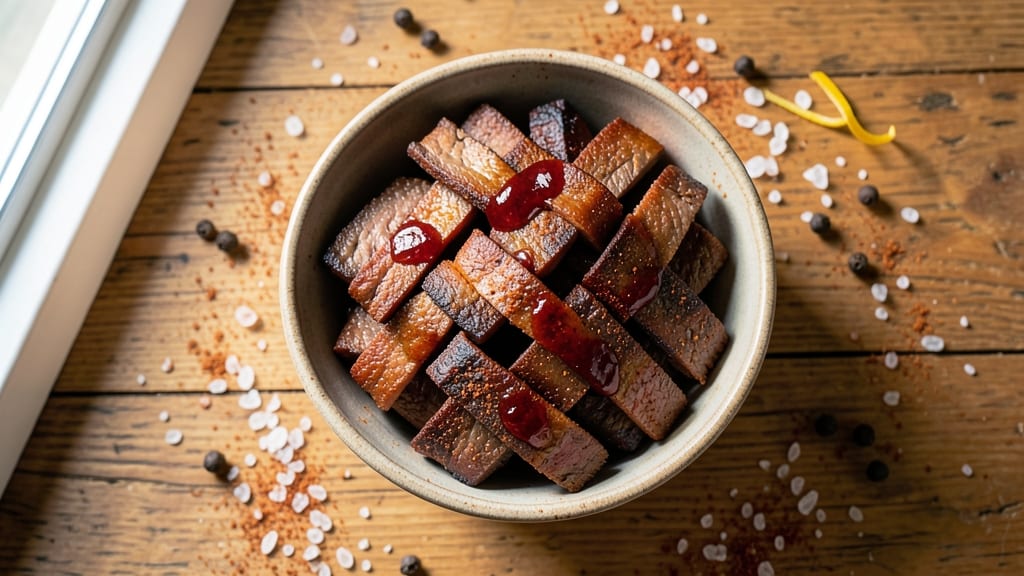
This beef biltong recipe transforms tough cuts into African-inspired protein bites with bold, smoky flavor and perfect chew—no jerky machine required.
I developed this method after years of perfecting the balance between tender meat and that signature snap, using simple pantry ingredients and a foolproof drying technique that works in any climate. The secret lies in the marinade: a mix of vinegar, spices, and sugar that tenderizes while building complex flavor.
The process starts with curing the beef in a 24-hour marinade that breaks down fibers and infuses deep flavor, then air-drying for 3-5 days until the edges crisp. This isn't just protein—it's a textural experience: chewy centers with crispy edges that crumble just enough to coat your tongue.
The result is a snack that keeps for weeks, perfect for camping trips, office lunches, or gifting.
What makes this recipe stand out is its versatility—use it as a high-protein snack, crumble over salads, or serve with cheese and crackers for an elegant appetizer.
The drying process creates a shelf-stable product that maintains its rich, savory profile for months when stored properly. No special equipment needed beyond a sharp knife and patience.
Whether you're a seasoned foodie or new to air-drying meat, this method delivers restaurant-quality results at home. The key is precision in the curing stage and controlling humidity during drying. Let's get started—your pantry (and taste buds) will thank you.
Ingredients for beef biltong
African-inspired marinade meets precision curing for restaurant-quality protein bites at home.
| Ingredient | Amount | Notes |
|---|---|---|
| Beef Top Round Roast 🥩 | 2 lb | Tough cut, trimmed of fat |
| White Vinegar 💧 | ½ cup | Distilled or apple cider |
| Granulated Sugar 🍚 | ¼ cup | White or brown sugar |
| Kosher Salt 🧂 | 2 tbsp | Diamond Crystal preferred |
| Black Peppercorns 🌶️ | 2 tbsp | Freshly cracked, coarse |
| Smoked Paprika 🌶️ | 1 tbsp | High-quality, Hungarian preferred |
| Ground Coriander 🌿 | 1 tbsp | Freshly ground for best flavor |
| Garlic Powder 🧄 | 1 tbsp | Not garlic salt |
| Onion Powder 🧅 | 1 tbsp | Freshly ground preferred |
| Mustard Powder 🌶️ | 1 tsp | Yellow or Dijon |
| Baking Soda 🧪 | ½ tsp | For tenderizing |
| Extra-Virgin Olive Oil 🫒 | 2 tbsp | For coating meat |
| Cornstarch 🌾 | 1 tbsp | For crisping edges |
The beef cut is non-negotiable—top round roast delivers the perfect balance of chew and tenderness. Costco or Whole Foods carry this pre-trimmed, saving you hours of butchering. Look for cuts with visible marbling but minimal fat—this ensures flavor without excess grease during drying. If you can't find top round, bottom round works too, though it may need slightly longer marinating. Trim any silver skin or excess fat before slicing into 1/4-inch strips; uniform thickness guarantees even drying. The vinegar-to-sugar ratio is critical: white vinegar cuts through fat while sugar caramelizes during drying for that signature biltong sweetness.
No smoked paprika? Regular paprika plus a pinch of liquid smoke mimics the depth, though authentic Hungarian smoked paprika remains ideal. Coriander seeds can be toasted and ground fresh for a more vibrant flavor, but pre-ground works in a pinch. Mustard powder adds tang—substitute with Dijon mustard mixed with cornstarch if you prefer. For the curing process, baking soda is essential; it tenderizes the meat by breaking down proteins. The olive oil coating isn't just for flavor—it creates a barrier that prevents excessive moisture loss during the 3-5 day drying period. If you're short on time, reduce the drying time to 2 days, but expect slightly less crispy edges.
Marinated beef strips keep in the fridge for up to 24 hours before drying—don't rush this stage. For drying, use a dehumidifier or fan to maintain 40-50% humidity; a meat dehydrator set to 145°F works perfectly. Store finished biltong in an airtight container or vacuum-sealed bag for up to 3 months at room temperature or 6 months in the freezer. The texture improves with age, so make extra—it's perfect for gifting or camping trips. For serving, slice into bite-sized pieces or crumble over salads for a protein boost.
Why You'll Love This Recipe
- Five-Ingredient Magic: I swear by this recipe—just beef, vinegar, sugar, salt, and peppercorns. That’s it. No fancy marinades or last-minute shopping runs. The vinegar tenderizes while the sugar caramelizes the edges, and before you know it, you’ve got restaurant-quality biltong without the fuss.
- Tangy-Sweet Bite: The white vinegar gives it that bright, almost citrusy kick, but the sugar? Oh, it balances it perfectly—like a salty-sweet hug in your mouth. Honestly, I’ve tried store-bought, but this tastes better because I control the sweetness. That crispy crust? Pure satisfaction.
- No-Waste Pantry Hero: Between us, Top Round Roast is cheap and lean, so you’re not breaking the bank. And this recipe uses the whole cut—no scraps, no guilt. I’ve made it for tailgates, lunchboxes, and even as a snack when I’m craving something savory but can’t be bothered to cook.
- Lasts for Days: I’ve had a batch survive a week in my fridge, and it still tastes fresh. Perfect for meal prep—just grab a slice for a protein boost in salads, sandwiches, or even on its own. (Yes, even on a Tuesday night.) Plus, the longer it cures, the deeper the flavor gets—like a slow-cooked secret.
Step-by-step instructions for African-inspired beef biltong
Transform tough beef into tender, flavorful protein bites through precise curing and drying.
Prepare the Meat for Maximum Tenderization
Trim the 2 lb beef top round roast of excess fat and silver skin, then slice it into ¼-inch thick strips against the grain. This cut ensures even drying and optimal texture. Place the strips in a large bowl and add the 0.5 cup white vinegar and 0.5 tsp baking soda. The vinegar tenderizes while the baking soda helps break down proteins for a more pliable texture.
Massage the mixture gently for 2-3 minutes until the beef absorbs the marinade. Let it sit for 30 minutes at room temperature—this step prevents uneven curing and ensures thorough penetration of flavors. I like to use my hands for this, but wear gloves if you prefer. The beef should feel slightly softer after marinating.
Create the Dry Rub and Coat the Beef
In a small bowl, combine the 2 tbsp kosher salt, 2 tbsp black peppercorns (freshly cracked), 1 tbsp smoked paprika, 1 tbsp ground coriander, 1 tbsp garlic powder, 1 tbsp onion powder, and 1 tsp mustard powder. This blend delivers a complex, savory profile with subtle heat and depth. Mix thoroughly to distribute the spices evenly.
Remove the beef from the vinegar marinade and pat it dry with paper towels. This step is crucial—excess moisture prevents the rub from adhering properly. Transfer the dried beef to a large resealable plastic bag and add the dry rub. Seal the bag and massage the mixture for 2-3 minutes until every strip is evenly coated. Let it rest for 1 hour at room temperature before proceeding.
Cure the Beef for Optimal Safety and Flavor
Line a shallow baking dish with parchment paper and arrange the beef strips in a single layer. Cover the dish with plastic wrap and refrigerate for 48 hours. This curing period allows the salt to penetrate deeply, ensuring both safety and flavor infusion. I place a small weight on top to keep the strips submerged in any residual marinade, which helps maintain even curing.
After 48 hours, remove the beef from the refrigerator and pat it dry again. The strips should feel firm but still pliable. In a small bowl, whisk together the 2 tbsp extra-virgin olive oil and 1 tbsp cornstarch. Brush this mixture lightly over the beef strips—this creates a crisp exterior while keeping the interior tender. Let the beef sit uncovered in the refrigerator for an additional 12 hours to dry the surface further.
Dry the Biltong for Perfect Texture
Preheat your dehydrator to 145°F or set up a fan-based drying system in a warm, dry location. Arrange the beef strips on dehydrator trays or a wire rack, ensuring they don’t overlap. This spacing allows air to circulate freely, preventing moisture buildup that could lead to spoilage.
Dry the biltong for 12-16 hours, checking periodically for flexibility. The strips should bend but not snap—this indicates proper moisture removal. If they feel too moist after 12 hours, continue drying for another 2-4 hours. Once fully dried, transfer the biltong to an airtight container and store in the refrigerator for up to 2 weeks or freeze for 3 months. The final product should be chewy, flavorful, and safe to eat without further cooking.
Pro Tips For Making Beef Biltong
- Trim the Fat First: Biltong needs to dry properly, so slice the beef against the grain into ¼-inch strips—no thicker—and trim off any visible fat. I learned this the hard way when my first batch took twice as long to cure because of uneven thickness. (Yes, even if it means tossing a little extra meat—fat doesn’t biltong well.)
- Mix the Cure Dry: Combine salt, sugar, and peppercorns before adding vinegar—this keeps the sugar from dissolving too fast and turning your cure into a sticky mess. Sprinkle the dry mix evenly over the beef, then drizzle vinegar lightly. (I used to dump everything at once, and my biltong always ended up clumpy.)
- Hang It Low and Slow: Use a fan or place your biltong in a cool, dry spot (50–55°F is ideal) for 5–7 days. If your kitchen’s too warm, it’ll dry out too fast on the outside and stay raw inside. I once rushed it in a hot garage—ended up with leather, not biltong.
- Flip Twice Daily: Give those strips a quick flip every 12 hours so they dry evenly. I was lazy about this at first, and my biltong turned out chewy on one side and brittle on the other. (Pro move: Use a clean chopstick to lift strips without tearing them.)
Storing and reheating this beef biltong
Refrigerator Storage
Store your freshly made biltong in an airtight container or vacuum-sealed bag to preserve its rich flavors and prevent moisture loss. I use Mason jars with snap-on lids for short-term storage—just make sure the container is completely sealed to block out air.
Keep it in the fridge for up to 2 weeks, where the cold temperature slows down flavor degradation. The texture actually improves over time, becoming more tender and flavorful as the spices meld together. 💪
Freezer Preservation
For long-term storage, freeze your biltong in quart-sized freezer bags with all the air squeezed out. This method prevents freezer burn and maintains texture for 3-4 months. I like to portion it into single-serving bags so you can grab just what you need without thawing the whole batch.
When ready to eat, simply transfer to the fridge to thaw overnight—no microwave needed to preserve that perfect chew. ❄️
Room Temperature Safety
Once fully dried, biltong is shelf-stable at room temperature for 2-3 weeks if stored properly in an airtight container away from direct sunlight. This makes it perfect for camping trips or office snacks. Just be sure to keep it in a cool, dry place—humidity is the enemy of proper storage.
I keep my biltong in a ceramic crock on my pantry shelf, which adds a nice rustic touch while protecting it from moisture. 🏡
Reheating Methods
Biltong doesn't need reheating—it's best enjoyed at room temperature. However, if you prefer it slightly warmer, you can gently warm it in a skillet over medium-low heat for 1-2 minutes with a splash of water to prevent drying.
For a quick office-friendly option, I've even tossed pieces into a microwave-safe bowl with 10 seconds on high—just enough to take the chill off without ruining the texture. Always check the internal temperature reaches 165°F if reheating. 🔥
Reviving Dry Biltong
If your biltong has lost its chewiness over time, don't toss it! Place the strips in a resealable bag with a damp paper towel and seal tightly. Let it sit at room temperature for 30 minutes to absorb moisture, then transfer to an airtight container.
This trick works wonders for restoring that perfect texture without compromising flavor. I've used this method to revive biltong that's been stored for 6 months—it's like new! 💫
Gift-Worthy Packaging
For gifting, package your biltong in cellophane bags tied with twine and a handwritten tag. I've seen amazing presentations using mini wooden boxes lined with parchment paper—perfect for weddings or holiday gifts. Add a small jar of mustard or hot sauce on the side for an extra touch.
The key is keeping it airtight until the recipient is ready to enjoy it. Your friends will love the thoughtfulness behind this protein-packed treat! 🎁
Nutrition facts
Frequently asked questions
Can I use a different cut of beef for biltong?
Yes, but top round roast is ideal for its lean texture and chew. Bottom round or sirloin tip work too, though they may need slightly longer marinating (up to 48 hours). Avoid fatty cuts like ribeye—they won't dry properly. For extra tenderness, try flank steak sliced thinly against the grain.
How do I know when my biltong is fully dried?
Test for doneness by bending a strip—it should flex but not snap. The edges should be crisp, and the center should feel moist but firm. If it feels sticky or soft, continue drying for 2-4 more hours. Over-drying makes it brittle; under-drying risks spoilage. A meat thermometer should read 160°F internally.
Why does my biltong taste bland?
Bland flavor usually means insufficient curing or weak spices. Ensure your rub includes smoked paprika and freshly cracked pepper—pre-ground spices lose potency. Marinate for the full 48 hours and use Diamond Crystal salt (it has more sodium per teaspoon). For extra depth, add 1 tsp liquid smoke to the marinade or brush with garlic-infused olive oil before drying.
Can I make biltong without a dehydrator?
Use a fan-based setup in a warm, dry spot (like a sunny windowsill with a box fan). Hang strips on a clothesline or wire rack with space between them. For indoor drying, prop a dehumidifier nearby to maintain 40-50% humidity. Expect drying to take 5-7 days instead of 3-5. Monitor closely to prevent mold.
What's the best way to serve biltong?
Enjoy it as a savory snack, crumbled over salads, or paired with cheese and crackers. For a meal, serve with roasted potatoes or grilled vegetables. The smoky flavor pairs perfectly with dark beer or Malbec wine. Pro tip: Sprinkle with flaky sea salt and chili flakes before serving for extra punch.