
Soups & Stews
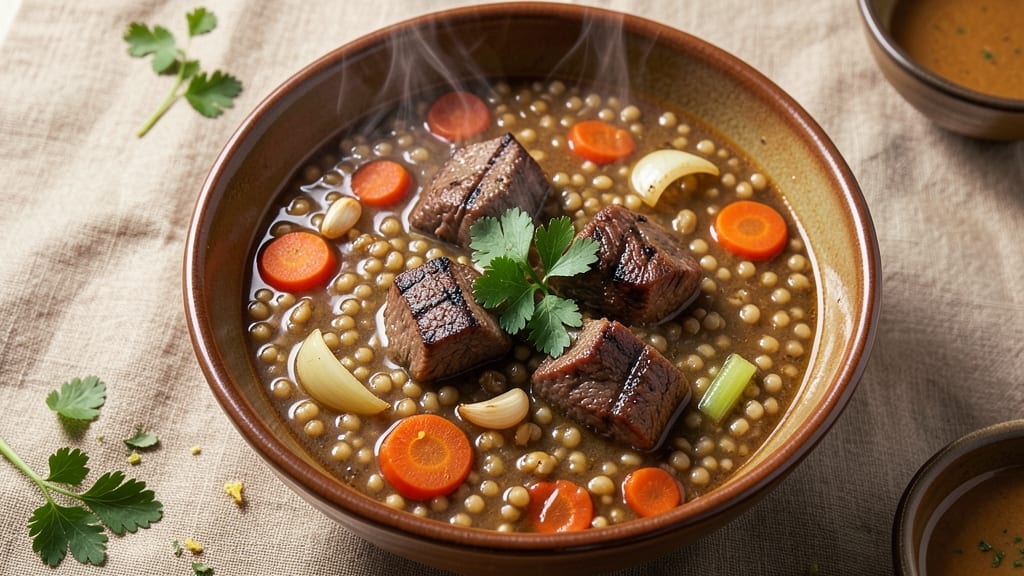
Alton Brown’s beef barley soup delivers the kind of slow-cooked depth that transforms simple ingredients into something extraordinary. The secret lies in caramelizing beef and vegetables to create a rich, layered broth that’s impossible to resist.
This recipe balances hearty barley, tender beef, and aromatic vegetables for a soup that’s both comforting and refined.
What sets this apart is the technique: browning the beef and onions first to develop a deep, caramelized fond that forms the soul of the broth. The barley cooks until tender but retains a satisfying bite, while the vegetables add freshness and texture.
It’s the kind of soup that tastes even better the next day, as flavors meld and deepen.
Ready in about 3 hours (with minimal hands-on time), this soup is perfect for chilly evenings or when you need a meal that feels like a hug.
Serve it with crusty bread to soak up every last drop of that flavorful broth. The result is a classic, elevated comfort dish that’s worth the wait.
Alton Brown’s approach ensures restaurant-quality results at home—no shortcuts, just deep flavor built layer by layer. The slow simmer allows the beef to become fork-tender while the barley absorbs the rich broth. Garnish with fresh parsley for brightness, and you’ve got a soup that’s as impressive as it is satisfying.
Ingredients for beef barley soup recipe alton brown
Sixteen ingredients. Three hours of slow magic. The caramelized beef and barley create a soup that feels like a hug.
| Ingredient | Amount | Notes |
|---|---|---|
| Chuck Roast 🥩 | 2 lb | Cut into 1-inch cubes, trimmed of fat |
| Yellow Onions 🧅 | 2 whole | Cut into 1-inch chunks, no need to peel |
| Carrots 🥕 | 4 whole | Cut into 1-inch chunks, peeled or unpeeled |
| Celery Stalks 🌿 | 4 whole | Cut into 1-inch chunks, leaves trimmed |
| Garlic Cloves 🧄 | 6 cloves | Minced, not pre-minced jarred garlic |
| Pearl Barley 🌾 | 1 cup | Rinsed thoroughly before cooking |
| Beef Broth 💧 | 6 cups | Low-sodium preferred, homemade or high-quality |
| Tomato Paste 🍅 | ½ cup | Smooth, not chunky, for even texture |
| Red Wine 🍷 | 1 cup | Dry red like Cabernet or Merlot |
| Bay Leaves 🍃 | 2 whole | Fresh preferred, dried works too |
| Thyme Sprigs 🌿 | 4 whole | Fresh, or 1 tsp dried thyme |
| Black Peppercorns 🌶️ | 1 tsp | Freshly cracked, not pre-ground |
| Salt 🧂 | 1 ½ tsp | Kosher or sea salt, adjust to taste |
| Fresh Parsley 🌿 | ¼ cup | Chopped, for garnish only |
| Olive Oil 🫒 | ¼ cup | For browning beef and onions |
The chuck roast is non-negotiable here—it's what gives you that melt-in-your-mouth texture after hours of simmering. Look for well-marbled cuts at your butcher or the meat department, and ask for it cut into 1-inch cubes if possible. Most grocery stores carry pre-cubed chuck roast, which saves time. For the onions, carrots, and celery, buy them fresh—they should feel firm and crisp. If you're using dried thyme or bay leaves, store them in a cool, dark place to preserve their flavor. The pearl barley needs rinsing to remove any surface starch that could make the soup gummy.
No red wine? Substitute with an extra 1 cup of beef broth—it won't be identical, but it'll still taste rich. Fresh thyme is ideal, but dried thyme works at one-third the amount. If you're short on time, jarred tomato paste is fine, but avoid the chunky kind—it can make the soup unevenly textured. For the barley, if you can't find pearl barley, substitute with pot barley or even orzo, though the texture will differ slightly. The olive oil should be a high-quality extra-virgin for the best flavor when browning, but any neutral oil will work in a pinch.
This soup tastes even better the next day, so make a double batch if you can. Store leftovers in the fridge for up to 5 days or freeze for 3 months. The barley will soften further when reheated, so it's best to reheat gently on the stove with a splash of broth. For serving, garnish with fresh parsley right before eating—it adds a bright contrast to the deep, savory flavors. If you're making this ahead for a gathering, keep the parsley separate until serving to maintain its freshness.
Why You'll Love This Recipe
- One-Pot Magic: I swear by this recipe—just toss everything in one pot, walk away, and let the chuck roast and barley tenderize themselves. No chopping boards to clear, no extra pans to wash. Honestly, the only prep is slicing the onions and peeling the carrots, and even that’s forgivable.
- Garlic Bomb Depth: That slow-cooked chuck roast with minced garlic? It’s ridiculously good. The onions caramelize just enough to add sweetness, while the celery and carrots soften into the broth without disappearing. Between us, I’ve never had beef barley soup where the garlic didn’t steal the show.
- Weeknight to Holiday: This soup is my go-to for lazy Mondays, but it also feels fancy enough for Thanksgiving leftovers. Serve it with crusty bread for a casual dinner or pair it with a simple green salad for a hearty meal that doesn’t scream “I spent all day cooking.”
- Budget-Friendly Feast: A chuck roast stretches across multiple meals, and barley keeps you full longer than rice. I’ve made this for four people and still had leftovers for lunch the next day—no sad, wilted salads here. Plus, the ingredients are cheap but taste like you splurged. (Yes, even on a Tuesday night.)
Step-by-step instructions for beef barley soup
Master this slow-cooked classic with rich caramelized flavors and tender beef every time.
Brown the Chuck Roast for Deep Flavor
Heat a large Dutch oven over medium-high heat and add the 0.25 cup olive oil. Working in batches if needed, add the 2 lb chuck roast cut into 1-inch cubes and brown on all sides. This step is crucial—it develops the Maillard reaction that creates deep, meaty flavor. Don't rush it; let each piece develop a rich, golden crust before removing to a plate.
Once all the beef is browned, reduce the heat to medium and add the 2 whole yellow onions, 4 whole carrots, and 4 whole celery stalks, all cut into 1-inch chunks. Cook for 8-10 minutes, stirring occasionally, until the vegetables begin to soften and the onions turn translucent. This pre-cooking step builds the aromatic base for your soup.
Build the Fond and Add Aromatics
Lower the heat to medium-low and add the 6 cloves minced garlic, stirring for 30 seconds until fragrant. Immediately add the 0.5 cup tomato paste and stir vigorously for 1 minute to create a rich, caramelized fond at the bottom of the pot. This step is where the magic happens—it forms the flavor foundation of your soup.
Deglaze the pot by pouring in the 1 cup red wine, scraping up all those browned bits from the bottom. Let it simmer for 2-3 minutes until the wine reduces by half. Add the 6 cups beef broth, 2 whole bay leaves, 4 whole thyme sprigs, 1 tsp cracked black peppercorns, and 1.5 tsp salt. Return the browned beef to the pot and bring everything to a gentle boil.
Simmer the Soup for Maximum Tenderness
Once boiling, reduce heat to low and let the soup simmer uncovered for 1.5 hours. This long, gentle cooking time is essential—it breaks down the tough beef fibers while allowing the barley and vegetables to develop their flavors. Stir occasionally to prevent the soup from sticking, and add a splash of water if it gets too thick.
After 1.5 hours, add the 1 cup rinsed pearl barley and continue simmering for another 30-45 minutes until the barley is tender and the beef is fork-tender. The soup should have a rich, velvety consistency with the barley holding its shape but being easily mashable. Taste and adjust seasoning with additional salt or pepper if needed.
Finish and Serve with Fresh Herbs
Remove the bay leaves and thyme sprigs from the soup. Taste again and adjust seasoning one final time. This is your chance to perfect the balance of flavors—savory from the beef, sweetness from the carrots, acidity from the wine, and earthiness from the barley.
Ladle the soup into bowls and garnish each serving with chopped fresh parsley. The parsley adds a bright, fresh contrast to the rich, hearty soup. Serve immediately while hot, with crusty bread to soak up every last drop of that flavorful broth. The soup will continue to deepen in flavor as it sits, so don't wait too long to enjoy it.
Pro Tips For Making Beef Barley Soup Recipe Alton Brown
- SEAR THE ROAST LONG: I used to rush the chuck roast and end up with pale, bland beef. Now I sear each side for 4-5 minutes in a cold pot—no crowding—until it’s deep brown and releases that caramelized crust. The extra time upfront means richer flavor later when you’re simmering.
- CHOP VEGETABLES UNIFORM: Barley soup needs even cooking, so cut carrots and celery into ½-inch chunks and onions into ¼-inch dice. I learned this the hard way when my carrots turned to mush while the celery stayed crunchy—now everything softens at the same time.
- DON’T SKIP THE BROWNING: The onions and garlic should be golden, not just soft. I was skeptical until I tried it—high heat for 8-10 minutes until they’re deep amber, not pale. This isn’t the prettiest method, but it’s the tastiest.
- USE PEARL BARLEY: Alton’s recipe calls for pearl barley, not quick-cooking or steel-cut. I tried shortcuts, but pearl barley’s firm bite and ability to absorb flavor make it non-negotiable. Rinse it first to remove excess starch, or it’ll turn gummy.
Storing and reheating your leftovers
Refrigerator Storage
Let your beef barley soup cool to room temperature (about 1 hour) before transferring to airtight containers. I use glass Pyrex containers with snap-on lids—they distribute heat evenly and prevent odors from seeping in.
Store in the fridge at 40°F or below for up to 5 days, but honestly, it tastes even better on day 2 or 3 as flavors meld together beautifully. 💫
Freezer Prep Tips
For longer storage, portion the soup into freezer-safe containers or heavy-duty freezer bags, leaving 1-inch headspace for expansion. Seal tightly to prevent freezer burn—this soup keeps its quality for up to 3 months.
I like to freeze it in quart-sized portions for easy reheating. Label with the date to track freshness.
Stovetop Reheating
My preferred method is stovetop reheating—it preserves texture better than microwaving. Transfer soup to a pot over medium-low heat and add ¼ cup water or beef broth to prevent sticking.
Heat for 10-15 minutes, stirring occasionally, until steaming. The barley will soften further, so check for doneness at 10 minutes if you're short on time. 🔥
Microwave Shortcut
For quick meals, microwave individual portions covered with a microwave-safe lid or damp paper towel. Heat on 70% power for 3-4 minutes, stirring halfway. Add a splash of broth if it looks dry—this soup reheats beautifully with minimal effort. Just avoid high power to prevent uneven heating.
Garnish Refresh
Always add fresh parsley or a sprinkle of grated Parmesan when reheating—it brightens the flavors after storage. I also keep a small batch of crusty bread on hand to serve alongside reheated soup. The contrast of warm bread and rich broth is pure comfort food magic. 🥖
Barley Texture Note
If your barley turns mushy after reheating, it likely overcooked during initial simmering. Next time, aim for 30 minutes of barley cook time instead of 45. The barley should be tender but still hold its shape—this ensures it reheats perfectly without turning into a gluey mess. 🌾
Nutrition facts
Frequently asked questions
Can I use a slow cooker instead of stovetop?
For a slow cooker version, brown the beef and vegetables first in a skillet, then transfer everything to your slow cooker. Add the remaining ingredients and cook on low for 7-8 hours or high for 4-5 hours. The slow cooker method actually enhances the beef's tenderness even more. Just stir occasionally and add water if needed to maintain moisture.
What's the best way to make this soup gluten-free?
Replace the pearl barley with certified gluten-free barley or substitute with quinoa or millet in equal amounts. Both options work well and maintain the soup's hearty texture. Always check labels on broths and tomato paste to ensure they're gluten-free too. The flavor profile will be slightly different but still delicious.
Why does my soup taste bland after reheating?
This usually happens when flavors haven't had time to meld properly during initial cooking or if the soup was over-diluted. To fix it, add a splash of red wine or beef broth when reheating and let it simmer for 5 extra minutes. Fresh herbs like parsley or thyme added at the end will also brighten the flavors significantly. The key is to reheat gently to preserve all the developed flavors.
Can I prepare this soup in a pressure cooker?
Yes, but with adjustments. Brown the beef and vegetables first, then add all ingredients except barley. Pressure cook for 20 minutes on high pressure. Quick-release the pressure, then add barley and cook for another 10 minutes on high pressure. This cuts cooking time to about 30 minutes total, but the barley may be slightly firmer than traditional stovetop methods.
What's the secret to perfectly tender beef?
The secret lies in the low-and-slow cooking combined with proper browning. Always cut the beef into 1-inch cubes and brown thoroughly before adding liquid. The slow simmer (1.5 hours) breaks down collagen, while the initial browning creates flavor depth. Never rush this step—patience is key for that melt-in-your-mouth texture.