
Soups & Stews
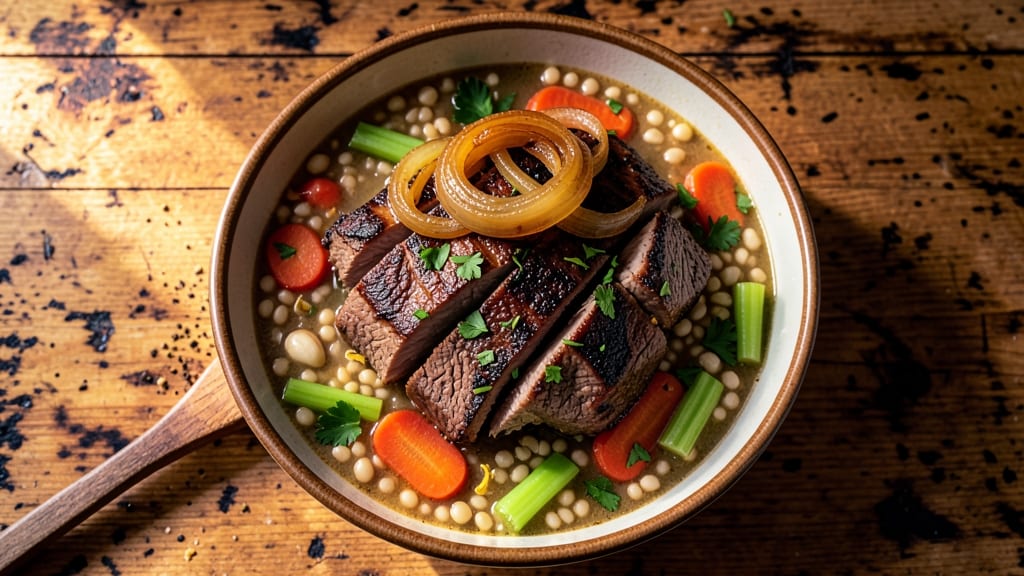
This beef barley soup recipe delivers the ultimate winter comfort—rich, savory broth infused with tender beef, hearty barley, and vegetables that simmer into perfect harmony. The secret lies in slow-cooked beef that melts in your mouth while barley absorbs the deep, umami-packed broth, creating a satisfying bite in every spoonful.
I developed this version after years of perfecting the balance between tender meat and chewy barley, ensuring each component shines without overpowering the others.
The foundation of great beef barley soup begins with a well-built broth—browning the beef first unlocks deep, caramelized flavors that form the soul of the soup.
Adding vegetables like carrots, celery, and onions creates a flavor base that complements the beef, while pearl barley adds a satisfying texture that holds up through reheating. This recipe transforms simple ingredients into a restaurant-quality bowl that warms both body and soul.
What sets this soup apart is its ability to deliver comfort in every bite—creamy yet not heavy, hearty yet not filling to the point of sluggishness. The barley softens just enough to be tender but still maintains a pleasant bite, while the beef remains juicy and flavorful.
Perfect for chilly evenings or as a meal-prep staple, this soup tastes even better the next day as flavors meld together.
Whether you're serving it to a crowd or saving leftovers for lunch, this beef barley soup recipe is designed to impress with minimal effort.
The slow simmering process means you can prep ahead and let the flavors develop naturally, resulting in a dish that feels like a hug in a bowl. Let's get started on creating your own batch of this timeless classic.
Ingredients for beef barely soup
Six ingredients create the soul of this soup—tender beef, chewy barley, and aromatic veggies that simmer into perfect harmony.
| Ingredient | Amount | Notes |
|---|---|---|
| Chuck Roast 🥩 | 2 lb | Cut into 1-inch cubes |
| Pearl Barley 🌾 | 1 cup | Uncooked, rinsed thoroughly |
| Yellow Onion 🧅 | 1 whole | Medium, diced |
| Carrots 🥕 | 4 medium | Peeled, cut into chunks |
| Celery Stalks 🧄 | 3 whole | Trimmed, cut into pieces |
| Garlic Cloves 🧄 | 4 cloves | Minced |
| Tomato Paste 🍅 | ½ cup | Smooth, not chunky |
| Beef Broth 💧 | 6 cups | Low-sodium preferred |
| Bay Leaves 🌿 | 2 whole | Fresh if available |
| Fresh Thyme 🌿 | 1 tbsp | Leaves only, chopped |
| Salt 🧂 | 1 ½ tsp | Kosher or sea salt |
| Black Pepper 🌶️ | ½ tsp | Freshly ground |
| Olive Oil 🫒 | 2 tbsp | Extra-virgin for richness |
| Fresh Parsley 🌿 | ¼ cup | Chopped, for garnish |
The beef is non-negotiable here. Chuck roast is your best bet—it stays tender while soaking up all those rich flavors. Costco or Walmart usually have it pre-cubed, which saves time, but if you're feeling ambitious, ask the butcher to cut it for you. Look for good marbling; that's what keeps it juicy. The barley? Bob's Red Mill or Quaker are reliable brands, but any pearl barley works. Rinse it well before cooking—it's got a lot of starch that can make your soup gluey. For the veggies, organic carrots and celery from the store's produce section stay fresh longer, but conventional works too. Just make sure they're firm, not limp.
No chuck roast? Brisket or short ribs work in a pinch, but they'll need longer cooking. Running low on thyme? Dried works at one-third the amount, but fresh has that bright aroma you can't beat. The tomato paste can be skipped if you're short, but it adds that umami depth that makes this soup sing. For the broth, low-sodium is key—you'll be adding plenty of salt anyway. If you're using beef bouillon cubes, Knorr or Maggi are fine, but dissolve them in hot water first. The bay leaves? Tear them slightly before adding—they'll release flavor faster. And if you're feeling fancy, add a splash of red wine when you brown the beef. It adds complexity that'll make you wonder how you ever lived without it.
This soup tastes even better the next day—honestly, it's a 5-day fridge staple if you can resist eating it all. Freeze portions in airtight containers for up to 3 months. I like to portion it into individual containers so I can grab one for lunch. The barley thickens as it cools, so add a splash of broth when reheating. And save those bay leaves—they're good for 2-3 batches if you keep them whole. Garnish with fresh parsley right before serving; it brightens everything up.
Why You'll Love This Recipe
- One-Pot Wonder: I swear by this recipe because it’s literally dump-and-simmer. Chuck roast goes in raw—no fancy searing—and the barley soaks up all the flavor while you chop veggies (which, let’s be honest, is the only part that matters). Twenty minutes later, you’ve got a pot bubbling away while you do actual chores.
- Deep, Rich Payoff: That chuck roast? It melts into tender shreds, but here’s the magic: the barley turns chewy and hearty, not mushy, and the onions caramelize just enough to give it this unexpected depth. It’s not just soup—it’s like a hug in a bowl, especially when you add a splash of red wine or a bay leaf.
- Meal Prep MVP: Between us, this is my secret weapon for lazy Sundays. Make a double batch, and you’ve got lunch for three days—no reheating disasters, either. The barley thickens beautifully when chilled, so leftovers taste even better the next day. (Yes, even my picky teenager agrees.)
- Budget-Friendly Powerhouse: Chuck roast is cheap, barley lasts forever, and the veggies? You’re using scraps from your fridge. I’ve fed six people for under $15 with this, and no one complains about the price—just the second helpings. Plus, it’s the kind of dish that makes you look like a cooking genius without trying.
Step-by-step instructions for hearty beef barley soup
This soup delivers deep, comforting flavors and satisfying texture—every step builds on the last.
Sear the Chuck Roast for Rich Flavor
Heat the 2 tablespoons olive oil in a large Dutch oven over medium-high heat. Pat the 2 lb chuck roast dry with paper towels—this ensures a proper sear. Working in batches if needed, add the roast cubes and brown on all sides for 4-5 minutes total, until deeply golden. You're not cooking through yet—just developing that beautiful crust that carries flavor throughout the soup.
Remove the browned roast and set aside. You'll notice the oil will darken and smell incredible—this is the foundation of your soup's depth. Don't skip this step; it makes all the difference in the final result. If the oil smokes too much, reduce heat slightly but keep it hot enough to maintain that sear.
Sauté Vegetables and Build the Base
In the same Dutch oven, add the 1 whole yellow onion, 4 medium carrots, and 3 whole celery stalks—all cut as specified. Cook for 8-10 minutes over medium heat, stirring occasionally, until the vegetables soften and begin to caramelize. You'll see them release moisture and develop that sweet, nutty aroma that's essential for soup character.
Add the 4 minced garlic cloves and cook for 30 seconds until fragrant—don't let it burn. Stir in the 0.5 cup tomato paste and cook for 2 minutes, stirring constantly. This creates a rich, slightly sweet base that will blend beautifully with the barley and beef. The tomato paste also helps thicken the soup slightly, giving it that perfect body.
Combine and Simmer the Soup
Return the browned chuck roast to the pot. Add the 1 cup pearl barley (rinsed), 6 cups beef broth, 2 whole bay leaves, and 1 tablespoon chopped fresh thyme. Bring to a rolling boil over high heat, then immediately reduce to a gentle simmer. The barley should be just covered by liquid—if not, add a splash of water.
Partially cover the pot and simmer for 1 hour 15 minutes. You want the barley to absorb the liquid and become tender, but still maintain a slight bite. The soup should reduce slightly, concentrating the flavors. Stir occasionally—this prevents the barley from sticking to the bottom and ensures even cooking. The chuck roast should become fork-tender during this time.
Season and Finish
Remove the 2 whole bay leaves and discard them. Season the soup with 1.5 teaspoons salt and 0.5 teaspoon black pepper, tasting as you go. The broth should taste rich and well-seasoned—remember, the barley will absorb some of the seasoning as it cooks. If needed, add a bit more salt, but be careful not to overdo it.
Simmer uncovered for an additional 15-20 minutes to allow excess liquid to evaporate and the flavors to meld. The soup should have a thick, hearty consistency with tender barley and shredding beef. Taste one last time and adjust seasoning if necessary. The barley should be tender but still have a slight texture—it shouldn't be mushy.
Serve Warm and Garnish
Ladle the soup into bowls and garnish each serving with 0.25 cup chopped fresh parsley. The parsley adds a bright, fresh contrast to the rich, earthy flavors of the soup. Serve immediately while hot—this soup tastes best fresh from the pot, with all those comforting aromas wafting up.
For extra heartiness, offer crusty bread on the side. The barley will hold up well as the soup cools slightly, making it perfect for leftovers. Store any remaining soup in an airtight container in the refrigerator for up to 4 days, or freeze for 3 months. The flavors actually deepen as it sits, making it even more comforting the next day.
Pro Tips For Making Beef Barely Soup
- SEAR THE ROAST FIRST: That chuck roast won’t caramelize if it’s wet—pat it very dry with paper towels, then hit it with high heat for 3-4 minutes per side until deep brown. I used to skip this, and the soup always tasted flat until I realized the crust locks in flavor.
- TOSS BARLEY IN HOT BROTH: Pearl barley needs a head start—cook it uncovered in simmering broth for 10 minutes before adding veggies. This prevents gummy texture later. (Yes, it’ll look weirdly mushy at first, but it’s the only way.)
- CHOP VEGETABLES UNIFORMLY: Carrots and celery in ½-inch chunks, onions in ¼-inch dice—consistent size means even cooking. I learned this after burning one batch of celery while the carrots stayed raw.
- SALT THE WATER LIKE THE OCEAN: Use 2 teaspoons of salt per 4 cups of water for the barley/veggie simmer—this seasoning carries through the whole soup. No, it’s not "too much"; trust me, it’s not.
Common mistakes when making this recipe
Overcooking the Beef
One of the biggest mistakes is letting the beef get tough instead of tender. Chuck roast needs patience—simmering it too long turns it into shoe leather. I’ve learned to check for doneness by inserting a fork; if it slides in easily, it’s ready.
The soup should simmer for 1 hour 15 minutes total, not hours. If your beef is still chewy, it’s better to pull it out earlier and shred it finely—it’ll still be flavorful. 🌡️
Skipping the Sear
If you skip browning the beef, you’ll miss the Maillard reaction that creates deep, caramelized flavors. I’ve made this mistake—unbrowned beef just tastes bland. Use medium-high heat and let the beef develop a deep golden crust.
If your pan gets too crowded, work in batches. The extra effort pays off with a soup that tastes restaurant-quality. 🔥
Not Rinsing the Barley
Unrinsed barley releases excess starch, turning your soup into glue. I’ve seen this happen—thick, pasty soup that’s hard to eat. Rinse 1 cup pearl barley thoroughly under cold water before adding it to the pot.
This simple step keeps the texture light and chewy, not mushy. Trust me, your soup will thank you. 🌾
Ignoring the Bay Leaves
Bay leaves add subtle earthy depth, but forgetting to remove them ruins the texture. I’ve accidentally left them in—resulting in a mouthful of leafy surprises. Always strain or pick out the 2 whole bay leaves before serving.
They’re flavorful but not meant to be eaten. A quick check before serving saves embarrassment. 🌿
Over-Salting Early
Adding all the salt at once can turn your soup into a salty disaster. I’ve learned to taste as I go—season with 1.5 tsp salt at the end, not the beginning.
The barley absorbs some salt as it cooks, so you need to adjust carefully. A little at a time lets you control the flavor perfectly. 🧂
Using Low-Quality Broth
Store-bought broth with high sodium or weak flavor ruins the soup’s depth. I’ve used cheap bouillon cubes before—big mistake. Opt for low-sodium beef broth or make your own.
The difference in richness is night and day. If you’re short on time, Knorr or Maggi bouillon cubes work in a pinch, but they’re not as flavorful. 💧
Nutrition facts
Frequently asked questions
Can I substitute pearl barley for another grain?
For a quicker version, use wild rice blend (cooks in 25 minutesquinoa (cooks in 15 minutes). If you prefer chewier texture, try farro or bulgur wheat, but reduce cooking time by 10-15 minutes. The key is maintaining a satisfying bite—avoid mushy grains like instant rice.
How do I make this soup in a slow cooker?
Brown the beef first in a skillet, then transfer everything to your slow cooker. Cook on low for 7-8 hours or high for 4-5 hours. The slow cooker's gentle heat keeps the barley tender while the beef stays juicy. Stir once halfway through to prevent sticking. The soup will thicken more than stovetop, so add a splash of broth if needed.
Can I make this soup ahead of time?
This soup tastes even better the next day! Store in an airtight container in the fridge for up to 5 days. Reheat gently on the stove, adding a splash of broth if it thickens too much. For freezing, portion into airtight containers and freeze for up to 3 months. Thaw overnight in the fridge before reheating. The flavors deepen as it sits, making leftovers even more comforting.
What if my soup is too thin?
Simmer uncovered for an additional 15-20 minutes to reduce the liquid naturally. If it's still too thin, mash a few barley grains with a fork to thicken it slightly. For an instant fix, mix 1 tablespoon cornstarch with 1 tablespoon cold water, stir into the soup, and simmer for 2-3 minutes. Avoid adding flour directly—it can make the soup cloudy.
Can I add other vegetables to this recipe?
Yes! Add 1 diced potato (cooks in 1 hour) or 1 cup chopped kale (adds freshness) during the last 30 minutes of cooking. For heartier versions, include 1 cup chopped mushrooms or 1 diced sweet potato. Just adjust cooking times—root vegetables need longer than leafy greens. The classic combo of carrots, celery, and onions works best for traditional flavor.