
Soups & Stews
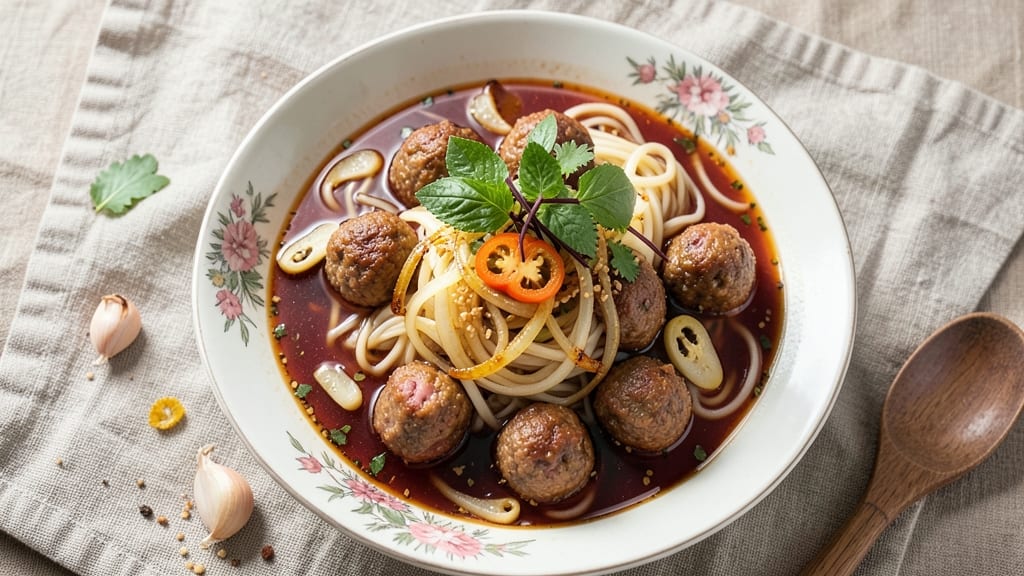
This beef ball pho recipe transforms a classic Vietnamese bowl into a restaurant-worthy masterpiece with wok-seared beef balls that deliver both texture and depth.
The secret lies in braising the beef in a ginger-scented broth until it develops that signature melt-in-your-mouth tenderness, then finishing with a quick sear for maximum flavor.
What sets this version apart is the balance—silky broth meets crispy garnishes, while the beef balls absorb the aromatic essence of star anise, cinnamon, and ginger.
The foundation of great pho starts with the broth, where charring onions and garlic over high heat unlocks layers of caramelized sweetness that form the base. Traditional recipes call for hours of simmering, but this method streamlines the process without sacrificing depth.
The beef balls, made from tender ground beef bound with fish sauce and cornstarch, are poached just until they set, then finished in a hot wok for that coveted crispy exterior that adds a satisfying contrast to the silky broth.
What you'll end up with is a bowl that's visually stunning and deeply flavorful—steaming hot broth filled with perfectly textured beef balls, chewy rice noodles, and a medley of fresh herbs and lime.
The aroma alone will draw everyone to the table, while the first sip delivers a symphony of ginger, star anise, and umami-rich beef. This isn't just pho; it's a complete dining experience that brings the soul of Vietnam into your kitchen.
Whether you're serving a crowd or treating yourself to a solo meal, this recipe scales beautifully. The broth can be made ahead, the beef balls prepped in advance, and the garnishes assembled in minutes.
Serve with extra lime wedges, bean sprouts, and chili slices for customization—every bite should be a balance of heat, freshness, and richness. Let's get cooking.
Ingredients for beef ball pho
Ground beef, aromatic spices, and silky broth—this is your pho shortcut with restaurant-level flavor.
| Ingredient | Amount | Notes |
|---|---|---|
| Ground Beef 🥩 | 1 ½ lb | 80/20 fat ratio preferred |
| Fish Sauce 🍶 | 2 tbsp | Red Boat preferred |
| Cornstarch 🌾 | 2 tbsp | For binding beef balls |
| Yellow Onions 🧅 | 2 whole | Chopped, for broth |
| Garlic Cloves 🧄 | 8 cloves | Minced, for aroma |
| Fresh Ginger 🌿 | 4 oz | Julienned, peeled |
| Star Anise Pods 🌶️ | 2 whole | Lightly crushed |
| Cinnamon Sticks 🍃 | 2 whole | 2-inch pieces |
| Dried Coriander 🌿 | 1 tbsp | Ground preferred |
| Dried Cardamom Pods 🌶️ | 4 whole | Lightly crushed |
| Chicken Broth 💧 | 6 cups | Homemade or quality store-bought |
| Rice Noodles 🍜 | 8 oz | Banh pho or pho noodles |
| Fresh Thai Basil Leaves 🌿 | ½ cup | For garnish |
| Bean Sprouts 🌱 | 1 cup | Fresh or frozen |
| Lime Wedges 🍋 | 4 whole | For serving |
| Jalapeño Slices 🌶️ | 2 whole | For garnish |
| Sesame Oil 🫒 | 1 tbsp | For finishing |
| Vegetable Oil 🫒 | ¼ cup | For wok-searing |
The beef is non-negotiable here—80/20 fat ratio gives those beef balls the perfect texture. Red Boat fish sauce is the gold standard, but any reputable brand works. For the spices, Whole Foods or Asian markets have the best selection of whole pods. Star anise and cardamom lose potency fast once opened, so buy small amounts and store them in a cool, dark place. The ginger should be fresh—no powdered shortcuts. If you can't find fresh, Trader Joe's frozen ginger works in a pinch, but it won't have the same impact.
No fish sauce? Soy sauce at half the amount gets you close, though it won't be as umami-rich. Running low on star anise? 1/2 tsp ground anise seed is a decent swap. The broth can be made ahead—it actually tastes better after sitting overnight. For the noodles, banh pho noodles are ideal, but any flat rice noodles work. If you're prepping ahead, store the beef ball mixture separately from the broth ingredients—they'll absorb flavors differently if mixed too soon. The basil and bean sprouts should be fresh, but frozen sprouts thawed in cold water work in a bind.
Broth keeps for 5 days in the fridge or 3 months frozen. The beef balls can be prepped a day ahead and stored in the fridge—just reheat gently before searing. Fresh herbs and lime should be added right before serving. For a crowd, double the broth and noodles, but keep the beef balls separate until serving so they stay crispy. Leftovers? Store everything separately and assemble fresh—nothing beats that first bowl experience.
Why You'll Love This Recipe
- No-Chop Needed: I swear by this trick—just pulse the onions and garlic in a food processor for 10 seconds. The beef balls stay juicy, and you’re left with that perfect pho broth without dicing anything. Honestly, my lazy Sundays thank me every time.
- Umami Bomb: Fish sauce and garlic? That combo is chef’s kiss—deep, savory, and just a little funky in the best way. The cornstarch gives those beef balls a satisfying chew, and the broth? It’s the kind of flavor that makes you want to slurp it straight from the pot.
- Lunchbox Hero: These beef balls reheat like a dream—toss them in a thermos with rice and broth, and you’ve got a packed lunch that tastes fresh hours later. My kids actually ask for leftovers, and that’s saying something.
- Pocketbook Winner: Ground beef and pantry staples? This recipe costs me about $1.50 per serving, easy. No fancy ingredients, no waste—just pure, hearty pho that feeds the whole family without breaking the bank. (Yes, even on a Tuesday night.)
Step-by-step instructions for beef ball pho
Here's how to make restaurant-quality beef ball pho with a perfectly balanced broth and crispy wok-seared meatballs.
Prepare the Beef Balls for Maximum Crunch
In a large bowl, combine the 1.5 lb ground beef, 2 tbsp fish sauce, and 2 tbsp cornstarch. Using your hands, gently mix until just combined—don't overwork the meat or the balls will be tough. Form into 1-inch diameter balls (about 12-15 total) and set aside on a plate.
Here's the thing—cornstarch is key for that crispy exterior. The fish sauce adds depth, but don't skip the cornstarch or your beef balls will turn out mushy. Let them rest uncovered for 10 minutes while you prep the broth. This resting time helps the cornstarch bind properly and creates a better sear later.
Build the Aromatic Broth Base
Heat 0.25 cup vegetable oil in a large pot over medium heat. Add the 2 whole chopped yellow onions and cook for 5 minutes until softened. Add the 8 minced garlic cloves and 4 oz julienned fresh ginger, cooking for another 2 minutes until fragrant—this is where all the flavor develops.
Stir in the 2 lightly crushed star anise pods, 2 cinnamon sticks (cut into 2-inch pieces), 1 tbsp ground dried coriander, and 4 lightly crushed dried cardamom pods. Toast these spices for 1 minute until you can smell their warm, earthy aromas filling your kitchen. This quick toasting unlocks their full potential in the broth.
Simmer the Ginger-Braised Broth
Pour in the 6 cups chicken broth and bring to a gentle boil. Reduce heat to low and let it simmer uncovered for 20 minutes. Skim off any foam that rises to the surface—this ensures a crystal-clear broth. The spices should infuse the broth with their warm, aromatic qualities while keeping it silky smooth.
After 20 minutes, strain the broth through a fine-mesh sieve into a clean pot, pressing gently on the spices to extract all their flavor. Discard the solids. The broth should now have a rich, golden hue and carry all those complex spice notes we just developed. Keep it warm at a gentle simmer—never boiling—as we prepare the beef balls.
Wok-Sear the Beef Balls to Perfection
Heat a large wok or skillet over high heat until smoking hot. Add the beef balls in a single layer—don't crowd them or they'll steam instead of sear. Let them cook undisturbed for 2 minutes until they develop a deep golden crust on all sides. This high-heat searing creates that satisfying crunch you get in authentic pho.
Carefully flip each beef ball and cook for another 2 minutes until they're deep brown all over. They should be hot in the center but still slightly firm to the touch—overcooking will make them rubbery. Transfer the beef balls to a plate and set aside. The residual heat will continue cooking them slightly as they rest.
Assemble the Perfect Pho Bowls
Bring a large pot of water to a boil and cook the 8 oz rice noodles according to package directions (usually 2-3 minutes). Drain and rinse briefly under cold water to stop the cooking process, then divide among 4 bowls. Ladle the hot broth over the noodles until each bowl is ¾ full.
Arrange 2-3 beef balls in each bowl, then top with ¼ cup bean sprouts and 2 tbsp fresh Thai basil leaves. Drizzle with ½ tbsp sesame oil and serve with 1 lime wedge and ½ jalapeño slice on the side. The contrast of temperatures—hot broth, room-temperature beef balls, and cool garnishes—creates the perfect balance in every bite.
Pro Tips For Making Beef Ball Pho
- Use Fat Beef, Not Lean: That 80/20 ground beef isn’t just for burgers—it’s your flavor insurance. The fat renders out during cooking, carrying all those savory notes from fish sauce and garlic into the broth. I used to skimp with 90% lean, and my beef balls ended up dry and bland. Trust me, the extra 5% makes a real difference.
- Bloom the Aromatics First: Sizzle minced garlic and onions in oil for 30 seconds before adding beef—this isn’t just about flavor, it’s about texture. The onions should soften but not brown, and the garlic should smell like a Vietnamese street stall, not burn like a campfire. Skip this, and your broth will taste flat.
- Slurry the Cornstarch: Mix that cornstarch with cold water before adding it to the broth—otherwise, you’re just making glue. I learned this after my first attempt left me with a pasty, unappetizing mess. A 1:1 ratio with water works, but stir it like you’re trying to win a prize at a county fair. Smooth is the goal.
- Salt the Beef Balls Twice: Season the raw beef mixture and the cooked balls again after shaping. The fish sauce is salty, but ground beef absorbs it unevenly. A pinch of salt in the raw mix and another after frying guarantees they’re seasoned through—no guessing, no regret. (Yes, even if you’re impatient like me.)
Regional styles of this recipe
Northern Vietnam Style
In Hanoi, pho is traditionally lighter with a clearer broth and thinner rice noodles. For this version, reduce the ginger to 2 oz and add 1 cinnamon stick and 1 star anise pod to the broth for a more delicate spice profile.
Serve with thinly sliced raw jalapeño (no seeds) and a sprinkle of fried shallots on top for authentic Northern flair. The beef balls should be slightly smaller (¾ inch diameter) to match the lighter broth. 🌿
Central Vietnam Twist
Central Vietnam's coastal influence brings a brinier, more aromatic approach. Add 1 tbsp shrimp paste (mắm ruốc) to the broth base along with the spices, and use 1 tbsp fish sauce instead of the full 2 tbsp in the beef balls.
Garnish with fresh cilantro and pickled daikon radish for that coastal tang. The broth should have a deeper color from the shrimp paste, creating a richer umami base. 🍶
Southern Vietnam Fusion
Ho Chi Minh City's pho often features bolder flavors and sometimes includes coconut milk. For a Southern twist, add ½ cup coconut milk to the finished broth (after straining) and include 1 tbsp palm sugar to balance the richness.
Swap Thai basil for Vietnamese mint and add toasted coconut flakes as a garnish. The beef balls can be slightly larger (1.25 inch diameter) to handle the creamier broth. 🥥
Modern Spicy Adaptation
For heat lovers, boost the spice level by adding 1 tbsp chili oil to the finished broth and including extra jalapeño slices with seeds. Use 1 tsp cayenne pepper in the beef ball mixture for an internal kick.
Garnish with fresh bird's eye chili slices and serve with sriracha on the side. The heat should be balanced by extra lime juice—always have fresh lime wedges available. 🌶️
Vegetarian Adaptation
Swap the beef for 1.5 lb firm tofu pressed for 30 minutes, cut into balls, and marinated in 2 tbsp soy sauce and 1 tbsp cornstarch. Use the same wok-searing technique but reduce heat slightly to prevent burning.
Keep the broth vegetarian by omitting fish sauce (use 2 tbsp soy sauce instead) and adding 1 tbsp miso paste for depth. Garnish with toasted cashews for crunch. 🌱
Nutrition facts
Frequently asked questions
Can I make the beef balls ahead of time?
Prepare the beef ball mixture and shape them up to 24 hours ahead, then refrigerate uncovered on a plate. The cornstarch will help them maintain shape, and you can sear them fresh when ready. For best results, bring them to room temperature before cooking to ensure even searing. Pro tip: Freeze them on a tray first if prepping for longer storage.
How do I adjust the spice level in this recipe?
For milder pho, reduce the ginger to 3 oz and omit the cardamom pods. For extra heat, add 1 tbsp chili oil to the broth and include bird's eye chili slices as garnish. The key is balance—always serve with fresh lime to cut through any spice.
Can I use beef chunks instead of ground beef for the balls?
Not recommended for this recipe—the ground beef creates the ideal tender, juicy texture. If you must use chunks, finely chop them into ¼-inch pieces and follow the same cornstarch binding method. The searing technique will work, but the texture won't be as authentic. For best results, stick with ground beef for that signature melt-in-your-mouth quality.
What's the best way to reheat leftover beef ball pho?
Reheat the broth separately until steaming, then add noodles and beef balls to warm through (2-3 minutes on low). Never microwave the beef balls directly—they'll turn rubbery. For best texture, assemble fresh bowls with reheated components. Garnishes should be added fresh to maintain crispness.
Can I substitute chicken broth for beef broth?
Yes, but beef broth will give deeper umami flavor. If using chicken, add 1 tbsp soy sauce to the broth for richness. For maximum authenticity, use a combination of both. The spices will still infuse beautifully, but the beefy notes will be subtler.