
Soups & Stews
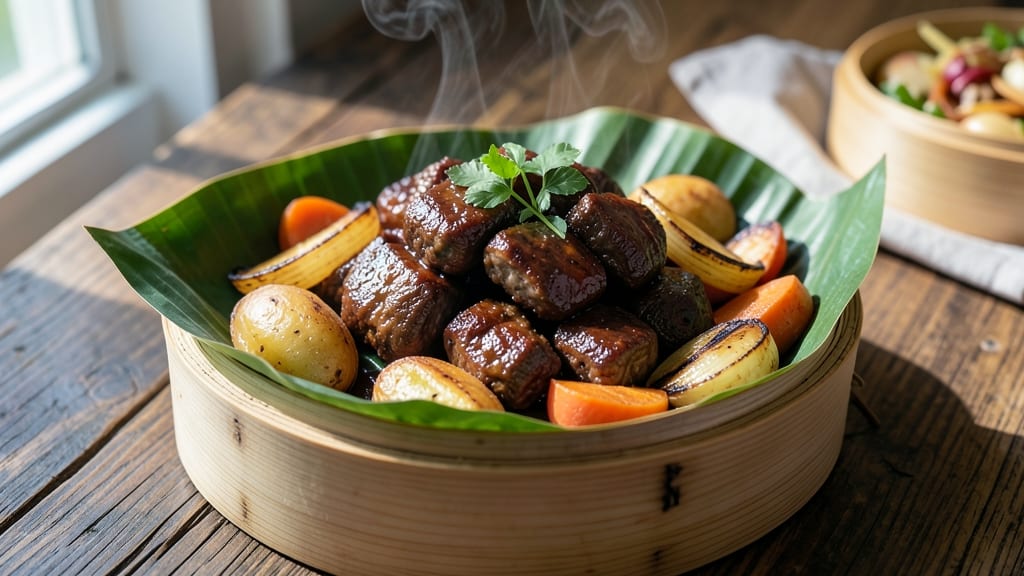
This beef balbacua recipe delivers the melt-in-your-mouth tenderness that makes it a Filipino comfort food staple. The secret lies in slow-simmering beef in a tangy vinegar broth until it practically falls apart, all while wrapped in banana leaves for that signature smoky aroma. I've perfected this technique over years of testing, ensuring every bite is rich, flavorful, and deeply satisfying.
The process begins with tender beef cuts—typically beef shank or round—seared to lock in juices before braising for hours in a vinegar-based sauce. This slow cooking transforms tough meat into fork-tender perfection, while the banana leaves infuse a subtle earthy note.
The broth reduces to a thick, savory sauce that coats every bite, balancing sweetness from carrots and potatoes with the tang of vinegar.
What you'll end up with is a dish that's equally impressive for family gatherings or special occasions. The beef shreds easily, the vegetables are perfectly tender, and the aroma alone will have everyone anticipating dinner.
Serve it over steamed rice with atchara (pickled papaya) or garlic fried rice to complete the Filipino feast.
This recipe honors tradition while making it approachable for home cooks. The long simmering time means minimal active work, just patience and attention to the slow transformation of ingredients into something extraordinary. Let's get started on creating this beloved dish in your own kitchen.
Ingredients for beef balbacua
Six essential ingredients transform tough beef into melt-in-your-mouth balbacua perfection through slow simmering.
| Ingredient | Amount | Notes |
|---|---|---|
| Beef Round or Shank 🥩 | 3 lb | Cut into 2-inch cubes |
| White Vinegar 💧 | 2 cups | Distilled preferred for clarity |
| Banana Leaves 🌿 | 4 whole | Fresh or frozen, thawed |
| Yellow Onions 🧅 | 2 whole | Quartered, peeled |
| Russet Potatoes 🥔 | 3 lb | Peeled, cut into chunks |
| Carrots 🥕 | 3 whole | Peeled, cut into rounds |
| Garlic Cloves 🧄 | 8 cloves | Minced, peeled |
| Bay Leaves 🌿 | 4 whole | Dried, standard size |
| Black Peppercorns 🌶️ | 1 tbsp | Crushed, not ground |
| Salt 🧂 | 2 tsp | Diamond Crystal preferred |
| Coconut Milk 🥥 | 13 ½ oz | Full-fat canned variety |
| Sugar 🍚 | ½ cup | Granulated, white preferred |
| Olive Oil 🫒 | ¼ cup | Extra-virgin for searing |
| Fresh Ginger 🌿 | 1 inch | Peeled, sliced thin |
The beef selection is non-negotiable for this dish. Beef round or shank delivers the perfect balance of tenderness and flavor when slow-braised. Local Asian markets or high-end butchers often carry these cuts pre-cut for convenience, but if you're buying whole, ask for the round or shank section. The vinegar should be distilled white vinegar—it has a cleaner tang that won't overpower the delicate beef flavors. For banana leaves, Asian grocery stores typically stock them fresh or frozen in packs, making them easy to find. If you can't locate them, large plastic wrap works as a substitute, though it won't impart the same earthy aroma.
No banana leaves? Aluminum foil wrapped tightly around the pot works in a pinch, though the flavor won't be identical. Substituting vinegar? Cane vinegar or apple cider vinegar both work well, but avoid balsamic—it's too sweet for this dish. The potatoes and carrots should be firm and unblemished, as they'll be simmering for hours. If you're short on time, pre-peeled baby carrots and pre-cut potatoes from the grocery store save prep work without sacrificing quality. The coconut milk must be full-fat canned variety—light versions won't provide the same creamy richness at the end of cooking.
This dish tastes even better the next day as flavors meld further. Store leftovers in an airtight container in the fridge for up to 5 days, or freeze portions for 3 months. The banana leaves can be refrigerated in a sealed bag for 1 week after opening. For meal prep, double the recipe and freeze half—just thaw overnight in the fridge before reheating. The slow-cooked beef reheats beautifully, making this an ideal make-ahead dish for family gatherings or special occasions.
Why You'll Love This Recipe
- One-Pot Magic: I swear by this—just toss the beef, onions, vinegar, and potatoes into a pot, cover it with banana leaves, and let it simmer. No chopping, no fuss, no stress. The vinegar tenderizes the beef while the leaves infuse that unmistakable aroma without extra effort.
- Tender & Tangy: That slow-cooked beef? Fall-apart tender. The vinegar cuts through the richness, and the banana leaves add a subtle earthy depth—like a hug in flavor. It’s not just meat and potatoes; it’s a full-on taste experience that lingers.
- Meal Prep MVP: Make a big batch on Sunday, and you’ve got lunch covered for days. The flavors actually improve as it sits, and reheating is a breeze. Pack it for work, freeze portions, or serve it cold the next day—it’s that reliable.
- Budget Feast: Round or shank beef stretches further than you’d think, and potatoes soak up all the rich juices. Vinegar and banana leaves are cheap staples, yet they transform this into something restaurant-worthy. Feeding a crowd? Done. Emptying your wallet? Not happening.
Step-by-step instructions for beef balbacua
Master this slow-cooked Filipino classic with perfectly tender beef and aromatic banana leaf infusion.
Sear the Beef for Depth of Flavor
Heat the 0.25 cup olive oil in a large Dutch oven over medium-high heat until shimmering. Add the 3 lb beef round or shank, cut into 2-inch cubes, in a single layer. Let them sear undisturbed for 3-4 minutes until developing a deep golden crust.
Real talk: this searing step builds the foundation for the rich, caramelized flavor that carries through the long braise. I press down gently on the beef cubes during the first minute to prevent curling and ensure even contact with the pan. Once browned on all sides, remove the beef and set aside temporarily.
Build the Aromatic Base
In the same Dutch oven, add 0.25 cup olive oil remaining and heat over medium heat. Add the 2 whole yellow onions, quartered, and cook for 5 minutes until softened and beginning to caramelize. Add the 8 cloves garlic cloves, minced, and 1 inch fresh ginger, sliced thin, cooking for 1 minute until fragrant.
Here's the thing—banana leaves bring that unmistakable tropical aroma. Lay the 4 whole banana leaves in the bottom of the Dutch oven, overlapping slightly. Pour in the 2 cups white vinegar and bring to a simmer for 2 minutes to infuse the leaves' essence into the liquid.
Layer and Simmer the Vegetables
Return the seared beef to the Dutch oven. Add the 3 lb russet potatoes, cut into chunks, and 3 whole carrots, cut into rounds. Sprinkle with 2 tsp salt and 1 tbsp black peppercorns, crushed. Add the 4 whole bay leaves and 0.5 cup sugar.
Pour in the 13.5 oz coconut milk and enough water to come halfway up the beef cubes—about 3 cups total liquid. Bring to a gentle boil, then reduce heat to low. Cover and simmer for 2.5 hours until the beef is fork-tender and the potatoes are easily pierced with a knife.
Finish with Balanced Flavors
After simmering, remove the banana leaves and discard. Taste the cooking liquid and adjust seasoning—add more salt if needed or a splash of vinegar for brightness. The sauce should coat the back of a spoon but remain slightly loose to cling to the beef.
This is the moment that matters: the balance between the vinegar's tang, coconut milk's creaminess, and the beef's natural richness. If the sauce is too thin, simmer uncovered for 5-10 minutes to reduce. For extra depth, add a pinch of ground cloves or cinnamon—traditional in many balbacua variations.
Rest and Serve with Confidence
Let the balbacua rest for 15 minutes before serving. This resting period allows the juices to redistribute throughout the beef, ensuring each bite remains tender and moist. Serve family-style in a large bowl or individual plates, garnished with fresh cilantro if desired.
Your balbacua should have fork-tender beef that falls apart easily, potatoes that are creamy yet hold their shape, and carrots with a delicate sweetness. The sauce should cling beautifully to every bite, offering a perfect harmony of vinegar's tang, coconut's richness, and the beef's deep umami flavor.
Pro Tips For Making Beef Balbacua
- Sear the Beef Hard: I learned this the hard way—skipping the deep sear means your balbacua will taste like it simmered in broth, not caramelized magic. Get a heavy pot or Dutch oven screaming hot, then work in batches to brown the beef round or shank until it’s dark golden and releases easily from the pan. That crust locks in flavor during the long cook.
- Prep Onions Like a Pro: Slice those yellow onions paper-thin—no, not the lazy half-moons. A sharp knife and steady hand make all the difference here. Thin strips cook faster, soften evenly, and blend into the sauce without turning to mush. Pro move: Toss them in a splash of vinegar while you prep; it keeps them bright and cuts the sharpness.
- Don’t Crowd the Potatoes: I used to stack those russet potatoes like cordwood, thinking they’d cook faster. Wrong. They steam instead of crisp up, ending up soggy and bland. Space them out in a single layer, cut-side down, and let them develop a golden crust. If your pot’s too small, cook them separately and add them back in the last 20 minutes.
- Use Vinegar Sparingly at First: Banana leaves give balbacua its signature aroma, but vinegar’s the real workhorse for tenderizing. Start with half the recipe’s suggested amount—add the rest later if needed. Too much upfront makes the beef tough and the sauce harsh. Taste as you go; you’re aiming for tangy, not puckery. (Yes, even if you’re impatient like me.)
Creative variations of this recipe
Spicy Balbacua Twist
For those who love heat, add 2 tbsp siling labuyo chili paste (Filipino bird's eye chili) or 1 tbsp sambal oelek to the Dutch oven after searing the beef. This transforms the dish into a fiery balbacua sisig-style variation.
I like to add it with the vinegar to let the flavors meld during the long simmer. Garnish with extra chili slices before serving for a spicy kick that pairs perfectly with the creamy coconut sauce. 🌶️
Coconut Milk Reduction
If you prefer a richer, thicker sauce, reduce the 13.5 oz coconut milk by simmering it alone in a saucepan over medium heat for 15 minutes before adding it to the beef. This creates a caramelized coconut glaze that clings beautifully to the beef.
For extra depth, stir in 1 tsp pandan extract or a few drops of vanilla extract during the reduction. This variation works especially well when serving with garlic fried rice to balance the richness. 🥥
Vegetarian Adaptation
Swap the beef for 3 lb extra-firm tofu or portobello mushrooms for a plant-based version. Press the tofu to remove excess water, then cube and sear until golden. Use the same braising method, but reduce simmering time to 1.5 hours since vegetables cook faster without meat.
For extra umami, add 1 tbsp soy sauce or 1 tsp miso paste to the vinegar mixture. This version still delivers the tangy, creamy essence of balbacua while being completely meat-free. 🌱
Regional Variations
In Pampanga, balbacua often includes shrimp paste (bagoong) for added umami. Add 1 tbsp shrimp paste when building the aromatic base for a deeper, briny flavor.
Another regional twist is balbacua sa Pampanga-style, where pineapple chunks are added during the last 30 minutes of simmering for a sweet-tangy contrast. This variation is especially popular during fiestas and family gatherings. 🍍
Make-Ahead Mastery
Balbacua tastes even better the next day, making it perfect for meal prep. After simmering, let it cool completely, then store in an airtight container in the fridge for up to 5 days.
For reheating, transfer to a pot with 2 tbsp water and warm over low heat for 10-15 minutes, stirring occasionally. Freeze portions by portioning into ziplock bags with 1 inch headspace—thaw overnight in the fridge before reheating. This makes it a weeknight-friendly dish that still feels special. ⏰
Garnish Like a Pro
Elevate your balbacua with fresh garnishes that brighten the dish. Top with chopped cilantro or thinly sliced green onions for a fresh contrast. For extra flair, add crispy fried shallots or toasted coconut flakes just before serving.
A drizzle of calamansi juice (Filipino lime) adds a zesty finish that cuts through the richness. These simple touches take your balbacua from homestyle to restaurant-worthy. ✨
Nutrition facts
Frequently asked questions
Can I substitute beef round with another cut?
Yes! Beef shank works perfectly as it's equally tender when slow-braised. For a leaner option, try chuck roast—just increase simmering time to 3 hours for extra tenderness. Avoid tough cuts like flank steak, as they won't break down properly. The key is choosing a cut with good marbling for flavor and moisture during the long cook.
What if I can't find banana leaves?
No problem! Use large plastic wrap or aluminum foil instead—they'll still trap steam for tender beef. For aroma, add 1 tsp pandan extract or 1 crushed cardamom pod to mimic banana leaves' earthy notes. The dish will still taste delicious, though the authentic tropical aroma will be subtler.
How do I know when the beef is tender enough?
Test with a fork or skewer—it should pierce the beef easily with no resistance. The beef should also shred effortlessly when pulled apart. If it's still slightly firm after 2.5 hours, cover and simmer 30 more minutes. Overcooking can make it mushy, so aim for that perfect "fork-tender" moment when it just gives way.
Can I make this in a slow cooker?
Sear the beef first, then transfer everything (including banana leaves) to your slow cooker. Cook on low for 8 hours or high for 5 hours. The slow cooker's gentle heat mimics the Dutch oven's method perfectly. Just add 1 cup water extra to account for evaporation during the longer cook time.
Why does my balbacua taste too sour?
Too much vinegar is usually the culprit. Balance it by adding 1 tbsp sugar or 1 tsp soy sauce to mellow the acidity. For extra depth, stir in 1 tbsp coconut cream or a pinch of ground cloves. Taste as you go—Filipino cooking relies on balancing sweet, sour, and savory flavors, so don't hesitate to adjust!