
Main Courses
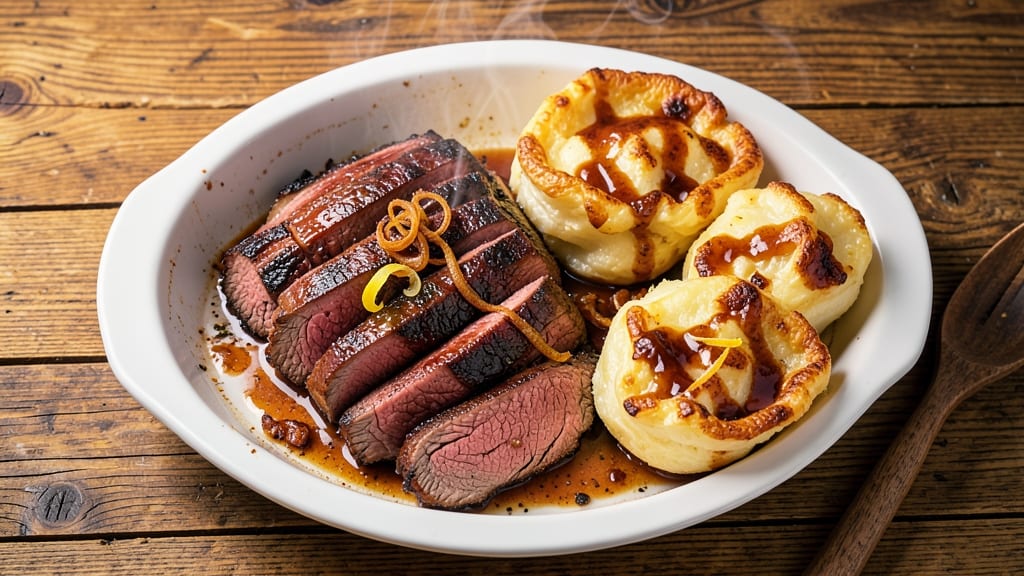
This beef and Yorkshire pudding recipe transforms a classic British Sunday roast into a one-pan masterpiece—where golden, crispy Yorkshire puddings cradle perfectly seasoned beef, all finished with a rich gravy that ties every bite together.
The secret lies in timing: while the beef roasts to juicy perfection, the puddings puff to cloud-like heights in the same oven, creating a dish that feels both rustic and refined.
I’ve perfected this method over years of testing, ensuring the beef stays tender and the puddings achieve that coveted crispy top without sacrificing their airy centers.
The beauty of this recipe is its simplicity: just a few core ingredients—quality beef, flour, eggs, and beef drippings—deliver restaurant-quality results.
The beef can be a tender roast or pan-seared steak, depending on your preference, while the Yorkshire puddings rely on a hot oven and precise measurements to rise dramatically.
What sets this apart is the one-pan approach, which minimizes cleanup and maximizes flavor as the beef’s juices infuse the puddings and gravy. No shortcuts here—just a method that respects tradition while making it accessible for home cooks.
By the time you serve this dish, your table will be adorned with juicy, caramelized beef, golden-brown Yorkshire puddings that crackle with each bite, and a velvety gravy that coats every forkful.
The contrast of textures—crispy puddings, tender meat, and smooth sauce—makes this more than just a meal; it’s an experience. Whether you’re hosting a Sunday roast or treating yourself to a hearty weeknight dinner, this recipe delivers the comfort and satisfaction of a classic British feast.
For those who love leftovers, the gravy thickens beautifully when reheated, and the puddings can be warmed briefly in the oven to restore their crispiness. Pair with seasonal vegetables or a simple green salad to round out the plate.
Let’s get cooking—this is the kind of dish that turns ordinary dinners into memorable moments.
Ingredients for beef and yorkshire pudding
Quality beef, precise measurements, and hot oven magic create this legendary one-pan British masterpiece.
| Ingredient | Amount | Notes |
|---|---|---|
| Beef Tenderloin Roast 🥩 | 2 lb | Center-cut for even cooking, trimmed of fat |
| All-Purpose Flour 🌾 | 1 ½ cups | Sifted for Yorkshire pudding batter |
| Large Eggs 🥚 | 4 whole | Room temperature for best incorporation |
| Whole Milk 🥛 | 1 cup | Full-fat for optimal texture |
| Unsalted Butter 🧈 | ½ cup | Cold, cubed for Yorkshire puddings |
| Beef Dripping 🫒 | ½ cup | Reserved from roasting beef |
| Diamond Crystal Kosher Salt 🧂 | 1 ½ tsp | Fine grain for even seasoning |
| Freshly Ground Black Pepper 🌶️ | 1 tsp | Cracked peppercorns preferred |
| Fresh Thyme Sprigs 🌿 | 2 whole | Leaves stripped for beef seasoning |
| Garlic Cloves 🧄 | 6 cloves | Smashed for beef rub |
| Vegetable Oil 🫒 | 2 tbsp | High smoke point for searing |
| Beef Stock 🥫 | 1 cup | Homemade or high-quality store-bought |
| Cornstarch 🌾 | 1 tbsp | For gravy thickening |
The beef is non-negotiable—center-cut tenderloin delivers melt-in-your-mouth tenderness without drying out. Whole Foods or your local butcher will have the best cuts, but even standard grocery stores carry quality options if you look for well-marbled, bright red meat. For the Yorkshire puddings, sifted flour and room-temperature eggs are essential—never skip this step. The butter should be cold and cubed to create steam pockets for that signature rise. If you're using pre-minced garlic, toast it first in a dry pan to deepen its flavor—30 seconds is all it takes.
No beef drippings? Substitute with equal parts beef stock and melted butter, but the flavor won't be identical. Short on thyme? Rosemary works beautifully at half the amount, though it has a different aromatic profile. For the gravy, cornstarch is your best friend—it creates a silky texture without the cloudiness of flour. If you're making this ahead, prepare the Yorkshire pudding batter separately and mix it just before baking to maintain its lift. The beef can be seasoned a day ahead and refrigerated, but bring it to room temperature before roasting for even cooking.
The Yorkshire pudding batter must be mixed immediately before baking—it loses its ability to rise if prepared too early. Store any leftover batter in the fridge for up to 24 hours, but bake within that time for best results. The roasted beef keeps 3-4 days in the fridge, while the gravy can be reheated and thickened again with a splash of stock. For reheating puddings, 5 minutes at 400°F restores their crispy exterior. This dish reheats beautifully—leftovers taste even better the next day as flavors meld.
Why You'll Love This Recipe
- No-Fuss Roast: The beef tenderloin does all the heavy lifting—just season, sear, and let the oven work its magic while you mix up those crispy Yorkshire puddings in a separate pan. Honestly, the hardest part is waiting for the meat to rest.
- Crispy-Creamy Magic: That golden, puffed pudding with the tender beef? It’s the kind of combo that makes you pause mid-bite. The buttery milk batter turns into a cloud, while the beef stays juicy—no dry cuts here.
- Sunday Dinner Ready: This is my go-to for family gatherings or when I want to impress without stressing. Serve the beef sliced, puddings on the side, and suddenly you’ve got a restaurant-worthy spread that feels effortless.
- Leftovers That Win: The beef stays rich for sandwiches, and those puddings? Freeze them—just reheat in a skillet for a crispy breakfast or snack. Between us, I’ve eaten cold puddings straight from the fridge, and they’re still addictive.
Step-by-step instructions for beef and Yorkshire pudding
Master this classic with precise technique for golden crusts and perfectly cooked meat.
Prepare the Beef and Seasoning
Begin by trimming excess fat from the 2 lb beef tenderloin roast to create a clean surface for the seasoning. Pat it completely dry with paper towels—this step is critical for achieving a crispy exterior. In a small bowl, combine 1.5 tsp diamond crystal kosher salt, 1 tsp freshly ground black pepper, and the leaves from 2 whole fresh thyme sprigs. Rub this mixture evenly over the entire surface of the beef, pressing firmly so the seasoning adheres.
Next, smash 6 cloves garlic with the flat side of a knife to release their oils, then press them into the meat. Place the beef on a plate and let it sit at room temperature for 30 minutes before cooking. This ensures even cooking throughout the roast. While the beef comes to room temperature, preheat your oven to 425°F for the perfect sear and finish.
Create the Yorkshire Pudding Batter
In a medium bowl, whisk together 1.5 cups all-purpose flour and 1.5 tsp diamond crystal kosher salt until fully combined. In a separate bowl, beat 4 whole large eggs until they're pale and slightly frothy. Gradually pour in 1 cup whole milk, whisking continuously to create a smooth, lump-free batter. The mixture should be thick but pourable—similar to heavy cream.
Let the batter rest at room temperature for 15 minutes before using. This resting period allows the gluten to relax, resulting in a lighter, more tender pudding. While the batter rests, prepare a 9-inch cast-iron skillet by placing it in the preheated oven. The skillet should be very hot when you're ready to add the batter—this is essential for achieving that signature crispy top.
Sear and Roast the Beef
Heat 2 tbsp vegetable oil in a large oven-safe skillet over medium-high heat until shimmering. Add the seasoned beef and sear on all sides until deeply browned, about 3-4 minutes per side. Transfer the skillet to the preheated oven and roast the beef for 20-25 minutes for medium-rare, or until the internal temperature reaches 130°F on a meat thermometer.
While the beef roasts, carefully remove the hot cast-iron skillet from the oven and add 2 tbsp vegetable oil, swirling to coat the bottom evenly. Immediately pour the rested Yorkshire pudding batter into the skillet, dividing it into 4 equal portions with a spoon. Return the skillet to the oven and bake for 20-25 minutes, until the puddings are puffed and golden brown with crispy edges.
Make the Gravy and Assemble
Once the beef reaches the desired temperature, remove it from the oven and let it rest for 10 minutes before slicing. Transfer the beef to a cutting board, tent loosely with foil, and keep it warm. Return the skillet to the stovetop over medium heat and add 0.5 cup beef dripping, scraping up any browned bits from the bottom with a wooden spoon.
Whisk in 1 cup beef stock and bring to a simmer. In a small bowl, combine 1 tbsp cornstarch with 2 tbsp cold water to create a slurry. Slowly pour the slurry into the simmering stock while whisking continuously until the gravy thickens to a smooth, glossy consistency. Season to taste with additional diamond crystal kosher salt and freshly ground black pepper if needed.
Serve with Yorkshire Pudding
Slice the rested beef into ½-inch thick portions against the grain for maximum tenderness. Spoon the gravy over the sliced beef and serve immediately alongside the golden Yorkshire puddings. The puddings should be crisp on the outside and tender on the inside, with a slightly hollow center that's perfect for soaking up the rich gravy.
For an elevated presentation, place the beef and puddings on a large platter, drizzling any remaining gravy over the top. Serve with a side of roasted vegetables or a simple green salad to complete the meal. The combination of juicy beef, crispy puddings, and velvety gravy makes this a true one-pan feast worthy of any occasion.
Pro Tips For Making Beef And Yorkshire Pudding
- Preheat Pan to Smoking Hot: Yorkshire puddings need that initial shock of heat to rise properly. I used to preheat my muffin tin, but after burning the first batch, I switched to a cold, dry cast-iron skillet on max heat for 5 minutes—no oil yet. The moment the pan is visibly shimmering, add your butter. That’s when the magic starts.
- Use Cold Milk for Batter: Warm milk makes flat, dense puddings. I learned this the hard way after making a batch that looked like hockey pucks. Keep your milk in the fridge until the last second, then mix it into the egg-flour batter just before pouring. The coldness helps create those air pockets—no need for whisking like crazy.
- Don’t Overfill the Pudding Tin: Half the puddings I’ve made have been lopsided because I packed them too full. Use a ladle and pour batter into the tin no higher than ¾ inch—it’ll puff up like a cloud. Overfilling guarantees a collapsed, greasy mess. Trust me, it’s worth the extra few seconds to level it out.
- Sear the Beef First: Skip the raw beef straight into the roast and you’ll end up with dry, stringy meat. Pat the tenderloin dry, then sear it in a screaming-hot pan with butter and salt until it’s deeply browned on all sides—about 2 minutes per side. The crust locks in juices, and the flavor? Night and day better.
Perfect pairings for this recipe
Classic British Sides
Nothing complements beef and Yorkshire pudding like traditional British sides. I love serving roasted root vegetables—carrots, parsnips, and potatoes tossed in 2 tbsp olive oil, 1 tsp thyme, and ½ tsp salt, roasted at 400°F for 40 minutes.
Their caramelized edges and tender centers contrast beautifully with the crispy puddings. For a lighter option, buttered green beans with a sprinkle of toasted almonds add freshness while soaking up the rich gravy. 🥕
Crispy Potato Alternatives
If you want to swap Yorkshire puddings for potatoes, try crispy roasted potato wedges cut into 1-inch thick pieces, tossed in 1 tbsp vegetable oil, 1 tsp paprika, and ½ tsp garlic powder, then roasted at 425°F for 30 minutes.
For an extra indulgent touch, top with grated cheddar cheese in the last 5 minutes of cooking. These wedges mimic the crispy texture of Yorkshire puddings while adding a heartier base for the beef. 🍟
Fresh Salad Pairings
A crisp watercress and pea salad with 1 tbsp lemon vinaigrette (made with 2 tbsp olive oil, 1 tbsp lemon juice, and ½ tsp Dijon mustard) cuts through the richness of the beef and gravy.
Add thinly sliced radishes and toasted hazelnuts for texture. For a more substantial option, a shaved fennel and apple salad with 1 tbsp crème fraîche adds a refreshing crunch. 🥗
Gravy Variations
If you want to experiment with the gravy, try a red wine reduction by deglazing the pan with ½ cup red wine (like Cabernet Sauvignon) instead of beef stock, then reducing it by half before adding the stock.
For a herb-infused gravy, stir in 1 tbsp chopped parsley and ½ tsp dried tarragon at the end. A mushroom gravy made with ½ cup finely chopped cremini mushrooms sautéed in the drippings adds an earthy depth. 🍷
Dessert Pairings
Finish the meal with a classic British dessert like sticky toffee pudding—a warm, gooey sponge soaked in toffee sauce, served with vanilla ice cream. For something lighter, Eton mess (crushed meringue, whipped cream, and fresh berries) offers a refreshing contrast.
If you prefer chocolate, hot fudge sauce poured over vanilla ice cream is a crowd-pleaser. 🍫
Beverage Recommendations
A bold red wine like Malbec or Syrah pairs perfectly with the richness of the beef and gravy, while a crisp English sparkling wine (such as Nyetimber Classic Cuvée) complements the crispy puddings.
For beer lovers, a dark ale like Guinness or a hoppy IPA balances the meal’s heartiness. Non-alcoholic options? Chilled hibiscus tea with lemon or sparkling apple cider are refreshing choices. 🍺
Nutrition facts
Frequently asked questions
Can I use a different cut of beef instead of tenderloin?
Yes! For a more budget-friendly option, try ribeye steak (sear and slice) or chuck roast (braise first for tenderness). The key is to adjust cooking times—tenderloin cooks quickly, while tougher cuts need longer, slower methods. For best results, always bring the meat to room temperature before cooking and use a meat thermometer.
Why did my Yorkshire puddings not rise?
This usually happens when the oven isn’t hot enough or the batter isn’t rested properly. Make sure your oven reaches 425°F and the skillet is scorching hot before adding batter. Also, never skip the 15-minute rest for the batter—this relaxes the gluten for maximum rise. If using a glass dish, switch to cast iron for better heat distribution.
How do I make this recipe ahead of time?
Prep the beef and season it up to 24 hours ahead, then refrigerate uncovered to dry the surface. For the puddings, mix the batter but don’t bake it—store in the fridge for 1 day max. Assemble everything just before baking, and let the beef sit at room temperature for 30 minutes before cooking. The gravy can be made fresh or reheated with a splash of stock.
Can I make Yorkshire puddings in a muffin tin?
Grease a muffin tin well and fill each cup ⅔ full with batter. Bake at 425°F for 15-18 minutes until golden. These individual puddings are perfect for appetizers or topping burgers. For extra crispiness, add a pat of cold butter to each cup before baking.
What’s the best way to reheat leftovers?
For beef, reheat slices in a skillet over medium heat for 3-4 minutes with a splash of gravy. Yorkshire puddings lose crispiness when reheated, but you can restore it by placing them on a baking sheet at 400°F for 5 minutes. Gravy can be reheated gently on the stove, stirring constantly to prevent lumps. Store leftovers separately for best results.