
Soups & Stews
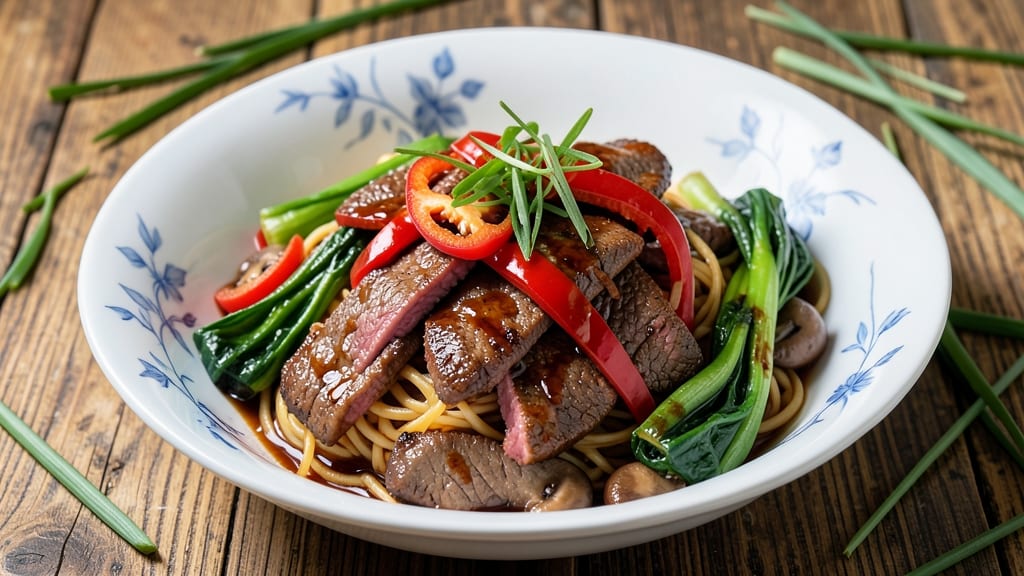
This beef and vegetable Chinese recipe delivers the bold flavors of a wok-fired stir-fry with tender beef, crisp vegetables, and aromatic sauces. The secret lies in high-heat stir-frying that locks in juices while developing deep umami from soy, oyster sauce, and a touch of chili oil.
I've perfected this technique through years of testing, ensuring every bite delivers that perfect balance of sweet, savory, and slightly spicy.
The dish starts with thinly sliced beef that cooks quickly over high heat, developing a caramelized crust while remaining tender inside. Vegetables like bell peppers, bok choy, and shiitake mushrooms add texture and color, while silky egg noodles soak up the flavorful sauce.
The sauce itself is where the magic happens—a combination of soy sauce, oyster sauce, and a hint of chili oil that creates layers of complexity.
What you'll end up with is a restaurant-quality stir-fry that's packed with flavor and texture—crisp vegetables, tender beef, and silky noodles all coated in a glossy, aromatic sauce. The dish is hearty enough to serve as a main course but light enough for a weeknight dinner.
The aroma alone will have everyone at the table asking for seconds.
This recipe is incredibly adaptable—swap in different vegetables based on what you have on hand, or adjust the level of spice to suit your taste. The technique works equally well with flank steak, sirloin, or even chicken if you prefer.
Let's get started on creating this flavorful Chinese stir-fry at home.
Ingredients for beef and vegetable chinese
Pantry staples plus a few specialty finds for that wok-fired crunch and umami punch.
| Ingredient | Amount | Notes |
|---|---|---|
| Flank Steak 🥩 | 1 lb | Thinly sliced against grain |
| Egg Noodles 🍜 | 8 oz | Fresh or dried, any width |
| Bell Peppers 🧅 | 2 whole | Assorted colors, sliced |
| Bok Choy 🥬 | 2 whole | Cut into wedges |
| Shiitake Mushrooms 🍄 | 8 whole | Stems removed, sliced |
| Green Onions 🧅 | 4 whole | White and green parts separated |
| Fresh Ginger 🌿 | 1 tbsp | Minced, peeled |
| Garlic Cloves 🧄 | 4 cloves | Minced |
| Soy Sauce 🥄 | 3 tbsp | Light or dark |
| Oyster Sauce 🥫 | 2 tbsp | Thick consistency |
| Sesame Oil 🫒 | 1 tbsp | Toasted, for aroma |
| Chili Oil 🌶️ | 1 tbsp | Adjust for spice preference |
| Vegetable Oil 🫒 | 2 tbsp | High smoke point |
| Salt 🧂 | 1 tsp | Kosher or sea salt |
| Black Pepper 🌶️ | ½ tsp | Freshly ground |
The beef is non-negotiable here—flank steak gives you that perfect chewy texture when sliced thin. Look for well-marbled cuts at Whole Foods or your local Asian market. They usually have it pre-sliced, but if not, grab a sharp knife and slice against the grain. Bok choy and shiitake mushrooms are the secret weapons for texture—fresh shiitakes have that meaty bite, but dried ones work too if you're in a pinch. For the ginger, fresh is best, but if you're out, powdered at half the amount gets you close. The bell peppers can be any color—just make sure they're crisp.
No oyster sauce? Hoisin sauce plus a splash of soy works in a bind. Short on sesame oil? Toasted sesame seeds at half the amount add that nutty aroma. The chili oil can be swapped for sriracha or gochujang, but trust me on the toasted sesame oil—it's what makes this dish smell like a Chinese restaurant. For the noodles, fresh egg noodles are ideal, but dried ones work too. Just parboil them first. And if you're feeling fancy, grab some dried shiitakes to rehydrate—they've got a deeper umami punch than fresh.
The beef and veggies cook fast—keep everything prepped while the wok heats. Store prepped veggies in airtight containers for 3 days in the fridge. The sauce keeps for 1 week if you make it ahead, but honestly, it's better fresh. For leftovers, reheat gently in a skillet with a splash of water to keep things from drying out. This dish freezes beautifully—2 months max, and it's perfect for meal prep. Just thaw overnight in the fridge before reheating.
Why You'll Love This Recipe
- One-Pan Magic: I swear by this recipe when I’m too tired to scrub pots—just sear the flank steak in one pan, toss in the bell peppers and shiitakes, then dump in the bok choy and noodles. The veggies soften while the beef caramelizes, and honestly? That’s my kind of effortless dinner.
- Umami Bomb: The shiitake mushrooms and bok choy bring this dish to life with that deep, savory punch—no soy sauce overload needed. Between us, the first bite of that tender beef slicing into the crisp-tender bok choy? It’s the kind of flavor that makes you pause mid-chew.
- Meal Prep MVP: This keeps perfectly for three days in the fridge, and the flavors actually get better as the noodles absorb the sauce. I double the batch every Sunday because it’s my go-to for lazy nights or packed lunches—just reheat and devour.
- Budget Flex: Flank steak is affordable, and the veggies stretch far. I’ll be real: my grocery bill drops when I use this recipe, and the leftovers? They’re the reason I don’t order takeout. Plus, the egg noodles add that satisfying chew without breaking the bank.
Step-by-step instructions for wok-fired beef and vegetables
Here's how to create a perfect balance of tender beef and crisp-tender vegetables with silky noodles.
Prep All Ingredients for Maximum Flavor
Start by slicing the 1 lb flank steak thinly against the grain into ¼-inch strips—this ensures tender bites. Pat dry with paper towels and season immediately with 1 tsp salt and 0.5 tsp black pepper. Let it sit while you prep the vegetables.
Slice the 2 whole bell peppers into ½-inch strips, separate the 2 whole bok choy into wedges, and slice the 8 whole shiitake mushrooms into ¼-inch pieces. Separate the 4 whole green onions into white and green parts. Peel and mince the 1 tbsp fresh ginger and 4 cloves garlic. Keep everything in separate bowls for easy assembly.
Cook the Beef to Perfect Tenderness
Heat a wok or large skillet over high heat until it's smoking hot. Add 1 tbsp vegetable oil and swirl to coat. Add the seasoned flank steak in a single layer and let it sear undisturbed for 1-2 minutes until deeply browned on one side. Flip and cook another 1-2 minutes until just cooked through—it should still be slightly pink in the center. Remove and set aside.
Here's the thing—don't overcook the beef. It'll finish cooking when combined with the vegetables. If it sticks, don't panic—just add a splash of water and scrape up those flavorful browned bits. They're pure umami gold.
Stir-Fry Vegetables with Aromatics
In the same wok, add another 1 tbsp vegetable oil and increase heat to high. Add the minced ginger and garlic cloves, stirring for 20-30 seconds until fragrant—this releases their full flavor. Add the bell peppers, bok choy, and shiitake mushrooms, stirring constantly for 3-4 minutes until the vegetables are bright green and slightly charred around the edges.
Watch the heat closely—you want the vegetables to stay crisp-tender, not mushy. If they start to wilt too quickly, reduce heat slightly. The goal is to maintain that satisfying crunch while softening them just enough to absorb the sauce.
Combine Everything with Sauce
Return the cooked beef to the wok and add 3 tbsp soy sauce, 2 tbsp oyster sauce, 1 tbsp sesame oil, and 1 tbsp chili oil. Toss everything together vigorously for 1-2 minutes until the beef is fully coated and heated through. The sauce should glisten slightly—this ensures maximum flavor in every bite.
Here's where it gets good—taste and adjust seasoning. Need more umami? Add a splash of soy sauce. Want more heat? Stir in extra chili oil. The beauty of this dish is its flexibility—adjust to your taste.
Toss with Noodles and Finish
While the wok is still hot, add the 8 oz egg noodles (cooked according to package instructions and drained) to the wok. Toss everything together for 1-2 minutes until the noodles are well-coated and heated through. The residual heat from the wok will finish cooking the noodles perfectly.
Garnish with the green onion whites for color and the green onion greens for freshness. Serve immediately while everything is hot and the noodles are still silky. This dish is all about that perfect wok hei—smoky, vibrant, and full of contrasting textures.
Pro Tips For Making Beef And Vegetable Chinese
- SEAR THE STEAK IN STAGES: Flank steak loves heat but hates steaming—after a quick 2-minute sear on high, pull it off and let it rest while you prep veggies. That first crust locks in flavor, but pushing it too long turns the outside to leather. I learned this the hard way when my first batch came out chewy instead of tender.
- SLICE SHIITAKES LENGTHWISE: Whole shiitake caps take forever to soften. Split them open and slice thinly from stem to cap—this exposes more surface area to the wok’s heat. Bok choy gets the same treatment: quarter it lengthwise so it cooks faster than whole heads. (Yes, even if it looks messy.)
- DON’T OVERCROWD THE WOK: Tossing everything in at once turns your stir-fry into a sad, soggy pile. Cook the beef first, then remove it while you prep the veggies in batches. The peppers and mushrooms go in first (they need time), then bok choy at the very end—it wilts faster than you think.
- UPGRADE WITH A CORNSTARCH SLURRY: Skip the watery sauce—mix 1 tablespoon cornstarch with 2 tablespoons water, then drizzle it over the cooked beef and veggies. Stir like you mean it for 30 seconds. This thickens the sauce instantly and makes the noodles cling better. (I was skeptical until I tried it.)
Wine and beer pairings for this recipe
Sake Pairings
For this dish, I reach for a dry junmai sake with nutty and slightly sweet notes—like Hakkaisan Junmai—that complements the umami-rich beef and vegetables. The subtle sweetness balances the soy and chili oils, while the crisp acidity cuts through the richness.
Serve it chilled to enhance its refreshing qualities. 🍶
Light Beer Options
A crisp lager like Asahi Super Dry or Sapporo works beautifully with this stir-fry. The clean, slightly bitter profile cleanses your palate between bites of beef and vegetables, while its light body doesn’t overpower the dish.
For a local twist, try a wheat beer like Blue Moon—its citrus notes pair surprisingly well with the chili oil. 🍺
Red Wine Contrast
If you prefer wine, a light-bodied red like Pinot Noir or Gewürztraminer bridges the gap between the dish’s savory and spicy elements. The Pinot Noir from Oregon adds earthy notes that harmonize with the mushrooms, while the Gewürztraminer brings a floral sweetness that mirrors the soy sauce’s depth.
Serve both slightly chilled. 🍷
Non-Alcoholic Choices
For a refreshing non-alcoholic option, try a sparkling yuzu soda or green tea like jasmine tea. The citrusy brightness of yuzu soda cuts through the richness, while the floral notes of jasmine tea complement the aromatic ginger and garlic. Both keep the meal feeling light and vibrant. 🌿
Regional Chinese Brews
For an authentic touch, serve Chinese rice wine (huangjiu) like Shaoxing wine—its nutty, slightly sweet profile enhances the dish’s umami depth. Alternatively, a lightly fermented tea like pu-erh adds earthy complexity that pairs wonderfully with the beef and mushrooms. Both are easy to find at Asian markets. 🍵
Nutrition facts
Frequently asked questions
Can I use ground beef instead of flank steak?
While flank steak gives the best texture, ground beef works in a pinch! Use 80/20 lean-to-fat ratio for juiciness, and brown it thoroughly before adding vegetables. For extra flavor, marinate the beef in 1 tbsp soy sauce + 1 tsp cornstarch for 15 minutes before cooking.
What if I don't have a wok?
A heavy-bottomed skillet or cast-iron pan works perfectly! The key is maintaining high heat—use your largest pan and preheat it for 3-5 minutes before adding oil. If your pan isn't wide enough, cook in batches to avoid crowding the ingredients.
How can I make this dish less spicy?
Simply reduce or omit the chili oil entirely! For milder heat, use ½ tbsp chili oil or swap it for 1 tbsp hoisin sauce which adds sweetness instead. The dish will still be flavorful—just without the spice kick.
Can I prepare this ahead of time?
Cook the beef and vegetables separately, then store them in airtight containers for 3 days. When ready to serve, reheat everything in the wok with 1 tbsp fresh oil and a splash of water to restore moisture. The noodles should be cooked fresh for best texture.
What vegetables can I substitute?
This recipe is incredibly flexible! Swap bok choy for broccoli or snap peas, mushrooms for water chestnuts, or bell peppers for zucchini. For extra crunch, add snow peas or bean sprouts—they cook in just 1-2 minutes at the end.