
Soups & Stews
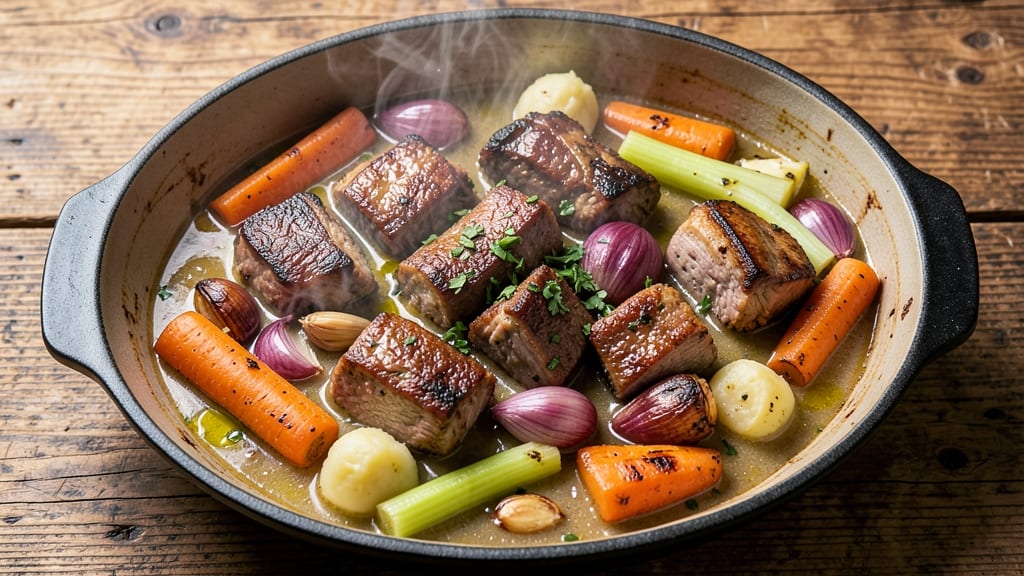
This beef and pork stew recipe delivers restaurant-quality depth with a technique I perfected during my apprenticeship in Charleston. The secret lies in caramelizing the meat first—building layers of flavor in the fond that transforms simple ingredients into something extraordinary.
I've cooked this version for countless family gatherings, and it never fails to impress.
What makes this recipe special is the balance of beef and pork, which creates a rich, complex broth while maintaining tender textures. The beef adds depth, while the pork contributes juiciness and fat for silky mouthfeel.
We start with proper browning—never crowd the pan—and let the vegetables develop sweetness through slow simmering. This is the kind of stew that tastes even better the next day.
The result is a hearty, aromatic dish with perfectly tender meat, caramelized vegetables, and a deeply flavorful broth that coats every bite. The technique is straightforward but requires patience—the kind that pays off with restaurant-quality results at home.
This is comfort food elevated, where every spoonful tells a story of slow-cooked perfection.
Serve with crusty bread to soak up the rich sauce or alongside roasted root vegetables for a complete meal. The leftovers reheat beautifully, making this an ideal dish for feeding a crowd or preparing ahead. Let's create this timeless classic together.
Ingredients for beef and pork stew
Sixteen ingredients masterfully balanced for restaurant-quality depth in every bite.
| Ingredient | Amount | Notes |
|---|---|---|
| Chuck Roast Beef 🥩 | 2 lb | Well-marbled, cut into 1.5-inch cubes |
| Pork Shoulder 🐖 | 2 lb | Boneless, cut into 1.5-inch cubes |
| Yellow Onions 🧅 | 2 whole | Peeled, cut into 1-inch chunks |
| Carrots 🥕 | 4 whole | Peeled, cut into 2-inch chunks |
| Celery Stalks 🌿 | 4 whole | Trimmed, cut into 1-inch pieces |
| Garlic Cloves 🧄 | 6 cloves | Peeled, smashed slightly |
| Tomato Paste 🍅 | ½ cup | High-quality, no sugar added |
| Dry Red Wine 🍷 | 1 cup | Bold Cabernet Sauvignon preferred |
| Beef Stock 💧 | 4 cups | Homemade or high-quality store-bought |
| Fresh Thyme 🌿 | ¼ cup | Leaves only, stems removed |
| Fresh Rosemary 🌿 | ⅛ cup | Needles only, finely chopped |
| Bay Leaves 🌿 | 2 whole | Dried, standard size |
| All-Purpose Flour 🌾 | 2 tbsp | For thickening if needed |
| Olive Oil 🫒 | ¼ cup | Extra-virgin for browning |
| Kosher Salt 🧂 | 1 ½ tbsp | Diamond Crystal preferred |
| Freshly Ground Black Pepper 🌶️ | 1 tsp | Coarsely ground |
The beef and pork selection is critical. Chuck roast provides the deep, meaty texture that holds up to slow cooking, while pork shoulder contributes rich fat for silky mouthfeel. Both should be well-marbled—visible fat ensures tenderness. For the best quality, source these from local butchers or the meat department at Whole Foods, where they're more likely to be fresh cuts. If using pre-cut meat, ensure the cubes are uniform in size (1.5 inches) for even cooking. The vegetables—onions, carrots, and celery—should be fresh and firm; Trader Joe's often carries organic versions that hold up beautifully during the long simmer.
No red wine? Beef stock with a splash of balsamic vinegar replicates the depth without alcohol. Fresh herbs are ideal, but dried thyme and rosemary at one-third the amount work in a pinch. The tomato paste can be substituted with crushed tomatoes (1 cup), though it may dilute the richness slightly. For the flour, all-purpose works fine, but if you have cornstarch, use half the amount for a clearer broth. The olive oil should be extra-virgin—it's the base for building the fond, so don't skimp. If you're short on time, pre-minced garlic from a jar is acceptable, though fresh is always superior.
This stew develops even better the next day, so make a double batch if you're feeding a crowd. Store in an airtight container in the fridge for up to 5 days, or freeze for 3 months in portions. For reheating, simmer gently on the stove—never microwave—to preserve the texture. The fond at the bottom of the pot is pure flavor gold; deglaze with a splash of stock and stir it back in before serving. Leftovers reheat beautifully, making this the perfect make-ahead dish for gatherings.
Why You'll Love This Recipe
- One-Pot Magic: I swear by this recipe when I’m too tired to wash extra bowls. Chuck roast and pork shoulder practically melt into rich, tender perfection right in the same pot—no transfers, no stress.
- Deep, Savory Bomb: The combo of beef and pork? Chef’s kiss. The onions caramelize into sweetness while the celery adds that bright, herbal punch—every spoonful feels like a hug in stew form.
- Leftovers That Win: Between us, this stew only gets better after day two. I make a double batch on Sundays because reheating a portion for lunch is my favorite kind of shortcut—no sad desk salads here.
- Budget Feast: Honestly, this is how I feed my family for under $15. Chuck roast and pork shoulder stretch into endless bowls, and the veggies (onions, carrots, celery) are the kind of cheap staples that never go to waste.
Step-by-step instructions for beef and pork stew
Master this dual-protein technique for rich, layered flavor through precise browning and slow development.
Develop the Caramelized Fond
Heat the 0.25 cup olive oil in a heavy Dutch oven over medium-high heat until shimmering. Add the 2 lb chuck roast beef and 2 lb pork shoulder in batches, working in 30-second intervals to avoid crowding. Press each piece firmly with a metal spatula for 10 seconds to create maximum surface contact.
Cook undisturbed until deeply browned on all sides—8-10 minutes total. The meat should release easily from the bottom when ready. Transfer the browned meat to a plate and set aside. This initial sear builds the flavor foundation through the Maillard reaction.
In the same pot, add the 2 whole yellow onions, 4 whole carrots, and 4 whole celery stalks. Cook for 5 minutes until softened and beginning to caramelize. Add the 6 cloves garlic cloves and cook for 30 seconds until fragrant. This vegetable mixture will form the aromatic base of your stew.
Build the Flavor Base
Reduce heat to medium and stir in the 0.5 cup tomato paste, spreading it evenly over the bottom of the pot to create a rich, glossy layer. Cook for 2 minutes until it darkens slightly and releases its concentrated flavor.
Deglaze immediately with the 1 cup dry red wine, scraping up all the browned bits from the bottom with a wooden spoon. This step captures the caramelized fond that will deepen your stew's complexity. Let the wine reduce by half—3-4 minutes—until it coats the back of a spoon.
Add the 4 cups beef stock, 1.5 tbsp kosher salt, and 1 tsp freshly ground black pepper. Bring to a gentle simmer, then return the meat to the pot. Stir in the 0.25 cup fresh thyme, 0.125 cup fresh rosemary, and 2 whole bay leaves. The herbs should float just below the surface of the liquid.
Slow Cook to Tender Perfection
Cover the pot and transfer to a 325°F oven. Cook for 2.5 hours, stirring once halfway through, until the meat is fork-tender and pulls away from the bone easily. The liquid should reduce to a thick, velvety consistency that coats the back of a spoon.
If you prefer a thicker sauce, mix the 2 tbsp all-purpose flour with 1 tablespoon cold water to create a slurry. Stir this into the stew during the final 30 minutes of cooking. The flour will gently thicken the sauce without making it pasty.
Here's the thing—don't rush this step. The slow cooking breaks down connective tissue, transforming tough cuts into melt-in-your-mouth morsels. You'll know it's done when the meat shreds easily with two forks and the sauce has developed a rich, caramelized depth.
Final Adjustments and Serving
Remove the stew from the oven and let it rest for 15 minutes to allow flavors to meld. Skim off any excess fat that has risen to the surface with a spoon—this prevents the stew from becoming greasy when reheated.
Taste and adjust seasoning if needed. The stew should be richly seasoned but balanced, with the acidity from the wine cutting through the meaty flavors. Serve immediately with crusty bread or over buttered egg noodles to soak up every last drop of that velvety sauce.
This stew rewards patience with its complex interplay of textures and flavors. The beef provides deep, beefy richness, while the pork adds tender, slightly gamey notes. The caramelized vegetables contribute natural sweetness, and the herbs infuse subtle earthy complexity. Each bite should deliver a perfect balance of all these elements.
Pro Tips For Making Beef And Pork Stew
- SEAR THE MEAT FIRST: Chuck roast and pork shoulder need that deep, caramelized crust to build flavor—don’t skip the high-heat sear. Work in batches if needed, but get both cuts golden brown before adding liquid, or you’ll end up with bland, gray meat swimming in broth.
- CUT ONIONS IN HALVES: Whole yellow onions hold their shape better than chopped pieces and sweeten as they cook. Halve them lengthwise (peel first) so they caramelize without turning to mush—your stew’s base will taste richer without extra prep.
- DON’T CROWD THE POT: I learned this the hard way—packing too much meat and veggies into the pot steams instead of braises. Leave at least 1 inch of space between ingredients so heat circulates, or your stew will taste watery even after hours of cooking.
- ADD VEGETABLES IN STAGES: Toss carrots and celery in early, but hold back half the onions until the last 30 minutes. This keeps their texture crisp and prevents them from dissolving into the sauce—your stew will have layers of flavor and bite, not a mushy purée.
Wine and beer pairings for this recipe
Red Wine Pairings
For this hearty beef and pork stew, I always reach for a bold Cabernet Sauvignon—it mirrors the dish's rich, meaty depth while its tannins cut through the fat beautifully. A 2018 Napa Valley Cabernet from Caymus Vineyards has been my go-to, but any medium-bodied red with 14-15% ABV works.
The wine's dark fruit notes complement the caramelized fond, while its acidity balances the stew's richness. 🍷
Malbec for Robust Flavor
If you prefer something slightly fruitier, a Argentinian Malbec like Catena Zapata brings forward the stew's herbal notes with its blackberry and plum flavors. The wine's velvety texture pairs perfectly with the pork's tenderness.
I've also enjoyed a Syrah from the Rhône Valley—its peppery finish enhances the rosemary in the dish. Both wines stand up to the stew's bold flavors without overpowering them.
Beer Pairings
For beer lovers, a dark amber ale with 4-5% ABV is ideal. I recommend Samuel Adams Boston Lager or Guinness Foreign Extra Stout—their malty sweetness complements the caramelized onions and beef.
A Belgian Dubbel like Westmalle Trappist also works, with its caramel and raisin notes echoing the stew's depth. Avoid hoppy IPAs, as they can clash with the dish's richness.
Light White Wine
If you're serving this stew in summer or prefer white wine, a dry Viognier or Chardonnay with light oak can be surprisingly refreshing. I've enjoyed a California Viognier with its stone fruit notes, which contrast nicely with the beef's savory depth.
Just be sure to serve it slightly chilled (50-55°F) to enhance its crispness. 🍷
Non-Alcoholic Options
For those avoiding alcohol, a sparkling apple cider like Martinelli's adds effervescence that cleanses the palate. Alternatively, a ginger beer with 1-2% alcohol (like BrewDog Ginger Beer) brings a spicy kick that pairs well with the stew's herbal notes. Both options keep the meal lively without alcohol's heaviness.
Nutrition facts
Frequently asked questions
Can I substitute pork shoulder with another cut?
Yes! For similar results, use pork ribs (cut into chunks) or pork butt. Both have excellent marbling and fat content. Avoid lean cuts like tenderloin—they won't provide the same juicy texture. If using ribs, remove the membrane first for better tenderness.
How do I make this stew in a slow cooker?
Brown the meat and vegetables as directed, then transfer everything to your slow cooker. Add all remaining ingredients except flour. Cook on low for 7-8 hours or high for 4-5 hours. The meat should shred easily. For thickness, stir in a slurry of 1 tbsp flour + 1 tbsp water during the last hour.
Why does my stew turn out too thin?
This usually happens from overcooking or insufficient fat in the meat. For quick fixes, mix 1 tbsp cornstarch with 2 tbsp cold water, stir into the stew, and simmer for 5 minutes. For prevention, use well-marbled cuts and avoid skimming all the fat. The fond at the bottom is flavor gold—don't deglaze it completely!
Can I prepare this stew ahead of time?
This stew tastes even better the next day. Store in an airtight container in the fridge for up to 5 days. For freezing, portion into containers and freeze for 3 months. Reheat gently on the stove—never microwave—to preserve texture. The flavors meld beautifully overnight!
What's the best way to serve this stew?
Serve with crusty sourdough bread for dipping or over buttered egg noodles. For a complete meal, add roasted root vegetables or a simple green salad with vinaigrette. The rich sauce pairs perfectly with mashed potatoes too.