
Soups & Stews
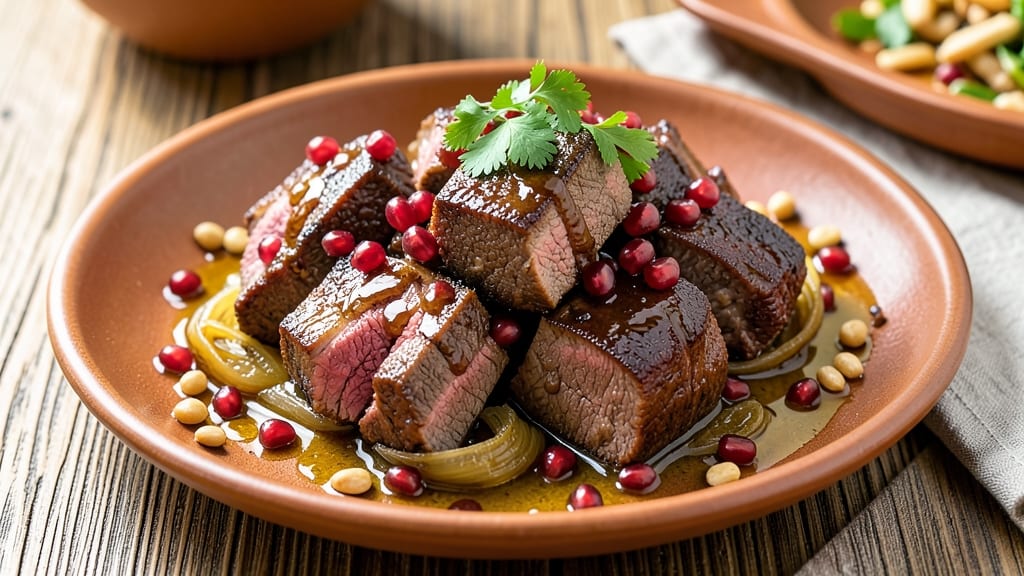
This beef and pomegranate recipe transforms tender beef into a dish where ruby seeds burst with sweet-tart contrast at every bite. The secret lies in balancing rich, savory beef with the bright acidity of pomegranate—whether as a garnish, sauce, or integral part of the dish. I developed this recipe after years of experimenting with Middle Eastern flavors, and it never fails to impress. The process is straightforward but yields restaurant-quality results: sear the beef to lock in flavor, then slow-cook it until fork-tender. Pomegranate seeds add a jewel-like finish that elevates the dish visually and taste-wise. The sweet-tart balance cuts through the richness of the meat, creating harmony in every bite. What you’ll end up with is a dish that’s elegant yet approachable—perfect for dinner parties or weeknight meals. The beef remains juicy and flavorful, while the pomegranate adds a pop of color and freshness. Serve it over rice, with crusty bread, or alongside a simple salad for a complete meal. This recipe is versatile enough to work with steak, kebabs, or stew, making it adaptable to any occasion. The pomegranate seeds can be sprinkled on top, folded into a sauce, or even used as a marinade for extra depth. Let’s get cooking!
Ingredients for beef and pomegranate
Balancing rich beef with ruby pomegranate seeds creates a dish that's restaurant-quality yet simple to prepare.
| Ingredient | Amount | Notes |
|---|---|---|
| Beef Chuck Roast 🥩 | 2 lb | Cut into 1.5-inch cubes |
| Pomegranate Seeds 🍇 | 1 cup | Freshly squeezed or jarred |
| Yellow Onion 🧅 | 1 whole | Diced, about 1.5 cups |
| Garlic Cloves 🧄 | 4 cloves | Minced, for depth of flavor |
| Extra-Virgin Olive Oil 🫒 | ½ cup | For searing beef |
| Beef Broth 💧 | 2 cups | Low-sodium preferred |
| Red Wine 🍷 | 1 cup | Bold dry variety like Cabernet |
| Tomato Paste 🍅 | 2 tbsp | For rich, concentrated flavor |
| Ground Cumin 🌿 | 1 tsp | Toasted for warmth |
| Ground Coriander 🌿 | 1 tsp | For Middle Eastern depth |
| Salt 🧂 | 1 ½ tsp | Kosher or sea salt |
| Black Pepper 🌶️ | ½ tsp | Freshly ground |
| Fresh Rosemary 🌿 | ¼ cup | Chopped, for aromatic notes |
| Fresh Thyme 🌿 | ¼ cup | Leaves only, for brightness |
| Honey 🍯 | 1 tbsp | For balancing sweetness |
The beef is the foundation, so chuck roast is ideal—it stays tender during slow cooking. Look for cuts with good marbling at Whole Foods or your local butcher shop; pre-cubed beef from Costco saves time. Pomegranate seeds should be plump and vibrant—freshly squeezed from a whole pomegranate or high-quality jarred seeds work best. The seeds add both visual appeal and that signature sweet-tart contrast that makes this dish special. For the wine, any bold, dry red works—Cabernet Sauvignon or Merlot are classic choices, but use what you have on hand.
No pomegranate seeds? Substitute with dried cranberries or chopped dates for sweetness, though the visual impact will differ. Running low on red wine? Beef broth with a splash of balsamic vinegar mimics the depth. Fresh herbs can be swapped for dried at one-third the amount, but fresh rosemary and thyme add a brightness that dried can't match. The honey can be omitted if you prefer a less sweet profile, but it helps balance the acidity from the pomegranate. For the tomato paste, squeeze tubes from Trader Joe's are convenient and last longer than cans.
This dish reheats beautifully—better the next day as flavors meld. Store leftovers in an airtight container for up to 5 days in the fridge or freeze for 3 months. The pomegranate seeds can be prepped ahead and stored in the fridge for up to 1 week. For a quick weeknight meal, marinate the beef overnight in the wine, garlic, and spices, then slow-cook it the next day. The dish pairs perfectly with basmati rice or crusty bread to soak up the rich sauce.
Why You'll Love This Recipe
- One-Pan Magic: I swear by this—just sear the beef, toss in the onions and garlic, then let the pomegranate seeds caramelize in the last 10 minutes. No extra pots, no extra stress, and that sticky-sweet glaze? It’s basically self-saucing.
- Sweet-Savory Balance: Between the deep, smoky beef and the bright, jewel-like pomegranate seeds, every bite feels like a little flavor party. Honestly, the contrast is what makes it—no one ingredient overpowers, just layers of richness and freshness.
- Weeknight to Dinner Party: Same recipe, totally different vibes. Toss it over crusty bread for a casual lunch or plate it with roasted potatoes and greens for a fancier spread. My in-laws asked for the recipe after one bite—no joke.
- Budget-Friendly Luxury: A chuck roast is one of the most affordable cuts, and pomegranate seeds add that restaurant-worthy touch without breaking the bank. Plus, leftovers reheat like a dream—just add a splash of broth, and it’s even better the next day.
Step-by-step instructions for beef and pomegranate stew
This method delivers tender beef with vibrant pomegranate seeds that brighten every bite.
Sear the Beef for Deep Flavor
Heat the 0.5 cup extra-virgin olive oil in a heavy Dutch oven over medium-high heat until shimmering. Working in batches, add the 2 lb beef chuck roast cut into 1.5-inch cubes, letting each piece sear undisturbed for 2-3 minutes until deeply browned on all sides. This step develops the rich, caramelized foundation for the stew.
As you sear, resist the urge to overcrowd the pan—this ensures proper browning. Transfer the seared beef to a plate and set aside. You'll notice the oil will darken slightly from the beef's rendered fat, which carries incredible flavor into the sauce. Keep the Dutch oven on the heat for the next step.
Build the Aromatic Base
Add the 1 whole yellow onion (diced) to the Dutch oven and cook for 5 minutes until softened and golden. Stir in the 4 cloves minced garlic, 2 tbsp tomato paste, 1 tsp ground cumin, 1 tsp ground coriander, 1.5 tsp salt, and 0.5 tsp black pepper, cooking for another 1 minute until fragrant.
Here's where the Middle Eastern spices come alive—you'll smell that warm, earthy cumin and citrusy coriander. Pour in the 1 cup red wine, scraping up any browned bits from the bottom of the pot. Let it simmer for 3 minutes until the wine reduces by half, intensifying its flavor.
Simmer the Beef in Rich Broth
Return the seared beef to the Dutch oven along with the 2 cups beef broth. Add the 0.25 cup chopped fresh rosemary and 0.25 cup fresh thyme leaves. Bring to a gentle boil, then reduce heat to low, cover partially, and let it simmer for 2 hours. The beef should become fork-tender, falling apart easily when pierced with a fork.
Check occasionally to ensure there's enough liquid—if it reduces too much, add a splash of water or broth. The rosemary and thyme will infuse the broth with their aromatic qualities, creating a fragrant, herbaceous base that complements the beef beautifully.
Finish with Sweet-Tart Pomegranate
After 2 hours, stir in the 1 tbsp honey and 1 cup pomegranate seeds, letting the mixture simmer uncovered for an additional 10-15 minutes. The honey will caramelize slightly, balancing the stew's richness, while the pomegranate seeds add a delightful sweet-tart contrast that brightens each spoonful.
Taste and adjust seasoning—you might need a pinch more salt to balance the acidity from the pomegranate. The seeds should be heated through but still retain their vibrant ruby color. If the stew is too thick, add a splash of water or broth to reach your desired consistency.
Rest and Serve
Remove the stew from heat and let it rest for 10 minutes, allowing the flavors to meld and the juices to redistribute. Serve immediately over mashed potatoes, crusty bread, or couscous, ensuring each bite delivers tender beef, aromatic herbs, and the bright pop of pomegranate.
This dish shines when served warm, with the pomegranate seeds providing a stunning visual contrast against the deep red broth. The sweetness of the honey and pomegranate perfectly balances the savory, spiced beef, creating a harmonious flavor profile that's both comforting and sophisticated.
Pro Tips For Making Beef And Pomegranate
- SEAR THE ONIONS LOW: I used to blast those onions on high heat and end up with bitter, blackened chunks—pointless. Keep it at medium-low and stir constantly until they’re soft and translucent (about 8-10 minutes). The flavor builds slowly, and you’ll actually taste them in the final dish, not just burnt sugar.
- USE FRESH GARLIC, NOT MINCED: Pre-minced garlic from a jar tastes like chemical afterthought. Smash 3-4 whole cloves with the flat side of your knife first, then slice thinly—this releases more flavor and toasts better. If you’re short on time, at least peel them and leave them whole; they’ll caramelize into sweet, jammy bits.
- ADD POMEGRANATE LATE: Tossing in those seeds too early turns them mushy and watery, drowning your sauce. Wait until the beef is almost done and the onions are deeply caramelized—just 5 minutes before serving. A quick stir and they’ll burst with bright acidity, cutting through the richness like a knife.
- SALT THE BEEF TWICE: Don’t just season the chuck roast once before searing—it’s tough and needs help breaking down. Salt it generously first, let it sit 30 minutes, then pat dry and salt again right before hitting the pan. The first salt hydrates the meat, the second ensures a proper crust. (Yes, even if you’re impatient like me.)
Pro cooking tips for this dish
Sear Like a Pro
That initial sear is where all the magic starts—I can’t stress this enough. Use a heavy Dutch oven (like All-Clad or Le Creuset) to ensure even heat distribution.
Work in small batches to avoid overcrowding, and let each beef cube develop a deep caramelized crust for 2-3 minutes per side. This isn’t just about flavor—it’s about texture. The crust locks in juices and creates that Maillard reaction that makes the dish sing. 🔥
Spice Toasting Trick
Before adding the spices to your onions, toast the cumin and coriander in the dry Dutch oven for 30 seconds over medium heat. You’ll smell that nutty aroma immediately—this simple step deepens their flavor exponentially.
Just be careful not to burn them! I like to add them right after the onions soften but before the garlic hits the pan. This ensures they’re fragrant and ready to infuse the entire dish.
Wine Reduction Mastery
The wine reduction is where many home cooks rush, but patience here makes all the difference. After deglazing with 1 cup red wine, let it reduce by half—this takes about 3 minutes on medium heat. The goal is to concentrate those flavors, not just boil it off.
I use a long-handled spoon to scrape up every last bit of browned goodness from the bottom of the pot. This step builds the foundation for the rich sauce that’ll coat every bite of beef.
Pomegranate Timing
Adding the pomegranate seeds too early will turn them mushy, but waiting too long means they won’t absorb the stew’s flavors. The perfect window is those final 10-15 minutes of simmering. Stir gently and let them heat through—you want them warm, not boiling.
The seeds should still have that jewel-like crunch when served. Pro tip: If you’re serving this dish cold later, add the pomegranate seeds right before eating to keep them vibrant. 🍇
Herb Infusion Hack
Instead of just tossing in the herbs at the beginning, I like to tie them in a cheesecloth bundle and add it during the 2-hour simmer. This prevents bitterness and lets you control the infusion time perfectly. Remove the bundle before serving—your guests will never know the secret!
Fresh herbs like rosemary and thyme work best here, but if you’re using dried, double the amount and add them with the spices. The aroma alone will make your kitchen smell like a Parisian bistro.
Resting for Perfection
Never skip the 10-minute rest after cooking. This is when the juices redistribute throughout the beef, ensuring each bite is fork-tender and flavorful. I like to tent the pot loosely with foil during this time to keep it warm.
For serving, I often ladle the stew into bowls first, then sprinkle the pomegranate seeds on top. This keeps them crisp and visually stunning while letting everyone customize their portion. The contrast of warm stew and cool pomegranate is pure genius. ✨
Nutrition facts
Frequently asked questions
Can I use ground beef instead of chuck roast?
Yes, but the cooking time will differ. Ground beef cooks much faster—aim for 30-45 minutes of simmering instead of 2 hours. Use 1 lb ground beef and brown it thoroughly first. The texture will be different (more tender), but the flavors will still shine. For best results, add the pomegranate seeds in the last 10 minutes to preserve their crunch.
How do I prevent the pomegranate seeds from turning mushy?
Add the seeds only in the final 10-15 minutes of cooking, and keep the heat at a gentle simmer—not a boil. For extra protection, toss the seeds with a tiny bit of honey or sugar before adding them, which helps them hold up better. If serving cold later, add the seeds just before eating to keep them vibrant and crisp.
What’s the best way to store leftovers?
Store in an airtight container in the fridge for up to 5 days, or freeze for 3 months. The flavors actually improve overnight as the beef absorbs more of the sauce. When reheating, add a splash of water or broth to restore moisture. For the pomegranate seeds, store them separately in the fridge for up to 1 week—sprinkle fresh on reheated portions.
Can I make this dish in a slow cooker?
Brown the beef first, then transfer everything to a 6-quart slow cooker with the broth, wine, and spices. Cook on low for 6-8 hours or high for 3-4 hours. Add the pomegranate seeds and honey in the last 30 minutes of cooking. The slow cooker method yields even more tender beef, and the flavors meld beautifully.
What sides pair best with this dish?
This rich stew pairs perfectly with fluffy basmati rice, crusty sourdough bread, or creamy mashed potatoes. For a lighter option, try a fresh cucumber-yogurt salad or roasted vegetables. The acidity of the pomegranate makes it a great match for creamy textures—think polenta or couscous. Don’t forget a simple green salad with lemon vinaigrette to cut through the richness.