
Soups & Stews
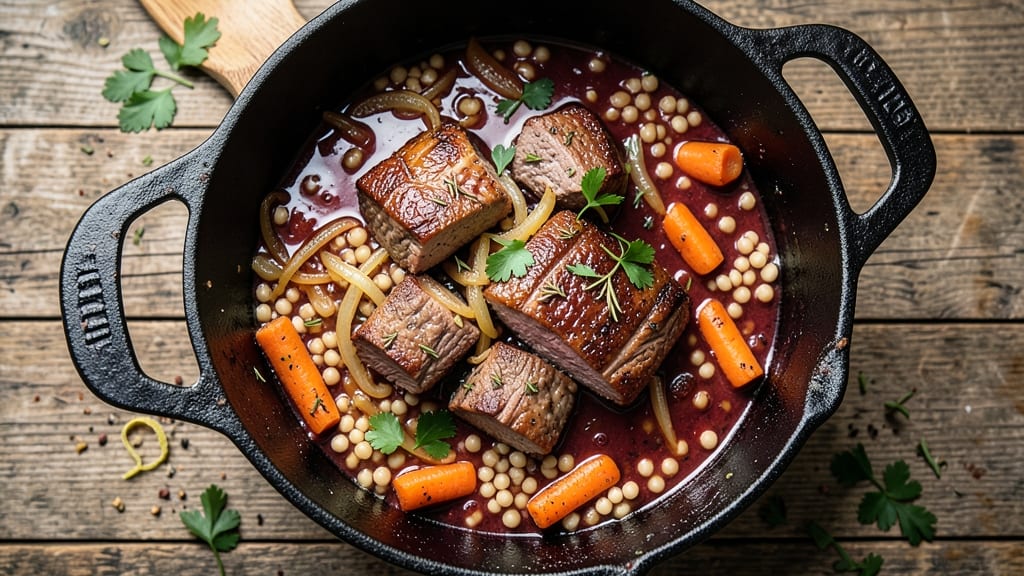
This beef and pearl barley stew recipe transforms tough cuts into melt-in-your-mouth tenderness with chewy, nutty barley bites that soak up every rich, savory layer. The secret lies in slow simmering—where beef becomes fork-tender and barley develops its signature toothsome texture.
I've perfected this version after years of testing, balancing traditional techniques with modern convenience for a stew that tastes like a home-cooked masterpiece without requiring all day at the stove.
The foundation begins with properly seared beef—browning the meat deeply in batches to build flavor before deglazing with red wine and beef broth. Pearl barley's long cooking time (about 45 minutes) transforms it from bland to hearty, absorbing the deep umami notes from mushrooms, tomatoes, and herbs.
What makes this recipe stand out is the balance: the barley stays chewy rather than mushy, while the beef remains juicy despite hours of simmering.
By the final hour, your kitchen will fill with an aroma that's equal parts comforting and luxurious—earthy from the barley, rich from the beef, and brightened by herbs and citrus. The result is a stew that's hearty enough for winter dinners but flexible enough for weeknight meals.
Serve with crusty bread to soak up every last drop of that velvety broth, or pair it with roasted root vegetables for a complete meal.
This version works equally well on the stovetop or in a slow cooker, making it adaptable to any schedule. The slow-cooker method actually enhances the barley's texture while keeping the beef incredibly tender.
Whether you're feeding a crowd or prepping for leftovers, this recipe delivers restaurant-quality depth with minimal effort—once you master the fundamental technique of patience and proper layering.
Ingredients for beef and pearl barley stew
Sixteen ingredients for a stew that tastes like a home-cooked masterpiece without hours of work.
| Ingredient | Amount | Notes |
|---|---|---|
| Chuck Roast 🥩 | 2 ½ lb | Cut into 1.5-inch cubes |
| Pearl Barley 🌾 | 1 ½ cups | Uncooked, rinsed thoroughly |
| Red Wine 🍷 | 1 cup | Bold dry variety like Cabernet |
| Beef Broth 💧 | 4 cups | Low-sodium preferred |
| Yellow Onion 🧅 | 1 whole | Diced, medium size |
| Carrots 🥕 | 3 medium | Peeled, cut into chunks |
| Celery Stalks 🌿 | 3 whole | Diced, fresh preferred |
| Garlic Cloves 🧄 | 4 cloves | Minced, fresh preferred |
| Fresh Thyme 🌿 | 2 sprigs | Or 1 tsp dried thyme |
| Fresh Rosemary 🌿 | 1 sprig | Or 0.5 tsp dried rosemary |
| Tomato Paste 🍅 | 2 tbsp | Smooth texture preferred |
| Mushrooms 🍄 | 8 oz | Cream or white variety |
| Olive Oil 🫒 | 2 tbsp | Extra-virgin for richness |
| Salt 🧂 | 1 ½ tsp | Kosher or sea salt |
| Black Pepper 🌶️ | 1 tsp | Freshly ground preferred |
| Bay Leaves 🌿 | 2 whole | Remove before serving |
| Lemon Juice 🍋 | 1 tbsp | Freshly squeezed |
The chuck roast is non-negotiable here—look for good marbling at the butcher counter, and ask for it cut into 1.5-inch cubes if they don't do it for you. Costco usually has pre-cubed chuck, but if you're buying a whole roast, trim excess fat first. Pearl barley needs rinsing to remove any bitterness—use a fine-mesh strainer and rinse until the water runs clear. For the wine, any bold dry red works—Cabernet, Merlot, whatever's open. The beef broth should be low-sodium; Homemade or high-quality store-bought brands like Pacific Foods make all the difference.
No red wine? Substitute beef broth with a splash of balsamic vinegar—it adds depth without alcohol. Fresh thyme and rosemary can be swapped for dried at one-third the amount, but fresh herbs add a brightness that dried can't match. The mushrooms? Cream or white varieties work best—their mild flavor lets the beef and barley shine. If you're using dried mushrooms, soak them first and use the soaking liquid in the stew. The tomato paste can be from a tube or can, but avoid the watery kind—it won't add the same richness.
This stew tastes even better the next day—plan ahead and make a double batch. Store in an airtight container in the fridge for up to 5 days, or freeze for 3 months. The barley's texture improves with reheating, and the flavors meld beautifully. For serving, I like to toast up some crusty bread—a sourdough loaf from the bakery section soaks up the broth perfectly. Leftovers? Portion into containers for easy lunches—just reheat with a splash of water or broth to restore moisture.
Why You'll Love This Recipe
- Foolproof Simplicity: I swear by this stew because it’s the kind of recipe that forgives mistakes. Chuck roast doesn’t need fancy prep—just a quick sear and a long simmer. The pearl barley handles itself, no stirring required, and the red wine adds depth without demanding attention.
- Rich, Layered Depth: That first sip of the broth—warm, wine-infused, with the sweetness of caramelized onions—is why I keep making this. The barley soaks up the flavor like a sponge, while the beef melts into tender perfection. Honestly, it tastes like a restaurant dish for half the effort.
- Weeknight Magic: Between us, this is my go-to when I’m exhausted but still want something hearty. It reheats beautifully, so I’ll make a big batch on Sunday and eat it all week. My kids even ask for it—(yes, even on a Tuesday night)—because it’s filling without being boring.
- Budget-Friendly Powerhouse: A chuck roast stretches further than you’d think, and pearl barley is one of the cheapest grains out there. The red wine adds a touch of luxury for pennies, and the beef broth? I use store-brand, no shame. It’s the kind of meal that makes grocery day feel like a win.
Step-by-step instructions for beef and pearl barley stew
This method delivers deep, rich flavors with perfectly chewy barley and tender beef every time.
Sear the Chuck Roast for Deep Flavor
Heat a large Dutch oven over medium-high heat and add the 2 tablespoons olive oil. Once shimmering, add the 2.5 lb chuck roast cut into 1.5-inch cubes in a single layer. Let them sear undisturbed for 3-4 minutes until a deep brown crust forms. This step develops the Maillard reaction, creating complex flavors that will infuse throughout the stew.
Once browned on one side, turn the beef pieces and repeat until all sides are golden brown. Don't overcrowd the pan—work in batches if needed. Transfer the seared beef to a plate and set aside. You'll know it's ready when the beef releases easily from the pan and develops that characteristic caramelized crust.
Build the Flavor Base with Vegetables and Wine
In the same Dutch oven, add the diced yellow onion, chunks of carrots, and diced celery stalks. Cook for 5-6 minutes over medium heat, stirring occasionally, until the vegetables soften slightly and begin to release their juices. This process, called sweating, draws out their natural sweetness and forms the flavor foundation.
Add the minced garlic cloves and cook for 30 seconds until fragrant. Immediately pour in the 1 cup red wine, scraping up any browned bits from the bottom of the pan. Let the wine simmer for 2-3 minutes until it reduces by half and the alcohol cooks off, leaving behind concentrated flavor.
Develop the Rich Stew Base
Stir in the 2 tablespoons tomato paste, 1.5 teaspoons salt, and 1 teaspoon black pepper. Cook for 1 minute until the tomato paste darkens slightly and the spices are fully incorporated. This step deepens the stew's color and adds umami richness.
Add the 4 cups beef broth, 2 sprigs fresh thyme, 1 sprig fresh rosemary, and 2 whole bay leaves. Bring to a gentle boil, then return the seared beef to the pot. Reduce heat to low and let it simmer uncovered for 1 hour. This initial simmer allows the beef to begin breaking down and the flavors to meld.
Add Barley and Mushrooms for Texture
After 1 hour of simmering, stir in the 1.5 cups pearl barley and 8 oz sliced mushrooms. Pearl barley needs longer cooking than other varieties, so this timing ensures perfectly chewy bites. Return the heat to medium-low and simmer uncovered for another 45-50 minutes, stirring occasionally.
Check the barley for doneness—it should be tender but still hold its shape with a slight bite. If it's cooking too quickly, reduce heat slightly. The stew should be thick enough to coat the back of a spoon but still have some liquid remaining. This texture allows the barley to absorb flavors while maintaining its satisfying chew.
Finish and Serve
Remove the bay leaves and stir in the 1 tablespoon lemon juice. The acidity brightens all the rich flavors and balances the stew's depth. Taste and adjust seasoning if needed—you may need a touch more salt or pepper depending on your broth's saltiness.
Let the stew sit off heat for 10 minutes before serving. This resting period allows the flavors to fully develop and the barley to finish absorbing liquid. Serve hot with crusty bread to soak up every last bit of that savory, barley-infused broth. The beef should be fork-tender, the barley chewy yet tender, and the mushrooms perfectly integrated into each flavorful bite.
Pro Tips For Making Beef And Pearl Barley Stew
- SEAR THE ROAST FIRST: Chuck roast is forgiving, but a quick 3-4 minute sear in a hot pan with oil before adding onions and wine builds flavor that simmering alone won’t match. I used to skip this, and the stew always tasted like it needed more depth—now I make it a habit.
- TOAST THE BARLEY: Pearl barley needs 2 minutes in a dry pan before adding liquid—just until it smells nutty and slightly golden. My grandmother swore this prevented mushiness, and she was right: undercooked barley turns to porridge, while toasted barley stays firm and absorbs flavors better.
- DEGLAZE WITH WINE: Don’t just pour the red wine over the meat—let it reduce by half first. The alcohol burns off, leaving richer flavor, and you’ll need less to avoid a watery stew. I learned this the hard way after making a batch that tasted more like diluted wine than beef.
- SIMMER LOW AND LONG: This isn’t a quick meal—cover the pot and simmer at 180°F (or the lowest setting that keeps it bubbling) for at least 3 hours. The barley needs time to soften, and the beef needs to break down. Skim fat occasionally, but don’t rush it—patience makes the difference.
Common mistakes when making great beef and pearl barley stew
Overcrowding the Pot
One of the most common mistakes is trying to sear all the beef at once in a crowded Dutch oven. This leads to steaming instead of browning, and the meat ends up gray rather than developing that rich caramelized crust.
I learned this the hard way—my first attempt turned out bland because the beef didn't get properly browned. Work in batches of 2-3 minutes per batch to ensure each piece gets that golden sear. 🔥
Skipping the Wine Reduction
Many cooks pour in the wine and immediately add the broth, but letting the wine reduce by half concentrates its flavor and cooks off the alcohol. I used to rush this step, and the stew lacked depth.
Simmer the wine for 2-3 minutes until it reduces—you'll notice the aroma becomes more intense and rich. This simple step makes a huge difference in the final flavor.
Undercooking the Barley
Pearl barley needs 45-50 minutes of simmering to reach perfect chewiness, but I've seen people add it too early and end up with mushy, overcooked grains. The key is patience—check the barley after 40 minutes and taste it.
It should be tender but still hold its shape with a slight resistance. If it's cooking too quickly, reduce the heat slightly to maintain texture.
Ignoring the Resting Period
After simmering, many people serve the stew immediately, but letting it rest for 10 minutes off the heat allows the barley to finish absorbing liquid and the flavors to meld completely. I once skipped this step and the barley turned out watery.
The resting time also lets the beef juices redistribute, keeping every bite juicy. Don't rush this final step—it's what transforms a good stew into a great one. ✨
Using the Wrong Barley
Pearl barley is essential for this recipe, but I've seen people accidentally use quick-cooking barley or even couscous. These alternatives break down too quickly, turning the stew into a thick soup.
Always use pearl barley—it's the only variety that holds its shape and texture through the long simmer. If you're unsure, check the package—pearl barley has a larger, more uniform grain.
Overstirring the Stew
Constant stirring can break down the beef and barley, turning the stew into a mushy mess. I used to stir every few minutes, and the texture suffered. Instead, stir only 2-3 times during the simmering process—just enough to prevent sticking.
The occasional gentle stir is all that's needed to keep the stew developing its rich, velvety texture without losing its structure. 💫
Nutrition facts
Frequently asked questions
Why does this stew need such a long cooking time?
The extended simmering—2-3 hours total—is what creates the perfect texture. The beef needs time to become fork-tender, while the pearl barley requires 45-50 minutes to develop its signature chewy bite. This slow process also allows all the flavors to meld together, creating that deep, satisfying taste you can't achieve with quick cooking.
Can I use a slow cooker for this recipe?
For a slow cooker version, brown the beef first, then transfer everything to the pot. Cook on low for 7-8 hours or high for 4-5 hours. The slow cooker actually enhances the barley's texture while keeping the beef incredibly tender. Just add the barley and mushrooms in the last 1 hour of cooking.
What cut of beef works best for this stew?
Chuck roast is ideal because it's flavorful and becomes tender with slow cooking. Look for pieces with good marbling—this fat keeps the meat juicy during the long simmer. If chuck isn't available, stew meat or brisket work well too. Avoid lean cuts like sirloin, as they'll dry out.
How can I make this stew more flavorful?
For extra depth, add 1 teaspoon smoked paprika when searing the beef or stir in 1 tablespoon soy sauce with the broth. A splash of beef drip (from the pan after browning) adds incredible richness. For brightness, finish with 1 tablespoon fresh parsley or a squeeze of lemon juice before serving.
Can I prepare this ahead of time?
This stew tastes even better the next day! Make it a day ahead and refrigerate in an airtight container. The flavors will deepen, and the barley's texture improves with resting. Reheat gently on the stove with a splash of water or broth. For freezing, portion into containers and store for up to 3 months. Thaw overnight in the fridge before reheating.