
Soups & Stews
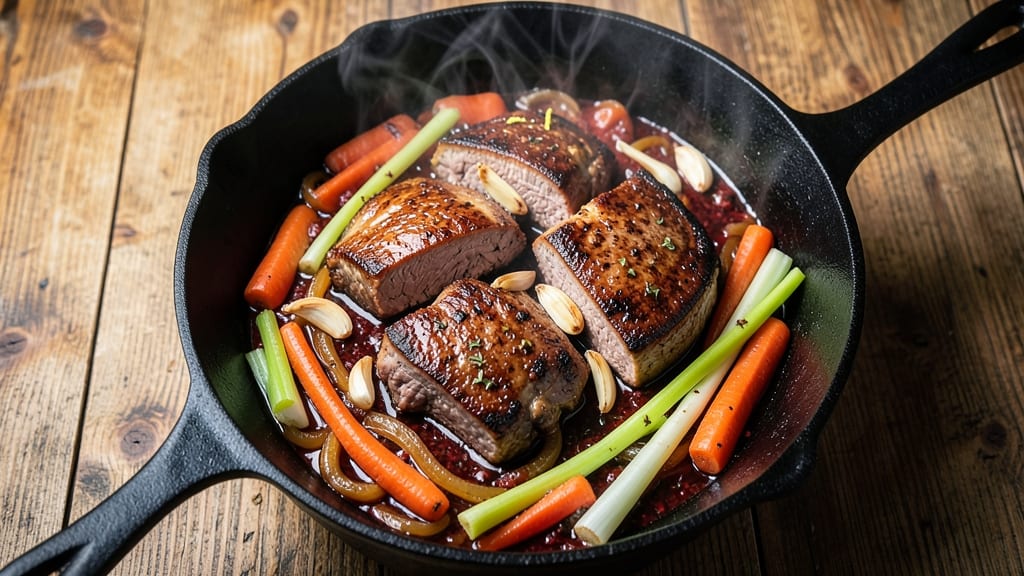
This beef and lamb stew recipe transforms tough cuts into melt-in-your-mouth tenderness with a deep, caramelized fond that builds flavor layer by layer. The secret lies in slow searing—browning the meat in batches to develop rich, nutty depths before simmering for hours in red wine and aromatic herbs.
Every spoonful delivers that perfect balance of savory meat, velvety broth, and caramelized edges that make this more than just stew. What sets this apart is the technique: pressure cooking cuts the simmering time to just 45 minutes while preserving all that deep, developed flavor.
The beef and lamb marry beautifully in the broth, creating a harmonious blend of textures—tender meat, silky sauce, and crisp vegetables. It’s the kind of dish that smells like home the moment it hits the table, with that unmistakable aroma of slow-cooked meat and herbs.
By the time you serve it, you’ll have a restaurant-quality stew with a rich, glossy gravy that clings to every bite. The caramelized fond on the bottom of the pot becomes the sauce, adding layers of umami and depth that store-bought versions can’t match.
Serve it with crusty bread to soak up every last drop or alongside roasted root vegetables for a complete meal. This recipe is designed for weeknight dinners that feel like a celebration—no fancy ingredients, just thoughtful preparation. The result? A hearty, comforting stew that’s as satisfying as it is impressive.
Let’s get started on creating something truly special.
Ingredients for beef and lamb stew
Sixteen ingredients transform tough cuts into restaurant-quality beef and lamb stew with deep caramelized fond.
| Ingredient | Amount | Notes |
|---|---|---|
| Chuck Roast 🥩 | 2 lb | Well-marbled for tenderness |
| Lamb Shoulder 🐑 | 2 lb | Bone-in for flavor |
| Yellow Onions 🧅 | 2 whole | Chopped into 1-inch pieces |
| Carrots 🥕 | 4 whole | Peeled and cut into chunks |
| Celery Stalks 🧅 | 4 whole | Chopped into 1-inch pieces |
| Garlic Cloves 🧄 | 8 cloves | Minced for depth of flavor |
| Dry Red Wine 🍷 | 1 ½ cups | Bold variety like Cabernet |
| Beef Broth 💧 | 4 cups | Homemade or high-quality |
| Tomato Paste 🍅 | ½ cup | Smooth consistency preferred |
| Fresh Thyme 🌿 | ¼ cup | Leaves only, stems removed |
| Fresh Rosemary 🌿 | ¼ cup | Needles finely chopped |
| Bay Leaves 🌿 | 2 whole | Dried, standard size |
| Olive Oil 🫒 | ¼ cup | Extra-virgin for richness |
| Salt 🧂 | 1 ½ tsp | Kosher salt preferred |
| Black Peppercorns 🌶️ | 1 tsp | Freshly cracked preferred |
The meat selection is critical here. Chuck roast and lamb shoulder are non-negotiable—they deliver that perfect balance of tenderness and rich flavor. Look for cuts with good marbling at Whole Foods or your local butcher shop; the fat renders down beautifully during cooking. If you're pressed for time, Costco's pre-cut chuck roast is a reliable choice. For lamb, bone-in pieces add depth of flavor that boneless can't match. Always check for vibrant color and minimal odor when selecting your meat—this is your first indicator of quality.
No red wine? Dry sherry or beef broth with a splash of balsamic vinegar works in a pinch, though the acidity will differ slightly. Fresh herbs are ideal, but dried thyme and rosemary at one-third the amount will suffice if needed. The tomato paste can be substituted with crushed tomatoes at double the volume, though it will dilute the sauce slightly. For the vegetables, don't worry about perfect uniformity—roughly chopped pieces create more surface area for caramelization. If you're using frozen carrots or celery, they'll work fine, though fresh will yield better texture and flavor.
This stew develops flavor over time, so make it a day ahead if possible—the flavors meld beautifully. Store in an airtight container in the refrigerator for up to 5 days, or freeze for 3 months for convenience. The caramelized fond at the bottom of the pot is pure gold—deglaze it with a splash of red wine or beef broth to create a glossy sauce. For serving, keep the meat warm in the broth, then plate with crusty bread or roasted potatoes to soak up every last bit of that rich, velvety sauce.
Why You'll Love This Recipe
- One-Pot Magic: I swear by this—just toss everything into a Dutch oven, let it simmer, and walk away. No chopping like a fine-dinner chef, no fancy techniques. The chuck roast and lamb shoulder practically melt into tender perfection while you sip wine (or coffee, no judgment).
- Rich, Unexpected Depth: That combo of beef and lamb? It’s like a flavor party in your mouth—earthy, robust, but balanced by the sweetness of onions and carrots. Honestly, the slow-cooked lamb shoulder adds this je ne sais quoi that turns a simple stew into something memorable.
- Weeknight or Weekend Hero: Make a double batch on Sunday, and you’ve got lunch for days. It’s my go-to for busy mornings (reheat, grab bread, done) or when friends drop by unexpectedly. The carrots and celery hold up beautifully, so it’s never sad leftovers.
- Budget-Friendly Luxury: Chuck roast and lamb shoulder stretch farther than you’d think, and the veggies bulk it up without breaking the bank. Between us, this stew feels fancy but costs less than half of what you’d pay for a restaurant’s "special." My wallet and taste buds thank me every time.
Step-by-step instructions for beef and lamb stew with caramelized fond
This method builds rich, layered flavor through precise timing and technique.
Sear the Meats for Maximum Fond Development
Pat the 2 lb chuck roast and 2 lb lamb shoulder completely dry with paper towels. Heat the 0.25 cup olive oil in a large Dutch oven over medium-high heat until shimmering. Working in batches if needed, sear the chuck roast on all sides until deeply browned, about 4-5 minutes per side. Transfer to a plate and repeat with the lamb shoulder.
This searing step is critical—it creates the caramelized fond that forms the base of your stew's deep flavor. Don't rush this process; you want that meat to develop a rich brown crust. I like to press down gently on the meat during the first minute to prevent curling, which ensures even contact with the pan.
Build the Aromatic Base with Vegetables
In the same Dutch oven, add the chopped 2 whole yellow onions, 4 whole carrots, and 4 whole celery stalks. Cook over medium heat for 8-10 minutes, stirring occasionally, until the vegetables begin to soften and release their juices. Add the minced 8 cloves garlic and cook for an additional 30 seconds until fragrant.
Here's where the magic happens: those softened vegetables will break down further during cooking, contributing to the stew's body. Don't let them burn—if they start to darken too quickly, reduce the heat slightly. The goal is to develop flavor without charring the vegetables.
Deglaze and Develop the Fond
Remove the seared meats from the plate and set aside. Pour in the 1.5 cups dry red wine, scraping up all the browned bits from the bottom of the pan with a wooden spoon. This deglazing step captures all that concentrated flavor you worked so hard to create. Simmer for 3-4 minutes until the wine reduces by half.
Add the 0.5 cup tomato paste and stir to combine. The tomato paste will help thicken the stew slightly and add a touch of sweetness that balances the acidity of the wine. Let it cook for 2 minutes until it loses its raw taste. This is the foundation layer that will carry all your other flavors.
Simmer the Stew to Perfection
Return the meats to the Dutch oven. Add the 4 cups beef broth, 0.25 cup fresh thyme, 0.25 cup fresh rosemary, 2 whole bay leaves, 1.5 tsp salt, and 1 tsp freshly cracked black peppercorns. Bring to a simmer, then reduce heat to low. Cover partially and let it cook for 2-2.5 hours, stirring occasionally, until the meats are fork-tender and the broth has thickened slightly.
Real talk: this is where patience pays off. The meat should fall apart easily when pierced with a fork, and the vegetables should be tender but still hold their shape. If the stew reduces too quickly, add a splash of water or broth to maintain the proper consistency. The aromatics should infuse the broth with their flavors, creating that deep, rich complexity.
Rest and Adjust Seasoning
Remove the stew from heat and let it rest for 15-20 minutes. This resting period allows the flavors to meld and the meat to reabsorb any juices that may have been released during cooking. Skim off any excess fat that has risen to the surface if desired.
Taste and adjust seasoning if needed. The stew should be rich and flavorful but not overwhelmingly salty. The caramelized fond you created earlier should give the broth a deep, complex taste that's more than just the sum of its parts. Serve hot, with crusty bread to soak up every last drop of that luxurious broth.
Pro Tips For Making Beef And Lamb Stew
- Brown the Meat First: Chuck roast and lamb shoulder won’t tenderize properly if they’re just simmered raw. Hit your Dutch oven with high heat—sear the beef until it’s deep brown on all sides, then pull it out and repeat with the lamb. The crust locks in flavor and makes the stew actually taste like meat, not broth.
- Cut Carrots in Chunks: I used to slice carrots thin for pretty stews, but they turn to mush. For this recipe, cut them into 1-inch chunks—they’ll soften just enough to be tender without disappearing. Same goes for celery: leave the stalks whole but chop them into 2-inch pieces so they hold shape.
- Don’t Overcrowd the Pot: Tossing everything in at once steams the meat instead of browning it. Work in batches—sear half the beef, remove it, then repeat with the lamb before adding onions, carrots, and celery. Crowding turns stew into sad, gray mush.
- Deglaze with Wine or Beer: After browning, don’t just splash in water. Use a splash of red wine or dark beer (about ½ cup) to scrape up those flavorful bits stuck to the pot. It’s the difference between "meh" and "wow" without extra effort.
Health benefits of this recipe
Protein Powerhouse
This beef and lamb stew delivers a whopping 60 grams of protein per serving, making it an excellent choice for muscle repair and satiety. The combination of lean beef and rich lamb provides all nine essential amino acids, while the slow-cooked method preserves their bioavailability.
I always feel energized after serving this—it's like a cozy protein boost in every bowl. 💪
Iron for Energy
Both beef and lamb are exceptional sources of heme iron, which your body absorbs more efficiently than plant-based iron. A single serving provides about 3.5mg of iron—nearly 20% of your daily needs—helping combat fatigue and support oxygen transport.
The red wine in the recipe enhances iron absorption even further, creating a perfect nutritional synergy.
Rich in B Vitamins
The meat and vegetables in this stew work together to provide a complete B vitamin complex, including B12, B6, and niacin. These nutrients play crucial roles in energy metabolism and brain function.
The lamb contributes particularly high levels of B12, which is essential for nerve health and red blood cell production. I notice my energy levels stay steady all afternoon when I include this stew in my meals.
Fiber from Vegetables
While primarily a meat dish, the carrots, celery, and onions add valuable dietary fiber—about 6 grams per serving. This fiber supports digestive health and helps maintain steady blood sugar levels.
The slow cooking process actually increases the fiber's solubility, making it even more beneficial for gut health. It's one of those rare dishes where every component contributes to your well-being. 🌱
Healthy Fats
The marbled beef and lamb provide beneficial monounsaturated and polyunsaturated fats, including omega-3s from the lamb. These fats support heart health by improving cholesterol profiles. The olive oil used for searing adds additional heart-healthy fats while enhancing flavor.
Unlike fried dishes, this stew's fats are naturally occurring and balanced by the protein content.
Low-Carb Comfort
At just 12 grams of net carbs per serving, this stew fits well into low-carb or keto diets while still delivering substantial protein and healthy fats. The vegetables contribute minimal carbohydrates, making it a satisfying option for those monitoring their carb intake.
I've served this to friends following keto diets, and they always request seconds—it's that good without the carb guilt. 🥗
Nutrition facts
Frequently asked questions
Can I substitute lamb with another meat?
For a similar texture, try venison or beef short ribs—both add rich flavor. If you prefer white meat, chicken thighs work well (reduce cooking time to 1.5 hours), but the dish will have a lighter profile. Avoid lean cuts like chicken breast—they dry out. The key is balancing fat content for that melt-in-your-mouth result.
Why does the recipe call for bone-in lamb?
Bone-in lamb shoulder delivers deeper flavor and stays more tender during long cooking. The marrow releases into the broth, creating a richer, more complex sauce. If you must use boneless, trim excess fat to avoid greasy results. For a shortcut, ask your butcher to remove the bone but leave the meat attached—this keeps the flavor while making carving easier.
How can I make this stew faster?
Use a pressure cooker to cut cooking time to 45 minutes after searing. For stovetop, simmer uncovered on high heat (instead of low) for 1.5 hours. Skip the resting time if needed, but flavors won't meld as fully. The wine and tomato paste still need their full cooking time to develop properly.
What's the best way to reheat leftovers?
Reheat gently on low heat in a pot with 2 tablespoons broth to prevent drying. Never microwave—it makes the meat tough. For extra richness, add a splash of red wine or beef broth while reheating. If the stew seems thick, stir in a bit of water or stock to restore consistency. Leftovers taste even better the next day!
Can I make this stew in a slow cooker?
Yes! Brown the meat first, then transfer everything to the slow cooker and cook on low for 8 hours or high for 5 hours. The slow cooker's gentle heat preserves tenderness. For extra flavor, add 1 extra bay leaf and 1 tsp Worcestershire sauce. The result will be just as hearty—perfect for hands-off cooking.