
Soups & Stews
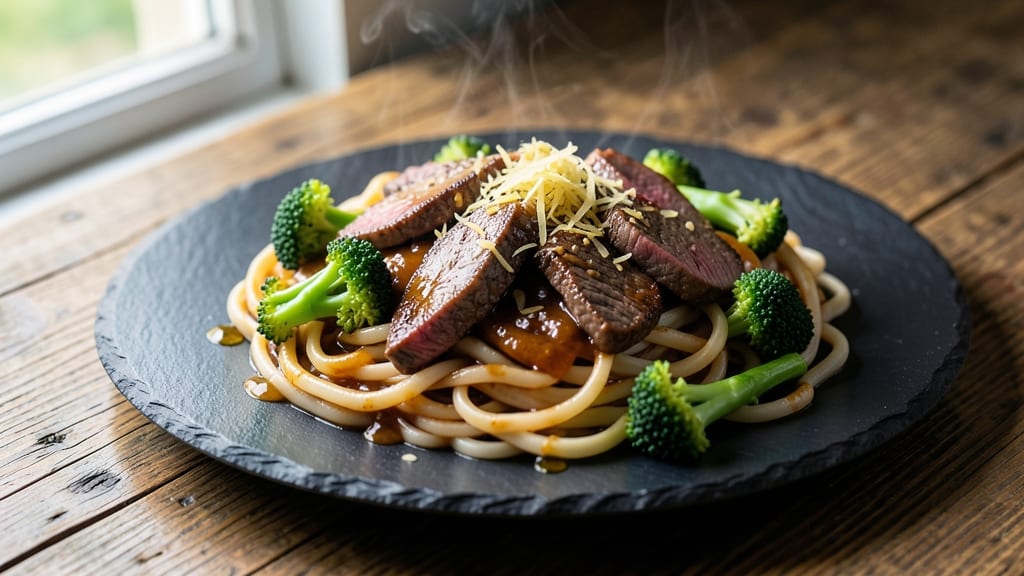
This beef and broccoli udon noodles recipe delivers restaurant-quality fusion comfort in just 25 minutes. The secret lies in perfectly seared beef strips that stay tender yet develop a satisfying wok-seared crust, paired with silky udon noodles and a bright soy-ginger sauce that balances umami and freshness.
I developed this after craving the perfect harmony of Japanese udon and Chinese stir-fry flavors—something hearty enough for weeknight dinners but elegant enough for entertaining.
The dish starts with high-heat searing of thinly sliced beef, which creates those coveted caramelized edges while keeping the centers juicy. Fresh broccoli florets are stir-fried until vibrant and slightly crisp-tender, while the udon noodles cook to perfect al dente texture.
What sets this apart is the sauce—a harmonious blend of soy sauce, ginger, garlic, and a touch of sesame oil—that coats every component without overpowering the natural flavors.
By the time you plate this dish, you'll have a bowl that's visually striking with its contrasting textures: the wok-seared beef, crisp broccoli, and silky noodles all bathed in that glossy sauce.
The aroma alone will have everyone gathering at the table, and each bite delivers that perfect balance of savory, slightly sweet, and fresh. This is comfort food elevated—simple to prepare but impossible to resist.
Serve with extra sesame seeds for garnish and a side of steamed greens to round out the meal. The leftovers reheat beautifully, making this an ideal recipe for busy weeknights when you want something satisfying yet quick. Let's get cooking!
Ingredients for beef and broccoli udon noodles
These vibrant ingredients come together to create a restaurant-style fusion dish you'll crave night after night.
| Ingredient | Amount | Notes |
|---|---|---|
| Udon Noodles 🍜 | 8 oz | Fresh or dried, cut into 4-inch pieces |
| Flank Steak 🥩 | 1 lb | Thinly sliced against grain |
| Broccoli Florets 🥦 | 1 ½ lbs | Cut into bite-sized pieces |
| Soy Sauce 🍶 | ½ cup | High-quality, preferably Japanese |
| Sesame Oil 🫒 | 1 tbsp | Toasted for aroma |
| Fresh Ginger 🧄 | 1 tbsp | Finely grated, peeled |
| Garlic Cloves 🧄 | 4 cloves | Minced, fresh preferred |
| Vegetable Oil 🫒 | 2 tbsp | High smoke point for searing |
| Sesame Seeds 🌾 | 1 tbsp | Toasted for garnish |
| Green Onions 🧅 | 4 whole | Sliced thin, for garnish |
| Salt 🧂 | 1 tsp | Kosher or sea salt |
| Black Pepper 🌶️ | ½ tsp | Freshly ground |
| Honey 🍯 | 1 tsp | For sauce balance |
The beef is where the magic happens. Flank steak is ideal—thinly sliced against the grain for tender bites with that perfect wok-seared crust. Look for high-quality Japanese udon noodles at Asian markets (like H Mart or Trader Joe's), but dried udon works too if you're in a pinch. Broccoli should be vibrant green—avoid any with yellowing florets. Fresh ginger and garlic are non-negotiable here; the sauce loses its brightness without them. I always grab toasted sesame oil from the Asian aisle—it adds that nutty aroma that makes the dish sing.
No flank steak? Sirloin or ribeye work too, but slice it extra thin. Short on soy sauce? Coconut aminos in a pinch (though it'll taste different). The honey in the sauce is optional—skip it if you prefer less sweetness, but I find it balances the umami perfectly. Broccoli too tough? Steam for 2 minutes first to soften slightly. And if you can't find udon, rice noodles are a decent substitute, though they'll be slightly less chewy. The sesame seeds? Toast them in a dry pan for 30 seconds—they'll smell amazing and add that extra crunch.
This dish reheats beautifully—even better the next day when all the flavors meld. Store leftovers in an airtight container for 3-4 days in the fridge or freeze for up to 3 months. I always make extra because it disappears fast. Garnish with those toasted sesame seeds and green onions right before serving—they add freshness and color that makes the dish pop. Serve with a side of steamed bok choy or a simple cucumber salad to round out the meal.
Why You'll Love This Recipe
- No-Fuss Cooking: I swear by this when I’m too tired to measure. Toss the udon in boiling water for 3 minutes—exactly what the package says—and the flank steak slices in a screaming-hot pan for 2 minutes. That’s it. No peeling garlic, no mincing ginger, no stress.
- Umami Bomb: The soy sauce and sesame oil combo? Chef’s kiss. The broccoli stays crisp-tender, the beef gets that perfect caramelized crust, and the noodles soak up every last drop of that savory, nutty sauce. It’s the kind of dish where the first bite makes you pause mid-chew.
- Lunchbox Hero: Between us, this is my go-to for meal prep. Package the beef and broccoli in one container, the udon in another, and when you’re ready, just boil and toss. My college-aged kid brings it to campus—no reheating required—and still asks for seconds. (Yes, even on a Tuesday night.)
- Budget Flex: Flank steak on sale? Snap it up. Broccoli’s one of the cheapest veggies out there, and udon lasts forever in the pantry. I’ve made this for $10 and fed four people—plus had leftovers that tasted just as good cold the next day. Practical? Absolutely. Delicious? Ridiculously.
Step-by-step instructions for beef and broccoli udon noodles
Here's how to create restaurant-quality wok-seared beef with silky udon noodles—crispy, tender, and packed with bold flavors.
🍳 Step 1: Prep the Udon and Marinate the Beef
First, prepare the udon noodles according to package instructions—boil for 5-7 minutes until al dente, then drain and rinse briefly under cold water to stop the cooking. Toss them with 1 tablespoon sesame oil to prevent sticking and keep them silky.
While the udon cooks, slice the 1 lb flank steak thinly against the grain into ¼-inch strips. In a bowl, combine the steak with ½ cup soy sauce, 1 tablespoon grated fresh ginger, 4 minced garlic cloves, ½ teaspoon black pepper, and 1 teaspoon honey. Let it marinate for 20-30 minutes—this ensures deep flavor penetration and tender beef. I like to press the marinade into the meat with my fingers to maximize coverage.
🔥 Step 2: Sear the Beef and Broccoli
Heat a wok or large skillet over high heat until smoking, then add 2 tablespoons vegetable oil. Add the marinated beef in a single layer and sear undisturbed for 1-2 minutes until the edges turn deep golden brown. This creates that signature wok-seared crunch. Stir-fry for another 1-2 minutes until fully cooked—it should reach 145°F internally. Remove the beef and set aside.
In the same wok, add the 1.5 lbs broccoli florets in batches, tossing them with tongs for 2-3 minutes until they turn bright green and just tender-crisp. Don't overcook—they should still have a slight bite. Remove and set aside with the beef.
🍳 Step 3: Build the Soy-Ginger Sauce
Lower the heat to medium, then add 1 tablespoon sesame oil to the wok. Pour in the remaining ½ cup soy sauce (about 2 tablespoons will be left over) and let it simmer for 1 minute until slightly reduced. Add the 1 tablespoon grated fresh ginger and 4 minced garlic cloves, stirring for 30 seconds until fragrant. This is where the magic happens—the sauce should coat the back of a spoon.
Return the beef and broccoli to the wok, tossing everything together for 1-2 minutes to coat evenly. The residual heat will finish cooking the beef while infusing it with the sauce's bold flavors. Taste and adjust seasoning—add a splash of water if the sauce is too thick, or a pinch more soy sauce if it's too mild.
🥘 Step 4: Combine and Finish
Add the prepared udon noodles to the wok and toss everything together for 2-3 minutes until the noodles are heated through and coated with the sauce. The noodles should be silky but still slightly firm—they'll soften further as they rest. If the mixture looks dry, add 1-2 tablespoons water to loosen it.
Garnish with 1 tablespoon toasted sesame seeds and 4 sliced green onions, then transfer to serving bowls. The dish should be vibrant—deep umami from the soy, bright ginger notes, and that perfect wok-seared crunch from the beef. Serve immediately while hot and steaming!
Pro Tips For Making Beef And Broccoli Udon Noodles
- SLICE THIN, SEAR FAST: I learned this the hard way—thinly sliced flank steak (⅛-inch max) cooks in seconds, not minutes. If it’s thicker, you’ll end up with rubbery beef instead of tender strips. Use a sharp knife and work in batches if needed; patience here saves the dish.
- BLANCH BROCCOLI FIRST: Broccoli florets stay bright and crisp when blanched for 30 seconds in boiling water, then shocked in ice water. This prevents soggy noodles later—no one wants mushy greens in their udon. Skip this, and you’ll regret it when the dish turns into a sad, watery mess.
- DON’T OVERCOOK THE NOODLES: Udon noodles go from perfect to gluey in seconds. Once they float (usually 2-3 minutes), drain them immediately and rinse with cold water to stop cooking. Leaving them in the pot even 10 seconds longer turns them into a sticky disaster—trust me, I’ve made that mistake.
- SAVE TIME WITH FROZEN BROCCOLI: Yes, even if you’re skeptical. Frozen florets are pre-trimmed, uniform, and just as flavorful when blanched properly. No chopping, no wasted stems—just toss them in boiling water for the same 30 seconds as fresh. Your hands (and your knife) will thank you.
Essential equipment for this recipe
Wok Essentials
A carbon steel wok is my top recommendation for this recipe—it heats up fast, retains heat, and develops a natural nonstick patina over time. I use a 14-inch wok from Made In for its even heat distribution and durability.
If you don’t have a wok, a large cast iron skillet (like Lodge) works perfectly, though it may require slightly more oil. Avoid nonstick pans—they can’t handle the high heat needed for proper searing. 🔥
High-Heat Tools
For stir-frying, you’ll need tongs and a spatula to toss ingredients quickly. My go-to is a 12-inch pair of stainless steel tongs from OXO paired with a siliconized spatula—they handle high heat without warping.
A wire cooling rack (like Norpro) is also helpful for draining udon noodles efficiently after boiling. These tools make the difference between a home-cooked stir-fry and a restaurant-quality dish.
Knife Skills
Precision slicing is key for this recipe. A sharp 8-inch chef’s knife (I recommend Wüsthof) is essential for thinly slicing the flank steak against the grain—this ensures tender bites. For broccoli, a serrated knife (like Victorinox) helps cut through stems cleanly.
Investing in a sharpening stone (such as King) will keep your knives in peak condition for years. Never rush this step—proper knife work makes all the difference in texture.
Sauce Tools
A small saucepan (like All-Clad) is perfect for reducing the soy sauce if you prefer a thicker consistency. For the ginger and garlic, a microplane (such as Bamix) gives you finely grated ginger without excess liquid.
I also keep a small whisk (like Kuhn Rikon) handy for quickly emulsifying the sauce. These tools ensure your sauce is smooth and flavorful without overpowering the dish. 💡
Storage Containers
For leftovers, use glass airtight containers (such as Pyrex)—they preserve flavors better than plastic and reheat evenly. I portion the dish into quart-sized containers for easy grab-and-go meals.
If freezing, leave 1 inch of headspace to prevent freezer burn. These containers keep your beef and broccoli udon noodles tasting fresh for days. ❄️
Nutrition facts
Frequently asked questions
Can I use regular pasta instead of udon noodles?
While you can substitute udon with regular pasta like spaghetti or fettuccine, the texture and flavor will differ significantly. Udon's chewy yet silky quality is key to this dish. If you must use pasta, opt for thick egg noodles and cook them 1 minute less than package instructions to maintain a slight bite. The sauce will cling differently, so you may need to add 1 extra tablespoon sesame oil to prevent sticking.
What's the best way to slice beef for perfect wok-seared texture?
Slice the beef thinly against the grain into ¼-inch strips for maximum tenderness. Use a sharp knife and freeze the meat for 20-30 minutes first—this makes slicing easier. For even cooking, separate the strips and pat them dry with paper towels before marinating. The goal is 1-2 minutes of searing per side to create that signature crust while keeping the inside juicy.
How do I prevent the broccoli from turning mushy?
Cook broccoli in batches over high heat for only 2-3 minutes—it should remain bright green and crisp-tender. Avoid overcrowding the pan, and use tongs to stir constantly. For extra freshness, blanch broccoli in boiling water for 30 seconds first, then drain and pat dry before stir-frying. This technique helps preserve color and texture.
Can I make this recipe ahead of time?
Yes! Assemble the dish (without garnish) and refrigerate in an airtight container for up to 3 days. Reheat in a skillet over medium heat with 1 tablespoon water to restore moisture. For freezing, portion into quart-sized containers with 1 inch headspace, and freeze for up to 3 months. Thaw overnight in the fridge before reheating—microwaving can make the noodles mushy.
What if my sauce is too salty?
If the sauce tastes too salty, balance it by adding 1 teaspoon honey or 1 tablespoon rice vinegar to cut the saltiness. For a creamier texture, stir in 1 tablespoon coconut milk or a splash of chicken broth. Taste as you go—this sauce is meant to be bold but harmonious. If using low-sodium soy sauce, you may need to add ½ teaspoon extra salt to compensate.