
Main Courses
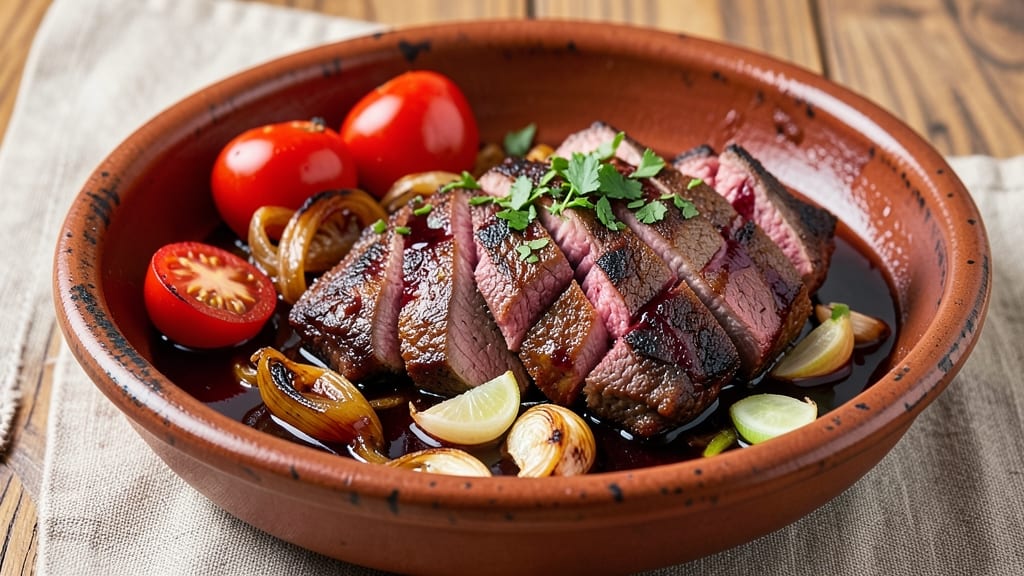
This beef ajou recipe brings the rich, velvety flavors of West African braising to your kitchen with just the right balance of red wine and aromatic spices. 🌟 The dish transforms tough cuts of beef into tender, melt-in-your-mouth perfection through slow simmering, creating a sauce that’s deep, complex, and full of character.
It’s a dish that carries the warmth of tradition while delivering restaurant-quality results at home.
What sets this recipe apart is the harmonious blend of French techniques—like red wine reduction—and West African seasoning, creating a sauce that’s both sophisticated and deeply comforting.
The beef cooks low and slow, absorbing the flavors of tomatoes, onions, and a medley of spices until it’s fork-tender, while the sauce thickens into a luscious, glossy finish. This is the kind of dish that transforms a simple meal into a celebration.
By the time you serve it, you’ll have a plate of golden-brown beef swimming in a sauce that’s rich with umami, balanced with acidity, and finished with a touch of sweetness.
The texture is unmatched—tender beef that falls apart with just a fork, paired with a sauce that clings to every bite. It’s the kind of meal that feels like a hug in a bowl, perfect for family gatherings or a special weekend dinner.
Traditionally served with rice, fufu, or eba, this dish is as versatile as it is impressive. The leftovers, if there are any, reheat beautifully the next day, making it a practical choice for meal prep without sacrificing flavor. Let’s get started on creating this timeless classic.
Ingredients for beef ajou
The heart of this French-West African fusion lies in these simple yet powerful ingredients.
| Ingredient | Amount | Notes |
|---|---|---|
| Beef Chuck Roast 🥩 | 2 lb | Cut into 1.5-inch cubes |
| Dry Red Wine 🍷 | 1 cup | Bold, like Cabernet Sauvignon |
| Tomato Paste 🍅 | 2 tbsp | Squeeze tube preferred |
| Yellow Onion 🧅 | 1 whole | Diced, medium size |
| Garlic Cloves 🧄 | 4 cloves | Minced, fresh preferred |
| Fresh Ginger 🌿 | 1 tbsp | Grated, peeled |
| Vegetable Oil 🫒 | 2 tbsp | For searing |
| Dried Thyme 🌿 | 1 tsp | Or 1 tbsp fresh |
| Ground Black Pepper 🌶️ | 1 tsp | Freshly cracked |
| Salt 🧂 | 1 ½ tsp | Kosher or sea salt |
| Beef Broth 💧 | 2 cups | Low-sodium preferred |
| Water 💧 | 1 cup | For thinning sauce |
| Honey 🍯 | 1 tbsp | For balancing acidity |
| Fresh Bay Leaves 🍃 | 2 whole | Removed before serving |
The beef is non-negotiable—chuck roast breaks down beautifully, while sirloin stays tough. Grab the pre-cubed version from Costco or your butcher counter to save time. For the red wine, any bold, dry red works—Cab Sauv, Merlot, whatever's open. The tomato paste? Those little squeeze tubes at Trader Joe's are perfect—no waste, lasts forever. Fresh ginger and garlic? Walmart's bulk bins have the best prices for these staples.
No red wine? Beef broth with 1 tbsp balsamic vinegar mimics the depth. Fresh thyme is ideal but dried works at one-third the amount. The honey balances the acidity—substitute maple syrup if you're avoiding it. Bay leaves add aroma but skip if you hate fishing them out. For the broth, low-sodium is key—you'll be adding salt anyway. The onions can be yellow or red, but yellow has more sweetness. Ginger? Peel and grate it fresh—jarred ginger is a sad, watery substitute.
This reheats beautifully—honestly tastes better the next day once flavors meld. Keeps 4-5 days in the fridge, freezes for 3 months. I portion mine into containers so lunches are sorted for the week. The sauce thickens as it cools, so add a splash of water if it's too stiff when reheating. Leftovers make amazing sandwiches—toasted sourdough is the perfect vehicle.
Why You'll Love This Recipe
- Weeknight-Friendly Prep: The beef chuck roast is forgiving—no need to sear it perfectly or stress over timing. I’ll be real: I’ve thrown this together after work while scrolling through my phone, and it still turns out tender.
- Wine-Rich Magic: That splash of dry red wine? It’s the secret weapon—deep, savory, and just sweet enough to balance the tomato paste’s richness. Honestly, the aroma alone makes my kitchen smell like a Parisian bistro.
- Leftovers That Shine: This dish actually improves the next day. The beef gets even more melt-in-your-mouth, and I repurpose it for sandwiches or rice bowls—zero waste, all flavor.
- Budget Meal for Crowds: A single chuck roast feeds six, and the ingredients (especially that onion-garlic base) stretch far. Between us, this is how I feed my book club without breaking the bank.
Step-by-step instructions for French-style braised beef
This rich, wine-braised beef transforms tough chuck into melt-in-your-mouth perfection.
🔥 Step 1: Sear the Beef Until Deeply Browned
Heat the 2 tablespoons vegetable oil in a heavy Dutch oven over medium-high heat until shimmering. Working in batches if needed, add the 2 lb beef chuck roast cut into 1.5-inch cubes, letting each piece sear undisturbed for 3-4 minutes until deeply browned on all sides. This caramelization builds incredible flavor for your braise.
Don't crowd the pan—this is where patience pays off. You'll know it's ready when the beef releases easily from the bottom (though it won't look perfectly cooked yet). Transfer the seared beef to a plate and set aside. If your pan starts smoking too much, reduce heat slightly—you want color, not char.
👨🍳 Step 2: Build the Flavor Base with Onions and Aromatics
In the same Dutch oven, add the diced yellow onion and cook for 5-6 minutes until softened and golden. Stir in the minced garlic cloves and grated fresh ginger, cooking for 30 seconds until fragrant—don't let the garlic burn, or it'll turn bitter. Add the 2 tablespoons tomato paste and stir to coat the onions completely.
Here's where the magic starts: Sprinkle in the 1 teaspoon dried thyme, 1 teaspoon ground black pepper, and 1.5 teaspoons salt, stirring to combine. The spices should sizzle slightly from the residual heat. Pour in the 1 cup dry red wine and scrape up all those browned bits from the bottom—this is called deglazing, and it captures all the flavor you worked so hard to create.
🍳 Step 3: Simmer the Braise Until Tender
Return the beef to the Dutch oven along with any accumulated juices. Add the 2 cups beef broth, 1 cup water, and 1 tablespoon honey, stirring to combine. Bring to a gentle simmer, then reduce heat to low and cover tightly. Here's the crucial part: Let it cook for 2.5 to 3 hours until the beef is fork-tender and easily pulls apart.
Check occasionally to ensure there's enough liquid to keep the beef submerged. If it looks too dry, add ¼ cup water at a time. The sauce should reduce to a rich, glossy consistency. Real talk: This is where most people rush and end up with tough meat—don't skip this step, even if it means setting a timer and doing other things while it cooks.
⏰ Step 4: Finish with Fresh Bay Leaves and Rest
When the beef is tender, add the 2 whole fresh bay leaves and simmer uncovered for 5-10 minutes to let the flavors meld and the sauce thicken slightly. Remove the bay leaves before serving—they're not meant to be eaten, though they do add beautiful aroma to the dish.
Let the braised beef rest for 10 minutes before serving. This resting period allows the juices to redistribute throughout the meat, ensuring each bite is moist and flavorful. The sauce should coat the back of a spoon with a perfect balance of richness from the wine, sweetness from the honey, and depth from the tomato paste.
🍽️ Step 5: Serve with Crusty Bread and Polenta
Ladle the beef and sauce over buttered egg noodles or serve with creamy polenta and roasted root vegetables. The contrast of textures and temperatures makes this dish extraordinary—hot braised beef over cool polenta is pure comfort.
Each bite should deliver tender beef that falls apart at the touch, coated in a velvety sauce with notes of red wine, thyme, and just a touch of sweetness from the honey. Serve immediately while the beef is still piping hot and the sauce is at its peak flavor. Leftovers actually taste better the next day as the flavors continue to develop!
Pro Tips For Making Beef Ajou
- Sear the Chuck Hard: After patting the beef chuck dry with paper towels, hit it with a screaming-hot pan—no oil yet. Let it develop a deep brown crust for 3-4 minutes per side before adding anything else. That crust locks in flavor during the long braise, and I learned this the hard way after serving dry, flavorless slices.
- Deglaze with Wine Immediately: As soon as you remove the chuck, pour in the full glass of dry red wine right away—don’t wait for the pan to cool. Scrape up those browned bits (they’re packed with flavor) and let the wine simmer for 2 minutes before adding tomato paste. Skipping this step means losing half the depth of flavor.
- Dice Onions Like a Pro: For the onions, aim for ¼-inch dice—not too fine, or they’ll turn to mush. Sauté them low and slow until they’re translucent but still hold their shape, then add the garlic. Overcooking turns them bitter, and that’s a mistake I made too many times when rushing the base.
- Simmer Low and Long: Cover the pot and cook on low heat—225°F (107°C) if your oven allows—until the beef shreds easily with a fork. Rushing this step makes the meat tough; I used to check it every 10 minutes and ended up with stringy, disappointing slices. Trust the process—it’s worth the wait.
Wine and beer pairings for this recipe
Red Wine Harmony
The bold, tannic structure of Cabernet Sauvignon or Malbec mirrors the dish's deep, savory sauce perfectly. I love opening a bottle of Louis Jadot Beaujolais-Villages—its bright acidity cuts through the richness while complementing the thyme and ginger notes.
The wine's fruitiness also echoes the tomato base, creating a seamless flavor bridge. 🍷
Beer Balance
A malty Belgian Dubbel like Westmalle 8 adds caramel sweetness that harmonizes with the honey in the sauce. For a lighter option, try a German Helles Lager—its crisp profile refreshes your palate between rich bites. Avoid hoppy IPAs; their bitterness clashes with the dish's velvety texture.
Local West African Pairings
In Nigeria, this dish pairs beautifully with garri (fermented cassava flakes) or pounded yam. The starchy contrast soaks up the sauce while balancing the wine's acidity. For a quicker option, serve with jollof rice—its tomato-infused flavor complements the braise's depth.
Unexpected Twists
Try pairing with sparkling rosé—the bubbles cleanse your palate between bites of tender beef. For a non-alcoholic option, ginger beer adds zesty contrast that enhances the dish's spice profile. I once served it with dark chocolate-dipped strawberries for dessert, and the wine's tannins made the chocolate sing.
Serving Temperature
Serve the wine slightly cooler than room temperature (60-65°F) to preserve its freshness against the dish's richness. Beer should be served at 45-50°F—too warm, and the malt flavors become muddy. Let bottles sit in the fridge for 30 minutes** before opening for optimal temperature.
Nutrition facts
Frequently asked questions
Can I substitute chuck roast with a different beef cut?
Yes, but choose wisely! Chuck roast is ideal because it's well-marbled and breaks down beautifully. For a leaner option, use stew beef or brisket, but cut them into slightly smaller pieces (1-inch cubes) since they're tougher. Avoid tender cuts like sirloin or ribeye—they'll turn mushy. If you're in a pinch, pork shoulder works too, but reduce cooking time by 30 minutes.
Why does my sauce look too thin even after simmering?
Sauce thinning usually happens when the liquid isn't reduced enough. First, check if you used the right ratio—this recipe needs 3 cups liquid total (broth + water). If it's still watery, simmer uncovered for 10-15 minutes to thicken. For an instant fix, mix 1 tablespoon cornstarch with 2 tablespoons cold water, stir into the sauce, and cook until it thickens. Pro tip: Skim off excess fat if it's clouding the sauce.
Can I make this recipe without red wine?
Replace the 1 cup red wine with 1 cup beef broth + 1 tablespoon balsamic vinegar for depth. For a non-alcoholic, non-vinegar option, use 1 cup beef broth + 1 tablespoon soy sauce. The key is balancing acidity—add ½ teaspoon lemon juice if the sauce tastes flat. The dish will still be rich, just with a slightly different umami profile.
How do I reheat leftovers without drying out the beef?
Reheat gently to preserve moisture! Place the beef and sauce in a pot over low heat and add 2-3 tablespoons water to prevent sticking. Cover and simmer for 10-15 minutes until heated through. For microwave reheating, use 50% power for 2-3 minutes, then stir in 1 tablespoon water or broth to restore sauce consistency. Leftovers actually improve overnight as flavors meld!