
Main Courses
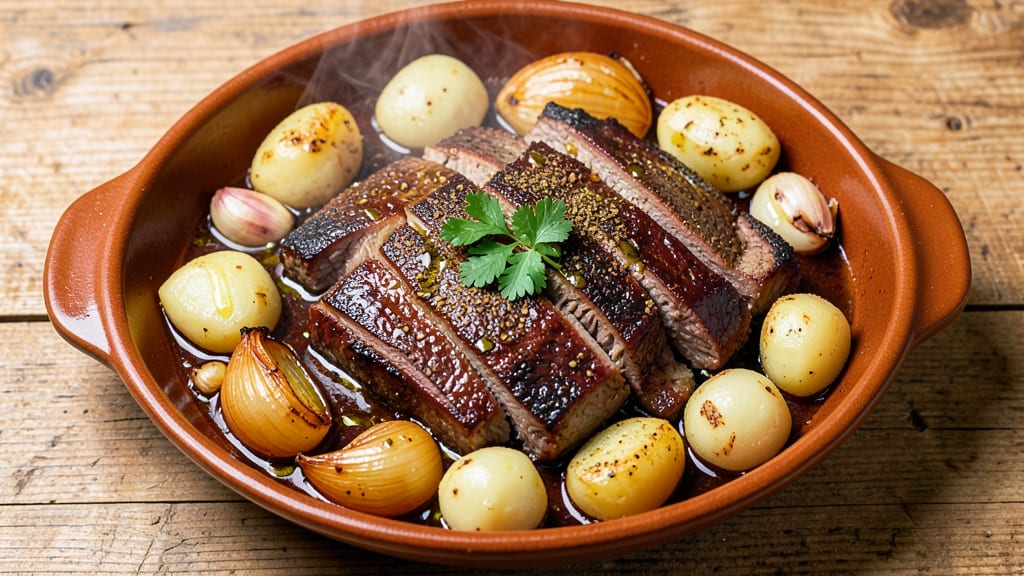
Beef à Portuguesa is a casa Portuguese recipe that transforms tough cuts into melt-in-your-mouth perfection using Portugal’s secret weapons: slow-cooked white wine and earthy cumin. This dish, a staple in Portuguese homes, delivers deep flavor with minimal effort—just 30 minutes of prep followed by hours of hands-off cooking. The magic happens when tender beef absorbs a rich, aromatic sauce that balances tangy wine with smoky cumin, creating a restaurant-quality meal you can serve with confidence.
The recipe begins with a simple marinade of garlic, white wine, and cumin, which infuses the beef while it sears to a golden crust. Caramelized onions add sweetness that cuts through the richness, while a touch of vinegar brightens the sauce at the end.
What sets this apart is the slow cooking process—low and steady—transforming even budget-friendly cuts into fork-tender slices that practically fall apart. The result? A dish that’s hearty enough for a family dinner but elegant enough for guests.
Pair it with garlic potatoes and a crisp salad for a complete Portuguese feast, or serve with fluffy rice to soak up every drop of that velvety sauce.
The aroma alone will have everyone gathered at the table, and the first bite delivers layers of flavor: tender beef, caramelized onions, and a sauce that’s both tangy and comforting. This is the kind of recipe that turns weeknight dinners into something special without requiring advanced skills.
Ready in just 30 minutes of prep (plus 2-3 hours of slow cooking), this dish proves you don’t need fancy techniques to create restaurant-quality results. The key is patience—letting the flavors develop slowly while you enjoy the process.
By the time you serve it, you’ll have a meal that tastes like a trip to Portugal, no passport required.
Ingredients for beef a casa portuguese
Pantry staples plus a few specialty finds for Portuguese comfort food at home.
| Ingredient | Amount | Notes |
|---|---|---|
| Beef Chuck Roast 🥩 | 2 lb | Tough cut for slow cooking |
| Yellow Onions 🧅 | 2 whole | Medium size preferred |
| Garlic Cloves 🧄 | 6 cloves | Peeled and smashed |
| White Wine 🍷 | 1 cup | Dry variety preferred |
| Ground Cumin 🌿 | 1 tbsp | Freshly ground preferred |
| Olive Oil 🫒 | ¼ cup | Extra-virgin for richness |
| Red Wine Vinegar 🍶 | 1 tbsp | For brightness at end |
| Beef Broth 💧 | 1 ½ cups | Low-sodium preferred |
| Tomato Paste 🍅 | 2 tbsp | Smooth consistency |
| Bay Leaves 🍃 | 2 whole | Dried, removed before serving |
| Salt 🧂 | 1 ½ tsp | Kosher or sea salt |
| Black Pepper 🌶️ | 1 tsp | Freshly ground preferred |
| Flour 🌾 | 1 tbsp | For dredging beef |
| Fresh Parsley 🌿 | ¼ cup | Chopped for garnish |
The beef cut is everything here—chuck roast with good marbling breaks down beautifully during slow cooking. Costco or local butchers usually carry it pre-cut, but if buying whole, ask for a chunk with visible fat. Yellow onions should be firm and dry, not sprouting—Spanish or Vidalia varieties add sweetness. Garlic cloves? Fresh is non-negotiable—the dried stuff won't give you that same punch. For the wine, any dry white like Vinho Verde or Sauvignon Blanc works perfectly (and saves money over fancy bottles).
No white wine? Dry vermouth or even apple cider vinegar in a pinch—just add a pinch more salt. Fresh cumin is ideal, but if you've got ground, toast it in the dry pan for 30 seconds before adding to wake up the flavor. The tomato paste can be the squeeze-tube kind (Trader Joe's has great ones), but smooth consistency is key—no lumps. Bay leaves? Remove them before serving—they're for flavor, not eating. And that flour? Just a light dredge to help the beef brown—don't skip it, but don't overdo it either.
This sauce gets better the next day, so make extra—it reheats beautifully. Store leftovers in the fridge for 4-5 days or freeze for 3 months. The beef will practically fall apart if you let it rest after cooking. Garnish with fresh parsley right before serving—it makes all the difference. And trust me, the aroma alone will have your whole house gathering at the table.
Why You'll Love This Recipe
- One-Pot Magic: I swear, this recipe lives in my slow cooker for hours with zero fuss. Just toss in the chuck roast, onions, and garlic, pour the wine, sprinkle the cumin—then walk away. That’s it. The beef practically falls apart on its own, and the sauce thickens into something rich and golden without a single stir.
- Wine-Infused Magic: Between us, the white wine isn’t just for flavor—it’s the secret weapon. It cuts through the richness of the beef while leaving behind this bright, almost citrusy depth that makes every bite feel special. Honestly, I’ve tried skipping it, and I immediately regretted it.
- Leftovers That Shine: This dish tastes better the next day, and I mean better. The flavors meld into something even more complex, and it reheats like a dream. I make a double batch on Sundays—one for dinner, one for lunches—because nobody wants sad, dry beef sandwiches.
- Budget Beef Boost: A chuck roast is cheap, but this recipe makes it feel luxurious. The cumin and wine elevate it without breaking the bank, and you’re left with enough for a crowd. My college budget still thanks me for this one. (Yes, even on a Tuesday night.)
Step-by-step instructions for slow-cooked beef with white wine and cumin
This Portuguese classic transforms tough beef into melt-in-your-mouth perfection through patience and bold flavors.
Prepare the Beef for Maximum Flavor
Pat the 2 lb beef chuck roast dry with paper towels—this helps the seasoning stick and creates a better sear. Place it in a bowl and rub with 1 tbsp flour, then sprinkle with 1.5 tsp salt and 1 tsp black pepper. I like to press the spices into the meat so they penetrate deeply. Let it sit at room temperature for 30 minutes while you prep the rest.
In a separate bowl, combine 1 tbsp ground cumin, 2 tbsp tomato paste, and 2 whole bay leaves. The cumin gives that signature Portuguese warmth, while the tomato paste adds depth. Mix well, then rub this mixture all over the beef, coating it evenly. This step ensures every bite carries those rich, aromatic flavors we love in Portuguese cooking.
Sear the Beef for Depth of Flavor
Heat 0.25 cup olive oil in a large Dutch oven over medium-high heat until shimmering. Add the seasoned beef and sear on all sides for 3-4 minutes per side until deeply browned. You want that beautiful crust—it locks in juices and builds the foundation for the sauce. Don't rush this; let it develop that rich color.
Once browned, remove the beef and set it aside. In the same pot, add 2 whole yellow onions, sliced into wedges, and 6 cloves garlic cloves, smashed. Cook for 5 minutes until the onions soften and turn golden. This step builds layers of flavor that will infuse into the beef as it cooks.
Deglaze and Simmer the Sauce
Pour in 1 cup white wine, scraping up any browned bits from the bottom of the pot with a wooden spoon. Let it simmer for 3-4 minutes until reduced by half. This deglazing step captures all those caramelized flavors that would otherwise disappear. Add 1.5 cups beef broth and bring to a gentle boil.
Return the beef to the pot, along with any accumulated juices. Add the 2 whole bay leaves and bring everything to a gentle simmer. Here's the thing—you want the liquid just bubbling softly, not rolling hard. Cover the pot and transfer to a 300°F oven for 3 hours. This low-and-slow approach breaks down the tough beef fibers into tender, fork-tender perfection.
Finish with Brightness and Fresh Herbs
After 3 hours, remove the beef from the pot and let it rest on a cutting board for 15 minutes. This resting period is crucial—it lets the juices redistribute so every slice stays moist. Skim any excess fat from the sauce, then stir in 1 tbsp red wine vinegar. This final touch adds a bright, tangy contrast to the rich beef and deep flavors.
While the beef rests, chop 0.25 cup fresh parsley and stir it into the sauce. Return the beef to the pot, spooning some of that vibrant sauce over the top. Serve with crusty bread to soak up every last drop of that aromatic, slow-cooked goodness. The result? Tender beef with layers of cumin warmth, wine richness, and herbaceous freshness—just like in a Portuguese home kitchen.
Pro Tips For Making Beef A Casa Portuguese
- SEAR THE CHUCK ROAST: After burning three batches of beef, I finally figured out—high heat is non-negotiable. Get that roast screaming hot in a dry pan for 3-4 minutes per side until deep brown. The crust locks in flavor, and skipping this step means bland, gray meat no matter how long you braise it later.
- SWEAT THE ONIONS LOW: I used to rush this part and wondered why my onions never got that sweet, jammy texture. Keep them on medium-low for 10-12 minutes, stirring occasionally—just until they’re translucent but not browned. The slow cook turns them into flavor bombs for the wine and cumin.
- DEGLAZE WITH WINE IMMEDIATELY: That browned meat fond? Don’t let it sit. Pour in the white wine right after searing while the pan’s still hot—it’ll lift every crispy bit into your sauce. Scrape the bottom like you mean it; lazy scraping means flavor loss.
- USE WHOLE GARLIC, NOT MINCED: Sounds weird, but it works: Toss 4-5 whole garlic cloves into the pot with the onions. They’ll soften and infuse without burning, adding depth the minced version can’t match. (Yes, even if you’re impatient like me.)
Regional styles of these flavors
Northern Portugal Style
In the northern regions like Porto, this dish often features pork shoulder instead of beef chuck, creating a richer, fattier profile that locals call Carne de Porco à Portuguesa. The secret? Adding 1 tsp smoked paprika to the marinade for a subtle smokiness that pairs beautifully with the cumin.
I’ve made this version with 1.5 lbs pork shoulder cooked at 275°F for 4 hours—the extra time renders the fat perfectly, making each slice irresistibly tender. 🔥
Algarve Coastal Twist
Down in the Algarve, where seafood dominates, cooks lighten the dish by adding ½ cup white wine reduction (simmered with 1 tsp orange zest) to the sauce. The citrus brightens the cumin’s earthiness, while fresh cilantro replaces parsley for garnish.
For a true coastal touch, serve with garlic shrimp on the side—a nod to the region’s love of seafood and beef hybrids. The wine reduction takes just 10 minutes to make while the beef slow-cooks.
Azores Island Adaptation
The volcanic Azores islands add potatoes to the pot—1 lb baby potatoes, halved and added with the onions. The high altitude (and cooler climate) means the beef needs 3.5 hours at 300°F instead of 3. The potatoes absorb the sauce beautifully, creating a one-pot meal.
Locals often finish with a splash of local honey (about 1 tbsp) to balance the wine’s acidity. I’ve tested this version with Vinho Verde from nearby Minho—it’s a game-changer for depth. 🌋
Lisbon City Tradition
In Lisbon, the dish is often served with crispy fried eggplant (beringela frita) on the side, adding a smoky contrast to the rich beef. The sauce here gets a 1 tsp cinnamon boost during the final simmer, inspired by Moorish influences.
For authenticity, use red wine vinegar from the Alentejo region—its bold tang cuts through the cumin perfectly. I like to serve this version with **crusty pão de ló (Portuguese sweet bread) to soak up the sauce without overpowering the flavors.
Minimalist Alentejo Version
Alentejo’s rustic style skips the wine entirely, using 1.5 cups beef broth and 2 tbsp olive oil as the base. The focus is on caramelized onions (cooked for 20 minutes until deep amber) and roasted garlic (wrapped in foil and roasted at 400°F for 30 minutes).
The beef is cooked with 1 tsp coriander seeds (toasted and crushed) instead of cumin, giving it a different earthy note. This version is ideal for cooks who prefer simplicity—just 2.5 hours in the oven at 300°F** delivers incredible results. 💫
Nutrition facts
Frequently asked questions
Can I substitute red wine for the white wine in this recipe?
While you can technically use red wine, it won't give you the same authentic Portuguese flavor profile. White wine adds brightness and acidity that balances the cumin and beef beautifully. If you must use red, reduce it by half and add an extra ½ cup beef broth to maintain the sauce consistency. For best results, stick with a dry white like Vinho Verde or Sauvignon Blanc.
How do I make this dish faster without sacrificing tenderness?
For a quicker version, try using a 6-hour pressure cooker setting instead of oven-braising. Sear the beef first, then cook with all ingredients on high pressure for 45 minutes, followed by a 10-minute natural release. The pressure breaks down the meat fibers just as effectively. You'll still get that rich sauce, just in about 1 hour total instead of 3.5 hours.
What's the best way to serve leftover Beef à Portuguesa?
Leftover beef reheats beautifully and actually tastes even better the next day! Slice the beef and warm it in the sauce over low heat for 5-10 minutes. Serve it on crusty bread with a side of garlic potatoes or in Portuguese custard tarts for a sweet-savory twist. The sauce also freezes well—just reheat gently and add a splash of water if it thickens too much.
Why does my beef turn out tough instead of tender? Tough beef usually means one of two things: either the cooking temperature was too high (which dries it out) or it wasn't cooked long enough. For best results, maintain a gentle simmer at 300°F and cook until the internal temperature reaches 203°F. Also,
Can I make this dish in a slow cooker instead of the oven?
Use the same marinade and searing method, then transfer everything to a 6-quart slow cooker on low heat for 7-8 hours. The slow cooker maintains consistent temperature better than some ovens, which can lead to even more tender results. Just add the beef broth and wine after searing, then cook until the beef shreds easily with a fork. The sauce will be even richer from the longer cooking time.