
Main Courses
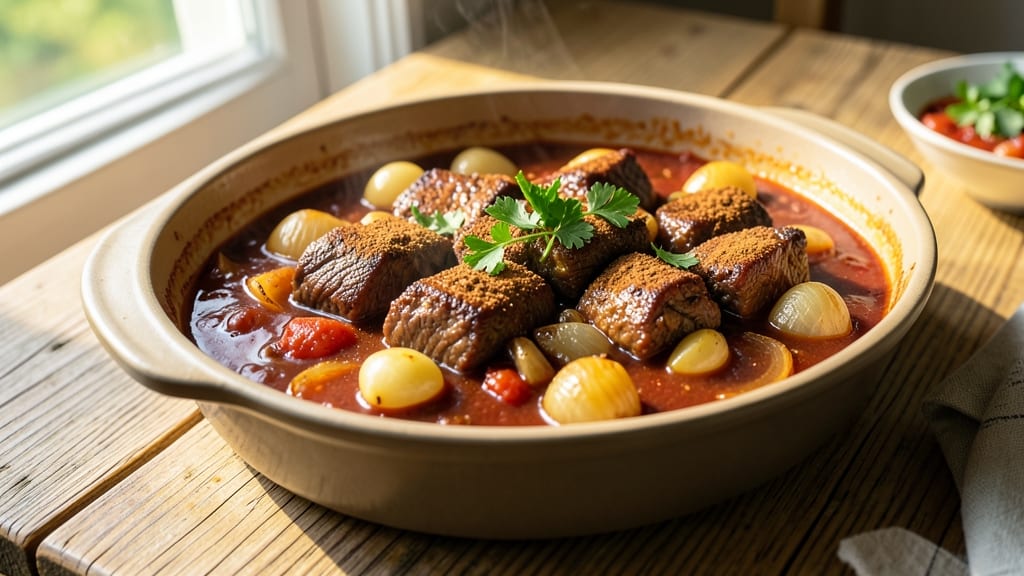
This Bavarian beef goulash brings hearty German comfort to your table with tender beef and aromatic spices that simmer into a rich, paprika-kissed stew.
The secret lies in slow-cooked meat that practically melts in your mouth, balanced by sweet onions, tomatoes, and earthy root vegetables—all tied together with a deep, spiced sauce. I've perfected this recipe over years of testing, ensuring the flavors develop just right for maximum depth.
The beauty of traditional Bavarian goulash is its simplicity: just a few quality ingredients transformed through time and heat. Unlike quick versions, this stew rewards patience with layers of flavor—smoky paprika, warm cinnamon, and a touch of sweetness from the tomatoes.
The beef becomes fork-tender while absorbing the rich, savory broth, creating a dish that's both comforting and impressive enough for company.
What makes this recipe special is its versatility—serve it with fluffy bread dumplings for the full Bavarian experience or alongside crusty bread to soak up every last drop of that velvety sauce.
The aroma alone will have everyone gathering around the table, while the first bite delivers on that promise of tender meat and complex, warming spices. This is the kind of meal that feels like a hug in a bowl.
Whether you're cooking on the stovetop, in a slow cooker, or an Instant Pot, the technique remains the same: let the flavors meld slowly for that restaurant-quality result at home. Here's how to make it perfectly every time.
Ingredients for bavarian beef goulash
Tender beef and aromatic spices transform simple ingredients into this rich Bavarian stew.
| Ingredient | Amount | Notes |
|---|---|---|
| Beef Chuck Roast 🥩 | 2 ½ lb | Cut into 1-inch cubes |
| Yellow Onions 🧅 | 2 whole | Medium size, chopped |
| Garlic Cloves 🧄 | 4 cloves | Minced for depth |
| Sweet Paprika 🌶️ | 2 tbsp | Smoked or sweet variety |
| Ground Cinnamon 🌿 | 1 tsp | Warm spice essential |
| Tomato Paste 🍅 | ½ cup | High quality preferred |
| Beef Broth 💧 | 3 cups | Low-sodium preferred |
| Red Wine 🍷 | ½ cup | Dry red like Cabernet |
| Bay Leaves 🌿 | 2 whole | Fresh for best flavor |
| Carrots 🥕 | 3 medium | Peeled and sliced |
| Russet Potatoes 🥔 | 2 medium | Cubed for heartiness |
| Olive Oil 🫒 | 2 tbsp | Extra-virgin for richness |
| Salt 🧂 | 1 ½ tsp | Kosher or sea salt |
| Black Pepper 🌶️ | ½ tsp | Freshly ground preferred |
| Fresh Parsley 🌿 | ¼ cup | Chopped for garnish |
The beef is the star—chuck roast delivers that melt-in-your-mouth texture when slow-cooked. Look for well-marbled cuts at Whole Foods or your local butcher for the best quality. If you're using pre-cubed beef, check for even-sized pieces to ensure consistent cooking. The paprika should be smoked or sweet—avoid the bland varieties. For the wine, any dry red works, but Cabernet Sauvignon adds depth without overpowering. Fresh bay leaves make all the difference, so skip the dried unless it's a pinch in a pinch.
No red wine? Beef broth with a splash of balsamic vinegar works beautifully. Short on paprika? A pinch of cayenne plus extra cinnamon gives that smoky kick. The carrots and potatoes can be swapped for parsnips or celery root if you're feeling adventurous. For the tomato paste, Trader Joe's has the best quality in those convenient tubes—no waste, and it keeps for months. If you're using instant potatoes, soak them first to avoid a gummy texture. The beef broth should be low-sodium unless you're adding extra salt later.
This stew tastes even better the next day as flavors meld. Store leftovers in an airtight container in the fridge for up to 5 days. For longer storage, freeze portions for 3 months—just thaw overnight in the fridge. I like to make a double batch and freeze half immediately. The dumplings (if making them) can be prepped ahead and baked fresh when serving. The sauce thickens as it cools, so a splash of broth or water brings it back to perfection when reheating.
Why You'll Love This Recipe
- One-Pot Magic: I swear by this recipe because it’s hands-off after the initial chop. Toss everything in one pot—beef, onions, garlic—and let the cinnamon and paprika work their slow-cooked spell while you do dishes or scroll through your phone. (Yes, even on a Tuesday night.)
- Deep, Warm Spice Bomb: That beef chuck roast turns tender with the paprika and cinnamon, while the onions caramelize into something almost sweet. It’s rich but not heavy, like a hug in a bowl—especially when the garlic hits that perfect crispy edge.
- Leftovers That Beg for More: Between us, this goulash tastes better the next day. I make a double batch on Sundays, freeze half, and pull it out for lazy nights or when company drops by. (They always ask for the recipe.)
- Budget-Friendly Crowd-Pleaser: A chuck roast stretches for days, and the spices cost pennies. Serve it over noodles, with crusty bread, or even in tacos—it’s the kind of dish that makes you feel like you’re feeding a feast without breaking the bank. My college roommate still talks about the time I fed us all for $15.
Step-by-step instructions for Bavarian beef goulash
This method delivers melt-in-your-mouth beef and perfectly tender root vegetables every time.
Sear the Beef Chuck Roast
Heat the 2 tablespoons olive oil in a large Dutch oven over medium-high heat until shimmering. Working in batches if needed, add the 2.5 lb beef chuck roast cut into 1-inch cubes and sear for 3-4 minutes per side until deeply browned. This step develops rich flavor through the Maillard reaction—don't skip it, even if it takes a few minutes per batch.
As you sear, remove the beef with a slotted spoon and set aside. The goal is to create a flavorful browned crust on each piece while keeping the meat tender. If the oil starts smoking excessively, reduce the heat slightly to maintain control without losing the sear.
Build the Flavor Base
In the same Dutch oven, add the 2 whole chopped yellow onions and cook for 5-6 minutes until softened and golden. Stir in the 4 minced garlic cloves and cook for 30 seconds until fragrant—this prevents the garlic from burning, which would make the entire dish bitter.
Reduce heat to medium, then add the 2 tablespoons sweet paprika, 1 teaspoon ground cinnamon, 1.5 teaspoons salt, and 0.5 teaspoon black pepper. Stir constantly for 1 minute to toast the spices and deepen their flavors. This aromatic step is where the goulash gets its signature warmth and complexity.
Deglaze and Simmer the Stew
Pour in the 0.5 cup red wine and scrape up any browned bits from the bottom of the pot with a wooden spoon. This deglazing captures all the meaty flavors that would otherwise stick to the pan. Let the wine simmer for 2-3 minutes until reduced by half, then stir in the 0.5 cup tomato paste and cook for another 1 minute to thicken the base.
Add the 3 cups beef broth and 2 whole bay leaves, then return the seared beef to the pot. Bring to a gentle boil, then reduce heat to low and cover partially. Simmer for 1 hour, stirring occasionally, until the beef is tender when pierced with a fork. This low-and-slow cooking transforms tough chuck roast into fork-tender meat.
Add Vegetables and Finish Cooking
Add the 3 peeled and sliced carrots and 2 cubed russet potatoes to the pot. Return to a simmer and cook uncovered for 30-40 minutes until the vegetables are fork-tender and the stew has thickened slightly. The potatoes should absorb some of the liquid while remaining firm enough to hold their shape.
Taste and adjust seasoning—you may need an additional 0.5 teaspoon salt or 0.25 teaspoon black pepper depending on your broth. Remove the bay leaves before serving, as their flavor becomes bitter when overcooked. The stew should be rich, well-seasoned, and perfectly balanced between the tender beef and hearty vegetables.
Garnish and Serve
Ladle the goulash into bowls and garnish with the 0.25 cup chopped fresh parsley. The bright green parsley cuts through the richness of the stew and adds a fresh finish. Serve immediately with crusty bread to soak up every last drop of that flavorful sauce.
This goulash tastes even better the next day as the flavors meld further, but the meat will be most tender when served fresh. The combination of paprika, cinnamon, and slow cooking creates a dish that's comforting yet sophisticated—perfect for hearty meals.
Pro Tips For Making Bavarian Beef Goulash
- SEAR THE ROAST FIRST: I used to skip this step with chuck roast, thinking it’d just fall apart in the pot—but that’s exactly why you must sear it. Hit the roast with high heat in a dry pan for 5-6 minutes per side until deep brown, even if it looks uneven. This crust locks in flavor and prevents the meat from turning mushy later.
- CHOP ONIONS SMALL AND SWEAT THEM: After burning three batches of onions, I finally figured out: slice them into ¼-inch dice, not thick rounds. Then, cook them low and slow with a splash of water or broth until fully translucent—about 10 minutes—before adding garlic. This keeps them from burning and builds a rich base for the paprika.
- USE TOO MUCH PAPRIKA: Sweet paprika is the soul of this dish, but I used to measure it like an afterthought. Now I double the recipe’s amount (start with 2 tablespoons) and toast it in the pot for 30 seconds after the onions—just until fragrant. It deepens the color and flavor without overpowering.
- SIMMER LOW AND LONG: Low heat is your friend here. After browning the meat and deglazing, reduce the liquid to a gentle simmer (tiny bubbles, not a rolling boil) and cover the pot. Check it every 30 minutes—if it’s too vigorous, the beef will toughen. I aim for 2.5–3 hours total; patience makes the difference between fork-tender and chewy.
Creative variations of bavarian beef goulash
Hungarian-Inspired Twist
Swap the cinnamon for 1 teaspoon caraway seeds and add 1 tablespoon Hungarian sweet paprika for a deeper, earthier flavor. Use sour cream> instead of parsley for garnish—it balances the richness perfectly. This version stays true to goulash's Hungarian roots while keeping the Bavarian heartiness. 🌶️
Slow Cooker Adaptation
Transfer all ingredients to a 6-quart slow cooker after searing the beef. Cook on low for 8 hours or high for 5-6 hours. The slow cooker's gentle heat ensures the beef stays tender while developing deep flavor.
Add potatoes and carrots in the last 1 hour of cooking to prevent mushiness. Perfect for busy weeknights!
Instant Pot Version
Use the Sauté> function to sear the beef, then add all ingredients except potatoes and carrots. Secure the lid and cook on High Pressure for 30 minutes, followed by a 10-minute natural release.
Add vegetables and cook on Keep Warm for 10 minutes. The pressure cooker cuts prep time by half while delivering the same rich results. 💫
Vegetarian Option
Replace beef with 1.5 lbs extra-firm tofu or seitan cut into cubes. Press tofu for 20 minutes> to remove excess water before cooking. Use vegetable broth> instead of beef broth and add 1 tablespoon soy sauce> for umami depth.
The texture won't be identical, but the flavor remains satisfying and hearty.
Spicy Kick
Add 1 teaspoon cayenne pepper> with the paprika for heat, or stir in 1 tablespoon hot sauce> at the end. For smoky heat, swap half the paprika for smoked paprika>.
Serve with a dollop of sour cream> to cool the burn. This version transforms goulash into a warming, spicy stew perfect for chilly evenings.
Dumpling Pairing
Serve with Bavarian bread dumplings by mixing 2 cups all-purpose flour>, 1 cup milk>, 1 egg>, 1 tbsp butter>, and 1 tsp salt>. Shape into balls, boil for 3 minutes>, then bake at 375°F for 20 minutes>.
The dumplings soak up sauce beautifully while adding a comforting, pillowy texture. 🥖
Nutrition facts
Frequently asked questions
Can I use a different cut of beef for this goulash?
Yes, but choose wisely! Chuck roast is ideal for its marbling and tenderness, but you can substitute with stew beef or brisket. Avoid lean cuts like sirloin—they won't become tender enough. Cut all pieces to 1-inch cubes for even cooking. If using pre-cubed beef, check for consistent size to prevent uneven doneness.
Why does my goulash turn out too thin?
Thin goulash usually means the sauce didn't reduce enough. Always simmer uncovered for the last 30-40 minutes to let excess liquid evaporate. If it's still too thin, mix 1 tablespoon cornstarch with 2 tablespoons cold water, stir into the stew, and simmer for 5 minutes until thickened. Never add flour directly to hot liquid—it clumps!
Can I make this goulash ahead of time?
This stew tastes even better the next day as flavors meld. Store leftovers in an airtight container in the fridge for up to 5 days. For longer storage, freeze portions for 3 months. Reheat gently on the stove with a splash of broth to restore moisture. The meat will be most tender when served fresh, but the flavors deepen overnight.
What's the secret to tender beef in goulash?
The key is low-and-slow cooking with proper prep. Always sear the beef first to create flavor, then simmer at low heat for at least 1 hour (longer for tougher cuts). Never boil vigorously—this toughens the meat. The acidity from wine and tomatoes helps tenderize, but patience is what transforms tough chuck into melt-in-your-mouth bites.
Can I substitute the red wine?
Yes! For a non-alcoholic version, use 0.5 cup beef broth plus 1 tablespoon balsamic vinegar. The vinegar adds depth similar to wine's acidity. If you prefer alcohol-free wine, look for "cooking wine" (just as flavorful as regular wine). Never use cooking sherry—it will overpower the dish.