
Soups & Stews
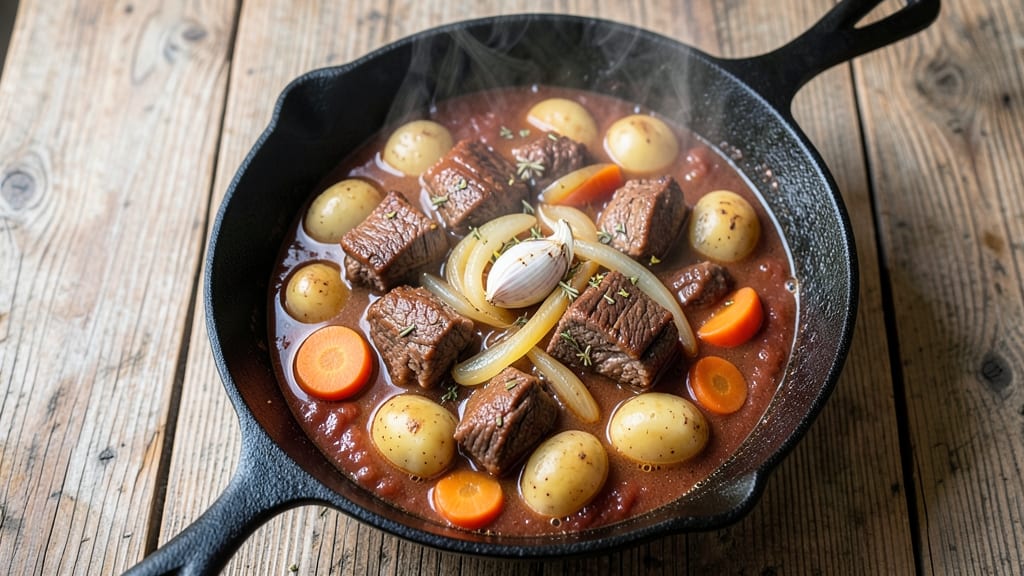
This basic beef stew recipe without wine delivers restaurant-quality depth using caramelized onions and umami-rich ingredients instead. The secret lies in slow-browning beef and onions to develop intense flavor before simmering with aromatic vegetables—no wine required.
This approach creates a rich, hearty stew that's perfect for chilly evenings or meal prep, with tender beef and perfectly softened vegetables.
What sets this recipe apart is the deep umami foundation created through proper browning techniques and quality ingredients. You'll start by searing beef in batches to develop a flavorful crust, then build layers of taste with caramelized onions and aromatic vegetables.
The slow simmer transforms tough cuts into fork-tender meat while creating a flavorful broth that coats every bite.
By the time you're done, you'll have a hearty, comforting stew with melt-in-your-mouth beef, tender carrots, and fluffy potatoes all swimming in a rich, savory broth. The aroma alone will have everyone gathering around the table, and the texture—crisp edges on the vegetables, tender beef—makes every spoonful satisfying.
This is the kind of meal that feels like a hug in bowl form.
Serve with crusty bread for soaking up every last drop of that flavorful broth, or pair with a simple green salad for balance. The recipe scales beautifully, making it perfect for family dinners or meal prepping for the week.
Let's get started on creating this comforting classic that doesn't rely on wine for its depth of flavor.
Ingredients for basic beef stew recipe without wine
Quality ingredients transform simple beef and vegetables into restaurant-worthy umami-rich stew without wine.
| Ingredient | Amount | Notes |
|---|---|---|
| Chuck Roast 🥩 | 2 ½ lb | Trimmed of excess fat |
| Yellow Onions 🧅 | 2 whole | Yellow or red preferred |
| Carrots 🥕 | 4 whole | Medium-sized, peeled |
| Russet Potatoes 🥔 | 2 lb | Yukon gold works too |
| Garlic Cloves 🧄 | 6 cloves | Freshly minced |
| Tomato Paste 🍅 | ½ cup | High-quality, canned |
| Beef Broth 💧 | 4 cups | Low-sodium preferred |
| Olive Oil 🫒 | ¼ cup | Extra-virgin for richness |
| Thyme 🌿 | 1 tbsp | Fresh, or 1 tsp dried |
| Rosemary 🌿 | 1 tbsp | Fresh, chopped |
| Bay Leaves 🍃 | 2 whole | Dried, standard size |
| Salt 🧂 | 1 ½ tsp | Diamond Crystal preferred |
| Black Pepper 🌶️ | 1 tsp | Freshly ground |
| Worcestershire Sauce 🍯 | 1 tbsp | Vegetarian version |
| Balsamic Vinegar 🍶 | 1 tbsp | For depth of flavor |
The chuck roast is non-negotiable for this recipe—its marbling and connective tissue create that signature stew texture. Look for well-marbled cuts at your local butcher or high-end grocery stores like Whole Foods—the extra effort pays off in tenderness. If you're buying pre-cut chuck, check for even-sized pieces to ensure consistent cooking. The onions are where the magic happens: yellow or red onions work best, but avoid sweet varieties like Vidalia. Caramelizing them properly is key to that deep, savory base the wine would normally provide. For the potatoes, Russet or Yukon Gold hold up best during the long simmer, though fingerlings add a nice texture contrast if you prefer.
No beef broth? Vegetable broth with 2 tbsp soy sauce works surprisingly well, though the umami depth won't be identical. Fresh thyme and rosemary can be swapped for 1 tsp dried each, but fresh is always better when available. The tomato paste is crucial for that rich, concentrated flavor—store-bought San Marzano is ideal, but any high-quality canned paste will do. For the Worcestershire, Lea & Perrins vegetarian version maintains the umami without animal products. The balsamic vinegar might seem like an odd addition, but that 1 tbsp adds complexity that elevates the entire dish. If you're concerned about sweetness, use aged balsamic—it's more robust and less cloying.
This stew tastes even better the next day as flavors meld, so make a double batch if you have space. Store in an airtight container in the fridge for up to 5 days, or freeze portions for 3 months. For freezing, cool completely first to prevent ice crystals. The broth thickens as it cools, so add a splash of water when reheating. Leftovers reheat beautifully—simmer gently on the stove with a splash of broth to restore moisture. The potatoes will soften further, becoming even more velvety with each reheating.
Why You'll Love This Recipe
- I swear by this trick: just slice the onions and carrots into big, uneven chunks—no fancy dicing. The stew tastes richer that way, and honestly? You’ll save 10 minutes while still getting that deep, savory flavor from the beef and garlic.
- No-Chop Night: I swear by this trick: just slice the onions and carrots into big, uneven chunks—no fancy dicing. The stew tastes richer that way, and honestly? You’ll save 10 minutes while still getting that deep, savory flavor from the beef and garlic.
- Tender Magic: That chuck roast? It falls apart on its own after slow simmering, and the potatoes soak up all the juices until they’re creamy inside with just a hint of bite. Between us, this is the kind of stew that makes you want to lick the spoon—no fancy wine needed.
- Leftovers That Shine: I make this on Sundays because it only gets better the next day. Reheat it, add a splash of broth, and it’s just as hearty—perfect for lunches or freezing for those nights when you’d rather not cook. My kids actually ask for the leftovers.
Step-by-step instructions for deep umami braise with caramelized onions
This method delivers restaurant-quality beef stew without wine, relying on caramelized onions and umami-rich ingredients.
🔥 Step 1: Sear the Chuck Roast for Maximum Flavor
Pat the 2.5 lb chuck roast completely dry with paper towels. Heat 0.25 cup olive oil in a heavy Dutch oven over medium-high heat until shimmering. Place the roast in the pan and sear on all sides for 8-10 minutes total, turning occasionally, until deeply browned with a crust forming. This step develops the Maillard reaction, creating deep flavor that will infuse the broth.
Remove the roast and set it aside. Don't wipe the pan clean—those browned bits are pure flavor. Reduce heat to medium and add the 2 whole yellow onions, sliced into ¼-inch rounds. Cook for 15-20 minutes, stirring occasionally, until they develop a deep golden caramelization. This process takes patience but creates the sweet, rich base for your stew.
🍳 Step 2: Build the Flavor Base with Aromatics and Tomato
Add the 4 whole carrots, peeled and cut into 1-inch chunks, along with the 6 cloves garlic cloves, minced. Cook for 5 minutes until the carrots begin to soften slightly. Stir in the 0.5 cup tomato paste, spreading it evenly over the bottom of the pan to create a flavorful paste. Cook for 2 minutes until it darkens slightly and loses its raw taste.
Deglaze the pan with 1 cup beef broth, scraping up all the browned bits from the bottom. This step captures all the flavor you've built so far. Add the remaining 3 cups beef broth, the 1 tbsp Worcestershire sauce, and the 1 tbsp balsamic vinegar. Bring to a gentle simmer, then return the roast to the pot, spooning some of the liquid over the top.
🥘 Step 3: Simmer the Roast Until Tender
Add the 2 lb russet potatoes, cut into 1-inch cubes, along with the 1 tbsp thyme, 1 tbsp rosemary, 2 whole bay leaves, 1.5 tsp salt, and 1 tsp black pepper. Bring the liquid to a boil, then reduce heat to low, cover partially, and simmer for 2.5 hours. The roast should be fork-tender, and the potatoes should be easily pierced with a fork.
Here's the thing—don't peek under the lid. Every time you lift it, you lose heat and moisture. Instead, check for doneness by testing the roast with a fork. It should slide in easily and the meat should pull apart with minimal resistance. The stew should have thickened slightly, with the vegetables absorbing the rich, caramelized flavors.
⏰ Step 4: Adjust Consistency and Rest Before Serving
Remove the roast from the pot and let it rest on a cutting board for 10 minutes. Skim any excess fat from the surface of the stew if desired. If the stew is too thick, add 2-4 tablespoons hot water or beef broth to reach your preferred consistency. Taste and adjust seasoning with additional salt or pepper if needed.
Slice the roast against the grain into ¼-inch thick slices and return it to the pot. Gently stir to combine, allowing the meat to reabsorb some of the flavorful juices. Serve immediately, with the vegetables and richly caramelized onions creating a hearty, comforting bowl of beef stew that delivers deep umami flavor without any wine.
Pro Tips For Making Basic Beef Stew Recipe Without Wine
- SEAR THE CHUCK ROAST: After browning the chuck roast, don’t rush—let it sit for 5 minutes in the pot. I used to skim this step, and the stew always tasted one-dimensional. That resting time lets the meat reabsorb its juices, so when you add the liquid, it stays fork-tender instead of drying out later.
- CUT POTATOES SMALLER THAN YOU THINK: Russet potatoes break down fast—slice them into 1-inch chunks, not 1.5. I learned this the hard way when my stew turned to mush after 2 hours. Smaller pieces cook evenly without turning to glue, and they soak up the flavor better.
- DON’T CROWD THE PAN: When browning the onions and carrots, spread them out in a single layer. I was skeptical until I tried it—now I never skip this. Overcrowding steams the veggies instead of caramelizing them, and you’ll miss that deep, sweet base that makes the stew taste homemade.
- ADD GARLIC LATE: Toss the whole garlic cloves in at the 45-minute mark, not the start. I was always impatient and added it early, which made the flavor bitter. Whole cloves infuse better this way, and you can fish them out before serving if you’re picky.
Essential equipment for basic beef stew recipe without wine
Dutch Oven
A heavy-duty Dutch oven is non-negotiable for this recipe—it needs to handle the searing, caramelizing, and slow simmering without warping. I swear by the Le Creuset 5.5-quart for its even heat distribution and durability, but All-Clad Stainless Steel or Lodge Cast Iron work beautifully too.
If you're on a budget, a 5-6 quart enameled cast iron from Lodge is a game-changer for under $50. 🔥
Meat Thermometer
Invest in a reliable instant-read thermometer to avoid overcooking the beef. I use the ThermoWorks Smoke—it's precise and stays cool to the touch, but the Meater or Thermoworks Thermapen are also excellent choices.
For this recipe, aim for an internal temperature of 195-203°F in the thickest part of the roast. A thermometer eliminates guesswork and ensures perfect tenderness every time. ⏰
Sharp Chef's Knife
A sharp 8-inch chef's knife is essential for prepping ingredients efficiently. I recommend the Wüsthof Classic or Shun Premier for their razor-sharp edges and comfortable handles. For onions and carrots, a slicing motion (rather than chopping) helps achieve those perfect ¼-inch rounds and 1-inch chunks needed for even cooking.
A dull knife makes prep frustrating—keep yours honed with a Whetstone or honings steel. ✨
Wooden Spoon
A heat-resistant wooden spoon (like Oxo Good Grips) is perfect for stirring the stew without scratching the Dutch oven. Wood distributes heat evenly and prevents the stew from sticking to the bottom.
I keep one dedicated to stews and soups—it becomes your best friend during the long simmer. Avoid metal utensils during cooking to preserve your pot's finish and prevent flavor transfer. 💫
Fine-Mesh Strainer
For straining excess fat after simmering, a fine-mesh strainer (like OXO Good Grips) works wonders. Place it over a bowl and ladle the stew through to remove any congealed fat while keeping the flavorful broth intact.
This step is optional but makes a noticeable difference in the final texture. If you're short on time, simply skim fat with a large spoon before serving. 💡
Nutrition facts
Frequently asked questions
Can I substitute beef broth with something else if I don't have it?
Yes! For a similar umami depth, mix 3 cups vegetable broth with 2 tablespoons soy sauce (or coconut aminos for vegetarian). If using chicken broth, add 1 teaspoon beef bouillon powder to enhance richness. The key is balancing saltiness and savory notes to mimic beef broth's complexity.
How do I know when the chuck roast is perfectly tender?
Use the fork test: The roast is done when it slides in easily and the meat separates with minimal resistance. For extra accuracy, check the internal temperature with a meat thermometer—it should reach 195-203°F in the thickest part. The potatoes should also be fork-tender, though slightly softer than the beef.
What if my stew is too watery after simmering?
Simmer uncovered for 10-15 minutes to reduce the liquid naturally. If that's not enough, mix 1 tablespoon cornstarch with 2 tablespoons cold water, stir into the stew, and simmer for 2-3 minutes until thickened. Avoid over-simmering—this can make the meat tough.
Can I make this stew in a slow cooker instead?
Brown the beef and onions first in a skillet, then transfer everything to the slow cooker. Cook on low for 7-8 hours or high for 4-5 hours. The slow cooker's gentle heat works perfectly for tenderizing the beef. Just add the potatoes during the last 1 hour to prevent them from turning mushy.
Why does my stew taste bland even after following the recipe?
Check these common fixes: Salt in layers—add half the salt during cooking and adjust at the end. Don't skip the caramelization—golden onions are flavor bombs! If using low-sodium broth, add ½ teaspoon beef bouillon powder or a pinch of MSG (just ⅛ teaspoon) for umami depth. Taste as you go—flavor builds gradually.