
Soups & Stews
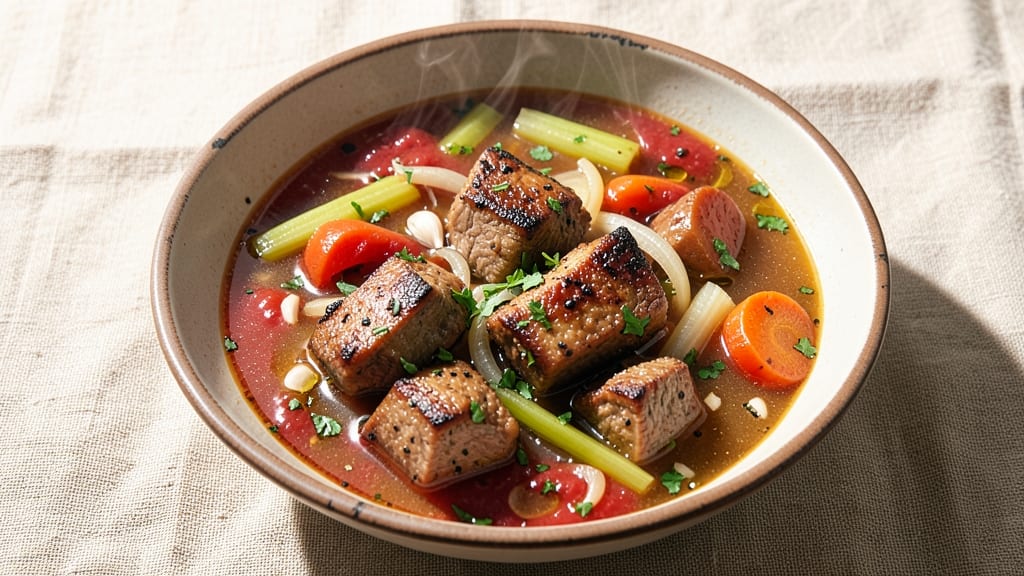
This basic beef soup recipe delivers restaurant-quality heartiness in a single pot, where rich caramelized onions and tender beef create layers of flavor that warm you from the inside out. The secret lies in slow simmering—transforming tough cuts into melt-in-your-mouth bites while vegetables soften into perfect harmony.
I’ve perfected this one-pot method over years of testing, ensuring every spoonful delivers deep, satisfying comfort without the fuss of multiple dishes.
The foundation begins with browning beef in batches—this crucial step develops the soup’s signature depth, creating a flavorful crust that dissolves into the broth as it simmers. Aromatics like garlic, onions, and celery form the flavor base, while bay leaves and thyme add subtle complexity.
The result? A soup so rich and balanced it feels like a hug in a bowl, yet requires minimal effort to prepare.
What you’ll end up with is a velvety broth swimming with tender beef chunks, caramelized onions, and perfectly softened vegetables—each bite packed with warmth and texture. This recipe builds flavor through slow cooking, ensuring the broth becomes increasingly rich as it reduces.
The best part? It’s foolproof for beginners yet sophisticated enough to impress guests, all while keeping cleanup to a single pot.
Serve with crusty bread to soak up every last drop of that flavorful broth, or pair it with a simple green salad for balance. The beauty of this soup lies in its versatility—easy to adapt with your favorite vegetables or herbs while maintaining its comforting core.
Let’s get started on creating your own pot of hearty goodness.
Ingredients for basic beef soup
Pantry staples plus a few fresh ingredients for a bowl of comforting beef soup goodness.
| Ingredient | Amount | Notes |
|---|---|---|
| Chuck Roast 🥩 | 2 lb | Cut into 1-inch cubes |
| Yellow Onions 🧅 | 3 whole | Sliced into 1/4-inch pieces |
| Carrots 🥕 | 4 whole | Peeled, cut into 1-inch chunks |
| Celery Stalks 🧄 | 3 whole | Chopped into 1/2-inch pieces |
| Garlic Cloves 🧄 | 4 cloves | Minced for deep flavor |
| Tomato Paste 🍅 | 2 tbsp | For rich color and depth |
| Beef Broth 💧 | 6 cups | Low-sodium preferred |
| Dried Thyme 🌿 | 1 tsp | Or 1 tbsp fresh thyme |
| Bay Leaves 🌿 | 2 whole | Remove before serving |
| Salt 🧂 | 1 ½ tsp | Adjust to taste |
| Black Pepper 🌶️ | ½ tsp | Freshly ground preferred |
| Olive Oil 🫒 | 2 tbsp | For browning beef |
| Fresh Parsley 🌿 | ¼ cup | Chopped for garnish |
The beef is where all the magic happens. Chuck roast is your best bet—it stays tender and full of flavor, unlike leaner cuts that can turn tough. Look for good marbling at Costco or your local butcher if you want to splurge, but the regular supermarket chuck works just fine. I usually grab mine pre-cubed to save time, but if you're feeling ambitious, cut it yourself into 1-inch pieces for even cooking. The onions? Yellow onions caramelize best, but red or white will work too—they just won't be as sweet. Slice them thinly for maximum surface area and flavor development.
No beef broth? Chicken broth with a splash of soy sauce works in a pinch, though it won't have that deep umami richness. Fresh thyme is ideal, but dried is fine at one-third the amount. The tomato paste can be skipped if you're watching acidity, but trust me—it adds a depth that's worth the extra minute. For the celery, the leafy tops are edible and packed with flavor, so don't trim them off if you're feeling adventurous. The carrots can be baby carrots if that's what you've got—just peel them first. And if you're short on garlic, garlic powder at half the amount gets you close.
This soup tastes even better the next day as all the flavors meld together. Store leftovers in an airtight container in the fridge for up to 5 days, or freeze for 3 months. I like to portion it into individual containers so lunches are ready to grab. The bay leaves can be removed before serving, but I often leave one in during cooking and then fish it out with tongs—no need to stress about it. And if you're making a big batch, double the herbs and spices to keep the flavor consistent.
Why You'll Love This Recipe
- Foolproof Prep: I swear by this—just chop the onions, carrots, and celery (no fancy dice, just rough chunks) while the chuck roast browns in the pot. That’s it. No stress, no last-minute grocery runs.
- Deep, Slow-Roasted Richness: The chuck roast turns buttery after hours on low heat, while the garlic and onions caramelize into something almost sweet. Honestly, that first spoonful tastes like you slaved over it for days.
- Leftovers That Beg for More: This soup only gets better the next day—even my picky teenager asks for seconds. I freeze half in portions, so I’ve got a ready-to-reheat meal when I’m too tired to cook.
- Budget Meal for Busy Nights: A single chuck roast feeds six for under $15, and the veggies stretch forever. Between us, this is my go-to when I need to feed a crowd without breaking the bank.
Step-by-step instructions for basic beef soup
Here's how to build this rich, comforting soup in one pot—layering deep flavors and tender meat.
Brown the Chuck Roast for Maximum Flavor
Heat the 2 tablespoons olive oil in a large Dutch oven over medium-high heat. Working in batches if needed, add the 2 lb chuck roast cut into 1-inch cubes, letting them brown undisturbed for 3-4 minutes per side until deeply golden. This step creates the Maillard reaction that forms rich, meaty depth.
As the beef browns, it releases its natural juices—don't drain them. Instead, use a wooden spoon to scrape up all those flavorful browned bits from the bottom of the pot. These bits, called fond, dissolve into the broth later, infusing every spoonful with concentrated beef flavor. If the oil starts smoking, reduce heat slightly to maintain even browning.
Sauté the Vegetable Base for Sweet, Caramelized Depth
Once all the beef is browned and removed to a plate, add the sliced 3 whole yellow onions, chopped 4 whole carrots, and chopped 3 whole celery stalks to the same pot. Cook over medium heat for 8-10 minutes, stirring occasionally, until the vegetables soften and the onions begin to caramelize—this is when they turn golden and smell irresistibly sweet.
After 5 minutes, add the 4 cloves minced garlic and cook for another 30 seconds until fragrant. The garlic should sizzle gently without burning. Stir in the 2 tablespoons tomato paste and cook for 1 minute to deepen the color and add a subtle umami richness. This vegetable base forms the flavor foundation of your soup, so take your time here—rushed cooking leads to bland results.
Build the Broth and Simmer for Tender Perfection
Return the browned beef to the pot and pour in the 6 cups beef broth. Add the 1 teaspoon dried thyme, 2 whole bay leaves, 1.5 teaspoons salt, and 0.5 teaspoon black pepper. Bring everything to a gentle boil, then reduce heat to low and cover partially. Let it simmer for 1.5 hours, stirring occasionally to prevent the vegetables from sticking to the bottom.
Here's where patience pays off—the long simmer breaks down the tough chuck roast into fork-tender pieces while allowing all the flavors to meld together. After 1 hour, check the beef for tenderness by piercing it with a fork. If it's still slightly resistant, continue simmering for another 30 minutes. The soup should have a rich, meaty aroma that fills your kitchen—this is your cue that it's working.
Finish with Fresh Herbs and Adjust Seasoning
Once the beef is fork-tender, remove the 2 bay leaves and discard them. Stir in the 0.25 cup chopped fresh parsley just before serving—this adds a bright, fresh contrast to the rich, hearty flavors. Taste the soup and adjust the seasoning if needed, adding more salt or pepper as necessary. The parsley should be distributed evenly throughout, giving each spoonful a pop of color and freshness.
Let the soup sit off the heat for 5 minutes before serving. This resting period allows the flavors to settle and the broth to thicken slightly, creating the perfect consistency. Serve immediately with crusty bread to soak up every last drop of that flavorful broth—this is comfort food at its finest, made even better by the caramelized onions and tender beef that make every bite satisfying.
Pro Tips For Making Basic Beef Soup
- Sear the Chuck Hard: Chuck roast needs that crust—don’t skimp on the sear. Hit it with high heat in a cold pot, 3-4 minutes per side, until deep brown. I used to rush this and ended up with bland soup; the Maillard reaction is what turns cheap meat into something rich.
- Cut Celery and Carrots Large: Tiny diced veggies disappear into mush. Leave carrots in 1-inch chunks and celery in 2-inch pieces—they’ll soften but stay recognizable. (Yes, even if you’re impatient like me, they’ll break down enough to blend into the broth later.)
- Deglaze with Beer or Broth: After searing the meat, don’t just splash water in—use ½ cup of beer (or broth) to scrape up those browned bits. It adds depth without extra effort. I learned this the hard way when my first batch tasted flat.
- Salt the Pot Early: Add 1 teaspoon of salt to the cold water before bringing it to a boil. It seasons the meat from the start and prevents the broth from tasting bland later. (Your future self will notice the difference—trust me.)
Flavor customization for this recipe
Spicy Kick
For a bold twist, add ½ teaspoon cayenne pepper or 1 tablespoon hot paprika when browning the beef. If you love heat, stir in 1-2 slices of fresh jalapeño with the vegetables.
For a smoky-spicy blend, swap ½ teaspoon dried thyme for ½ teaspoon smoked paprika—this adds depth without overpowering. 🌶️
Herb Variations
Swap out the thyme for 1 teaspoon dried rosemary or 1 sprig fresh rosemary for an earthy, piney note that pairs beautifully with beef. For a Mediterranean flair, add 1 teaspoon dried oregano along with the thyme.
Fresh herbs like 1 sprig fresh tarragon or 1 tablespoon chopped dill brighten the soup with a citrusy finish.
Umami Boosters
Enhance the depth with 1 tablespoon soy sauce or 1 teaspoon Worcestershire sauce when adding the broth. For extra richness, stir in 1 tablespoon fish sauce (a Southeast Asian staple) or ½ cup mushrooms (cremini or shiitake) with the vegetables.
A splash of 1 tablespoon balsamic vinegar at the end adds a tangy complexity that balances the heartiness.
Vegetable Swaps
Add 1 cup diced potatoes or ½ cup green beans for extra heartiness—they soften beautifully during the simmer. For a winter twist, include 1 cup chopped kale or ½ cup frozen peas in the last 30 minutes of cooking.
Swap carrots for ½ cup butternut squash cubes for a slightly sweet, creamy texture. 🥕
Protein Alternatives
Replace beef with 2 lb pork shoulder for a sweeter, slightly fattier broth, or use 2 lb chicken thighs for a lighter option. For a vegetarian version, swap the beef for 2 cups lentils or 1 lb mushrooms (browned first).
If you prefer seafood, add 1 lb shrimp or 12 oz firm white fish (like cod) in the last 15 minutes of cooking.
Acid Balance
Brighten the soup with 1 tablespoon lemon juice or 1 teaspoon apple cider vinegar before serving. For a tangy contrast, stir in ½ cup diced tomatoes or 2 tablespoons tomato paste with the broth.
A splash of 1 tablespoon red wine (like Cabernet Sauvignon) when deglazing the pot adds a sophisticated depth that complements the beef beautifully. 🍷
Nutrition facts
Frequently asked questions
Can I use ground beef instead of chuck roast in this recipe?
Ground beef works, but the texture and flavor will differ. For best results, use 80/20 ground chuck (80% lean, 20% fat) to maintain richness. Brown it thoroughly first, then proceed with the recipe. The soup will be heartier but slightly less tender than with cubed chuck. If you prefer ground beef, reduce simmering time to 45-60 minutes to avoid drying out.
How can I make this soup faster without sacrificing flavor?
Use a pressure cooker to cut cooking time to 30-40 minutes! Brown the beef and vegetables as directed, then add broth and herbs. Cook on high pressure for 20 minutes, then release pressure naturally. For stovetop speed, simmer uncovered on medium-high heat for 1 hour instead of 1.5 hours, stirring occasionally.
What if my beef soup turns out too thin?
Don't worry—thin soup is fixable! Simmer uncovered for 10-15 minutes to reduce the broth naturally. For quicker results, mix 1 tablespoon cornstarch with 2 tablespoons cold water, stir into the soup, and simmer for 2-3 minutes until thickened. If you prefer a creamy texture, stir in 2 tablespoons heavy cream or ½ cup mashed potatoes at the end.
Can I make this soup in a slow cooker? Brown the beef and vegetables as directed, then transfer everything to a 6-quart slow cooker. Add broth and herbs, cover, and cook on low for 8 hours or high for 4-5 hours. The slow cooker's gentle heat ensures tender beef and perfectly softened vegetables. Just
Why does my beef soup taste bland?
Bland soup usually means insufficient browning or seasoning. First, ensure you browned the beef thoroughly—this creates deep flavor. Taste as you go and adjust seasoning gradually. For extra depth, add 1 tablespoon soy sauce or 1 teaspoon Worcestershire sauce with the broth. A splash of 1 tablespoon red wine or 1 teaspoon fish sauce can also elevate the flavor profile.