
Main Courses
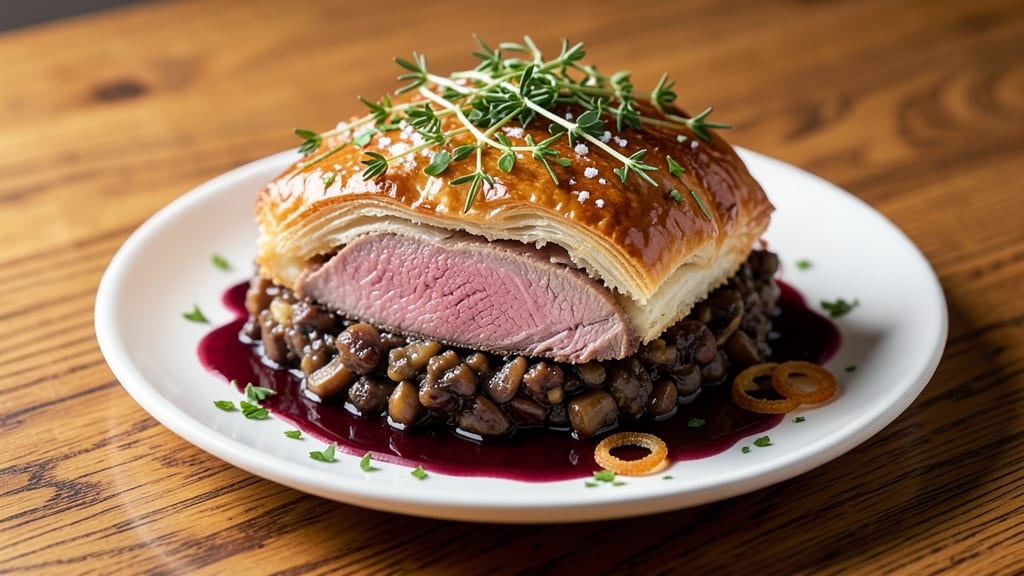
This Barefoot Contessa beef Wellington recipe delivers restaurant-worthy elegance with a perfect balance of technique and approachability. The secret lies in the duxelles—finely chopped mushrooms sautéed until their moisture evaporates, creating a velvety, flavorful base for the beef.
While traditional methods call for hours of prep, modern shortcuts like store-bought puff pastry and pre-seared fillets keep this dish achievable for home cooks.
The fillet must be seared to a golden crust and cooked to precise doneness—rare for maximum tenderness—before being wrapped in prosciutto and enveloped in buttery pastry.
This isn’t just a dish; it’s an experience that transforms a simple beef fillet into a showstopper with layers of savory, umami, and buttery richness. The key is patience—allowing the pastry to bake until deeply golden while keeping the beef perfectly warm inside.
What you’ll end up with is a plating masterpiece: a crisp, golden puff pastry encasing tender beef, herbed duxelles, and prosciutto, all sliced to reveal a luxurious center.
The aroma alone will have guests anticipating the first bite, and the presentation makes it feel like a Michelin-starred meal—without the years of training. Pair it with a bold red wine and roasted vegetables for a dinner that feels both celebratory and effortless.
Whether you’re cooking for a special occasion or simply treating yourself, this recipe proves that foolproof techniques and a few smart shortcuts can deliver restaurant-quality results.
The assembly might seem intimidating at first, but breaking it into manageable steps—searing the beef, preparing the duxelles, and carefully wrapping the fillet—makes it entirely achievable. Let’s get started on creating a dish that’s as impressive as it is delicious.
Ingredients for barefoot contessa beef wellington
Fourteen ingredients transform a simple fillet into a Michelin-worthy masterpiece with buttery layers and umami depth.
| Ingredient | Amount | Notes |
|---|---|---|
| Beef Fillet 🥩 | 1 ½ lb | Center-cut, 1-inch thick, rare preferred |
| Mushrooms 🍄 | 1 ½ lb | Cremini or button, finely chopped |
| Shallots 🧅 | 4 whole | Minced, about 0.5 cup total |
| Garlic Cloves 🧄 | 4 cloves | Minced, about 1 tbsp total |
| Fresh Thyme Leaves 🌿 | 1 tbsp | Finely chopped, stems removed |
| Fresh Parsley Leaves 🌿 | ¼ cup | Finely chopped, stems removed |
| Prosciutto 🥓 | 6 oz | Thinly sliced, high-quality |
| Puff Pastry 🍞 | 1 sheet | Store-bought, thawed |
| Unsalted Butter 🧈 | ½ cup | Cold, cut into small cubes |
| Dijon Mustard 🍯 | 1 tbsp | For pastry binding |
| Extra-Virgin Olive Oil 🫒 | 2 tbsp | For searing and sautéing |
| Kosher Salt 🧂 | 1 ½ tsp | Diamond Crystal preferred |
| Freshly Ground Black Pepper 🌶️ | 1 tsp | Coarsely ground |
| Dry White Wine 🍷 | ½ cup | For deglazing |
The beef fillet must be center-cut for tenderness—1.5 pounds serves four generously. Whole Foods or specialty butchers carry the highest-quality cuts, often pre-trimmed for convenience. Look for rich marbling and a deep red color; avoid fillets with grayish edges. For the duxelles, mushrooms are non-negotiable—cremini or button work equally well, but avoid pre-sliced varieties (they oxidize faster). Finely chopping them by hand ensures even cooking and maximum flavor extraction. Shallots add subtle sweetness—substitute with 1 extra tablespoon onion if unavailable, but the flavor profile shifts slightly.
No prosciutto? High-quality ham works in a pinch, but the saltiness intensifies. For the duxelles, toasted walnuts can replace half the mushrooms for texture, though the earthiness differs. The puff pastry should be store-bought for consistency—brands like Pepperidge Farm or Alliance yield the best results. If your pastry is too soft, chill it for 30 minutes before wrapping. The Dijon mustard acts as a glue; substitute with 1 teaspoon mayo if needed, though it lacks the tang. For the wine, Sauvignon Blanc or Chardonnay deglaze beautifully, but a splash of beef broth suffices in a bind.
The duxelles keeps for 3 days in the fridge, sealed tightly. The wrapped fillet should be assembled and refrigerated up to 12 hours before baking for optimal flavor melding. If prepping ahead, freeze the wrapped fillet (unbaked) for up to 1 month—thaw overnight in the fridge. The puff pastry loses crispness if refrigerated too long, so work with it within 2 hours of taking it from the fridge. For leftovers, slice and reheat in a 350°F oven for 10-15 minutes to restore crispness.
Why You'll Love This Recipe
- The secret’s in the layers: creamy mushroom duxelles (that’s just finely chopped mushrooms, shallots, and garlic) wrapped around tender beef fillet, all tied together with thyme. It’s not just flavor—it’s texture—that crispy puff pastry shell with the melt-in-your-mouth center. Dangerously addictive.
- Let’s talk about the real MVP: reheating. Cold slices the next day? Still delicious. Sandwiches? Even better. I’ll be real: I’ve had this for lunch three times this week, and no one’s complained. That’s a win for both flavor and my grocery budget.
Step-by-step instructions for beef Wellington assembly
This method delivers restaurant-quality Beef Wellington with a perfectly seared crust and tender, flavorful filling.
Prepare the Duxelles Filling
Heat 2 tablespoons extra-virgin olive oil in a large skillet over medium heat. Add the 1.5 pounds mushrooms and cook for 8-10 minutes until they release their moisture and begin to brown. Season with 1 teaspoon kosher salt and ½ teaspoon freshly ground black pepper as they cook.
Add the 4 minced shallots and 4 minced garlic cloves, cooking for another 3-4 minutes until the shallots soften and become translucent. Stir in the 1 tablespoon finely chopped fresh thyme leaves and ¼ cup finely chopped fresh parsley leaves, then remove from heat. Let the mixture cool completely before using—this prevents the filling from steaming the beef during baking.
In a small bowl, combine the 6 ounces thinly sliced prosciutto with 1 tablespoon Dijon mustard. Spread this mixture evenly over the center of the 1.5-pound beef fillet, then spoon the cooled duxelles mixture over the prosciutto, creating a thick, even layer. Press gently to adhere, ensuring the filling extends slightly beyond the edges of the beef.
Seal with Prosciutto and Butter
Roll the beef fillet tightly in plastic wrap, shaping it into a neat log. Chill in the refrigerator for 30 minutes to firm up. Unwrap and carefully roll the fillet in the remaining 5 ounces prosciutto, pressing the slices tightly against the surface to create a protective barrier. This step prevents the filling from leaking during baking and adds rich, salty flavor.
In a small bowl, mix the remaining ½ cup unsalted butter with ½ teaspoon kosher salt and ½ teaspoon freshly ground black pepper until combined. Gently roll the prosciutto-wrapped beef in this butter mixture, coating it evenly. The butter will create a golden, crispy crust while basting the meat as it bakes.
Wrap in Puff Pastry
Roll out the 1 sheet thawed puff pastry on a lightly floured surface to a ¼-inch thickness, creating a rectangle large enough to wrap the beef completely. Place the buttered beef fillet near one of the long edges of the pastry. Fold the pastry over the beef, then carefully roll it up tightly, enclosing the fillet completely. Seal the seam by pressing gently with your fingers or a fork.
Place the wrapped beef on a parchment-lined baking sheet and refrigerate for 20 minutes to ensure the pastry stays firm and easy to handle. Brush the entire surface with a beaten egg (optional but recommended for extra shine and crispiness). Score the top of the pastry in a decorative pattern with a sharp knife—this prevents cracking during baking and creates an appealing finish.
Bake to Medium-Rare Perfection
Preheat your oven to 425°F. Bake the Beef Wellington for 30-35 minutes until the pastry is deep golden brown and the internal temperature of the beef reaches 125°F for medium-rare (use a meat thermometer for accuracy). The pastry should be crisp and slightly puffed, with no soft spots.
Remove the Wellington from the oven and transfer it to a cutting board. Let it rest for 10 minutes before slicing—this allows the juices to redistribute, ensuring each bite remains tender. To serve, slice carefully between the seams of the pastry, revealing the beautifully seared beef and rich duxelles filling beneath.
Pro Tips For Making Barefoot Contessa Beef Wellington
- Use Room-Temp Beef: That cold fillet from the fridge will cook unevenly—give it 30-45 minutes to sit out. I learned this the hard way when my center stayed ice-cold while the edges overcooked. Trust me, the middle matters most here.
- Sear Shallots First: Cook the shallots until they’re golden and slightly caramelized before adding mushrooms. This builds flavor that gets lost if you rush through the prep. (Yes, even if you’re impatient like me.)
- Don’t Overmix the Duxelles: The mushroom-shallot mixture should stay chunky—just pulse it lightly in a food processor, then finish by hand. Over-blending turns it into paste, and that’s when the dish loses its texture.
- Rest the Meat Twice: First rest uncovered for 5 minutes after searing, then again for 10 minutes after baking. Skipping this means juices pool on the plate instead of redistributing. (Your future self will thank you.)
Essential equipment for barefoot contessa beef wellington
Must-Have Tools
Start with a sharp chef’s knife (I swear by Wüsthof’s 8-inch for precision) and a heavy-bottomed skillet like All-Clad’s stainless steel—it distributes heat evenly for that perfect sear on your beef fillet.
A meat thermometer (I recommend Thermoworks Smoke) is non-negotiable to hit 125°F for medium-rare without overcooking. 🌡️
Pastry Perfection
For the puff pastry, invest in a rolling pin with a marble base (like OXO Good Grips) to prevent sticking, and keep a pastry brush handy for egg wash. A sharp paring knife (I use Mercer Culinary’s) helps score the pastry cleanly before baking.
Pre-sliced prosciutto saves time, but if you’re ambitious, a slicing knife (like Dexter-Russell’s) ensures even slices.
Duxelles Essentials
A fine-mesh strainer (like OXO’s) helps drain excess moisture from your duxelles, while a microplane (I prefer BergHoff) quickly minces shallots and garlic. For the beef, a meat mallet (like Victorinox’s) tenderizes if your fillet needs it.
Don’t skip the plastic wrap—it’s key for shaping the fillet before wrapping in prosciutto.
Budget-Friendly Swaps
Skip the expensive skillet? A cast-iron pan (like Lodge’s) works just as well for searing. For pastry, homemade puff pastry is possible but time-consuming—Pepperidge Farm’s store-bought is a game-changer. A digital thermometer (like Thermapen) is cheaper than a sous-vide setup but just as accurate for checking doneness.
Pro Tips for Handling
Use parchment paper under your pastry to prevent sticking, and keep wet paper towels nearby to clean up butter or egg wash spills. A small offset spatula helps spread duxelles evenly, and tongs make flipping the beef fillet effortless.
For plating, a serving knife with a serrated edge (like Shun’s) slices through the pastry cleanly. 💡
Nutrition facts
Frequently asked questions
Can I make this Beef Wellington ahead of time?
Yes! Assemble the Wellington completely (including pastry wrap) and refrigerate it for up to 12 hours before baking. For longer storage, wrap the assembled but unbaked Wellington tightly in plastic and freeze it for up to 1 month. Thaw overnight in the fridge before baking. The flavors meld beautifully during chilling, making it even more delicious.
What if my puff pastry cracks during baking?
Cracking is normal—score the pastry before baking to control where it breaks. If it cracks anyway, don’t panic! Brush the exposed areas with extra egg wash and return to the oven for 5-10 minutes to crisp it up. For prevention, chill the wrapped Wellington for 20 minutes before baking and avoid overhandling the pastry.
How do I know when the beef is perfectly cooked?
Use a meat thermometer for accuracy—125°F for medium-rare is ideal. The beef should have a slightly pink center with a warm, red core. Never rely on baking time alone, as ovens vary. If you don’t have a thermometer, cut into the thickest part: juices should run clear, not red.
Can I substitute prosciutto with something else?
Yes! Use high-quality ham (like Black Forest) or smoked turkey breast for a similar effect. Avoid deli ham—it’s too salty and lacks the delicate flavor. If substituting, reduce the salt in the butter mixture by half to balance the flavors. The key is a thin, flavorful layer that seals the filling.
What’s the best way to reheat leftovers?
Slice the Wellington and reheat portions in a 350°F oven for 10-15 minutes on a wire rack (to restore crispness). For a quick fix, warm slices in a skillet over low heat for 2-3 minutes per side. Avoid microwaving—it makes the pastry soggy. Leftovers keep well for 3 days refrigerated.