
Soups & Stews
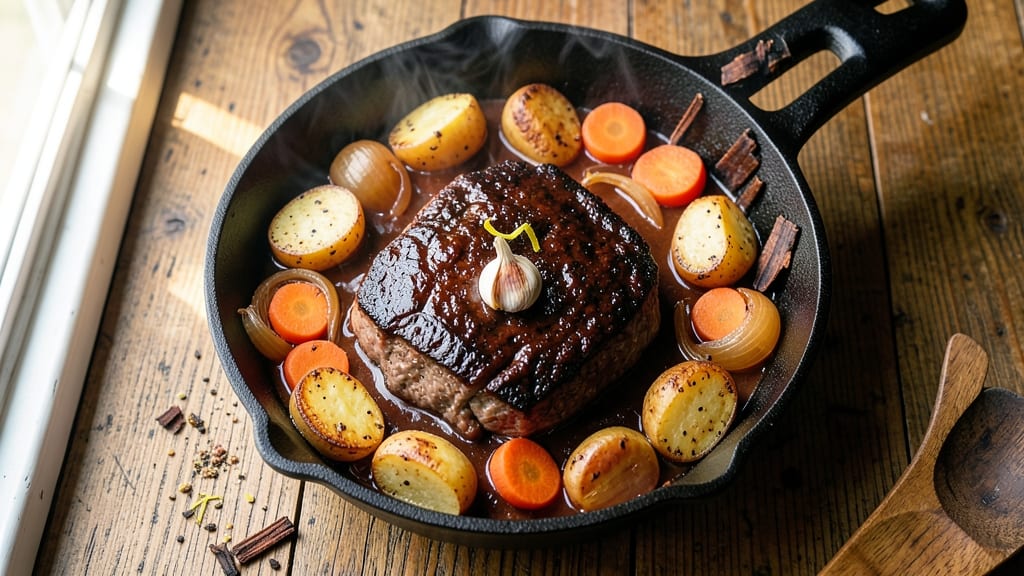
Barbecue beef stew transforms tough cuts into melt-in-your-mouth tenderness through slow-smoked magic and caramelized fond development. This recipe blends my pitmaster roots with French technique—smoked beef chuck breaks down into rich, smoky strands while vegetables develop deep, savory sweetness. The secret? A dry rub that builds bark on the beef while infusing the broth with layers of flavor.
We start by smoking the beef chuck overnight, letting the hickory or cherry wood penetrate the meat while creating a deep, aromatic base. The vegetables—carrots, potatoes, and onions—caramelize in the same pot, building a rich fond that forms the stew's foundation.
This isn't just comfort food; it's a restaurant-quality dish that delivers smoky depth and velvety texture in one bowl.
The result is a stew where every spoonful delivers perfectly tender beef, caramelized vegetables, and a broth so rich it coats your spoon. The smoky-sweet aroma alone will have everyone gathering around your pot.
This recipe serves 6-8 and makes enough for leftovers—because nothing beats reheated barbecue beef stew the next day.
Pair with cornbread for dipping or a crisp slaw to cut through the richness. The slow-cooked beef keeps its moisture while developing incredible texture, making this stew perfect for cold nights or holiday gatherings. Let's get cooking—your taste buds will thank you.
Ingredients for barbecue beef stew
Eight ingredients transform tough beef into smoky, velvety stew perfection with deep caramelized fond magic.
| Ingredient | Amount | Notes |
|---|---|---|
| Beef Chuck Roast 🥩 | 4 lb | Well-marbled, cut into 1.5-inch cubes |
| Yellow Onions 🧅 | 3 whole | Medium size, sliced into wedges |
| Carrots 🥕 | 4 lb | Whole, cut into 2-inch chunks |
| Russet Potatoes 🥔 | 3 lb | Cut into 2-inch chunks, peeled |
| Garlic Cloves 🧄 | 8 cloves | Smash with side of knife |
| Hickory Wood Chips 🌳 | 1 lb | Soaked in water for 30 minutes |
| Cherry Wood Chips 🍒 | ½ lb | Soaked in water for 30 minutes |
| Beef Broth 💧 | 4 cups | Low-sodium, homemade preferred |
| Tomato Paste 🍅 | ½ cup | Canned, no sugar added |
| Apple Cider Vinegar 🍎 | 2 tbsp | For bright acidity |
| Brown Sugar 🍯 | ¼ cup | Light or dark, packed |
| Smoked Paprika 🌶️ | 2 tbsp | For deep smoky flavor |
| Ground Black Pepper 🌶️ | 1 tbsp | Freshly cracked |
| Kosher Salt 🧂 | 1 tbsp | Diamond Crystal preferred |
| Olive Oil 🫒 | ¼ cup | For searing beef |
The beef chuck is non-negotiable here—look for well-marbled cuts at Whole Foods or your local butcher. I always ask for the roast to be cut into 1.5-inch cubes myself, but most grocery stores carry pre-cubed chuck. The wood chips? Traeger and Costco sell them pre-soaked, but I save money by buying bulk and soaking my own. For the vegetables, organic carrots and potatoes from the store's produce section hold up best during the long cooking time. The Russets should be firm—no soft spots. And don't skip the apple cider vinegar; it's what cuts through the richness for that perfect balance.
No hickory chips? Mesquite or pecan wood works beautifully, though the flavor profile shifts slightly. Running short on beef broth? Low-sodium chicken broth plus 1 tbsp soy sauce gets you close. The tomato paste can be that little squeeze tube from Trader Joe's—it's perfect for this recipe and lasts forever. For the rub, if you can't find smoked paprika, regular paprika plus a pinch of liquid smoke works in a pinch. And here's a pro tip: toast your brown sugar in a dry skillet for 2-3 minutes before adding—it deepens the caramel notes. The olive oil? Use something with a high smoke point—light olive oil or avocado oil. Don't ruin it with extra-virgin here.
This stew only gets better with time, so make a double batch. The beef will keep its tenderness for 4-5 days in the fridge, and the broth freezes beautifully for up to 3 months. I always portion mine into containers with a layer of fat on top to protect the beef—reheats like a dream. The vegetables can be prepped ahead and stored in the fridge for 2 days before cooking. And if you've got leftovers? Turn them into stew sandwiches with crusty bread the next day. Trust me, they're worth it.
Why You'll Love This Recipe
- One-Pot Magic: I swear by this recipe when I’m too tired to wash extra pots. Chuck roast, onions, and carrots all simmer together—no chopping like a fine-diner, just big chunks that melt into tender perfection. The potatoes slide in last, soaking up all that smoky, saucy goodness without falling apart.
- Smoky Depth Bomb: That slow-cooked beef? It’s like a hug in a bowl. The chuck roast gets fork-tender while the onions caramelize, and the garlic? Oh, it’s roasted right in the pot—no need to burn your kitchen. The barbecue sauce ties it all together with a sweet, tangy punch that makes every bite worth the wait.
- Leftovers That Shine: Between us, this stew only gets better the next day. I make a double batch on Sundays because reheating it for lunch is my favorite kind of lazy. The potatoes stay creamy, the meat pulls apart easily, and honestly? I’d eat it cold in a sandwich if I had to.
- Budget-Friendly Crowd-Pleaser: A chuck roast stretches farther than you’d think, and the veggies? Basic, cheap, and always in my pantry. It’s the kind of meal where I can feed my whole family—or my book club—without breaking the bank. Plus, the flavors are so rich, no one will guess it’s an easy weeknight dish.
Step-by-step instructions for slow-braised barbecue beef stew
Here's how to build layers of smoky depth and caramelized richness in your stew.
Prepare the Wood Chips and Preheat the Oven
Begin by soaking the 1 lb hickory wood chips and 0.5 lb cherry wood chips in separate bowls of water for 30 minutes. This ensures they'll smolder steadily without burning. While they soak, preheat your oven to 325°F—this low-and-slow temperature is essential for tenderizing the beef and developing deep flavor.
Real talk: Don't skip the soaking. Dry wood chips can create too much smoke too quickly, making your stew bitter rather than smoky. After soaking, drain them well before adding to your pot. This step sets the foundation for that authentic barbecue flavor profile we're after.
Sear the Beef Chuck Roast for Maximum Flavor
Heat a large Dutch oven over medium-high heat and add the 0.25 cup olive oil. Once shimmering, carefully add the 4 lb beef chuck roast cut into 1.5-inch cubes, working in batches if needed to avoid crowding. Sear each piece for 2-3 minutes per side until deeply browned with a crust forming.
This isn't just about color—searing develops the Maillard reaction, creating complex flavors that will infuse into your stew. I press down gently on the beef cubes during the first minute to prevent them from curling and ensure even contact with the pan. Transfer the browned beef to a plate as you work.
Build the Flavor Base with Onions and Carrots
In the same Dutch oven, add the 3 whole yellow onions sliced into wedges and 4 lb carrots cut into 2-inch chunks. Cook for 8-10 minutes, stirring occasionally, until the onions soften and begin to caramelize—this should happen before the carrots are fully tender. Add the 8 smashed garlic cloves and cook for another 1 minute until fragrant.
Here's where it gets good: The onions should be golden brown with some darker spots forming. If they're browning too quickly, reduce heat slightly. These caramelized vegetables form the flavor foundation of your stew, so don't rush this step. Remove them to a separate plate and set aside.
Develop the Smoky-Sweet Broth
Return the Dutch oven to medium heat and add the 0.5 cup tomato paste, stirring to coat the bottom. Cook for 2 minutes until it darkens slightly. Add the 4 cups beef broth, 2 tbsp apple cider vinegar, 0.25 cup brown sugar, 2 tbsp smoked paprika, 1 tbsp ground black pepper, and 1 tbsp kosher salt, stirring well to combine.
Now add the soaked wood chips to the pot. Bring everything to a gentle simmer, then return the beef, onions, and carrots to the pot. The liquid should come about ¾ of the way up the beef cubes—if not, add a splash more broth. Cover tightly with a lid and transfer to the preheated 325°F oven.
Braise Until Fork-Tender with Potatoes
Braise for 2 hours, then add the 3 lb russet potatoes cut into 2-inch chunks. Return to the oven and cook for another 1-1.5 hours until the beef is fork-tender with no resistance. The potatoes should be soft enough to pierce easily with a fork, and the stew should have thickened into a rich sauce.
I check doneness by piercing a beef cube—if it slides off the fork with minimal resistance, it's ready. The potatoes should be creamy inside but still hold their shape. If the stew seems too thick, add a splash of water or broth to reach your desired consistency. Let it rest for 15 minutes before serving to allow flavors to meld completely.
Pro Tips For Making Barbecue Beef Stew
- Sear the Chuck Hard: That beef chuck roast needs a deep, dark crust before it hits the liquid—don’t skimp on the time. I used to rush it, and the stew ended up tasting more like braised meat than rich, smoky barbecue. Hit it with high heat for 3-4 minutes per side until it’s got a good brown layer, then let it rest for 5 minutes before adding anything else.
- Cut Potatoes Uniformly: Russets break down unevenly, and you’ll end up with mushy chunks if you’re not careful. Cut them into 1.5-inch cubes—no smaller—so they hold their shape but still soften perfectly. I learned this the hard way when my first batch turned to mush before the beef was tender.
- Brown Onions First: Don’t just chop and toss those yellow onions into the pot with everything else. Sauté them in the same pan you seared the beef in until they’re golden and caramelized—this adds a depth of flavor that raw onions can’t match. Skip this, and your stew will taste flat, even if everything else is perfect.
- Add Potatoes Last: Potatoes absorb liquid fast, and if you throw them in too early, they’ll turn into a sad, waterlogged mess. Wait until the beef is fork-tender (about 2-2.5 hours in) before adding them, then simmer for just 20-25 minutes. This keeps them creamy without stealing all the rich beef broth.
Dietary considerations for this dish
Gluten-Free Adaptations
This stew is naturally gluten-free, but always double-check your ingredients. The beef broth should be labeled gluten-free (I use Pacific Foods brand), and ensure your tomato paste and brown sugar contain no wheat additives.
For extra insurance, I toast my own brown sugar in a dry skillet to avoid any potential cross-contamination. The wood chips and spices are inherently safe, so no modifications needed there. 🌱
Low-Carb Options
Swap the 3 lb russet potatoes for 3 cups cauliflower florets to cut carbs while keeping the hearty texture. The cauliflower will absorb the smoky flavors beautifully and add a subtle sweetness.
For even lower carbs, reduce the brown sugar to 1 tbsp and add 1 tsp erythritol for a sugar-free option. The beef and vegetables will still deliver that satisfying, slow-cooked depth.
Dairy-Free Considerations
This recipe is already dairy-free, but if you're serving alongside creamy sides, consider offering a dairy-free alternative. For example, cashew sour cream (blend ½ cup soaked cashews, 2 tbsp lemon juice, and 1 tbsp olive oil) pairs wonderfully with the smoky beef.
The stew's rich broth stands up to dairy-free garnishes like fresh parsley or a drizzle of chili oil for extra heat. ✨
Allergen-Friendly Swaps
For nut allergies, skip the cashew sour cream and use coconut yogurt instead—it adds creaminess without nuts. If you're avoiding tomatoes, replace the 0.5 cup tomato paste with 0.5 cup roasted red pepper purée (jarred or homemade) for a similar depth of flavor.
For soy concerns, ensure your beef broth is soy-free (I use Kettle & Fire brand). The stew remains robust even with these swaps!
Protein Variations
Want to make this vegetarian? Swap the beef for 4 lb extra-firm tofu or mushrooms** (like king oyster or portobello) cut into chunks.
Press the tofu first to remove excess water, then marinate in 2 tbsp soy sauce, 1 tbsp smoked paprika, and 1 tbsp maple syrup for 30 minutes before cooking. The mushrooms will soak up the smoky broth beautifully, delivering a meaty texture. 💫
Nutrition facts
Frequently asked questions
Can I make this stew in a slow cooker instead of the oven?
Transfer everything to a 6-quart slow cooker after searing the beef and building the flavor base. Cook on low for 8 hours or high for 5-6 hours, adding potatoes during the last 2 hours. The slow cooker's gentle heat will tenderize the beef beautifully while developing those smoky-sweet flavors. Just add the soaked wood chips directly to the slow cooker during the first hour for that authentic barbecue aroma.
What's the best way to reheat leftovers without drying out the beef?
Reheat gently on the stove over low heat with a splash of beef broth or water to restore moisture. Cover the pot and simmer for 10-15 minutes, stirring occasionally. For microwave reheating, cover with a damp paper towel and heat in 30-second intervals, stirring between each. The beef will stay tender and the broth will maintain its rich texture when reheated properly.
How can I make this stew spicier?
Add 1-2 tbsp cayenne pepper or 1 tsp red pepper flakes when building the flavor base. For heat with depth, stir in 1 tsp chipotle powder or ½ cup diced jalapeños during the final 30 minutes of cooking. Garnish with sliced jalapeños or a drizzle of hot sauce before serving for extra kick. Remember, you can always adjust spice levels to taste!
Can I use a different cut of beef?
While beef chuck is ideal for its marbling and flavor, you can substitute with brisket or short ribs. These cuts will develop even more rich, beefy flavors but may need 1-2 extra hours of cooking. Chuck roast is the most budget-friendly option that delivers perfect tenderness. If using short ribs, remove the membrane first for better texture.
What's the secret to getting that perfect smoky flavor?
The key is using high-quality wood chips (hickory or cherry) and soaking them properly. For extra depth, add ½ tsp liquid smoke to the broth during the final 30 minutes of cooking. Don't over-smoke—the wood chips should smolder gently, not burn. The combination of wood chips and smoked paprika creates that authentic barbecue flavor profile we all love.