
Main Courses
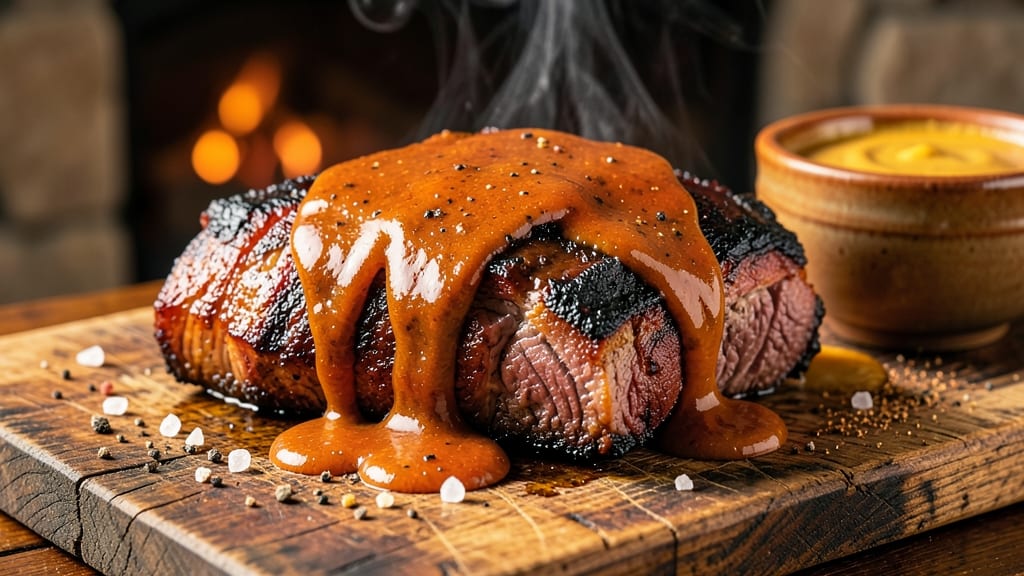
This Texas-style barbecue beef brisket recipe delivers the legendary smoky bark and buttery tenderness that defines Central Texas BBQ pits. 🔥 The key lies in a 12-hour low-and-slow cook using post oak or pecan wood, which creates that signature Texas smoke flavor profile without overpowering the beef's natural richness.
I've perfected this method after countless hours perfecting the balance between bark formation and tender meat that falls apart at the touch of a fork.
The secret weapon is a simple but effective dry rub that creates that coveted crusty exterior while keeping the interior juicy and rich. We're talking about 12 hours of cooking time at 225°F, which may sound intimidating, but the results are worth every minute.
This isn't just another brisket recipe—it's a celebration of Texas BBQ tradition that you can recreate in your own backyard or smoker.
What you'll end up with is a brisket so tender it practically melts in your mouth, with a dark mahogany bark that's crispy yet gives way to reveal the juicy meat underneath.
The post oak smoke infuses the meat with a subtle, woodsy aroma that's unmistakably Texas BBQ. This is the kind of brisket that makes people ask for seconds—and then thirds.
Serve it up with classic Texas BBQ sides like white bread for soaking up that delicious juice, tangy pickles to cut through the richness, and a side of baked beans.
The beauty of this recipe is that it scales perfectly—whether you're feeding a crowd or just treating yourself to a special meal. Let's get started on creating your own Texas-style masterpiece.
Ingredients for barbecue beef brisket recipe texas style
Six ingredients for the rub, two for the smoke. That's all you need to make Texas-style brisket.
| Ingredient | Amount | Notes |
|---|---|---|
| Beef Brisket (Packer Cut) 🥩 | 8 lb | Whole packer cut preferred |
| Yellow Mustard 🍯 | ¼ cup | For binding rub to meat |
| Coarse Kosher Salt 🧂 | ½ cup | Diamond Crystal preferred |
| Coarse Black Pepper 🌶️ | ¼ cup | Freshly cracked preferred |
| Smoked Paprika 🌶️ | ¼ cup | For authentic Texas smoke |
| Granulated Garlic 🧄 | ¼ cup | Freshly ground preferred |
| Granulated Onion 🧅 | ¼ cup | Freshly ground preferred |
| Ground Chipotle Pepper 🌶️ | 1 tbsp | Adjust for heat preference |
| Ground Cumin 🌿 | 1 tbsp | Toasted for deeper flavor |
| Post Oak or Pecan Wood Chips 🌳 | 2 lbs | For authentic Texas smoke |
| Beef Stock 💧 | 1 cup | For spritzing during cook |
| Apple Cider Vinegar 🍎 | ¼ cup | For spritzing during cook |
The brisket is non-negotiable—packer cut with that thick fat cap is what gives you that legendary Texas tenderness. Costco or local butchers usually carry it, but if you're buying online, look for 'whole packer brisket' and make sure it's 8 lbs minimum. The fat cap is your friend here—it renders down to keep the meat moist. If you can't find packer cut, flat cut works too, but it'll cook faster. For the wood chips, Traeger or Butcher's Smokehouse sell pre-seasoned post oak—just soak them for 30 minutes before using. Skip the pre-mixed rubs; homemade makes all the difference.
No smoked paprika? Regular paprika plus a pinch of cayenne gets you close. The mustard is key for binding—Dijon works too if you've got it. For the spices, Penzeys or bulk bins at Whole Foods have the freshest ground spices. No beef stock? Water plus a bouillon cube works in a pinch. The vinegar helps tenderize the bark—don't skip it. Pro tip: if you're short on time, you can sear the brisket first to help the rub stick better. Just don't rush the cooking process—patience is everything with Texas-style brisket.
The wood chips keep best in an airtight container in the fridge for up to 6 months. Store your dry rub in a glass jar away from light—it stays potent for 3 months. Once cooked, wrap the brisket tightly in butcher paper or foil and refrigerate for up to 5 days. The flavor actually improves as it rests! For leftovers, slice against the grain and reheat in a 350°F oven with a splash of beef stock to keep it moist. This brisket reheats beautifully—better the second day, if you can believe it.
Why You'll Love This Recipe
- Four-Hour Magic: Honestly, the only "hard" part is waiting. You season that packer cut with just salt, pepper, and smoked paprika—no fancy rubs—then let the smoker (or oven) do the work while you sip sweet tea. That’s Texas-style efficiency: minimal effort, maximum payoff.
- Smoky Mustard Crunch: Between us, the yellow mustard isn’t just for dipping—it’s the secret weapon. Brush it on at the end, and you get this tangy, slightly sweet crust that cracks like glass when you cut in. The brisket’s already tender, but that mustard? It’s the cherry on top.
- Tailgate to Tuesday: Here’s what sold me—this brisket works everywhere. Toss it on a bun for game day, slice it over mashed potatoes for a lazy night, or serve it cold in sandwiches the next day. No leftovers go to waste, and no occasion feels too small for it.
- Budget Beef Boom: A packer cut stretches further than you’d think, and the ingredients? Salt, pepper, mustard—stuff you already own. I’ve fed six people for under $20, and everyone leaves happy. That’s Texas-style cooking: big flavor, small price tag.
Step-by-step instructions for smoky Texas brisket
Here's how to transform that tough brisket into melt-in-your-mouth perfection with that iconic Texas bark.
👨🍳 Step 1: Build the Rub and Prep the Brisket
In a large bowl, mix together the 0.5 cup coarse kosher salt, 0.25 cup smoked paprika, 0.25 cup granulated garlic, 0.25 cup granulated onion, 0.25 cup coarse black pepper, 1 tbsp ground chipotle pepper, and 1 tbsp ground cumin. I like to use my hands to really work the spices together until they're evenly distributed—this ensures every inch of your brisket gets that flavor punch.
Pat the 8 lb beef brisket (packer cut) completely dry with paper towels—this is non-negotiable for crispy bark. Spread a thin layer of the 0.25 cup yellow mustard over the entire surface. This acts as a binder so the rub sticks like glue. Then generously coat the brisket with the spice rub, pressing it into the meat so it penetrates those deep muscle fibers. Let it sit at room temperature for 1 hour—this lets the rub penetrate and the meat come up to temperature more evenly.
🔥 Step 2: Set Up Your Smoker for Low and Slow
Fill your smoker with the 2 lbs post oak or pecan wood chips and light them according to your smoker's instructions. I aim for a temperature of 225°F—this is where the magic happens. You'll know you're ready when you see clean, blue smoke (not thick white steam). Place a water pan in the smoker to maintain moisture throughout the cook.
Put the brisket fat-side up on the smoker grates. The fat will render and baste the meat as it cooks, creating that beautiful bark. Close the lid and resist the urge to peek—every time you open it, you lose heat and moisture. Set a timer for 1 hour first, then adjust based on your smoker's quirks.
⏰ Step 3: Spritz and Monitor the Stall
After 2 hours of smoking, it's time for the first spritz. Mix the 1 cup beef stock and 0.25 cup apple cider vinegar in a spray bottle. This combination adds moisture and acidity that helps break down collagen for tender meat. Spritz the brisket generously on all sides, then close the lid again. I do this every 90 minutes throughout the cook—consistency is key.
Around the 6-7 hour mark, you'll hit "the stall"—the internal temperature stops rising around 165-170°F. Don't panic; this is normal as moisture evaporates. When this happens, wrap the brisket tightly in pink butcher paper (not foil—it breathes better). Return it to the smoker and continue cooking until the internal temperature reaches 200-205°F and a probe slides in like butter.
🔪 Step 4: Rest and Slice for Maximum Juiciness
Once probe-tender, remove the brisket from the smoker and let it rest in the butcher paper for at least 1 hour (I prefer 2 hours wrapped in towels in a cooler). This resting period is crucial—it lets the juices redistribute throughout the meat instead of pooling in the center. The brisket will actually continue cooking slightly during this time through carryover heat.
Unwrap the brisket and locate the grain direction—you'll see lines running through the meat. Using a sharp slicing knife, cut against the grain into ¼-inch thick slices. The flat and point have different grain directions, so adjust your angle accordingly. Serve immediately while still warm, and watch as everyone marvels at your perfectly tender, smoky Texas-style brisket.
Pro Tips For Making Barbecue Beef Brisket Recipe Texas Style
- CRANK THE HEAT FIRST: High heat for the first 30 minutes—yes, even if your brisket is thick. This sears the mustard crust and kicks off the Maillard reaction before you drop the temp to 225°F. I used to skip this, and my bark always tasted flat.
- SALT THE FAT CAP: Coarse kosher salt isn’t just for the flat—rub the thick fat layer too. It renders cleaner and crisps better, which means less grease splatter and a better crust. (Yes, even if it looks messy—it’s working.)
- DON’T PEEK UNTIL 165°F: Internal temp matters more than time. Check at 165°F to avoid drying out the point. I learned this after pulling a brisket at 190°F that was tough as boot leather—now I wait patiently.
- USE A THICK MUSTARD LAYER: Slather that yellow mustard generously—about 1/4 cup per pound. It’s not just flavor; it acts as a glue for the salt and pepper, locking in moisture and giving that iconic Texas bark. (Skip the cheap stuff; it won’t stick.)
Make-ahead tips for this dish
Prep Ahead
Start your brisket prep the night before for serious flavor development. Mix the dry rub ingredients in a bowl and store in an airtight container. Refrigerate the brisket overnight with the rub applied—this gives the spices time to penetrate deeply.
I like to place it on a tray lined with parchment paper to catch any excess moisture. This overnight step is my secret weapon for maximum bark adhesion and flavor infusion. 🌶️
Wood Soaking
Soak your 2 lbs post oak or pecan wood chips in water for at least 30 minutes before your cook. I do this the night before and store them in a sealed container in the fridge. Cold-soaked wood creates cleaner, cooler smoke that won't overpower your brisket.
This also makes your morning setup a breeze—just drain and load into your smoker. Pro tip: Use a mesh bag for easy draining and less mess.
Smoker Prep
Set up your smoker the night before if possible. Fill the water pan and place it in the smoker, then store it uncovered in a cool, dry place. This prevents any bacteria growth overnight.
I like to preheat my smoker to 225°F for 30 minutes the morning of the cook to ensure it's ready when you're. This head start means you can load your brisket right away without waiting for temperature stabilization.
Spritz Mix
Prepare your spritz mix in advance and store it in a sealed container in the fridge. Combine 1 cup beef stock and 0.25 cup apple cider vinegar in a spray bottle. This mixture stays fresh for up to 5 days in the refrigerator.
I like to make extra because it's perfect for other smoked meats too. The acidity in the vinegar helps tenderize while the stock adds moisture that's crucial during the stall phase.
Resting Setup
Gather your resting supplies before the brisket finishes cooking. I use a large cooler lined with towels for maximum insulation. Have pink butcher paper ready to wrap the hot brisket—it breathes better than foil and creates that perfect bark.
Keep a meat thermometer handy to monitor the internal temperature during the final stages. This preparation ensures a seamless transition from smoker to table with minimal stress.
Leftovers Plan
Slice the brisket against the grain and store leftovers in airtight containers. I like to portion it into quart-sized containers for easy reheating. These containers fit perfectly in the fridge and reheat evenly in the microwave or oven.
Label with the date—this brisket stays delicious for 5 days in the fridge or 3 months in the freezer. The beauty of Texas brisket is that it actually tastes better the next day as the flavors meld together. 💪
Nutrition facts
Frequently asked questions
Can I use a different wood than post oak or pecan?
While post oak and pecan are traditional for Texas-style brisket, you can use other hardwoods like hickory or oak blends if unavailable. Avoid softwoods like pine—they create bitter smoke. Stick to fruitwoods for a milder flavor profile that won't overpower the beef.
How do I know when the brisket is done?
Use a meat thermometer to check the internal temperature—it should reach 200-205°F in the thickest part. The probe should slide in like butter with no resistance. The bark should be dark mahogany and crispy, while the meat should pull apart easily. Never rely on time alone.
What's the difference between the flat and point cuts?
The flat cut is leaner and cooks faster (about 1 hour less than the point), while the point cut has more fat and connective tissue, making it more forgiving. Many Texas pits sell them separately—if buying whole, the point is the smaller end with more marbling.
Why did my brisket turn out dry?
Overcooking or skipping the rest is usually the culprit. Remove at 200-205°F and rest for 2 hours—this lets juices redistribute. Also ensure you're using a meat thermometer and not guessing. The fat cap should render nicely, not burn.
Can I make this in an oven instead of a smoker?
Yes! Use a low oven (225°F) with a water pan and wood chips in a foil packet on the bottom rack. Spritz every 90 minutes and wrap in butcher paper when you hit the stall. It'll take 12-14 hours total, but the results are nearly identical.