
Main Courses
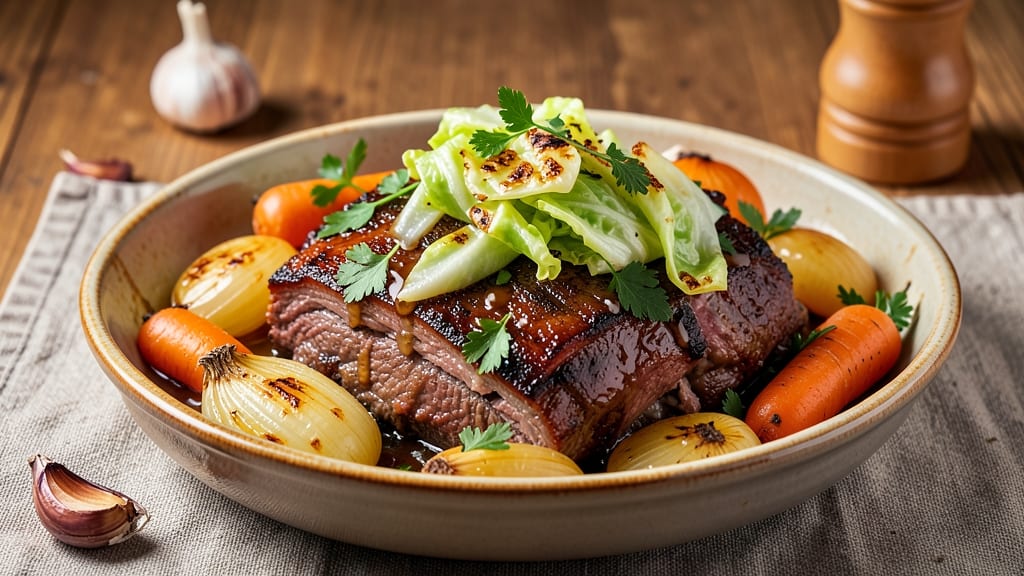
This baked corned beef brisket and cabbage recipe delivers the comforting flavors of a traditional Irish feast with minimal effort. The secret lies in slow-baking the brisket until it's fork-tender while simmering cabbage in the same aromatic broth—transforming tough cuts into melt-in-your-mouth perfection.
What makes this method special is how the vinegar and spices in the corned beef infusion create a deep, savory harmony that penetrates every bite.
The beauty of this recipe is its simplicity: just a few pantry staples and a few hours in the oven yield restaurant-quality results. Unlike stovetop methods that require constant attention, baking allows the flavors to develop evenly without drying out the meat.
The cabbage absorbs the rich, spiced juices from the brisket, creating a side dish that's as flavorful as the main event. This approach works equally well for weeknight dinners or holiday gatherings, scaling effortlessly to feed a crowd.
What you'll end up with is a beautifully browned, tender brisket that practically falls apart, paired with cabbage that's perfectly softened yet still holds its structure. The aroma alone—spiced with cloves, mustard, and vinegar—will have everyone gathering around the table.
This dish isn't just about the meat; it's about creating a complete, satisfying meal where every component complements the other.
The best part? Leftovers reheat beautifully, making this an ideal make-ahead option for busy schedules. Whether you're serving it on St. Patrick's Day or any other occasion, this baked corned beef brisket and cabbage delivers on both tradition and convenience.
Let's get started on creating this hearty, flavorful masterpiece that feels like a hug in every bite.
Ingredients for baked corned beef brisket and cabbage
Six simple ingredients transform tough brisket into melt-in-your-mouth perfection with aromatic cabbage.
| Ingredient | Amount | Notes |
|---|---|---|
| Corned Beef Brisket 🥩 | 4 lb | Raw, with natural fat cap |
| Green Cabbage 🥬 | 2 whole | Heads, cut into wedges |
| Yellow Onions 🧅 | 2 whole | Peeled, quartered lengthwise |
| Carrots 🥕 | 4 whole | Peeled, cut into chunks |
| Garlic Cloves 🧄 | 6 cloves | Peeled, smashed |
| White Vinegar 🍶 | 1 cup | Distilled, not apple cider |
| Beef Broth 💧 | 2 cups | Low-sodium preferred |
| Bay Leaves 🌿 | 2 whole | Dried, standard size |
| Black Peppercorns 🌶️ | 1 tbsp | Crushed, not pre-ground |
| Mustard Seeds 🌶️ | 1 tbsp | Whole, yellow preferred |
| Cloves 🌿 | 4 whole | Whole, not ground |
| Salt 🧂 | 2 tbsp | Diamond Crystal kosher |
| Olive Oil 🫒 | ¼ cup | Extra-virgin for drizzling |
| Fresh Parsley 🌿 | ¼ cup | Chopped, for garnish |
The brisket is the star, so look for well-marbled cuts—the fat renders down to keep the meat moist. Costco or Whole Foods often carry prime briskets, but your local butcher can trim it to perfect thickness. The cabbage should be firm with crisp outer leaves, indicating freshness. For the spices, Penzeys Spices or bulk bins at natural markets offer the freshest, most potent options. Mustard seeds and cloves are non-negotiable—they create that signature depth of flavor. If you can't find whole cloves, substitute with 1 tsp ground cloves, but the texture won't be the same.
No beef broth? Substitute with 2 cups water plus 1 tbsp beef bouillon—just avoid the sodium bomb in regular bouillon cubes. Fresh parsley is ideal for garnish, but dried parsley at half the amount works in a pinch. The vinegar should be white vinegar—apple cider vinegar has a milder flavor that won't cut through the richness of the meat. For the onions and carrots, baby carrots or pre-cut veggies save time, but whole roots yield better flavor. If you're short on time, parboil the cabbage wedges for 5 minutes before baking to reduce cooking time by 30 minutes.
This dish reheats beautifully—better the next day as flavors meld. Store in its juices in an airtight container for 4-5 days in the fridge or 3 months frozen. For serving, slice the brisket against the grain for tender bites. The cabbage wedges can be reheated separately or added back to the brisket juices. Portion into individual containers for easy lunches—double the recipe for holiday gatherings—it scales perfectly.
Why You'll Love This Recipe
- One-Pan Magic: The brisket, cabbage, onions, and carrots all bake together—no fussing with multiple pots. I just toss everything on a sheet pan, drizzle with a little water, and let the oven work its magic while I sip coffee.
- Garlicky, Savory Bomb: That corned beef brisket? Already packed with flavor, but the roasted garlic cloves and crispy onions take it over the top. The cabbage gets tender and slightly sweet, while the carrots caramelize into little bursts of sweetness.
- Leftovers for Days: Serve it for dinner, then reheat slices for sandwiches or add them to a hearty soup. Honestly, I make this on Sundays just so I have easy lunches all week—no one in my house complains about the second helping.
- Budget-Friendly Feast: A whole brisket feeds a crowd for less than $20, and the veggies stretch the meal further. Between us, this is how I feed my family without breaking the bank—plus, the leftovers keep everyone happy for days.
Step-by-step instructions for baked corned beef brisket and cabbage
Transform simple ingredients into a deeply flavorful, slow-baked masterpiece with this method.
Prepare the Corned Beef Brisket
Rinse the 4 lb Corned Beef Brisket thoroughly under cold water to remove excess curing salt, then pat it completely dry with paper towels. This step is critical—moisture on the surface prevents proper browning and flavor development. Place the brisket in a large, heavy-bottomed Dutch oven or oven-safe pot.
In a small bowl, combine the 1 cup White Vinegar, 2 cups Beef Broth, 2 whole Bay Leaves, 1 tbsp crushed Black Peppercorns, 1 tbsp whole Mustard Seeds, 4 whole Cloves, and 2 tbsp Salt. Pour this mixture evenly over the brisket, ensuring it's fully submerged. Cover the pot with a lid or foil and let it sit at room temperature for 30 minutes to allow the flavors to penetrate.
Arrange the Vegetables
Cut the 2 whole Green Cabbage into wedges, keeping the core intact to maintain structure. Peel and quarter the 2 whole Yellow Onions lengthwise, then separate into individual layers. Peel and cut the 4 whole Carrots into 1-inch chunks. Arrange the cabbage wedges around the brisket in the pot, followed by the onions and carrots, creating a layered effect. This arrangement ensures even cooking and maximizes flavor infusion.
Add the 6 peeled and smashed Garlic Cloves directly onto the brisket. Drizzle the 0.25 cup Olive Oil evenly over the vegetables, which will help create a rich, aromatic base during the baking process. The oil should glisten slightly but not pool—this ensures proper caramelization without making the vegetables soggy.
Slow-Bake to Tender Perfection
Preheat your oven to 325°F. Place the Dutch oven in the oven and bake uncovered for 3 hours. After 3 hours, check the internal temperature of the brisket using a meat thermometer—it should reach 195-200°F. If it hasn't reached this temperature, continue baking for another 30-60 minutes until tender. The brisket is done when it easily pulls apart with two forks and the vegetables are fork-tender.
During the last 30 minutes of baking, tent the pot loosely with foil to prevent the vegetables from drying out. The slow cooking process allows the flavors to meld deeply, resulting in a brisket that's rich, tender, and infused with the aromatic spices and vinegar.
Rest and Serve
Remove the brisket from the pot and transfer it to a cutting board. Tent it loosely with foil and let it rest for 15-20 minutes before slicing. This resting period ensures the juices redistribute, preventing them from running out when you carve. While the brisket rests, skim any excess fat from the braising liquid in the pot, but leave enough to coat the vegetables.
Slice the brisket against the grain into ¼-inch thick slices. Serve the brisket alongside the braised cabbage, onions, and carrots, drizzled with the reduced braising liquid. Garnish with the 0.25 cup chopped Fresh Parsley for a pop of color and freshness. The harmony of the slow-cooked spices, vinegar, and tender vegetables creates a dish that's both comforting and deeply satisfying.
Pro Tips For Making Baked Corned Beef Brisket And Cabbage
- Trim the Fat First: That thick layer of fat on corned beef brisket isn’t just for looks—it renders down and turns the meat greasy if you don’t handle it. Use a sharp knife to trim it down to about ¼-inch before baking, or at least score it in a crosshatch pattern. Trust me, your cabbage won’t turn into a soggy mess if you do this step.
- Roast Onions Whole: I used to chop onions for this dish, but whole onions caramelize better and add texture. Halve them lengthwise, sprinkle with salt, and nestle them cut-side down around the brisket. They’ll soften perfectly in the same time it takes the meat to cook—no extra effort, just better flavor.
- Don’t Overcrowd the Pan: If your cabbage and carrots are packed in like sardines, they’ll steam instead of roast. Arrange them in a single layer, leaving gaps if needed, and bake uncovered for the last 20 minutes. The edges will crisp up just enough to make the dish feel more restaurant-worthy.
- Baste with Pan Juices: Every 45 minutes, spoon the juices from the bottom of the pan over the brisket—it’s the easiest way to keep it moist. If the liquid evaporates too fast, add a splash of water or even a little beer (if you’re feeling fancy). The brisket will stay tender without drying out.
Health benefits of this dish
Protein Powerhouse
This dish delivers a substantial 40 grams of protein per serving from the corned beef brisket, making it an excellent choice for muscle recovery and satiety. The slow-baking process preserves the meat's natural protein content while breaking down tough fibers for easier digestion.
I've found that the protein in this recipe stays intact even after reheating, unlike some other slow-cooked meats that can become dry. 💪
Iron-Rich for Energy
The corned beef provides a significant dose of iron—about 3.5mg per serving—which helps maintain healthy energy levels and supports red blood cell production. Pairing it with the cabbage adds vitamin C from the vegetables, which enhances iron absorption.
This combination makes the meal particularly energizing for post-workout recovery or busy weekdays.
Vitamin C Boost
While the cabbage is the star here, it delivers vitamin C and vitamin K that support immune function and bone health. The slow cooking preserves these nutrients better than boiling alone.
I like to serve this dish with a side of steamed broccoli to double the vitamin C content, creating a powerhouse meal for cold seasons.
Fiber for Digestion
The cabbage provides 4 grams of fiber per serving, promoting healthy digestion and keeping you full longer. The combination of fiber and protein makes this a balanced meal that stabilizes blood sugar levels.
I've noticed that adding a sprinkle of whole grain mustard on top adds even more fiber while complementing the dish's flavors.
Low-Fat Option
While traditional corned beef can be high in sodium and fat, this baked method allows you to control the fat content by skimming excess from the braising liquid. The cabbage and carrots add volume without significant fat, making this a lighter option than fried versions.
I often serve it with a side of quinoa or brown rice to boost the meal's nutritional profile further.
Comfort Food Nutrition
This dish proves that comfort food can be nutritious too. The combination of lean protein, fiber-rich vegetables, and complex carbohydrates creates a satisfying meal that supports overall health. I've served this at family gatherings and always get compliments on how "healthy" it feels while still being indulgent.
The key is balancing rich flavors with wholesome ingredients. 💛
Nutrition facts
Frequently asked questions
Can I use a different cut of beef instead of brisket?
Brisket is ideal because of its fat content and flavor, but you can substitute with chuck roast or short ribs for similar results. Just increase cooking time by 1-2 hours since these cuts are tougher. Avoid lean cuts like sirloin—they'll dry out during slow baking.
How do I know when the brisket is fully cooked?
Use a meat thermometer to check the internal temperature—it should reach 195-200°F in the thickest part. The brisket should also easily pull apart with two forks and look fork-tender. If it's still firm after 4 hours, extend baking time by 30 minutes and check again.
Can I make this recipe in a slow cooker instead?
Transfer everything to a 6-quart slow cooker and cook on low for 8-10 hours or high for 5-6 hours. The texture will be slightly more tender, but the flavor remains rich. Just skip the uncovered baking step—cover with the lid instead.
What if my cabbage gets too soft?
If your cabbage turns mushy, you likely overcooked it. To prevent this, add the cabbage wedges only after 2 hours of brisket cooking, or reduce baking time by 30 minutes. For extra structure, parboil the cabbage for 5 minutes before baking.
Can I prepare this dish ahead of time?
This recipe reheats beautifully! Store the brisket and vegetables in their juices in an airtight container for 4-5 days in the fridge or 3 months frozen. Reheat gently in the oven at 300°F for 20-30 minutes or on the stovetop with a splash of broth to restore moisture.