
Main Courses
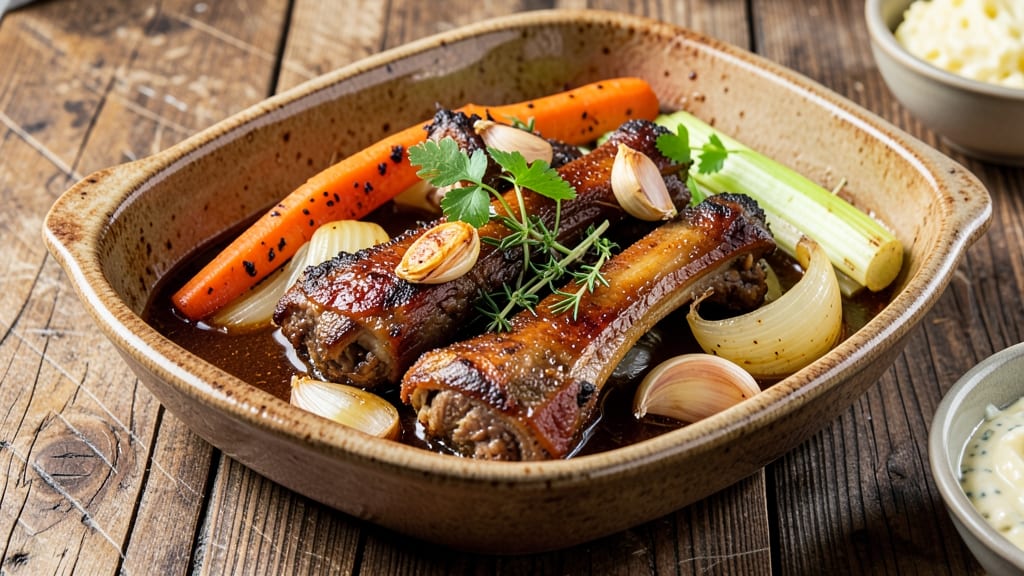
This baked beef neck bones recipe transforms tough cuts into melt-in-your-mouth comfort that makes every bite feel like a hug. 🔥 The secret lies in low-and-slow cooking, where collagen-rich bones break down into gelatinous richness that coats every forkful.
This isn't just dinner—it's a flavor experience that turns ordinary weeknights into special occasions.
What sets this recipe apart is the balance of technique and simplicity. You'll start with a simple seasoning blend—just salt, pepper, and aromatic herbs—but the magic happens during those hours in the oven.
The bones render their own juices, creating a natural broth that infuses the meat with unmatched depth. No fancy equipment needed, just patience and a steady oven temperature.
By the time you're done, you'll have fork-tender beef that practically falls apart, surrounded by a rich, gelatinous sauce that's perfect for dipping crusty bread.
The aroma alone will have everyone gathering at the table, and the first bite delivers that satisfying combination of meaty richness and velvety texture that defines true comfort food.
Serve with classic sides like mashed potatoes, buttered noodles, or a crisp green salad to balance the richness. This dish tastes even better the next day, making it ideal for meal prep or family gatherings. Let's get started on creating that restaurant-quality comfort at home.
Ingredients for baked beef neck bones
Six ingredients transform tough neck bones into melt-in-your-mouth comfort gold.
| Ingredient | Amount | Notes |
|---|---|---|
| Beef Neck Bones 🥩 | 4 lb | Collagen-rich, cut into 2-inch pieces |
| Yellow Onion 🧅 | 1 whole | Chopped into 1-inch pieces |
| Carrots 🥕 | 4 whole | Cut into 2-inch chunks |
| Celery Stalks 🥬 | 4 whole | Cut into 2-inch pieces |
| Garlic Cloves 🧄 | 6 cloves | Smashed for intense flavor |
| Fresh Thyme 🌿 | 2 tbsp | Leaves only, stems removed |
| Fresh Rosemary 🌿 | 1 tbsp | Chopped, fresh preferred |
| Kosher Salt 🧂 | 2 tbsp | Diamond Crystal preferred |
| Freshly Ground Black Pepper 🌶️ | 1 tbsp | Coarse grind preferred |
| Beef Broth 💧 | 2 cups | Low-sodium preferred |
| Red Wine 🍷 | 1 cup | Bold, dry variety |
| Olive Oil 🫒 | ¼ cup | Extra-virgin for richness |
| Fresh Parsley 🌿 | ¼ cup | Chopped, for garnish |
The beef neck bones are the star here—look for cuts with good marbling and visible collagen. Local butchers often have the best selection, but the meat department at Whole Foods or Costco carries quality options too. If you're buying a whole neck, ask for it cut into 2-inch pieces yourself—pre-cut saves time. The fresh herbs (thyme and rosemary) should smell vibrant, not dried out. Trader Joe's usually has great bundles of fresh herbs at reasonable prices. For the wine, any bold, dry red works—Cabernet Sauvignon or Merlot are my go-tos, but whatever's open in your fridge will do.
No fresh rosemary? Dried rosemary at one-third the amount works in a pinch, but fresh is ideal for that piney aroma. Short on beef broth? Water plus 1 tbsp soy sauce gets you close. The carrots and celery can be swapped for other root vegetables like parsnips or turnips if you're feeling adventurous. For extra richness, add 1 tbsp tomato paste to the pan when browning. The olive oil is non-negotiable here—use extra-virgin for that fruity depth that carries through the slow cooking. And if you're worried about the wine flavor being too strong, reduce it by half and add more broth instead.
This dish gets better with time—plan for at least 3 hours in the oven, but 4 is even better. The gelatinous sauce thickens as it cools, so it's perfect for dipping crusty bread or serving over buttered noodles. Store leftovers in the fridge for up to 5 days—the flavor only intensifies. For freezing, portion into airtight containers with some of the sauce, and it keeps for 3 months. I always make a double batch because it's that good. The bones practically dissolve into the sauce, creating a velvety texture that's pure comfort food magic.
Why You'll Love This Recipe
- One-Pot Magic: Honestly, I dump everything—bones, chopped veggies, garlic—into one pan and walk away. No pots to scrub, no mess to clean, just pure, lazy-day convenience.
- Deep, Caramelized Goodness: The onions and garlic turn golden and sweet while the bones render into rich, gelatinous perfection. That crispy edge on the veggies? Chef’s kiss.
- Leftovers That Shine: Between us, these bones taste better the next day. I’ll make a double batch on Sunday—freeze half, reheat the other for tacos or sandwiches all week.
- Budget Meal, Big Payoff: For the price of a single steak, I feed my whole family with bones that practically fall off the bone. (Yes, even on a Tuesday night.)
Step-by-step instructions for slow-roasted beef neck bones
Here's how to transform tough neck bones into melt-in-your-mouth gelatin-rich comfort.
🔥 Step 1: Sear the Bones for Deep Flavor
Preheat your oven to 300°F and position a rack in the lower third. Heat a large Dutch oven over medium-high heat until smoking hot. Add the 4 lb beef neck bones in a single layer and sear for 4-5 minutes per side until deeply browned and caramelized.
This searing step is non-negotiable—it develops the Maillard reaction that creates that rich, meaty depth. I like to press down gently on the bones during the first minute to prevent curling. Once browned, remove the bones and set them aside on a plate.
👨🍳 Step 2: Build the Aromatic Base
In the same Dutch oven, add the 0.25 cup olive oil and let it heat for 30 seconds until shimmering. Add the 1 whole chopped yellow onion, 4 whole cut carrots, and 4 whole cut celery stalks. Cook for 8-10 minutes until the vegetables soften and the onion becomes translucent.
Next, add the 6 smashed garlic cloves, 2 tbsp fresh thyme, and 1 tbsp chopped fresh rosemary. Stir for 1 minute until fragrant—this is where all the magic happens. The herbs should release their essential oils and perfume your kitchen. Sprinkle with 2 tbsp kosher salt and 1 tbsp freshly ground black pepper.
🥘 Step 3: Deglaze and Simmer the Bones
Pour in the 1 cup red wine and scrape up all those beautiful browned bits from the bottom of the pot. Let it simmer for 3-4 minutes until reduced by half. Add the 2 cups beef broth and return the seared bones to the pot, along with any accumulated juices.
Bring to a gentle simmer, then reduce heat to medium-low. Here's the thing—you want the liquid to bubble gently but not boil vigorously. Cover the pot and transfer to the preheated oven. This low-and-slow approach is key to extracting maximum collagen and gelatin from the bones.
⏰ Step 4: Slow Roast Until Fork-Tender
Roast uncovered for 3-4 hours until the bones are fork-tender and the meat pulls away easily from the bone. I check at the 2.5-hour mark—if your oven runs hot, you might need to reduce the temperature to 275°F to prevent overcooking.
The bones should be so tender that a spoon slides through them like butter. The liquid should have reduced to a thick, gelatinous broth that coats the back of a spoon. If it's not thick enough, return the pot to the stove and simmer uncovered for another 15-20 minutes to reduce further.
🍽️ Step 5: Finish and Garnish
Remove the bones from the pot and transfer to a serving platter. Strain the cooking liquid through a fine-mesh sieve into a clean pot and return it to the stove. Bring to a gentle simmer and reduce by half again for a more concentrated broth. Taste and adjust seasoning if needed.
To serve, ladle the reduced broth over the bones and garnish with 0.25 cup chopped fresh parsley. The bones should be fall-off-the-bone tender with a rich, gelatinous quality that makes every bite feel like comfort food heaven. Serve immediately with crusty bread or over mashed potatoes for the ultimate cozy meal.
Pro Tips For Making Baked Beef Neck Bones
- SEAR THE BONES FIRST: Don’t skip browning—those neck bones need a quick, hard sear in a hot Dutch oven (450°F) for 3-4 minutes per side. I learned this the hard way: skipping this step leaves you with bland, gray bones instead of deep, caramelized flavor. The Maillard reaction here is your friend.
- CHOP VEGETABLES UNIFORM: Cut onions into ½-inch chunks, carrots into ½-inch rounds, and celery into 1-inch pieces—no smaller. Too-fine dicing turns your braise into soup, and uneven sizes mean some veggies stay crunchy while others turn to mush. I used to eyeball it, but consistency makes all the difference.
- DON’T OVERCROWD THE PAN: If your Dutch oven looks packed after adding bones and veggies, reduce the batch or cook in batches. Bones need room to crisp and release flavor, not steam like sad, soggy dumplings. I’ve burned down two slow cookers trying to rush this—trust me, patience pays off.
- USE A DARK PAN: Swap stainless steel for a dark enameled Dutch oven or cast iron. Dark pans absorb and retain heat better, helping the bones render fat and develop a richer crust. My grandmother’s chipped Le Creuset does this effortlessly—no fancy gadgets needed.
Pro cooking tips for baked beef neck bones
Low-and-Slow Mastery
This dish thrives on patience—your oven should stay between 275°F and 300°F the entire time. I use a Thermoworks Smoke thermometer to monitor temperature precisely. If your oven runs hot, reduce to 275°F to prevent overcooking.
The key is maintaining a gentle simmer in the liquid, not a rolling boil, which would toughen the meat. 🌡️
Collagen Extraction
The magic happens when collagen-rich connective tissue breaks down into gelatin. For best results, cook until the bones are fork-tender (about 3-4 hours). If your broth isn't thick enough, return the pot to the stove and simmer uncovered for 15-20 minutes to reduce further.
This step transforms tough cuts into velvety comfort.
Dutch Oven Essentials
A heavy-bottomed Dutch oven is non-negotiable for even heat distribution. I recommend Le Creuset or Lodge for durability. If your pot isn't deep enough, use a large oven-safe skillet instead.
The lid should fit snugly to trap moisture during the slow cook. Never skip the sear—those browned bits form the flavor foundation.
Wine Reduction
Don't rush the wine reduction! Simmer the 1 cup red wine until reduced by half (3-4 minutes) to concentrate flavors. This step deepens the sauce's richness.
For extra depth, add 1 tbsp tomato paste when deglazing. If you're avoiding alcohol, substitute with 1 cup beef broth + 1 tbsp balsamic vinegar for similar acidity.
Herb Freshness
Fresh herbs make all the difference. Use 2 tbsp fresh thyme and 1 tbsp fresh rosemary for vibrant flavor. If using dried, reduce to 1 tsp each and add them directly to the pot with the broth.
The herbs should perfume the kitchen—if they don't smell strong, they're past their prime. For garnish, 0.25 cup chopped parsley adds a bright finish.
Make-Ahead Magic
This dish tastes even better the next day! Let it cool completely, then refrigerate in an airtight container for up to 5 days. The gelatin thickens as it chills, creating a luxurious sauce.
For freezing, portion into quart-sized bags with some broth—thaw overnight in the fridge before reheating gently on the stove. The bones will be even more tender after resting. ✨
Nutrition facts
Frequently asked questions
Why do beef neck bones need slow baking instead of quick cooking?
The collagen-rich connective tissue in neck bones breaks down into gelatin only at 275-300°F over 3-4 hours. This slow process transforms tough cuts into fork-tender meat with a rich, velvety sauce. Quick cooking would leave the meat chewy and dry.
Can I use beef neck bones with skin still on?
Yes, but remove the skin before baking for cleaner eating. The skin can become leathery during slow cooking. For extra flavor, sear the skin-side down first to render fat, then remove it before adding to the pot. This step prevents excess grease in your finished dish.
What if my oven doesn't go low enough for this recipe?
Use your oven's lowest setting (usually 250°F) and add 1-2 hours to the cooking time. For even more control, place the Dutch oven in a cooler oven rack position and monitor closely. The key is maintaining a gentle simmer in the liquid, not a rolling boil.
How do I know when the beef is fully tender?
The bones should separate easily with a fork and the meat should pull away cleanly. Test by inserting a fork at the 2.5-hour mark—if it slides through like butter, it's ready. The sauce should also thicken noticeably as collagen renders. Never rush this step for perfect texture!
Can I make this in a slow cooker instead of the oven?
Sear the bones first, then transfer everything to a 6-quart slow cooker on LOW for 8 hours or HIGH for 5-6 hours. The collagen will still break down beautifully, though the sauce may be slightly thinner. Finish by reducing the liquid on the stove if you prefer a thicker consistency.