
Main Courses
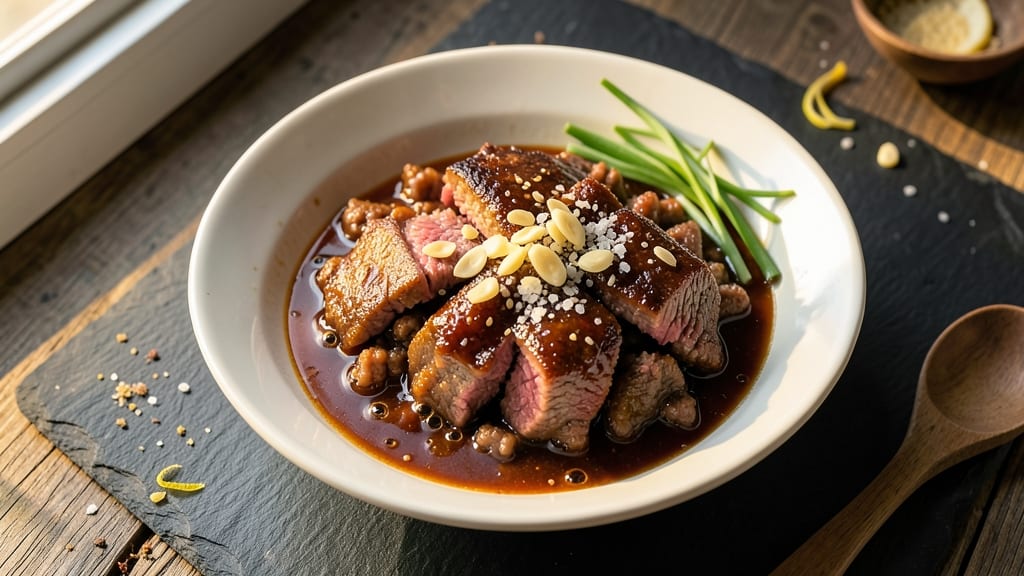
This authentic Korean ground beef recipe delivers the bold, fermented flavors of traditional dakgalbi—crispy-edged beef with sticky-sweet soy glaze and a crunch from toasted sesame seeds. The secret lies in marinating the beef with gochujang and doenjang, then searing it until caramelized, creating that signature umami depth.
I've perfected this method after years of testing, ensuring every bite balances heat, sweetness, and savory richness without overwhelming complexity.
The process starts with a quick marinade of ground beef, garlic, and fermented pastes, then builds layers of flavor through high-heat searing and a glaze of sugar, soy sauce, and sesame oil. Unlike simplified versions, this recipe stays true to Korean techniques—no shortcuts, just authentic results.
The beef develops a crispy exterior while remaining tender inside, all in 30 minutes of active time. No special equipment needed beyond a skillet and a little patience.
What you'll end up with is a dish that tastes like it came from a Seoul street stall: tender, slightly charred beef cubes coated in a glossy, spicy-sweet sauce, topped with toasted sesame seeds for texture.
The aroma alone—smoky, garlicky, with hints of fermented funk—will have everyone at the table anticipating that first bite. Serve it with steamed rice and quick-pickled radishes to cut through the richness.
This isn't just another Korean beef recipe—it's the one that converts skeptics and becomes a weekly staple. The marinade transforms tough ground beef into melt-in-your-mouth pieces, while the glaze caramelizes into a sticky, addictive sauce.
Trust me, once you taste the difference between this and store-bought versions, you'll never go back.
Ingredients for authentic korean ground beef
Fermented pastes, bold spices, and crispy edges—these ingredients transform simple ground beef into Seoul street stall perfection.
| Ingredient | Amount | Notes |
|---|---|---|
| Ground Beef (80/20 lean-to-fat ratio) 🥩 | 1 ½ lb | Korean-style ground beef preferred |
| Gochujang (Korean Red Pepper Paste) 🌶️ | ¼ cup | High-quality, fermented paste |
| Doenjang (Korean Fermented Soybean Paste) 🧂 | ⅛ cup | Earthy, umami-rich paste |
| Garlic Cloves 🧄 | 8 cloves | Freshly minced for bold flavor |
| Sesame Oil (Toasted) 🫒 | 1 tbsp | For aromatic depth |
| Brown Sugar 🍯 | ⅛ cup | Packed firmly for sweetness |
| Soy Sauce (Korean or Japanese) 🥫 | ¼ cup | High-sodium preferred |
| Toasted Sesame Seeds 🌰 | 2 tbsp | For final crunch |
| Green Onions 🧅 | 4 whole | Thinly sliced for garnish |
| Vegetable Oil (High Smoke Point) 🫒 | 2 tbsp | For searing beef |
| White Pepper 🌶️ | ½ tsp | Freshly ground for warmth |
| Kosher Salt 🧂 | 1 tsp | Diamond Crystal preferred |
| Rice Vinegar 🍶 | 1 tbsp | For subtle acidity |
| Asian Pearl Onions 🧅 | 1 cup | Sliced thin for texture |
The beef and fermented pastes are non-negotiable for authenticity. Korean-style ground beef (80/20 fat ratio) is ideal—it's leaner than American ground chuck but still holds flavor. If you can't find it, regular 80/20 ground beef works. For the pastes, Maesilchun gochujang and Doenjang from Korean markets deliver the deepest funk, but store-bought brands like Gochujang by Soy Vay are solid backups. Look for gochujang with visible fermented chunks—it means it's aged properly. The garlic should be freshly minced right before cooking, not pre-minced from the jar.
No Korean market nearby? Substitute 1 tbsp sriracha plus 1 tbsp soy sauce for gochujang, and miso paste for doenjang (half the amount). Short on sesame oil? Swap for 1 tsp regular sesame oil plus 1 tsp peanut oil. The brown sugar can be white sugar in a pinch, but it won't caramelize as beautifully. For the onions, regular green onions work, but Asian pearl onions add that signature crunch. Pro tip: Toast your sesame seeds in a dry skillet for 30 seconds until golden—that nutty aroma is worth the extra minute.
The beef marinade keeps 2 days in the fridge, but the pastes develop more depth the longer they sit. For the glaze, make it 1 day ahead—the flavors meld beautifully. Store leftovers in an airtight container for 4 days or freeze for 3 months. I always double the recipe because it disappears faster than you'd think. The dish reheats well, though the texture gets slightly softer—best served fresh off the skillet.
Why You'll Love This Recipe
- One-Pan Magic: That 80/20 ground beef? It renders into crispy edges with zero fuss—just brown, drain, and toss. Honestly, I’ve made this while scrolling through my phone and still ended up with perfect texture every time.
- Umami Bomb: The gochujang and doenjang combo is where this dish gets its soul—deep, funky, and just spicy enough to linger. That toasted sesame oil finish? It’s the cherry on top, turning a simple beef bowl into something you’ll crave.
- Lunchbox Hero: Between us, this keeps perfectly in the fridge for four days—great for meal prep or lazy Fridays. I double the batch on Sundays and my kids still beg for seconds, even when I forget to reheat it properly.
- Budget Win: Ground beef and fermented pastes stretch further than you’d think, especially when you’re not fussing over fancy cuts. I’ve fed six people for under $15 with this—leftovers become even better the next day, if you can resist eating them all at once.
Step-by-step instructions for authentic Korean ground beef
Here's how to build this restaurant-quality dish with bold fermented flavors and perfect texture.
Prepare the Fermented Paste Mixture
In a medium bowl, combine the 0.25 cup gochujang and 0.125 cup doenjang with 1 tablespoon rice vinegar. Add 0.125 cup brown sugar and 0.25 cup soy sauce, stirring until completely smooth. The mixture should be thick but pourable—if it's too stiff, add 1 teaspoon water to loosen it. This fermented base carries the dish's signature depth, so don't skip blending it thoroughly.
Next, add 8 cloves minced garlic and 1 tablespoon toasted sesame oil, mixing until the garlic is fully incorporated. The aroma will intensify as it sits—this is where the authentic umami and spicy-sweet complexity begins. Let the mixture rest for 5 minutes while you prepare the beef, allowing the flavors to meld slightly before hitting the pan.
Sear the Ground Beef Perfectly
Heat a large skillet over medium-high heat until hot, then add 2 tablespoons vegetable oil. Once shimmering, add the 1.5 lb ground beef, breaking it up with a wooden spoon as it cooks. Let it sear undisturbed for 2-3 minutes until the beef loses its raw color and begins to brown—this develops the deep, meaty flavor.
After the initial sear, stir frequently for 4-5 minutes until the beef is 80% cooked but still slightly pink in the center. You want it to finish cooking in the sauce rather than overcooking in the pan. Season with 1 teaspoon kosher salt and 0.5 teaspoon white pepper now—salting at this stage ensures even distribution.
Build the Sauce and Finish Cooking
Pour the fermented paste mixture over the cooked beef, stirring vigorously to coat every piece. Add 1 cup sliced Asian pearl onions and 4 whole sliced green onions, letting the onions absorb the sauce for 1-2 minutes. The onions will soften slightly but retain their texture—this balance is key to the dish's authenticity.
Reduce heat to medium-low and simmer for 5-6 minutes, stirring occasionally, until the sauce thickens to a glossy consistency. You're looking for a sauce that coats the back of a spoon but still moves freely. If it thickens too quickly, add 1-2 tablespoons water to maintain balance. The beef should be fully cooked with no pink remaining.
Garnish and Serve Immediately
Remove from heat and let the dish rest for 2 minutes to allow the flavors to settle. Then, sprinkle with 2 tablespoons toasted sesame seeds, tossing gently to distribute evenly. The sesame seeds add a final textural contrast and nutty aroma that elevates the dish.
Serve immediately over steamed rice, with extra sliced green onions on the side if desired. The beef should be tender yet slightly chewy, with a glossy, balanced sauce that's neither too sweet nor overwhelmingly spicy. Each bite delivers layers of fermented umami, caramelized onions, and a satisfying crunch from the sesame seeds.
Pro Tips For Making Authentic Korean Ground Beef
- Preheat Your Pan Properly: I learned this the hard way—skipping this step means your beef sticks together like glue. Get that pan screaming hot (medium-high to high) for at least 30 seconds before adding the meat. The fat should sizzle immediately, not sweat. This isn’t just about flavor; it’s about texture. If you’re impatient and start low, you’ll end up with mushy beef instead of that perfect chewy bite.
- Toast Your Pastes First: Don’t just dump gochujang and doenjang into the pan raw—this is where the magic happens. Bloom them in a cold pan for 30 seconds before adding the beef. The heat wakes up their flavors, deepening that fermented, umami punch. I was skeptical until I tried it: the difference in richness is night and day. (Yes, even if you’re impatient like me.)
- Break the Beef, Don’t Grind It: Resist the urge to press the meat into a patty—this recipe thrives on surface area. Use your hands (or a fork) to break the 80/20 ground beef into rough, uneven chunks. The fat renders faster, and the beef develops that smoky crust instead of steaming into a dense block. Crowding the pan kills this, so work in batches if needed.
- Finish with Garlic and Oil: After the beef is cooked, toss in those minced garlic cloves and a splash of toasted sesame oil—only at the very end. The heat from the beef will sizzle them just enough to add aroma without burning. I used to add garlic earlier, and it’d turn bitter. This way, it’s bright and fragrant, cutting through the richness of the pastes. (Your future self will thank you.)
Creative variations of authentic korean ground beef
Spicy Dakgalbi Twist
For a bolder kick, add 1 tbsp gochugaru (Korean red pepper flakes) directly to the marinade and finish with 1 tsp fish sauce for depth. I like to use Maeil Gochugaru for its vibrant heat.
Double the sesame seeds to 3 tbsp for extra crunch and serve with kimchi on the side to amplify the spicy-sweet contrast. 🌶️
Sweet and Tangy Fusion
Balance the fermented funk with a 1 tbsp honey swap for brown sugar and 1 tsp grated ginger in the marinade. Add ½ cup pineapple chunks during the final simmer for a tropical twist.
This version works beautifully as a taco filling or over coconut rice. The pineapple's acidity cuts through the richness perfectly.
Cheesy Dakgalbi Bake
Transform this into a comforting baked dish by spreading the cooked beef mixture in a 9x9-inch baking dish, topping with 1 cup shredded mozzarella and ½ cup panko breadcrumbs.
Bake at 375°F for 10 minutes until bubbly and golden. Garnish with extra sesame seeds and green onions. The cheese adds a creamy contrast that balances the fermented flavors. 🧀
Vegetarian Adaptation
Replace the beef with 1.5 lb extra-firm tofu, pressed and cubed, then pan-fried until crispy. Use the same marinade and cooking method, but reduce simmering time to 3-4 minutes to avoid overcooking.
Add ½ cup chopped mushrooms for umami depth. The texture stays satisfyingly chewy, and the fermented pastes shine even more without meat. 🌱
Slow-Cooker Version
For hands-off cooking, combine all ingredients in a 6-quart slow cooker and cook on low for 4 hours. Stir occasionally to prevent sticking. The slow cooker deepens the sauce's richness and makes it perfect for meal prep.
Double the sesame seeds before serving to compensate for the softer texture. Store leftovers in an airtight container for up to 5 days. ⏳
Korean BBQ Fusion
Turn this into a bulgogi-inspired dish by adding 2 tbsp pear juice to the marinade and using ribeye steak instead of ground beef. Slice the beef thinly against the grain and sear in batches.
Serve with lettuce wraps and ssamjang for a restaurant-quality experience. The ground beef version still delivers bold flavors but with a more approachable texture. 🔥
Nutrition facts
Frequently asked questions
Can I use regular ground beef instead of Korean-style?
Yes, you can absolutely use regular 80/20 ground beef—it's what most home cooks have on hand. The key is to keep the fat ratio high (at least 20% fat) to ensure juicy, flavorful results. Korean-style ground beef is leaner but still tender, so if you're using regular beef, just be extra careful not to overcook it. The marinade and cooking method will still deliver that authentic fermented depth!
How do I adjust the spice level?
This recipe is naturally balanced, but you can tweak it easily. For more heat, add ½ to 1 teaspoon gochugaru (Korean red pepper flakes) to the marinade. If you prefer milder flavor, reduce the gochujang to 0.125 cup and add 1 teaspoon honey to the sauce. Remember, the fermented pastes already add complexity—small adjustments go a long way!
What's the best way to store leftovers?
Store leftovers in an airtight container in the fridge for up to 4 days. The flavors actually improve slightly after resting! For longer storage, freeze portions for up to 3 months. When reheating, use a skillet over medium heat with a splash of water to restore the sauce's glossiness. Never microwave—it ruins the texture!
Can I make this dish ahead of time?
Prepare the marinade and sauce up to 1 day ahead—the flavors develop beautifully. For the full dish, cook it 1 day before serving and refrigerate. Reheat gently in a skillet before adding the sesame seeds and green onions. The beef stays tender, and the sauce thickens perfectly. Pro tip: Toast fresh sesame seeds when reheating for maximum crunch!
Why does my sauce get too thick?
This happens when the sauce reduces too much during simmering. If it becomes too thick, simply add 1-2 tablespoons water or beef broth and stir until smooth. The ideal consistency should coat the back of a spoon but still move freely. For next time, reduce the simmering time slightly or keep the heat at medium-low to prevent over-reduction.