
Main Courses
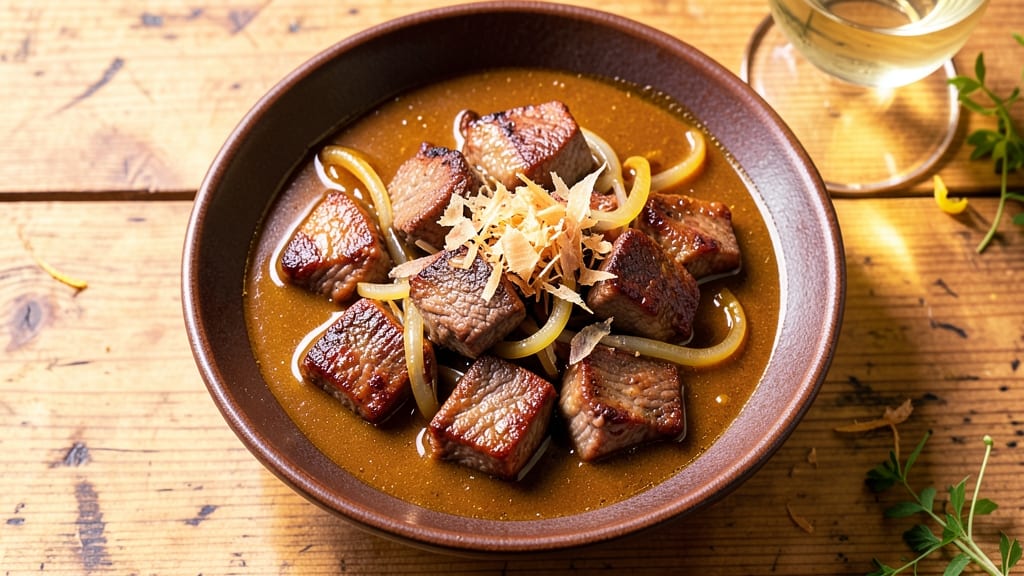
This authentic Japanese beef curry recipe delivers the deep umami and velvety texture that makes it a comfort food staple across Japan. 🔥 The secret lies in the carefully balanced curry roux—a blend of spices, onions, and honey that develops rich, caramelized depth through slow cooking.
Unlike Western curries, Japanese versions rely on subtle sweetness and silky onion fond to create a sauce that’s both complex and approachable. The process begins with a slow-cooked roux, where onions caramelize into a glossy fond before blending with spices and honey.
This base transforms tough beef into tender, flavorful chunks while absorbing the sauce’s velvety richness. The result is a dish that’s hearty yet refined, with layers of umami from katsuobushi (bonito flakes) and a touch of sweetness that balances the spices.
What sets this recipe apart is its authentic technique—no shortcuts, just time-honored methods. The beef cooks low and slow, ensuring maximum tenderness, while the roux develops a glossy, clingy texture that coats every bite.
Served over steamed rice with pickled vegetables, it’s a complete meal that feels both nostalgic and sophisticated. For those seeking restaurant-quality results, this recipe delivers—with tips for adjusting spice levels and optional garnishes like fresh herbs or sesame seeds.
The key is patience; the reward is a curry so rich and satisfying, it’ll become your new weeknight favorite.
Ingredients for authentic japanese beef curry
The foundation of authentic Japanese beef curry starts with these carefully balanced ingredients.
| Ingredient | Amount | Notes |
|---|---|---|
| Japanese Curry Roux 🌶️ | ½ cup | Store-bought or homemade blend |
| Yellow Onions 🧅 | 2 whole | Thinly sliced for caramelization |
| Honey 🍯 | ¼ cup | Light variety for balance |
| Beef Chuck Roast 🥩 | 1 ½ lb | Cut into 1-inch cubes |
| Katsuobushi (Bonito Flakes) 🐟 | 2 tbsp | For umami depth |
| Japanese White Wine 🍷 | ½ cup | Dry variety preferred |
| Chicken or Vegetable Stock 💧 | 1 ½ cups | Homemade or quality store-bought |
| Applesauce 🍎 | ¼ cup | For natural sweetness |
| Soy Sauce 🍶 | 2 tbsp | Light or regular |
| Sesame Oil 🫒 | 1 tbsp | Toasted for aroma |
| Fresh Ginger 🌿 | 1 inch | Peeled, thinly sliced |
| Garlic Cloves 🧄 | 4 cloves | Minced for depth |
| Japanese Rice Vinegar 🍶 | 1 tbsp | For brightness |
| Salt 🧂 | 1 tsp | Kosher or sea salt |
| Black Pepper 🌶️ | ½ tsp | Freshly ground |
The curry roux is non-negotiable for authentic flavor—Japanese brands like S&B Golden Curry or homemade blends deliver the best results. Look for yellow onions with crisp, dry skins at Whole Foods or Asian markets; they caramelize more evenly. Honey should be light and smooth—avoid thick varieties that won’t blend seamlessly. For beef, chuck roast is ideal due to its marbling, but Costco’s pre-cut chuck saves time without sacrificing quality. The katsuobushi (bonito flakes) should be freshly toasted—pre-packaged flakes lose their aroma quickly, so buy small amounts and store in the freezer.
No Japanese curry roux? Substitute 2 tbsp curry powder plus 1 tbsp tomato paste for a Western approximation, though it’ll lack depth. Short on honey? Maple syrup works at a 1:1 ratio, but the flavor profile shifts slightly. The white wine can be swapped for dry sherry or extra chicken stock, though the acidity will differ. For the stock, homemade is best, but Kikkoman or Knorr brands are reliable shortcuts. Ginger and garlic should be freshly minced—jarred versions add bitterness. The sesame oil? Toast it first in a dry pan for 30 seconds to amplify its aroma.
Store the roux base in an airtight container for up to 3 months in the pantry, though homemade versions last only 2 weeks. The beef can be prepped ahead and refrigerated for 2 days before cooking. Leftover curry reheats beautifully—simmer gently with 1 tbsp water per serving to restore its velvety texture. For freezer storage, portion into single-serving containers with a layer of plastic wrap pressed directly on the sauce to prevent freezer burn. Garnish with toasted sesame seeds just before serving to preserve freshness.
Why You'll Love This Recipe
- One-Pot Magic: I swear by this recipe when I’m too tired to scrub pots. Brown the beef, toss in onions and roux—boil, simmer, done. The roux does all the work, turning tough chuck into meltingly tender bites while you sip your tea.
- Umami Bomb: That first spoonful of curry with honey and bonito flakes sprinkled on top? Chef’s kiss. The honey cuts through the richness while the katsuobushi adds this deep, salty punch—like a hug in a bowl. (Yes, even on a Tuesday night.)
- Leftovers That Win: This curry tastes better the next day—seriously. I make a double batch, freeze half, and pull it out for lazy nights. The roux thickens just right when reheated, and the beef stays juicy. My college-aged kid’s favorite, honestly.
- Budget Stretch: A single chuck roast feeds six for under $20. The curry roux is cheap but packs serious flavor, and onions/honey are pantry staples. I’ll be real: this is how I feed my family without breaking the bank, and no one complains.
Step-by-step instructions for authentic Japanese beef curry
Master this technique and you'll unlock restaurant-quality Japanese curry with deep umami and silky onion fond.
🍳 Step 1: Develop the Onion Fond and Sear the Beef
Heat the 1 tablespoon sesame oil in a heavy-bottomed pot over medium-low heat. Add the 2 whole yellow onions, sliced into paper-thin strips, and cook undisturbed for 15 minutes until they transform into a deep golden, almost caramelized fond. This is your flavor foundation - don't rush it. The onions should be so tender they practically melt when pressed with a spoon.
While the onions caramelize, pat the 1.5 lb beef chuck roast dry with paper towels and cut into 1-inch cubes. When the onions are nearly ready, increase heat to medium-high and add the beef in batches, searing each side for 2-3 minutes until deeply browned. Remove beef with a slotted spoon and set aside - we'll return it later.
🔥 Step 2: Build the Curry Base with Aromatics
In the same pot, reduce heat to medium and add 1 tablespoon sesame oil if needed. Add the 1-inch fresh ginger (thinly sliced) and 4 cloves garlic (minced), cooking for 1 minute until fragrant. Sprinkle in the 2 tablespoons katsuobushi (bonito flakes) and let them sizzle briefly - this adds incredible umami depth that's essential for authentic flavor.
Pour in the 0.5 cup Japanese white wine and scrape up any browned bits from the bottom of the pot. Let it simmer for 2 minutes until reduced by half. Add the 0.5 cup Japanese curry roux and stir constantly for 1 minute to toast the spices gently - this prevents bitterness and develops their aromatic compounds.
🥘 Step 3: Simmer the Curry to Perfection
Return the seared beef to the pot along with any accumulated juices. Add the 1.5 cups chicken or vegetable stock, 0.25 cup applesauce, 0.25 cup honey, 2 tablespoons soy sauce, and 1 tablespoon Japanese rice vinegar. Stir well to combine, then bring to a gentle simmer. The liquid should just cover the beef - if it's too thin, reduce slightly by simmering uncovered for 5 minutes.
Season with 1 teaspoon salt and 0.5 teaspoon black pepper, then cover and simmer on low heat for 1.5-2 hours until the beef is fork-tender. Stir occasionally to prevent sticking, and if the curry gets too thick, add 1-2 tablespoons water at a time. The onions should be completely tender and the sauce should coat the back of a spoon with a velvety consistency.
⏰ Step 4: Finish and Rest for Optimal Texture
Once the beef is tender, remove the pot from heat and let it rest for 10 minutes. This resting period allows the flavors to meld completely and the sauce to thicken slightly. Taste and adjust seasoning if needed - you may need a touch more salt or vinegar to balance the sweetness.
For serving, gently reheat the curry if necessary, then ladle into bowls. The curry should be thick enough to coat the beef and onions completely, with a glossy sheen that indicates proper reduction. Serve immediately over steamed rice - the contrast of the warm, aromatic curry with fluffy rice is what makes this dish truly authentic.
Pro Tips For Making Authentic Japanese Beef Curry
- Sear the Beef in Batches: I learned this the hard way—trying to brown chuck roast all at once just makes your pan steam instead of sear. Split the beef into 2-3 groups, work in 5-minute stretches, and let the pan recover between batches. That crust? It’s what holds the curry together when the roux gets added.
- Sweat Onions Until Translucent: Don’t rush the onions—get them down to a jammy, golden state (about 10 minutes) before adding the roux. I used to skip this, and the curry always tasted flat. The slow caramelization balances the sweetness of the honey and deepens the flavor when the roux hits.
- Bloom the Roux Properly: Stir the roux in low for the first 3 minutes—yes, even if it looks like it’s not doing anything. After burning three batches, I finally figured out that rushing this step makes the curry taste raw and bitter. Let it melt into the onions first, then only crank the heat to medium-high.
- Add Honey at the End: Too early, and the honey burns before the roux can fully develop. Too late, and the curry lacks that glossy, slightly caramelized depth. Toss in the honey with the katsuobushi in the last 5 minutes—just enough time to let it mellow without turning the roux into syrup.
Wine and beer pairings for this authentic japanese beef curry
Japanese Sake Pairings
For an authentic experience, pair your beef curry with a dry junmai sake like Hakkaisan Junmai or Dassai 23. The clean, crisp profile of junmai cuts through the rich umami and honey sweetness without overpowering it.
Serve slightly chilled (45-50°F) to enhance its subtle citrus notes that complement the caramelized onions. 🍶
Light Lager Complements
A crisp Asahi Super Dry or Sapporo Premium balances the dish’s depth with its mild hop bitterness. The light body prevents the beer from clashing with the curry’s velvety texture, while its effervescence cleanses your palate between bites.
For a local twist, try Kirin Ichiban—its smooth finish mirrors the curry’s silky onion fond.
Sweet Riesling Harmony
Off-dry German Riesling (like Dr. Loosen Blue Slate) mirrors the curry’s honey and applesauce sweetness while its acidity brightens the dish. The mineral notes in Riesling also enhance the beef’s umami, creating a harmonious contrast. Serve at 50-55°F to preserve its delicate balance.
Umami-Boosting Mirin Cocktail
For a non-alcoholic option, mix 2 oz mirin, 1 oz yuzu juice, and 4 oz sparkling water over ice. The mirin’s sweetness and umami echo the curry’s depth, while yuzu’s citrus cuts through the richness. Garnish with a katsuobushi sprinkle for an authentic touch.
Serving Temperature Tips
Always serve sake and beer chilled** (45-50°F) to highlight their crispness against the curry’s warmth. Riesling should be slightly cooler (50-55°F) to preserve its acidity. Avoid warming sake—it dulls the delicate flavors that make it the perfect pairing for this dish. ✨
Nutrition facts
Frequently asked questions
Can I use store-bought Japanese curry roux instead of making it from scratch?
Store-bought Japanese curry roux like S&B Golden Curry or S&B Curry Block works perfectly—it’s what most Japanese home cooks use. The key is choosing a brand with a balanced sweet-spicy profile. For extra depth, toast the roux in oil for 1 minute before adding other ingredients to enhance its flavors.
What type of beef works best for this recipe?
Beef chuck roast is ideal due to its marbling and tenderness when slow-cooked, but you can also use brisket or short ribs. Avoid lean cuts like sirloin—they’ll dry out. For quick prep, buy pre-cut chuck roast from Costco or your butcher, then cut into 1-inch cubes for even cooking.
How do I adjust the spice level if my family prefers milder flavors?
Start by reducing the curry roux by 1-2 tablespoons and adding 1 extra tablespoon of honey or applesauce to balance heat. For a smoother texture, blend the finished curry briefly—this helps distribute flavors evenly. If using a spicier roux, add 1 extra tablespoon of rice vinegar to brighten the dish.
Can I make this curry ahead of time for a party?
Yes! This curry actually tastes better the next day as flavors deepen. Cook it fully, then refrigerate for up to 3 days or freeze for 3 months. Reheat gently on low heat with 1-2 tablespoons of water or stock to restore its velvety texture. For serving, reheat just until warm—overcooking can make the sauce separate.
What’s the secret to the perfect onion fond?
The secret is patience and low heat! Cook the onions for 15-20 minutes without stirring until they’re deep golden and almost jam-like. Use yellow onions (not red or white) for their natural sweetness. If they brown too quickly, reduce heat to medium-low and cover loosely with a lid to slow caramelization.