
Main Courses
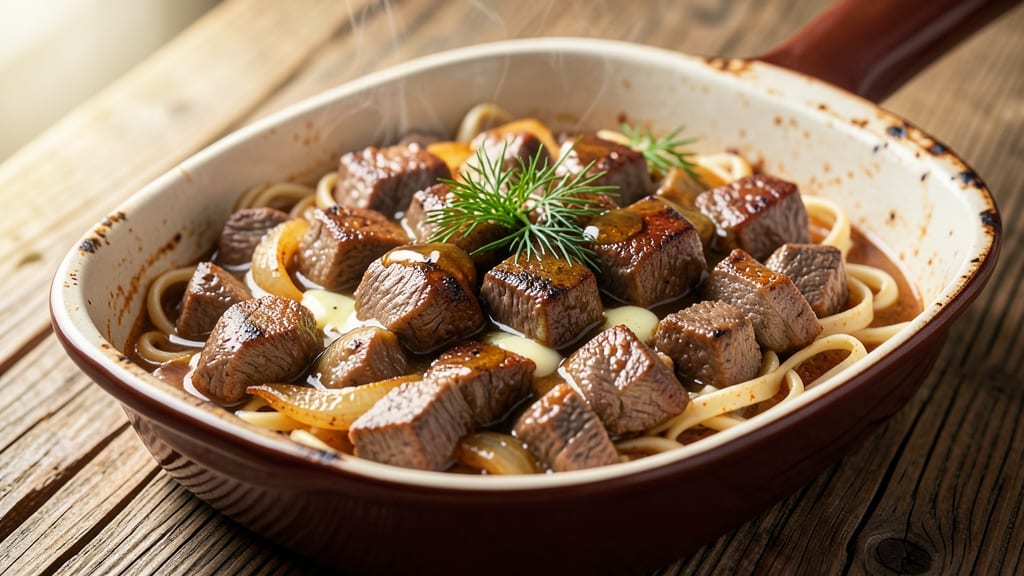
This authentic German beef stroganoff delivers rich, velvety flavors rooted in traditional German techniques—where sour cream meets tender beef in a velouté so smooth it practically melts on your tongue.
Unlike its Russian cousin, this version incorporates subtle German pantry staples like caraway seeds and a touch of beer for depth, creating a dish that feels both nostalgic and refined.
The secret lies in the slow simmering process, which develops layers of umami without overpowering the delicate balance of sour cream and egg noodles.
What sets this recipe apart is its authentic approach—no shortcuts, just time-honored methods. The beef is seared to a deep brown before simmering in a light beer-infused sauce, while the egg noodles absorb the velouté just enough to stay tender yet flavorful.
The dish is finished with a swirl of fresh sour cream, adding a touch of tang that cuts through the richness. This isn’t just stroganoff; it’s a taste of German home cooking, elevated for modern kitchens.
The result is a restaurant-quality dish that’s hearty enough for a family dinner but elegant enough for guests. The aroma alone—warm beef, caraway, and a hint of beer—fills the kitchen, promising a meal that’s both comforting and sophisticated.
Serve it with a crisp white wine or a dark lager to complement the flavors, and you’ll have a dish that feels like a piece of Germany on your table.
Perfect for weeknight dinners or special occasions, this stroganoff is foolproof once you master the slow simmer. The technique ensures the sauce remains silky and the beef stays tender, while the egg noodles provide the ideal base.
Whether you’re feeding a crowd or treating yourself to a cozy meal, this recipe delivers authentic German flavors with a modern twist.
Ingredients for authentic german beef stroganoff
German pantry staples and a few fresh ingredients create this restaurant-worthy stroganoff.
| Ingredient | Amount | Notes |
|---|---|---|
| Beef Chuck Roast 🥩 | 1 ½ lb | Cut into 1-inch cubes |
| All-Purpose Flour 🌾 | 2 tbsp | For dredging beef |
| Unsalted Butter 🧈 | 4 tbsp | Full-fat for richness |
| Yellow Onion 🧅 | 1 whole | Thinly sliced |
| Garlic Cloves 🧄 | 4 cloves | Minced for depth |
| Light Beer 🍺 | 1 cup | Lager or pale ale |
| Beef Broth 💧 | 1 cup | Low-sodium preferred |
| Sour Cream 🥛 | ½ cup | Full-fat for creaminess |
| Egg Noodles 🍝 | 8 oz | Fresh or dried |
| Caraway Seeds 🌿 | 1 tsp | Toasted for aroma |
| Fresh Dill 🌿 | 2 tbsp | Chopped for brightness |
| Salt 🧂 | 1 tsp | Kosher or sea salt |
| Black Pepper 🌶️ | ½ tsp | Freshly ground |
| Worcestershire Sauce 🍯 | 1 tbsp | Vegetarian version if needed |
The beef is everything here—chuck roast gives that melt-in-your-mouth texture, but sirloin works in a pinch if you're short on time. Most grocery stores carry pre-cubed chuck, but if you're grabbing a whole roast, ask the butcher to cut it for you. For the beer, a crisp lager like Beck's or pale ale keeps the flavor clean, but any light beer you enjoy drinking works. The caraway seeds? Buy whole and toast them briefly—they release so much more aroma that way. I grab mine from the bulk section at Whole Foods or Trader Joe's—they're cheaper and fresher than the tiny jars.
No beer on hand? Substitute with extra beef broth—just add a splash of apple cider vinegar for acidity. Fresh dill is ideal, but dried dill at one-third the amount gets you close. The Worcestershire sauce can be tricky—check for vegetarian versions if needed (Annie's is a good brand). For the sour cream, full-fat is non-negotiable—low-fat separates and ruins the velouté. If you're making this ahead, cook the noodles separately and toss them with the sauce right before serving to keep them from getting mushy. The flour is just for dredging, but don't skip it—it helps the beef sear properly.
This sauce gets better the next day—make a double batch if you can. Store leftovers in an airtight container for up to 4 days in the fridge, or freeze for 3 months. The noodles reheat beautifully, but if you're freezing, cook them fresh when serving. For extra richness, stir in a pat of butter when reheating. The beer-infused sauce pairs perfectly with crusty German rye bread—grab a loaf from the bakery section at Costco or Kroger for that authentic touch.
Why You'll Love This Recipe
- One-Pan Simplicity: I swear by this recipe because it’s actually hands-off after the initial sear. Brown the beef, toss in onions and garlic, then let the flour and butter work their magic while you stir—no fancy techniques, just a deep, rich sauce forming right in your skillet.
- Rich Without Fuss: That beef chuck roast? It’s the star—tender, flavorful, and packed with depth. The butter and onions caramelize into a sauce so velvety, it coats every bite like a warm hug. (Yes, even on a Tuesday night.)
- Leftovers That Shine: This dish tastes better the next day—seriously. I make a double batch on Sundays because reheating it is foolproof, and it’s perfect for quick lunches or a lazy dinner when you’re not in the mood to cook.
- Budget-Friendly Feast: A chuck roast stretches further than you’d think, and the ingredients won’t break the bank. Between us, this is the kind of meal that makes grocery day feel like a win—filling, satisfying, and still feels special.
Step-by-step instructions for authentic German beef stroganoff
Here's how to make this rich, velvety stroganoff with deep German flavors and proper technique.
Prepare and Brown the Beef
Pat the 1.5 lb beef chuck roast dry with paper towels and cut it into 1-inch cubes. Season generously with 1 tsp salt and 0.5 tsp black pepper on all sides. This seasoning step is crucial—German stroganoff relies on bold, well-seasoned meat.
Heat 2 tbsp unsalted butter in a large, heavy skillet over medium-high heat. Working in batches if needed, add the beef cubes and sear for 3-4 minutes per side until they develop a deep, golden-brown crust. You want that crust to form—it's what carries all those rich flavors through the cooking process. Remove the beef and set it aside on a plate.
Build the Flavor Base
In the same skillet (don't wipe it clean—those browned bits are flavor gold), melt the remaining 2 tbsp unsalted butter over medium heat. Add the thinly sliced yellow onion and cook for 5-6 minutes until softened and translucent. Stir in the minced garlic cloves and cook for another 30 seconds until fragrant.
Here's the authentic touch: add the 1 tsp caraway seeds and toast them in the pan for 30 seconds until they release their nutty aroma. This spice is essential for that true German flavor profile. Then pour in the 1 cup light beer and scrape up all those delicious browned bits from the bottom of the pan. Let it simmer for 3-4 minutes until reduced by half.
Create the Velouté Sauce
Stir in the 2 tbsp all-purpose flour and cook for 1 minute to remove the raw flour taste. Slowly pour in the 1 cup beef broth while whisking constantly to prevent lumps from forming. Add the 1 tbsp Worcestershire sauce and bring the mixture to a gentle simmer.
Return the browned beef to the skillet and let everything simmer together for 10 minutes until the beef is tender and the sauce has thickened slightly. You want the beef to be fork-tender but still hold its shape. If the sauce starts to thicken too much, add 1-2 tablespoons of water to maintain the proper consistency.
Finish with Sour Cream and Fresh Herbs
Reduce the heat to low and stir in the 0.5 cup sour cream gradually, letting it warm through but not boil. This is where the sauce gets its signature creamy texture. The heat should be gentle enough that the sour cream doesn't curdle—you're looking for a velvety, almost custard-like consistency.
Add the 2 tbsp chopped fresh dill and stir through. Taste and adjust seasoning if needed—you might need a bit more salt since the beer and broth can dilute the flavors. The sauce should coat the back of a spoon but still be smooth and luscious, not thick and gluey.
Cook and Serve with Egg Noodles
While the stroganoff simmers, cook the 8 oz egg noodles according to package instructions until al dente. Drain them and toss with a little unsalted butter to prevent sticking. The noodles should be tender but still have a slight bite.
To serve, spoon the stroganoff over the warm noodles, letting that rich sauce cling to every strand. Garnish with additional chopped dill if desired. This dish tastes best served immediately while the noodles are hot and the sauce is at its peak creaminess. The combination of tender beef, velvety sauce, and egg noodles creates that perfect balance of textures and flavors that makes German stroganoff so special.
Pro Tips For Making Authentic German Beef Stroganoff
- USE COLD BUTTER: The German version relies on a rich, velvety sauce, and cold butter is your best friend here. Melt half the butter first, then whisk in the cold cubes at the end—this keeps the sauce from separating and gives it that signature thickness without turning greasy. (Yes, even if you're impatient like me, resist the urge to melt it all at once.)
- SEAR THE ONIONS LOW: Skip the high heat for the onions—this isn’t French cuisine. Cook them on medium-low with a pinch of salt until they’re deep golden, almost caramelized, but not browned. That slow, sweet development is what makes the stroganoff taste like it’s been simmering all day. (I learned this the hard way after burning three batches.)
- DON’T SKIP THE REST: After browning the beef, let it sit for 5 minutes before deglazing. That pause lets the crust set, so it doesn’t dissolve into the sauce when you add liquid. Trust me, your stroganoff will taste like it came from a Munich kitchen, not a rushed weeknight.
- SWAP FLOUR FOR A ROUX: Instead of just tossing in flour, make a quick blond roux (equal parts butter and flour, cooked 2 minutes) before adding the beef stock. It adds body and depth without that raw flour aftertaste. (Sounds weird, but it works—my grandmother swore by it, and she was right.)
Regional styles of authentic german beef stroganoff
Bavarian-Inspired Version
In Bavaria, stroganoff often features dark lager beer instead of pale ale, adding a deeper maltiness that pairs beautifully with the beef. Replace the light beer with 1 cup dark lager (like Paulaner or Ayinger) and reduce it by half before adding broth.
For extra richness, stir in 1 tbsp German-style mustard (like Dijon or sweet Bavarian mustard) with the Worcestershire sauce. Serve with buttered spaetzle instead of egg noodles for a true Bavarian touch. 🍺
Berlin-Style Twist
Berlin chefs often incorporate sauerkraut into their stroganoff for a tangy contrast. After searing the beef, set aside 1 cup finely chopped sauerkraut and sauté it in the same pan for 3-4 minutes until softened. Fold it into the sauce just before adding the sour cream.
For garnish, sprinkle with crispy fried onions (toss ½ cup sliced onions in 1 tbsp butter and fry until golden). This version feels heartier and more rustic. 🥬
Rhineland Adaptation
The Rhineland region favors white wine over beer in their stroganoff variations. Substitute the beer with ½ cup dry Riesling (like Mosel or Rheingau) and add 1 tbsp apple cider vinegar to balance the acidity. Toast ½ tsp coriander seeds with the caraway seeds for a fragrant twist.
Serve with potato dumplings (like Kartoffelklöße) instead of noodles, as they’re a staple in this region. The wine adds a bright, citrusy note that cuts through the richness. 🍷
Saxon Hearty Style
In Saxony, stroganoff is often made with pork shoulder instead of beef, but you can keep the beef while adding smoked bacon for depth. Cook 4 slices smoked bacon until crispy, then crumble and set aside.
Use ½ cup bacon fat instead of butter for searing the beef, and add the crumbled bacon back into the sauce at the end. For extra heartiness, stir in ½ cup cooked pearl onions (parboiled and sautéed) with the dill. This version has a smoky, savory character. 🥓
Modern German Fusion
For a contemporary take, swap the egg noodles for shredded Brussels sprouts (sautéed with 1 tbsp bacon fat and 1 tsp maple syrup) and top with crispy prosciutto.
Use 1 cup stout beer (like Schöfferhofer) for a malty depth, and finish with 1 tbsp crème fraîche instead of sour cream. This fusion keeps the German soul while adding a gourmet twist that’s perfect for dinner parties. 🌟
Nutrition facts
Frequently asked questions
Why does authentic German stroganoff use beer instead of cream?
Beer adds depth and balances the richness of the sour cream while keeping the sauce light and velvety. The German tradition favors beer for its malty complexity—especially light lagers—which complements the beef's umami without overpowering it. It also creates a smoother texture when reduced.
Can I substitute the egg noodles for something else?
For a more German touch, try buttered spaetzle or potato dumplings (Kartoffelklöße). If you prefer grains, wild rice or farro work well too. Just cook them separately and toss with the sauce right before serving to avoid sogginess.
How do I prevent the sour cream from curdling?
Always stir the sour cream into the sauce over low heat—never let it boil. For extra insurance, temper it first by mixing a spoonful into the hot sauce before adding the rest. Also, use full-fat sour cream (it handles heat better than low-fat versions).
What’s the secret to tender beef in stroganoff?
The key is slow simmering after searing. Brown the beef deeply first to lock in juices, then cook it low and slow in the sauce for 10 minutes. Using chuck roast (with its natural marbling) ensures tenderness—never lean cuts like sirloin.
Can I make this ahead of time?
Yes! The sauce actually improves overnight. Cook the stroganoff, cool it completely, then refrigerate in an airtight container for up to 4 days. Reheat gently on low heat and add fresh noodles when serving. For freezing, store the sauce separately (without noodles) for up to 3 months.